The Temple He Could Not Afford
Pusalar Nayanar is one of the sixty three, and his story is the shortest and one of the best.
Who he was:
- From Thiruninravur, in what is now Tiruvallur district, near Chennai
- A brahmana, learned and devout
- Poor
- Seventh century, in the reign of the Pallava king Rajasimha
What he wanted:
- To build a temple for Shiva
- He had no money
- He tried to raise it and could not
What he did instead:
- He decided to build the temple in his mind
- Not as a fantasy, but as a construction project, properly done
And he did it properly. The tradition is specific about the method.
- He studied the Agamas, the texts that govern temple construction, so that it would be built correctly
- He selected the site
- He gathered the materials, mentally, and inspected them
- He laid the foundation
- He raised the walls, the sanctum, the mandapa, the tower
- He fitted the doors
- He completed the vimana and the finial
- Every stage in the proper order, over a long period
The consecration. When the building was complete he set a date for the kumbhabhishekam, the consecration, according to the calendar.
Meanwhile at Kanchipuram:
- Rajasimha, the Pallava king, had built a temple: the great stone temple at Kanchipuram, which is the Kailasanathar temple
- He had set his own consecration date
- It was the same day
The dream:
- The night before, Shiva appeared to the king
- And told him he would not be at Kanchipuram on that day
- Because he was going to Thiruninravur, to the temple Pusalar had built for him
- And that the king should choose another date
What the king did:
- He got up and went to Thiruninravur, with his retinue, to see what temple this was
- He found nothing. No temple, no building site, no construction
- He asked for Pusalar
- He found a poor brahmana who had built nothing
- And he asked
And Pusalar told him.
The king understood, honoured him, and postponed his own consecration.
That is the whole story.
What It Says
The story is short and it makes several arguments at once.
One. The thing was real.
The tradition does not present the mental temple as a consolation, a metaphor or a lesser substitute. It presents it as an actual temple, which the Lord chose to attend, in preference to a stone one built by a king.
Two. It was built properly.
This is the detail that keeps it from being sentimental. He did not imagine a temple. He studied the Agamas, followed the procedure, laid the foundation, raised the structure and completed the finial, in order, over years.
The discipline is the point. A daydream would not have counted.
Three. The comparison is with a real building.
The Kailasanathar temple at Kanchipuram, the one the king had built, is one of the finest early Pallava structures and it is still standing. Anybody can go and see it.
The story sets a poor man's mental construction against that specific building, and has the deity choose.
Four. And the king accepted it.
Rajasimha did not dismiss the dream. He got up, travelled, found nothing, asked, listened, and postponed his own event.
The tradition treats his response as the correct one and it is why the story works: without the king's acceptance it would just be a poor man's private belief.
What it is arguing against. The equation of devotion with expenditure.
That equation is very old and very live. Temple giving, gold, elaborate ritual, expensive observances, and the general sense that a person who can spend more is doing more.
The story says plainly that the Lord went to the one that cost nothing.
How the tradition uses it:
- As the standard answer to somebody who says they cannot afford to do something devotional
- As a statement about sankalpa, intention, being the substance of an act
- As an argument that the internal and external are not different orders of reality in this context
The manasa puja tradition. This is the wider practice the story belongs to.
Manasa puja is worship performed entirely in the mind, and it is a recognised and formally described practice across Indian traditions.
- The worshipper mentally performs each of the sixteen upacharas: seating, water, bath, clothing, ornaments, incense, lamp, food, and the rest
- Each is visualised in detail
- It requires no materials
- It is described in the Agamas and Tantras as equal to, and in some texts superior to, external worship
Adi Shankara's Shiva Manasa Puja is the best known text of this kind. Its verses offer a throne of jewels, a bath in the Ganga, silk garments, sandal paste and lamps, and each verse ends by saying that all of it has been done mentally.
And its last verse asks pardon for every fault of the practice: whatever was done wrong, forgotten, or not done at all.
Why manasa puja is useful now. Very practically.
- For people who are ill or in hospital
- For people travelling, in transit, at work
- For people living where there is no temple and no space at home
- For people who cannot afford materials
- For people who are, for any reason, unable to perform the physical form
The Shiva Manasa Puja takes five minutes, requires nothing, and is available in translation with recordings.
And the tradition has a saint whose only qualification is that he did the whole thing in his head.
The Temple the King Built
Since the story turns on a comparison, the building it is compared against is worth describing, and it is one of the important monuments of south India.
Kailasanathar temple, Kanchipuram:
- Built by Rajasimha, also called Narasimhavarman II, around the early eighth century
- Completed or added to by his son Mahendravarman III
- Built of sandstone and granite
- The oldest structural temple in Kanchipuram
- Among the earliest fully structural stone temples in the Tamil country, as against rock cut
Why it matters architecturally:
- It is a key monument in the transition from rock cut to structural building, the same transition visible at Mahabalipuram
- Its plan, with the sanctum surrounded by small cells each containing sculpture, is distinctive
- The Somaskanda panels, Shiva with Uma and Skanda, which are characteristic of Pallava work
- Traces of the original paint survive in places, which is very rare and gives some idea of how these temples originally looked
The paint point is worth dwelling on. Indian stone temples were painted. The bare stone appearance most people associate with them is the result of centuries of weathering and cleaning.
At Kailasanathar, fragments of the original pigment survive in protected areas, and they indicate strong colour.
Its influence. The Rashtrakuta king Krishna I is said to have seen it and been inspired to build Kailasa at Ellora, the enormous monolithic temple excavated downward out of the rock, which is one of the most extraordinary structures anywhere.
That connection is traditional rather than documented, but the two temples share the name and the dedication.
Visiting:
- In Kanchipuram, Tamil Nadu, around 75 kilometres from Chennai
- An ASI protected monument, quieter than the town's larger active temples
- Worship is limited, which means you can look at the architecture properly
- Go in the morning for the light
- October to March for weather
Kanchipuram generally. Worth a full day or two.
- Ekambaranathar, the earth element temple of the Pancha Bhoota Sthalams, with the ancient mango tree
- Kamakshi Amman, one of the principal Shakta temples of the south
- Varadaraja Perumal, a Divya Desam, with the hundred pillared hall
- Kailasanathar, this temple
- Vaikunta Perumal, with its historical panels showing Pallava history
- Thiruvekka and the Yathothkari temple, associated with Poigai Alvar and Thirumazhisai Alvar
- The silk weaving industry, which is what the town is otherwise known for
Kanchipuram's position. It is one of the very few towns that is major to Shaiva, Vaishnava, Shakta, Jain and formerly Buddhist traditions simultaneously.
- It is one of the Saptapuri, the seven cities of liberation
- The Jain Kanchi at Tiruparuttikunram, with the Trailokyanatha temple and its remarkable ceiling paintings, is on the edge of town and is very much worth visiting
- It was a Buddhist centre; Bodhidharma is traditionally said to be from Kanchipuram, and Dignaga is associated with the region
- Adi Shankara established the Kanchi Kamakoti Peetham here in the tradition of that matha
So the town where a king built a temple, and postponed its consecration because a poor man had built a better one in his head, is also the town where five traditions have been present at once for two thousand years.
Thiruninravur:
- Pusalar's own place, in Tiruvallur district, around 30 kilometres from Chennai
- The Bhaktavatsala Perumal temple there is a Divya Desam
- A Shiva temple is associated with Pusalar and the mental temple
- Easily reached from Chennai by suburban rail
How to Do Manasa Puja
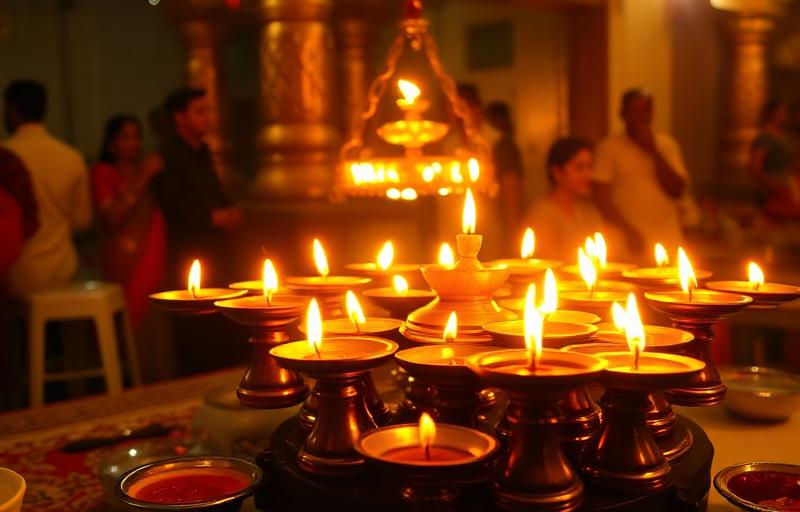
Since the story is the tradition's charter for mental worship, here is the practice set out.
What it is: performing the acts of worship entirely in the mind, with nothing physical.
The standard sequence, following the shodashopachara, the sixteen services:
- Avahana: inviting the deity to be present
- Asana: offering a seat
- Padya: water for the feet
- Arghya: water for the hands
- Achamana: water to sip
- Snana: the bath
- Vastra: clothing
- Yajnopavita: the sacred thread
- Gandha: sandal paste
- Pushpa: flowers
- Dhupa: incense
- Deepa: the lamp
- Naivedya: food
- Tambula: betel
- Pradakshina and Namaskara: circumambulation and prostration
- Visarjana: taking leave
How to actually do it:
- Sit somewhere you will not be interrupted for five or ten minutes
- Close your eyes
- Take each service in order and see it, in as much detail as you can hold
- Do not rush, and do not worry if the images are vague
- Finish with the apology verse: whatever was wrong, forgotten or not done, forgive it
Using the Shiva Manasa Puja. The easiest way in.
- Five verses attributed to Adi Shankara
- Each verse performs a set of the services and ends by saying it was done mentally
- The fourth verse identifies the self with the deity in every activity
- The fifth asks pardon for every failing, of hand, foot, speech, body, ear, eye and mind
It is short, it is in Sanskrit with translations everywhere, and recordings are easy to find.
When it is most useful:
- In hospital, for yourself or sitting with somebody
- Travelling, on a train or plane
- At work, in a few minutes
- When you are unwell and cannot bathe or stand
- When there is no space at home
- When you are somewhere with no temple and no materials
- During menstruation, if your household observes restrictions on physical puja and you want to continue
- When you are grieving and cannot manage the physical form
On that last one. Worth saying.
After a death, many households suspend regular puja for a period, and many people in grief find they cannot do the ordinary things.
Mental worship is available throughout and requires nothing of you physically. It is a reasonable thing to fall back on.
The theological status. The tradition is clear.
The Agamas and Tantras describe manasa puja and rank it high, several texts placing it above external worship on the grounds that it requires more concentration and less apparatus.
The Bhagavad Gita's statement that a leaf, a flower, a fruit or water offered with devotion is accepted is read in the same direction: the material is not the operative element.
And Pusalar is the tradition's proof of concept.
A closing note on the story's practical use. It is the answer to a specific and common situation.
Somebody wants to do something devotional and cannot: no money, no space, no time, no materials, no knowledge, no permission, no health.
The tradition's answer, in the form of a saint in its canonical list of sixty three, is that a man who could afford nothing built a complete temple over years without laying a single stone, and the Lord went to it on the appointed day and told a king to reschedule.
On Money and Devotion
The story is about not being able to pay for something, and since that is an extremely common situation, it deserves direct treatment.
The problem it addresses:
- Elaborate rituals cost money
- Pilgrimages cost money
- Temple offerings, sponsored pujas, archanas, abhishekas and annadanam all have prices
- Life events, weddings, upanayanam, house warming, funerary rites, have become extremely expensive in many communities
- And there is real social pressure attached to all of it
What the tradition actually holds. Consistently, across every entry in this series.
- Kannappa offered what a hunter had, incorrectly, and it was preferred
- Andal offered a garland she had already worn
- Sabari in the Ramayana offered fruit she had tasted
- Sudama offered a handful of beaten rice
- The Gita says a leaf, a flower, a fruit, water
- Pusalar offered nothing at all and it was preferred to a king's stone temple
That is not a marginal position. It is the tradition's stated position, repeated in every corpus.
What is nonetheless true:
- Temples need money to operate, and paid services fund them
- Sponsoring an archana or an abhisheka is a legitimate act and is not a purchase of favour
- Institutions that feed people and maintain buildings require income
Where the line is. It is worth being specific, because the exploitation is real and widespread.
Legitimate:
- Published rates for temple services, paid at the counter, with a receipt
- Voluntary donation in the hundi
- Sponsoring annadanam or a specific service
- Paying a priest a customary dakshina for a household ceremony
Not legitimate, and the warning signs:
- Being told that a calamity will follow unless you pay
- A price that rises as you show more concern
- Being told the remedy must be secret or must be done only through that person
- Escalating demands over time
- Being told your family members are the cause of your problem
- Being discouraged from medical, legal or financial advice in favour of a ritual
- Pressure to give beyond your means, or to borrow
On borrowing for religious expenditure. This should be said plainly.
Do not borrow money at interest to fund a ritual, a pilgrimage or a ceremony. The debt is real and lasting, the pressure is social rather than religious, and no tradition in India requires it.
Wedding and funeral expenditure in particular has driven very substantial household debt across India, and the pressure is entirely social.
What the tradition says about that. It is on your side.
- The texts on dana require that giving be within one's means and not at the cost of dependents
- The shastras provide for substitution and reduction at every point where cost is an obstacle
- A ritual performed simply is not defective
- The grihastha has obligations to their household first, and those obligations rank above discretionary religious expenditure
A practical position:
- Decide what you can give before you go, and give that
- Do not decide at the counter under pressure
- A lamp, a flower and the name cost nothing and are the practice
- If somebody frightens you into paying, that is not a religious transaction
And Pusalar's answer to all of it: he built the whole temple, correctly, according to the Agamas, over years, and spent nothing.
And the deity attended.
Practice
A practice from Pusalar
The Shiva Manasa Puja:
- Five verses, attributed to Adi Shankara
- Available in Sanskrit with translation and recordings everywhere
- Takes around five minutes
- Requires nothing
Building something over time:
- Pusalar's practice was not a single sitting. It was a construction project carried out over a long period, one stage at a time
- The transferable version is any long practice done in stages: a text read slowly over a year, a mantra count completed over months, a service maintained daily
- The point is that it was sustained, and the tradition emphasises that as much as the mental aspect
Places
Thiruninravur:
- In Tiruvallur district, around 30 kilometres from Chennai
- Reachable by suburban rail
- The Bhaktavatsala Perumal temple, a Divya Desam
- The Shiva temple associated with Pusalar
Kanchipuram:
- The Kailasanathar temple, which the king built and whose consecration he postponed
- Around 75 kilometres from Chennai
- Best in the morning
- A full day for the town's other temples
Mylapore, Chennai:
- The Arupathimoovar in Panguni, where Pusalar is carried with the other sixty two
A closing thought
A poor brahmana in a village outside what is now Chennai wanted to build a temple and could not raise the money.
So he read the construction manuals, chose a site, gathered materials, laid a foundation, raised walls, fitted doors and completed a tower, over a period of years, entirely in his head, and then set a date for the consecration.
On the same day, a Pallava king was consecrating a stone temple at Kanchipuram that you can still walk into.
The Lord went to the other one, told the king in a dream, and the king got up, travelled thirty kilometres, found an empty field and a man with nothing, asked him what he had done, and postponed his own ceremony.
The tradition put that man in a list of sixty three saints alongside kings and generals, and carries him through the streets of Chennai every year in Panguni.
He built nothing that anybody could see, and it is the reason he is there.
Reader Questions Answered
Who was Pusalar Nayanar?+
One of the sixty three Nayanars, a poor brahmana of Thiruninravur in what is now Tiruvallur district near Chennai, in the seventh century. He wanted to build a temple for Shiva and could not raise the money, so he built one entirely in his mind, studying the Agamas so it would be built correctly, and carrying out every stage in order over a long period.
What happened on the consecration day?+
He set a date for the kumbhabhishekam of his mental temple. The Pallava king Rajasimha had set the same date for the consecration of the Kailasanathar temple he had built at Kanchipuram. The night before, Shiva appeared to the king and said he would not be at Kanchipuram because he was going to Pusalar's temple at Thiruninravur, and that the king should choose another date. The king went there, found nothing, asked Pusalar, understood, and postponed his own.
What is manasa puja?+
Worship performed entirely in the mind, with nothing physical. The worshipper mentally performs each of the sixteen upacharas: inviting, seating, water, bath, clothing, sandal, flowers, incense, lamp, food and the rest, visualising each in detail. It is described in the Agamas and Tantras and several texts rank it above external worship on the grounds that it requires more concentration and less apparatus. Adi Shankara's five verse Shiva Manasa Puja is the best known text of this kind.
When is mental worship most useful?+
In hospital, whether for yourself or sitting with somebody; travelling; at work in a few minutes; when you are unwell and cannot bathe or stand; when there is no space at home; when you are somewhere with no temple and no materials; during menstruation if your household observes restrictions on physical puja and you want to continue; and when you are grieving and cannot manage the physical form. It takes around five minutes and requires nothing.
What is the Kailasanathar temple at Kanchipuram?+
The temple the Pallava king Rajasimha built, around the early eighth century, of sandstone and granite. It is the oldest structural temple in Kanchipuram and among the earliest fully structural stone temples in the Tamil country, a key monument in the transition from rock cut to structural building. Traces of the original paint survive in protected areas, which is rare and indicates that these temples were originally strongly coloured. It is ASI protected and quieter than the town's larger active temples.
Should I spend money I do not have on rituals?+
No. Do not borrow at interest to fund a ritual, a pilgrimage or a ceremony. The texts on dana require that giving be within one's means and not at the cost of dependents, the shastras provide for substitution wherever cost is an obstacle, and a ritual performed simply is not defective. Warning signs of exploitation include being told a calamity will follow unless you pay, a price that rises with your concern, secrecy requirements, escalating demands, and being discouraged from medical or legal advice.
About the author
Pandit Ravindra Sharma · Vedic Rituals & Bhakti, 22+ years
Pandit Ravindra is the Vandnaa editorial team's resident specialist on aarti, chalisa, and daily devotion. He has performed home and temple pujas across Varanasi and Delhi for over two decades and contributes the bhakti-focused articles on this site.
Meet the Vandnaa editorial team →