Pushkar - Tirtha Raj, the King of Pilgrimage Places
Tucked beside the Aravalli hills of Rajasthan, Pushkar carries a title no other place holds: Tirtha Raj, the king of all tirthas. The Padma Purana tells that when Bhagwan Brahma, the creator, sought a place on earth for a great yajna, a lotus (pushpa) slipped from his hand (kara) and struck the earth - and where it landed, water sprang forth, creating the sacred lake. From pushpa and kara came the name Pushkar. Tradition holds that a pilgrimage to the four dhams remains incomplete without a snan in Pushkar Sarovar, which is why pilgrims have come here for thousands of years - it is counted among the oldest continually sacred sites of Bharat. The town itself follows tirtha maryada: it is fully vegetarian, alcohol-free, and wakes daily to temple bells from some five hundred shrines, with the rare Brahma temple as its crown.
Why Brahma Has So Few Temples - The Savitri-Gayatri Legend
Why does the creator of the universe have almost no temples, while Vishnu and Shiva are worshipped in lakhs of shrines? Pushkar holds the answer. When Brahma arrived to perform his yajna on Kartik Purnima, the rituals required his consort Savitri beside him at the auspicious muhurat. Savitri was delayed, and as the sacred moment began slipping away, Brahma - on the counsel of the assembled devas - married Gayatri, a maiden of the region, so the yajna could be completed. When Savitri arrived and found another bride in her seat, her hurt blazed into a curse: Brahma would be worshipped nowhere on earth. The devas pleaded, and she relented just once - he would receive worship in Pushkar alone. Gayatri softened the curse further, blessing Pushkar's primacy among tirthas. The legend explains the Jagatpita Brahma Mandir's breathtaking rarity, and quietly teaches how even divine actions carry consequences.
The Jagatpita Brahma Mandir - Darshan Flow
The Jagatpita Brahma Mandir stands near the lake, its red shikhara and the hans (swan) motif - Brahma's vahana - marking it from afar; the present marble-and-stone structure dates to around the 14th century, though the site is held to be far older. Climbing the marble steps, pilgrims enter a pillared hall and come before the chaturmukhi (four-faced) murti of Brahma ji, the four faces representing the four Vedas, with Gayatri Mata worshipped alongside. Set into the floor is a distinctive silver turtle, and the walls carry generations of devotional inscriptions. The traditional sequence is snan first, darshan after: bathe or sprinkle the Sarovar's water at the ghats, then walk up for darshan, so you come before the creator purified by his own lake. Aarti is performed daily, and queues lengthen sharply on Kartik Purnima. As darshan hours shift seasonally, check official sources for current timings before you plan.
Pushkar Sarovar and Its 52 Ghats - The Snan That Completes All Tirthas
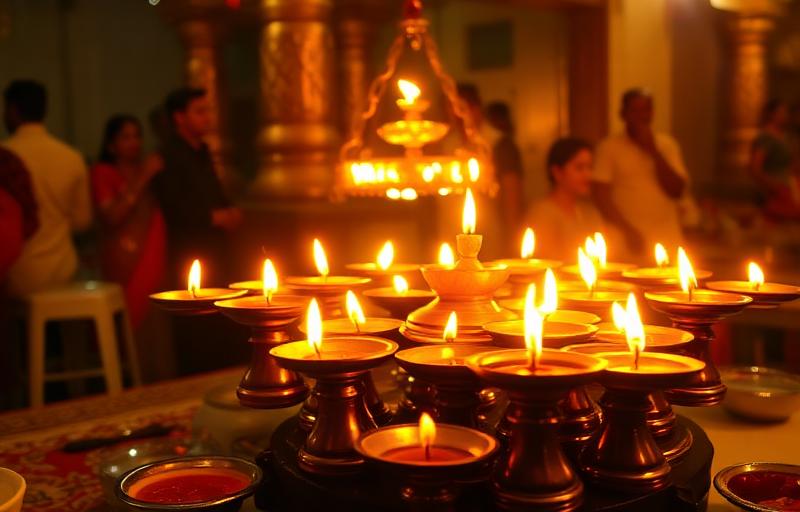
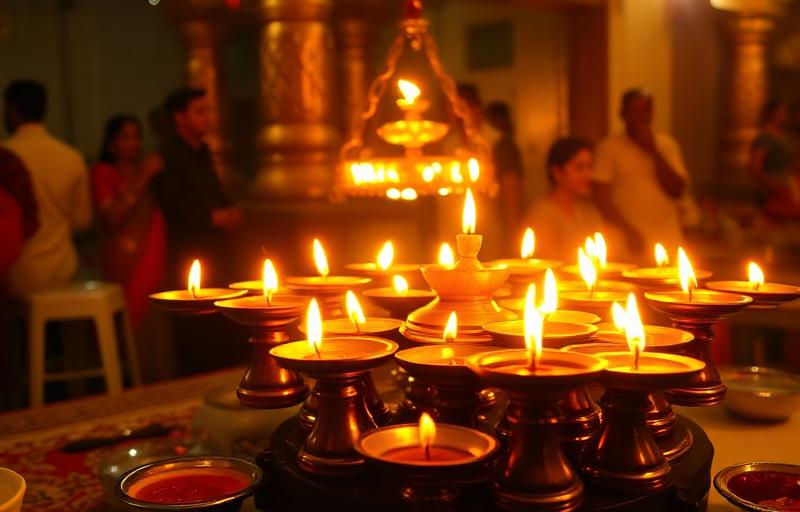
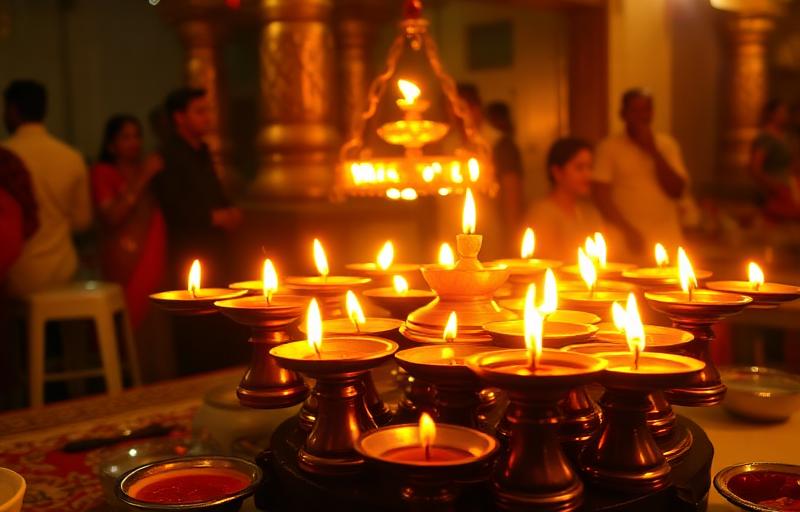
The semi-circular Pushkar Sarovar is the spiritual centre of the town, ringed by 52 ghats, each with its own history - many built or endowed by royal houses across centuries. Among the most revered are Varaha Ghat, linked to Vishnu's Varaha avatar; Brahma Ghat; and Gau Ghat, with its own solemn associations. A snan here is believed to cleanse lifetimes of karma, with the merit multiplying during Kartik's final five days, from Ekadashi to Purnima. Bathe with maryada: no soap or shampoo in the lake, footwear left well back from the steps, and quiet conduct - the ghats are for prayer first. Local pandas (priests) offer puja at the ghats; agree on the seva respectfully and beforehand, and feel free to decline politely if you wish to simply sit. At dusk, lamps are floated and an aarti rises along the water - stay for it; the lake at sunset explains Pushkar better than any words.
The Savitri Temple on Ratnagiri Hill
The legend of Pushkar does not end at the Brahma Mandir - it climbs a hill. After the events of the yajna, Savitri Mata is said to have withdrawn to the top of Ratnagiri hill overlooking the town, where her temple stands to this day; a shrine of Gayatri Mata sits on a hill across the valley, the two consorts gazing at Pushkar from opposite sides. Many pilgrims complete their yatra with this climb, holding that darshan of Savitri Mata rounds off the Brahma darshan - a quiet act of honouring the devi whose sorrow shaped Pushkar's destiny. The ascent is a stone-stepped path of about an hour, best walked at dawn for cool air; a ropeway also runs up the hill for the elderly or short on time - check official sources for its current operating details. From the top, the white town, the blue Sarovar and the dunes beyond unfold in one unforgettable sweep.
Kartik Purnima and the Pushkar Mela
Pushkar's greatest hour returns every year with Kartik Purnima (October-November), the very day of Brahma's yajna. The five days from Kartik Ekadashi to Purnima are the holiest for snan in the Sarovar, when lakhs of pilgrims descend the 52 ghats at dawn, deepdaan lamps float across the water and the Brahma Mandir queue winds through town. Alongside the pilgrimage runs the world-famous Pushkar Mela - the great camel and livestock fair with folk music, wrestling and bustling markets across the dunes. The two are companions, not the same thing: the fair is a spectacle, the snan is a sadhana. A devotee can happily enjoy both - mornings for the ghats and darshan, afternoons for the mela - but should book accommodation months ahead and expect dense crowds. If crowds are not for you, visit in the gentler months of October to March outside the mela, when the lake is serene and darshan unhurried.
How to Reach Pushkar and Pilgrim Tips
Pushkar sits just 11 km from Ajmer, across the scenic Nag Pahar pass. By rail, Ajmer Junction is the major railhead with trains from Delhi, Jaipur, Mumbai and Ahmedabad; taxis and buses cover the last stretch in under half an hour. By air, Kishangarh airport is about 40 km away, while Jaipur (around 145 km) offers far more flights - a comfortable 3-hour drive. By road, Pushkar links smoothly to Jaipur, Jodhpur and Udaipur. Keep these tips handy: 1. Honour the tirtha's maryada - the town is vegetarian and alcohol-free; respect it fully. 2. Dress modestly at the ghats and temple; remove footwear well before the steps. 3. Do the snan-then-darshan sequence, keeping a morning for the Brahma Mandir. 4. Settle any puja seva with ghat priests clearly and politely beforehand. 5. Climb Savitri hill at dawn, and keep an evening for the lakeside aarti. 6. For darshan timings, mela dates and snan-day arrangements, rely on official sources, as these change year to year.
Frequently Asked Questions
Why is the Pushkar Brahma temple so rare?+
According to the Padma Purana legend, when Brahma married Gayatri to complete his yajna in Savitri's absence, the hurt Savitri declared that Brahma would not be worshipped on earth, relenting only for Pushkar. This is why the Jagatpita Brahma Mandir remains the most prominent functioning Brahma temple, with only a handful of others anywhere.
What is the significance of a snan in Pushkar Sarovar?+
Pushkar is called Tirtha Raj, and tradition holds that pilgrimages remain incomplete without a snan here. The lake is believed to have sprung where Brahma's lotus fell, and bathing at its 52 ghats is said to wash away deep karma - with the merit greatest during the five Kartik days from Ekadashi to Purnima.
When is the Pushkar Mela held?+
The Pushkar Mela takes place around Kartik Purnima, usually falling in October-November, alongside the holiest snan days from Kartik Ekadashi to Purnima. Exact dates shift with the Hindu calendar each year, so check official Rajasthan tourism and local sources for the current year's schedule before planning.
What is the right darshan sequence in Pushkar?+
Tradition favours snan first, darshan after: bathe or sprinkle the Sarovar's water at the ghats, then proceed to the Jagatpita Brahma Mandir. Many pilgrims complete the yatra by climbing Ratnagiri hill for Savitri Mata's darshan. Keep mornings for the temple and ghats, and an evening for the lakeside aarti.
How do I reach Pushkar?+
Pushkar is 11 km from Ajmer across the Nag Pahar pass. Take a train to Ajmer Junction, then a taxi or bus for the short final stretch. By air, Kishangarh airport is about 40 km away and Jaipur about 145 km, with Jaipur offering many more flights. Good roads also connect Pushkar to Jaipur, Jodhpur and Udaipur.
Is Pushkar really a vegetarian town?+
Yes. As a tirtha town, meat, eggs and alcohol are not served within Pushkar's sacred precincts, and visitors are expected to honour this maryada fully during their stay. The local food is delightful - sattvik thalis, kachoris and the famous malpua - so eating as the tirtha asks is no hardship at all.
About the author
Pandit Ravindra Sharma · Vedic Rituals & Bhakti, 22+ years
Pandit Ravindra is the Vandnaa editorial team's resident specialist on aarti, chalisa, and daily devotion. He has performed home and temple pujas across Varanasi and Delhi for over two decades and contributes the bhakti-focused articles on this site.
Meet the Vandnaa editorial team →