What Is Ram Setu
Ram Setu, also called Rama's Bridge or Adam's Bridge, is the legendary bridge said to have been built by Lord Ram's vanara (monkey) army to cross the ocean to Lanka and rescue Mata Sita from Ravan. According to the Ramayan, it stretched from Rameshwaram in present-day Tamil Nadu to the shores of Lanka. A natural chain of shoals between Rameshwaram and Sri Lanka is identified by devotees with this sacred bridge of the Ramayan.
The Story of Building the Bridge
When Lord Ram reached the southern shore with His army, the vast ocean stood between Him and Lanka. After Ram prayed to the ocean god Samudra, he advised that the bridge be built by Nala and Nila, vanara architects who carried a divine boon: any stone they placed in the water would float. The vanaras gathered great rocks, and as they wrote the name of Ram on them and set them in the sea, the stones floated, forming a mighty bridge across the waters to Lanka.
Nala and Nila - The Divine Architects
Nala was the son of Vishwakarma, the celestial architect, and inherited his father's skill in construction. He, along with his brother Nila, led the building of the bridge. A popular tradition says that as a child Nala threw idols and stones into the water out of mischief, and a sage's words turned this into a boon: whatever Nala placed in water would never sink. This boon became the means by which Lord Ram's bridge to Lanka was made possible.
The Floating Stones
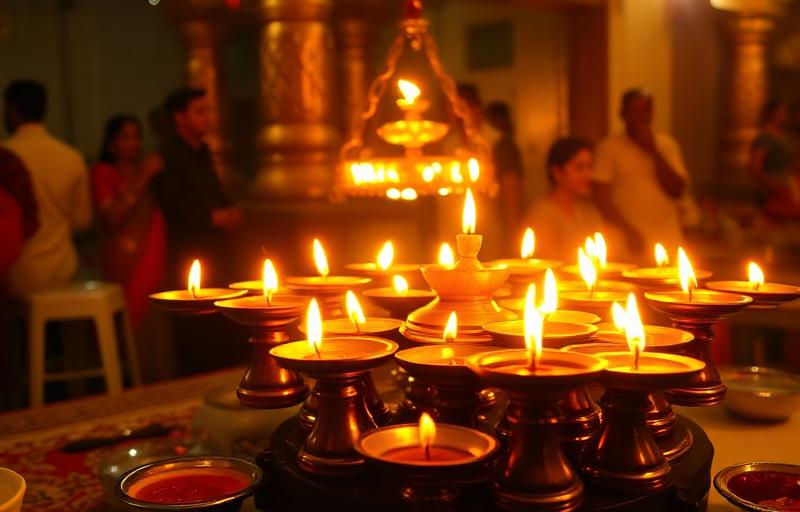
A cherished part of the legend is that the stones floated on the water rather than sinking, allowing the bridge to be built. Devotees believe the power of Ram's name written on each stone made them float. Even today, floating stones found near Rameshwaram and other coastal sites are revered as relics of Ram Setu and kept in temples. Whether seen as miracle or as porous volcanic rock, these stones remain a powerful symbol of faith and of the strength of the divine name.
Rameshwaram and Dhanushkodi
Rameshwaram, an island in Tamil Nadu, is one of the holiest Char Dham sites and is closely tied to Ram Setu. Here Lord Ram is said to have worshipped Shiva before and after the war, giving the famous Ramanathaswamy Jyotirlinga. At the island's tip lies Dhanushkodi, the point from which the bridge is believed to have begun toward Lanka. Pilgrims visit Rameshwaram and Dhanushkodi to bathe in the sacred waters, honour Lord Ram and feel the living presence of the Ramayan.
Significance and Lessons
Ram Setu is far more than a bridge - it is a symbol of devotion, unity and the power of God's name. It shows how the humble vanaras, working together with faith in Ram, achieved what seemed impossible. The squirrel who is said to have carried tiny pebbles teaches that every sincere contribution matters. The legend reminds devotees that with the name of Ram in the heart and selfless teamwork, even an ocean of difficulty can be crossed.
Key Facts at a Glance
In brief:
- Ram Setu was built by Lord Ram's vanara army to reach Lanka and rescue Sita.
- It was led by the architects Nala and Nila, sons blessed with the boon of floating stones.
- The name of Ram written on the stones is believed to have made them float.
- It is said to run from Rameshwaram (Dhanushkodi) in India toward Sri Lanka.
- A natural chain of shoals between the two coasts is associated with this sacred bridge.
- Rameshwaram is also home to the Ramanathaswamy Jyotirlinga, one of the twelve Jyotirlingas.
What People Ask Most
What is Ram Setu?+
Ram Setu, or Rama's Bridge, is the legendary bridge built by Lord Ram's vanara army to cross the ocean to Lanka and rescue Mata Sita from Ravan, said to run from Rameshwaram toward Sri Lanka.
Who built Ram Setu?+
It was built by Lord Ram's vanara army, led by the architects Nala and Nila. Nala, a son of Vishwakarma, carried a boon that any stone he placed in water would float.
Why did the stones float in Ram Setu?+
Devotees believe the power of Ram's name written on each stone made them float. Even today, floating stones found near Rameshwaram are revered as relics of Ram Setu.
Where does Ram Setu start?+
It is believed to begin at Dhanushkodi, the tip of Rameshwaram island in Tamil Nadu, and stretch toward the shores of Lanka, today identified with a natural chain of shoals.
What is the significance of Rameshwaram?+
Rameshwaram is a holy Char Dham site where Lord Ram is said to have worshipped Shiva, giving the Ramanathaswamy Jyotirlinga. It is closely tied to the start of Ram Setu at Dhanushkodi.
What does the story of Ram Setu teach us?+
It teaches devotion, unity and the power of God's name. The humble vanaras and the little squirrel show that with faith in Ram and selfless teamwork, even an ocean of difficulty can be crossed.
About the author
Anjali Mehta · Editor, M.A. Religious Studies
Anjali is the managing editor for Vandnaa and oversees the festival and vrat coverage. She holds an M.A. in Religious Studies and reviews every published article for accuracy, accessibility, and tradition-fidelity.
Meet the Vandnaa editorial team →Explore on Vandnaa
Related Articles

Ram Naam Jaap - Mahima, Benefits & Vidhi
9 min read
Hanuman Chalisa Lyrics in Hindi & English (हनुमान चालीसा)
12 min read
Dashavatar - 10 Avatars of Lord Vishnu: Names, Order, Meaning, Significance
11 min read
Hanuman Ji Puja Niyam - Rules for Tuesday & Saturday
9 min read
Sankat Mochan Hanuman Temple Varanasi - Significance
8 min read
Hanuman Ji Sindoor & Chola - Significance & Vidhi
8 min read