What Is the Ratri Suktam?
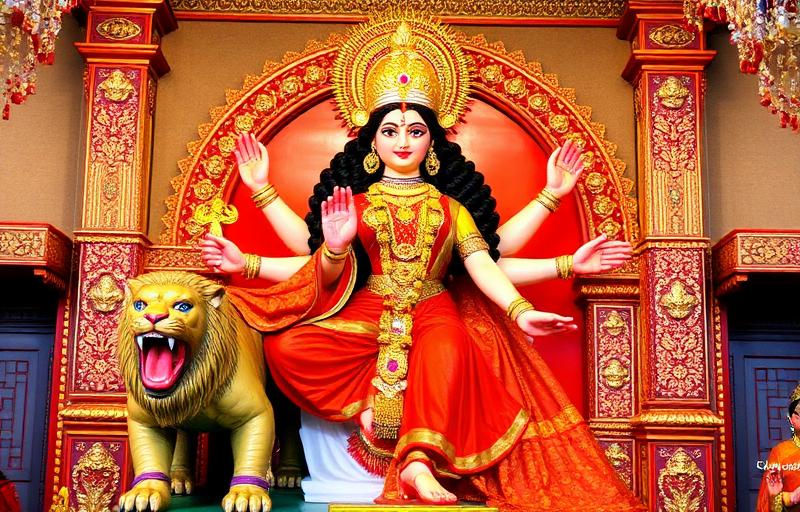
The Ratri Suktam is a Vedic hymn from the Rigveda that praises Ratri Devi, the goddess who personifies the night. Far from being dark or fearful, the night is seen here as a serene, protective divine mother who spreads her presence across the sky, watches over all beings, and grants rest, safety and peace.
The hymn asks Ratri Devi to keep away all that harms - to let the traveller reach home safely, to protect through the hours of darkness, and to bless the world with restful calm. In the tradition of Devi worship, the Ratri Suktam is deeply connected with the Durga Saptashati (Chandi Path), where the Goddess is honoured as the great cosmic Night (Maha Ratri) who dissolves all creation into her peaceful embrace. It is a hymn of surrender to the Mother's guarding love.
Significance & Benefits
Devotees traditionally associate the Ratri Suktam with:
- Protection during the night, from unseen fears, negativity and harm.
- Peaceful, restful sleep, and relief from anxiety, nightmares and disturbance.
- A sense of the Divine Mother's watchful presence through the hours of darkness.
- Calmness of mind and the dissolving of the day's worries into rest.
- Spiritual merit as part of Devi worship and the Chandi Path.
It is especially chanted at night, during Navratri, and along with the Durga Saptashati. For those who feel restless or fearful at night, reciting or listening to the Ratri Suktam is a gentle, faith-filled way to place oneself in the Mother's care. These are traditional beliefs offered with devotion.
How & When to Recite
- Best time: In the evening or at night, before sleep, when the hymn's theme of restful protection is most fitting.
- Prepare: Wash, sit calmly before an image of Maa Durga or the Divine Mother, and light a diya.
- Recite gently with devotion; even softly reading or listening to it as you settle for the night brings a sense of peace.
- During Navratri, chant it with the Durga Saptashati or Devi Suktam as part of Devi worship.
- For restful sleep, follow it with a short prayer placing yourself and your family in the Mother's protection.
Learning the correct pronunciation adds beauty, but a sincere, trusting heart is what the Mother receives. This is a devotional practice observed with faith.
Quick Answers
Who is Ratri Devi in the Ratri Suktam?+
Ratri Devi is the goddess who personifies the night in the Rigveda. She is seen not as dark or fearful but as a serene, protective divine mother who spreads across the sky, watches over all beings, and grants rest, safety and peace through the hours of darkness.
How is the Ratri Suktam connected to the Chandi Path?+
In Devi worship the Ratri Suktam is closely linked with the Durga Saptashati (Chandi Path), where the Goddess is honoured as the great cosmic Night (Maha Ratri) who dissolves all creation into her peaceful embrace. It is often chanted together with the Saptashati, especially during Navratri.
Can the Ratri Suktam help with peaceful sleep?+
Devotees traditionally recite or listen to it at night for protection, calmness and restful sleep, and relief from anxiety and nightmares, placing themselves in the Divine Mother's care. It is a devotional practice held with faith, not a substitute for needed rest or medical care.
About the author
Acharya Vinaya Kapoor · M.A. Sanskrit, Mantra & Stotra Studies
Acharya Vinaya holds an M.A. in Sanskrit from Banaras Hindu University and writes the mantra and stotra commentary on Vandnaa. Her focus is on accurate pronunciation, traditional context, and helping modern readers connect with classical texts.
Meet the Vandnaa editorial team →