What Is Reincarnation
Reincarnation (punarjanam) is the core Hindu belief that the soul (atman) does not die with the body but takes birth again in a new form. Death is seen not as an end but as a transition, like changing worn-out clothes. The soul continues its journey across many lifetimes, shaped by its actions, until it finally attains liberation. This understanding gives both comfort in loss and a deep sense of responsibility for how we live.
The Eternal Soul (Atman)
Hinduism teaches that the atman, the true self, is eternal, unborn and indestructible. The Bhagavad Gita describes it beautifully:
Vasamsi jirnani yatha vihaya, navani grihnati naro'parani (2.22) - 'As a person discards worn-out clothes and puts on new ones, so the soul casts off worn-out bodies and enters new ones.'
The body is born and dies, but the soul is never truly harmed by fire, water, weapons or time. It is a spark of the eternal Divine.
How Karma Shapes Rebirth
Karma is the law of cause and effect - every thought, word and action carries a consequence. The accumulated karma of one life influences the circumstances of the next, including one's family, tendencies and opportunities. Good actions (punya) lead toward favourable births and growth, while harmful actions (paap) create obstacles to be worked through. Karma is not blind punishment but a just teacher, giving each soul exactly what it needs to learn and evolve.
The Cycle of Samsara

Samsara is the continuous cycle of birth, death and rebirth through which the soul travels. Driven by desire, attachment and unresolved karma, the soul keeps returning to the world life after life. This cycle is not seen as a punishment but as the soul's long journey of learning and purification. The deeper teaching is that lasting peace cannot be found within samsara itself - it comes only when the soul realises its true nature and is freed.
Breaking the Cycle - Moksha
The goal of the soul's journey is moksha - liberation from the cycle of rebirth. It is attained when the soul exhausts its karma, lets go of attachment and realises its oneness with the Divine. The paths to moksha include selfless action (Karma Yoga), devotion (Bhakti Yoga), knowledge (Jnana Yoga) and meditation. Once liberated, the soul is no longer bound to be reborn and rests in eternal peace and union with God.
What This Belief Teaches Us
The teaching of reincarnation encourages compassion, patience and responsibility. Knowing that our actions echo beyond this life inspires us to live with honesty and kindness. It also softens the fear of death, reframing it as a passage rather than an ending. Above all, it points us toward the soul's true goal - not endless wandering, but the peace of self-realisation and union with the Divine.
What People Ask Most
What is punarjanam?+
Punarjanam is reincarnation - the Hindu belief that the eternal soul takes birth in a new body after death, guided by its karma, until it finally attains liberation.
Does the soul ever die?+
No. The Bhagavad Gita teaches that the atman is eternal, unborn and indestructible. Only the body is born and dies; the soul simply changes bodies like changing clothes.
How does karma affect rebirth?+
The accumulated karma of one life shapes the circumstances of the next, including family, tendencies and opportunities. Good actions lead toward growth; harmful ones create obstacles to resolve.
What is samsara?+
Samsara is the continuous cycle of birth, death and rebirth through which the soul travels, driven by desire and karma, until it attains liberation through self-realisation.
How can the cycle of rebirth end?+
Through moksha - liberation attained by exhausting karma, releasing attachment and realising the soul's oneness with the Divine, via paths like devotion, selfless action, knowledge and meditation.
Why does belief in rebirth matter for daily life?+
It encourages honesty, compassion and responsibility, knowing actions echo beyond this life. It also eases the fear of death by viewing it as a passage rather than an ending.
About the author
Anjali Mehta · Editor, M.A. Religious Studies
Anjali is the managing editor for Vandnaa and oversees the festival and vrat coverage. She holds an M.A. in Religious Studies and reviews every published article for accuracy, accessibility, and tradition-fidelity.
Meet the Vandnaa editorial team →Explore on Vandnaa
Related Articles

Moksha & the 4 Purusharthas - Dharma, Artha, Kama, Moksha
9 min read
Bhagavad Gita - All 18 Chapters Summary & Key Teachings
10 min read
Seven Chakras - Meaning, Balance & Awakening Guide
10 min read
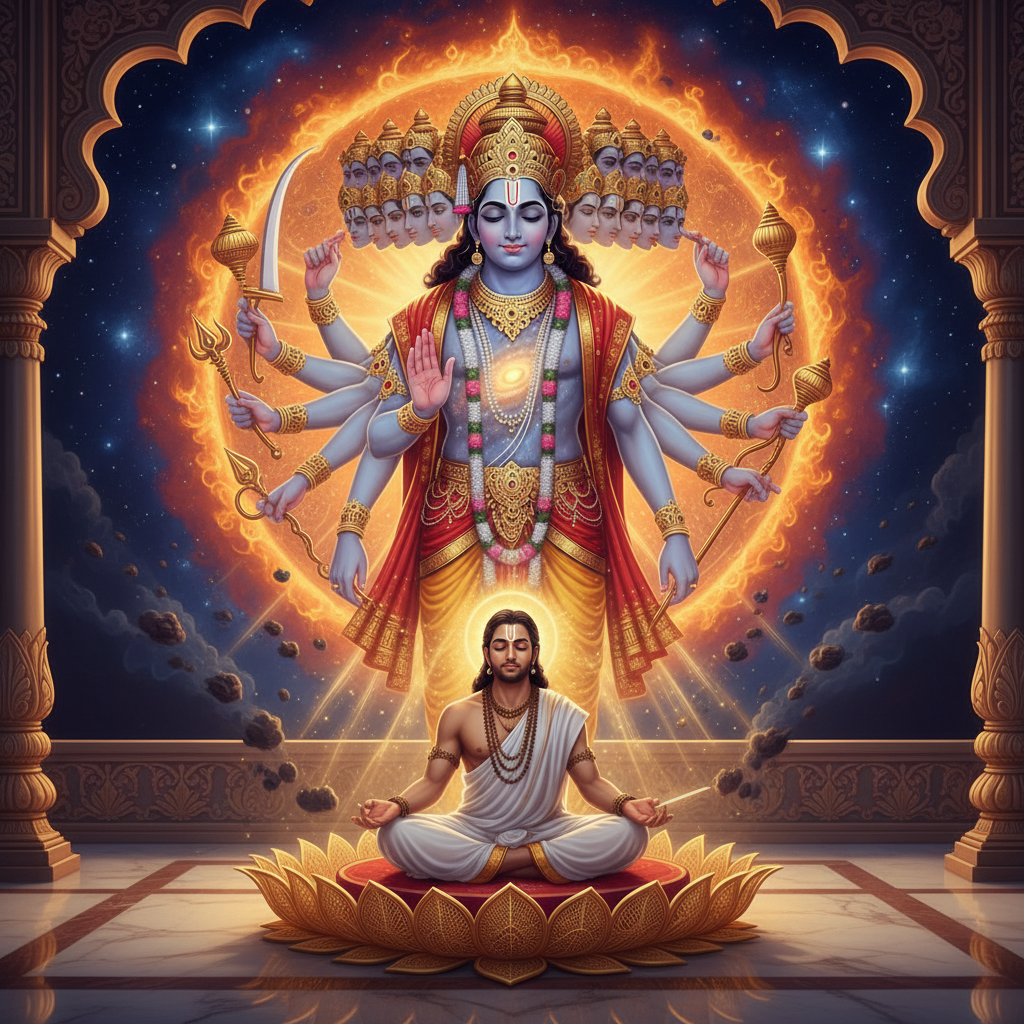
Dashavatar - 10 Avatars of Lord Vishnu: Names, Order, Meaning, Significance
11 min read
Om (Aum) Symbol - Meaning, Significance & Chanting Benefits
9 min read
Maha Mrityunjaya Mantra: Meaning & Benefits (महा मृत्युंजय मंत्र)
9 min read