Why the Ocean Was Churned - Durvasa's Curse and Vishnu's Counsel
The story of Samudra Manthan is told in the Bhagavata Purana, the Vishnu Purana and the Mahabharata. It begins with a curse. The short-tempered sage Durvasa once offered a sacred garland to Indra, king of the devas. Indra placed it carelessly on his elephant Airavata, who trampled it. Enraged, Durvasa cursed the devas to lose their strength, fortune and immortal vigour. Seizing the moment, the asuras led by King Bali defeated the weakened gods and took over the three worlds. The desperate devas approached Lord Vishnu, who gave them surprising counsel: do not fight the asuras now, partner with them. Together they should churn the Kshira Sagara, the cosmic ocean of milk, to extract amrit, the nectar of immortality. Vishnu privately assured the devas that the nectar would ultimately be theirs. Thus began the greatest joint venture in mythology, built, remarkably, on cooperation between sworn enemies.
Mandara, Vasuki and the Kurma Avatar
For so vast a churning, ordinary tools would not do. Mount Mandara became the churning rod and the serpent king Vasuki agreed to be the rope, coiled around the mountain. The devas diplomatically took the tail while the asuras, demanding the position of honour, gripped the head, where they were scorched by Vasuki's fiery breath through the long labour. But as the churning began, mighty Mandara started sinking into the ocean floor, for it had no foundation. Then Lord Vishnu took the Kurma avatar, the form of a colossal tortoise, and dove beneath the mountain, bearing its entire grinding weight on his back for the whole churning. This image carries deep meaning for devotees: every great endeavour in life needs a stable, unseen support beneath it, and that support is the Divine. The Kurma also teaches the yogic ideal of drawing the senses inward, as a tortoise draws in its limbs, before any inner churning can begin.
Halahala Poison and Neelkanth Shiva
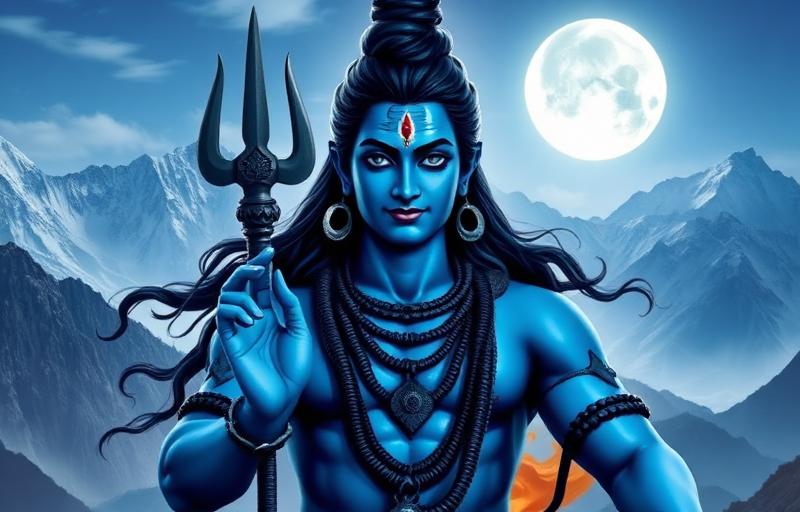
The first thing the ocean yielded was not treasure but terror. A churning, blue-black poison called Halahala rose from the depths, so virulent that its fumes began to suffocate devas, asuras and all living beings. The churning stopped; creation itself stood at the edge of annihilation. In desperation, everyone turned to Lord Shiva on Kailash. Out of boundless compassion, Shiva gathered the poison in his palms and drank it. Goddess Parvati, quick with love, pressed his throat so the poison would neither spill into the world nor descend into his stomach, where the universe rests within him. The poison lodged in his throat, turning it deep blue, and Shiva became Neelkanth, the blue-throated one. This moment is the spiritual summit of the story: the greatest among us is not the one who claims the treasures but the one who volunteers to absorb the pain. Every household that endures hardship quietly so others may flourish repeats Shiva's gesture in miniature.
The 14 Ratnas - Treasures That Rose from the Ocean

Once the poison was contained, the churning resumed and the ocean began releasing its treasures, the famous 14 ratnas: 1. Halahala - the poison, counted first as the ocean's dark yield, taken by Shiva. 2. Kamadhenu - the wish-fulfilling divine cow, given to the sages. 3. Uchchaihshravas - the seven-headed white horse, claimed by the asuras. 4. Airavata - the four-tusked white elephant, taken by Indra. 5. Kaustubha Mani - the radiant jewel that adorns Vishnu's chest. 6. Kalpavriksha - the wish-granting tree, planted in Indra's heaven. 7. Apsaras - celestial dancers led by Rambha. 8. Goddess Lakshmi - wealth and grace embodied, who chose Vishnu. 9. Varuni - the goddess of wine, accepted by the asuras. 10. Chandra - the soothing moon, who came to rest on Shiva's head. 11. Parijata - the fragrant celestial flowering tree. 12. Panchajanya - the divine conch of victory. 13. Sharanga - the celestial bow (with other divine weapons). 14. Dhanvantari with Amrit - the divine physician rising with the pot of nectar. Tradition lists minor variations, but the deeper point is constant: persistence through poison brings forth every kind of wealth.
Lakshmi's Emergence, Amrit and the Mohini Avatar
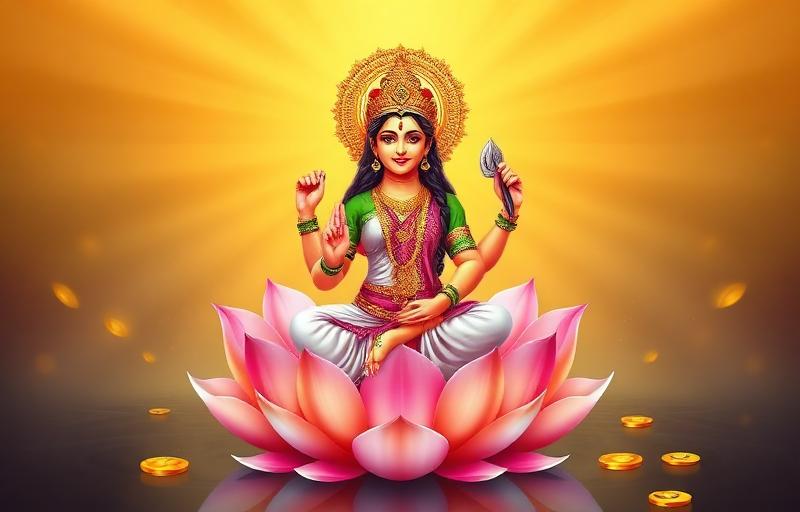
Among all the treasures, two moments shine brightest. First, Goddess Lakshmi rose from the waves seated on a blooming lotus, bathed by celestial elephants, radiant beyond description. Devas and asuras alike longed for her, but Lakshmi looked past power and wealth and chose Vishnu, garlanding the one being who desired nothing, teaching that fortune stays with the calm and dharmic, not the grasping. Then came Dhanvantari, the divine physician and origin of Ayurveda, holding the pot of amrit. Instantly the fragile alliance shattered; the asuras snatched the pot. To protect the cosmic balance, Vishnu assumed the form of Mohini, an enchantress of unearthly beauty, who offered to distribute the nectar fairly. Mesmerized, the asuras agreed, and Mohini served the amrit to the devas alone. Only the asura Svarbhanu slipped into the devas' line; the Sun and Moon exposed him, and Vishnu's chakra split him into Rahu and Ketu. The devas regained immortality and their heavenly kingdom.
Lessons for Devotees - The Churning of Everyday Life
Sages have always read Samudra Manthan as a map of the inner journey. The ocean of milk is the mind; the churning is sadhana; the devas and asuras are our higher and lower tendencies, both of which must work the rope of effort. 1. Poison comes before nectar: when you begin sincere prayer, meditation or honest self-work, old pain and negativity surface first. Do not stop churning; the halahala stage is a sign of progress, not failure. 2. Patience through the treasures: thirteen distractions arise before amrit. Many seekers settle for early gifts - comfort, recognition, minor powers - and abandon the churn. The devoted keep going. 3. Divine help has many forms: Kurma supports from below, Shiva absorbs the poison, Mohini protects the result. Grace works at every stage, often invisibly. 4. Cooperation over conflict: even adversaries churning together produce treasures; a divided effort produces nothing. 5. Hold your nectar wisely: what you gain through sadhana must be guarded with discrimination, or the asura within will snatch it.
Mantra and Prayer Connection - Remembering the Churning in Sadhana
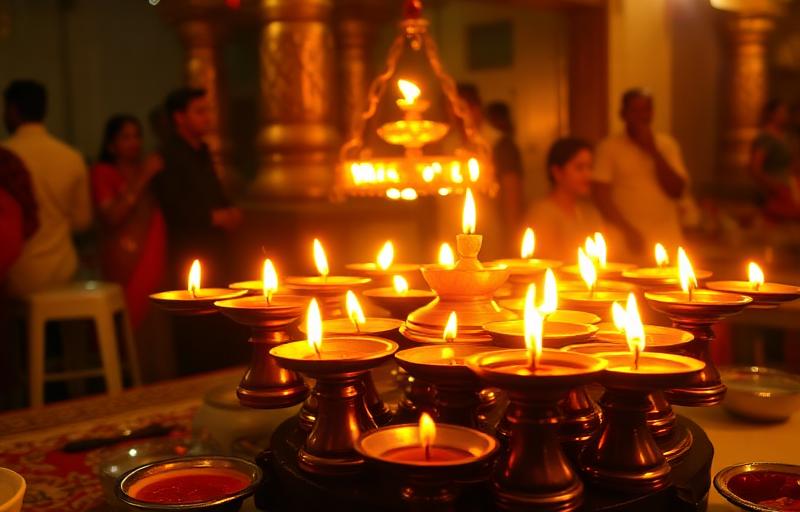
Samudra Manthan lives on in daily worship. When devotees chant Om Namah Shivaya, they bow to the Neelkanth who drank the world's poison; remembering him is the traditional refuge when life forces you to swallow bitterness you cannot share. The Mahamrityunjaya Mantra is likewise linked to Shiva's power over the halahala of disease and fear. Worship of Lakshmi on Fridays and Diwali recalls her emergence from the churned ocean, with the reminder that she stays where there is Vishnu-like calm and dharma. Dhanvantari is invoked on Dhanteras for health, and the amrit pot connects the story to the Kumbh Mela, held where drops of nectar are said to have fallen. A simple practice: before any demanding phase, sit quietly, visualize the Kurma bearing your burden from below, chant Om Namah Shivaya 108 times, and resolve to keep churning past the poison. The Vandnaa app's Shiva and Lakshmi aartis pair beautifully with this remembrance.
Frequently Asked Questions
What is Samudra Manthan and where is it described?+
Samudra Manthan is the churning of the cosmic ocean of milk by the devas and asuras to obtain amrit, the nectar of immortality. It is described in the Bhagavata Purana (Skandha 8), the Vishnu Purana and the Mahabharata, and is one of the most symbolically rich episodes in Hindu scripture.
What are the 14 ratnas of Samudra Manthan?+
The 14 ratnas commonly listed are Halahala poison, Kamadhenu, Uchchaihshravas horse, Airavata elephant, Kaustubha jewel, Kalpavriksha, the apsaras, Goddess Lakshmi, Varuni, Chandra the moon, the Parijata tree, the Panchajanya conch, the divine bow Sharanga, and Dhanvantari with the pot of amrit. Some texts list slight variations.
Why is Shiva called Neelkanth?+
When the deadly Halahala poison rose from the churning ocean and threatened all creation, Shiva drank it out of compassion. Parvati pressed his throat so the poison would stay there, neither falling into the world nor entering his body. The poison turned his throat blue, earning him the name Neelkanth, the blue-throated one.
What is the spiritual meaning of Samudra Manthan?+
Spiritually, the ocean is the mind, the churning is sadhana, and the devas and asuras are our higher and lower tendencies. Poison surfaces before nectar, meaning inner work first brings up negativity that must be endured. The treasures are distractions on the path, and amrit is Self-realization, attained only with patience and divine support.
Who was Mohini and why did Vishnu take this form?+
Mohini is the enchanting female form of Lord Vishnu. When the asuras seized the pot of amrit, Vishnu appeared as Mohini and offered to distribute the nectar. Captivated, the asuras handed it over, and Mohini served it to the devas alone, ensuring that immortal power did not fall into hands that would destroy cosmic balance.
How is Samudra Manthan connected to the Kumbh Mela?+
Tradition holds that while the amrit pot was being carried, drops of nectar fell at four places: Prayagraj, Haridwar, Ujjain and Nashik. The Kumbh Mela, the world's largest spiritual gathering, is held in rotation at these four sites, where bathing in the sacred rivers is believed to carry the blessing of that nectar.
About the author
Anjali Mehta · Editor, M.A. Religious Studies
Anjali is the managing editor for Vandnaa and oversees the festival and vrat coverage. She holds an M.A. in Religious Studies and reviews every published article for accuracy, accessibility, and tradition-fidelity.
Meet the Vandnaa editorial team →