Who Was Sant Tukaram?
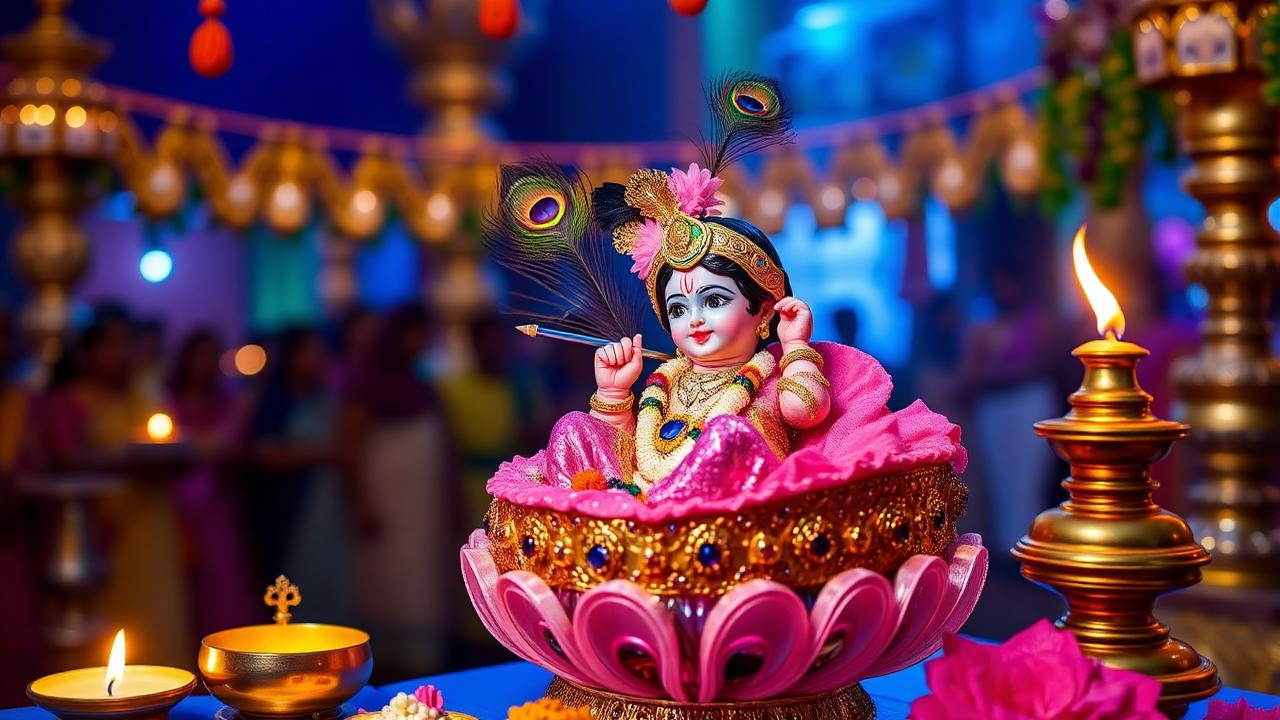
Sant Tukaram (c. 1608-1650) was a 17th-century bhakti saint from Dehu, a small village on the banks of the Indrayani river near present-day Pune in Maharashtra. His entire life revolved around Vitthal, also called Vithoba or Panduranga, the beloved form of Lord Krishna who stands on a brick in Pandharpur. Tukaram was born into a family of grocers and moneylenders, yet the world remembers him not for trade but for his abhangs - short, burning devotional songs in Marathi that farmers, mothers and labourers could sing while working. He became one of the brightest lights of the Varkari sampradaya, the tradition of pilgrims who walk to Pandharpur singing the divine name. For Maharashtra he is simply Tukoba, the saint who proved that the deepest spiritual truth can be spoken in the language of the kitchen and the field.
Early Life and the Losses That Turned Him to Bhakti
Tukaram's worldly life broke before his spiritual life began. He lost his parents in his teens, and the responsibility of the family shop and moneylending business fell on his young shoulders. Then came the terrible famine of 1629-30. His first wife Rakhumabai and his little son died, crops failed, the business collapsed, and neighbours who once respected the family now mocked him. Tradition tells that this shattering grief became his turning point. Tukaram withdrew to the lonely hills of Bhamnath and Bhandara, where he sat for days repeating the name of Vitthal. When he returned, he was a changed man. He pulled out the loan papers of poor villagers who owed his family money and dropped them into the Indrayani river, freeing them forever. The merchant had closed his accounts with the world and opened one with God.
His Abhangs - Verses Every Devotee Should Know
An abhang literally means 'unbroken' - a song whose flow of devotion nothing can interrupt. Tukaram composed thousands, collected today as the Tukaram Gatha. Three beloved examples show his heart. He sang, 'Je ka ranjale ganjale, tyasi mhane jo apule' - 'one who embraces the distressed and the broken as his own, know him to be a true saint, for God Himself dwells in him.' In another he taught surrender: 'Thevile anante taisechi rahave, chitti aso dyave samadhan' - 'remain as the Infinite has kept you, and let contentment live in your heart.' And in his ecstasy he declared, 'Anandache dohi anand tarang' - 'in the lake of bliss, waves of bliss arise.' For Tukaram, God was never a distant idea; Vitthal was mother, friend and final refuge, addressed in the rough, warm Marathi of everyday village life.
The Gatha and the Indrayani River - The Test Tradition Remembers
Tukaram's growing influence disturbed some orthodox scholars of his time. How could a simple grocer, they argued, speak of Vedic truths in common Marathi? As tradition tells it, Rameshwar Bhatt ordered that Tukaram's notebooks of abhangs be sunk in the Indrayani river. Tukaram obeyed, placed his life's work in the water, and then sat on the riverbank in fasting and prayer, asking Vitthal Himself to judge. For thirteen days he neither ate nor moved, singing to his Lord. Devotees believe that on the thirteenth day the manuscripts rose to the surface of the river, dry and unharmed, returned by the Lord who would not let truth drown. Rameshwar Bhatt, humbled, became Tukaram's admirer. Whatever one makes of the miracle, the message endures: words born of pure bhakti cannot be destroyed by any earthly authority.
The Varkari Sampradaya and the Wari Pilgrimage
Tukaram belongs to the Varkari sampradaya, the 'tradition of the pilgrims'. A varkari is one who makes the wari - the regular walking pilgrimage to Pandharpur, especially for Ashadhi Ekadashi in June-July and Kartiki Ekadashi after Diwali. Even today, lakhs of devotees walk for days behind the palkhis (palanquins) carrying the padukas of the saints - Sant Dnyaneshwar's palkhi from Alandi and Sant Tukaram's from Dehu - singing abhangs to the beat of taal cymbals and the mridanga drum. Every varkari wears a tulsi mala, eats simple sattvik food and greets fellow pilgrims as forms of Vitthal. The wari dissolves caste and status: everyone walks, sings and eats together. Tukaram stands in a luminous lineage - Dnyaneshwar, Namdev, Eknath and then Tukoba - which is why the entire procession resounds with one cry: 'Dnyanoba-Tukaram!'
Sadeha Vaikuntha Gaman - As Tradition Tells It
Tukaram's departure from this world is itself told as a song. In 1650, on the second day of the dark fortnight of Falgun - observed every year as Tukaram Beej - he gathered devotees at Dehu for a final kirtan. Tradition tells that as he sang, a divine vimana descended, and Tukaram was carried to Vaikuntha in his very body - sadeha vaikuntha gaman. His parting abhang is still sung with tears: 'Amhi jato amuchya gava, amucha Ram Ram ghyava' - 'I now go to my own village; accept my parting Ram Ram.' At Dehu, devotees believe the nandurki tree near the temple trembles at the exact moment of his ascent each Tukaram Beej. However one understands it, Maharashtra has never spoken of Tukaram as having died - only as having gone home.
What Sant Tukaram Teaches Today's Devotee
Tukaram's life speaks directly to the modern devotee. First, grief is not the end of the road; it can be the door to God, as his losses in the famine became. Second, bhakti requires no qualification - no Sanskrit, no priesthood, no wealth - only honesty and the divine name, which he repeated as nama-smaran all his life. Third, true spirituality shows itself as compassion; the man who drowned loan papers taught that serving the distressed is worship. Fourth, persist when the world mocks you; the river itself returned his songs. Begin simply: take Vitthal's name or any name of the Lord for a few minutes daily, sing one abhang or bhajan with full attention, and treat one struggling person as your own. That, Tukoba would say, is the whole wari - walked within the heart.
Quick Answers
Who was Sant Tukaram and when did he live?+
Sant Tukaram (c. 1608-1650) was a Marathi bhakti saint from Dehu near Pune. Born into a family of grocers, he became one of the greatest poet-saints of the Varkari sampradaya, devoted to Lord Vitthal of Pandharpur and famous for the thousands of abhangs collected as the Tukaram Gatha.
What is an abhang?+
An abhang is a Marathi devotional song of the Varkari tradition; the word means 'unbroken', a flow of devotion that nothing interrupts. Tukaram's abhangs use simple village language to express the deepest love for Vitthal, which is why farmers and labourers could sing them while working.
What happened when Tukaram's gatha was thrown into the Indrayani river?+
Tradition tells that orthodox critics had Tukaram's notebooks of abhangs sunk in the Indrayani river. Tukaram sat fasting on the bank for thirteen days, praying to Vitthal. Devotees believe the manuscripts then rose to the surface unharmed, and his chief critic Rameshwar Bhatt became his admirer.
What is the Pandharpur Wari and who are the Varkaris?+
The wari is the walking pilgrimage to Vitthal's temple at Pandharpur, made especially for Ashadhi and Kartiki Ekadashi. Varkaris are devotees who undertake it regularly, walking behind the palkhis of Sant Dnyaneshwar from Alandi and Sant Tukaram from Dehu, singing abhangs all the way.
What is sadeha vaikuntha gaman of Sant Tukaram?+
Sadeha vaikuntha gaman means going to Vaikuntha in one's physical body. Tradition tells that in 1650, during a final kirtan at Dehu, a divine vimana descended and carried Tukaram bodily to the Lord's abode. The day is observed every year as Tukaram Beej.
Which God did Sant Tukaram worship?+
Sant Tukaram was devoted to Lord Vitthal, also called Vithoba or Panduranga, the form of Lord Krishna worshipped at Pandharpur in Maharashtra. Vitthal stands on a brick with hands on hips, waiting for His devotees, and every abhang of Tukaram flows toward Him.
About the author
Pandit Ravindra Sharma · Vedic Rituals & Bhakti, 22+ years
Pandit Ravindra is the Vandnaa editorial team's resident specialist on aarti, chalisa, and daily devotion. He has performed home and temple pujas across Varanasi and Delhi for over two decades and contributes the bhakti-focused articles on this site.
Meet the Vandnaa editorial team →