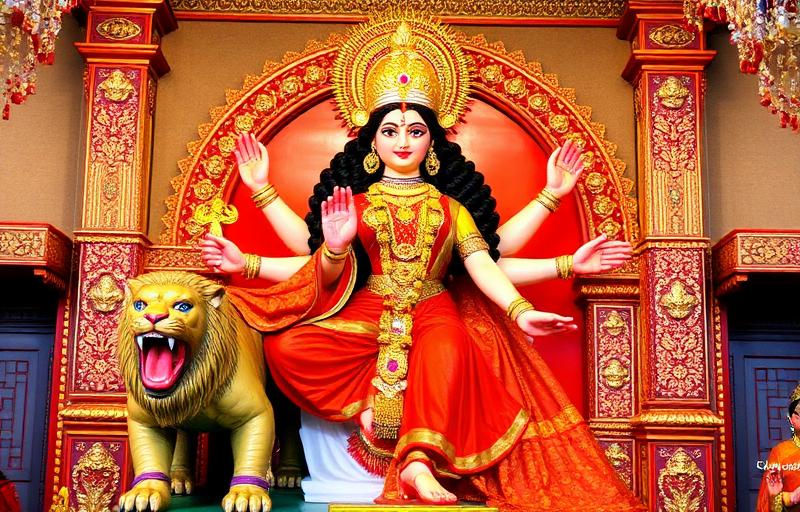
Santoshi Maa - The Goddess of Contentment
Santoshi Maa is worshipped across Hindu households as the goddess of santosh - contentment and satisfaction. Her worship is closely tied to the Solah Shukravar Vrat, a devotional observance of sixteen consecutive Fridays that has become one of the most widely practised home vrats, especially among women, over the last several decades.
Devotees keep the day simple: a single sattvic meal, avoidance of sour (khatti) foods, and an offering of jaggery and roasted gram (gur-chana) to the goddess. The vrat's popularity grew enormously through devotional storytelling and songs shared across generations.
The Santoshi Maa Chalisa is sung by devotees on Fridays and throughout the vrat to invite her blessings of peace, patience and quiet fulfilment in daily life.
Santoshi Maa Chalisa - Representative Verses (Hindi)
Here are representative opening and central verses of the Santoshi Maa Chalisa in the traditional doha-chaupai form, offered as a devotional excerpt:
दोहा: जय जय संतोषी माता, भक्तन हित दातार। सोलह शुक्रवार व्रत से, होवे बेड़ा पार॥
चौपाई: जय संतोषी माता रानी। कृपा करो हे जगत भवानी॥ संतोष नाम तुम्हारा प्यारा। जो सुमिरे ताको सुख सारा॥ शुक्रवार व्रत जो नर करई। मन वांछित फल पावत भरई॥ खट्टा वस्तु दूर हटावे। सच्चे मन से व्रत निभावे॥ गुड़ चना का भोग लगावे। कथा सुने संतोष पावे॥ घर परिवार सुखी हो जाए। कलह कष्ट सब दूर पराए॥
दोहा: संतोषी माता चालीसा, पढ़े धरे जो ध्यान। सुख शांति संतोष मिले, पूरण हो कल्याण॥
Meaning and Devotional Significance
The goddess's own name carries the chalisa's deepest teaching: santosh means contentment, and her worship is ultimately an invitation to find peace with what one has while still working sincerely toward one's goals. The line 'jo sumire tako sukh sara' (whoever remembers her finds complete happiness) points not to passive resignation but to a settled mind that is not constantly restless with craving.
The instruction to avoid sour foods during the vrat is widely understood symbolically as well as literally, avoiding sourness and bitterness in speech and temperament during the observance, not only in the kitchen.
The chalisa's promise of a peaceful household reflects why this goddess is so cherished in family life: her blessing is imagined less as sudden fortune and more as a lasting steadiness within the home.
Benefits of Reciting Santoshi Maa Chalisa
As per tradition, devotees who recite the Santoshi Maa Chalisa with sincerity, particularly on Fridays, believe it brings:
- A settled, contented mind, even amid ongoing struggles
- Harmony and reduced conflict within the household
- Patience during long waits for a desired outcome
- Support in resolving financial or domestic worries
- Steadiness for women managing multiple responsibilities
- A gentler, less reactive temperament in daily interactions
These benefits are held as matters of faith cherished across generations of devotees, meant to bring inner peace alongside sincere effort, not instead of it.
Solah Shukravar Vrat Vidhi
The Solah Shukravar Vrat begins on any Friday and continues for sixteen consecutive Fridays without a break. Devotees take one sattvic meal that day, avoid all sour foods and ingredients, and offer gur-chana (jaggery and roasted gram) to the goddess after listening to her katha.
The vrat is traditionally closed (udyapan) on the sixteenth or seventeenth Friday with a small closing ritual, often including a shared meal with eight young children, symbolically representing the goddess's blessing extending to the next generation.
Devotees who cannot undertake the full sixteen-week vrat often simply recite the Santoshi Maa Chalisa on Fridays with a sincere heart, which is considered a meaningful practice in its own right, since worship is an act of faith and love, not a transaction.
Common Questions From Devotees
What is the Solah Shukravar Vrat?+
It is a devotional observance of sixteen consecutive Fridays dedicated to Santoshi Maa, involving one sattvic meal, avoidance of sour foods, and an offering of jaggery and roasted gram, closed with a small udyapan ritual.
Why are sour foods avoided during this vrat?+
This is a long-held tradition of the vrat, often understood symbolically as avoiding sourness and bitterness in one's words and temperament as well, alongside the dietary restriction itself.
Can Santoshi Maa Chalisa be recited without doing the full vrat?+
Yes. Many devotees simply recite the chalisa on Fridays with sincere devotion, without undertaking the sixteen-week vrat, and this is considered a genuine and welcomed form of worship.
About the author
Acharya Vinaya Kapoor · M.A. Sanskrit, Mantra & Stotra Studies
Acharya Vinaya holds an M.A. in Sanskrit from Banaras Hindu University and writes the mantra and stotra commentary on Vandnaa. Her focus is on accurate pronunciation, traditional context, and helping modern readers connect with classical texts.
Meet the Vandnaa editorial team →