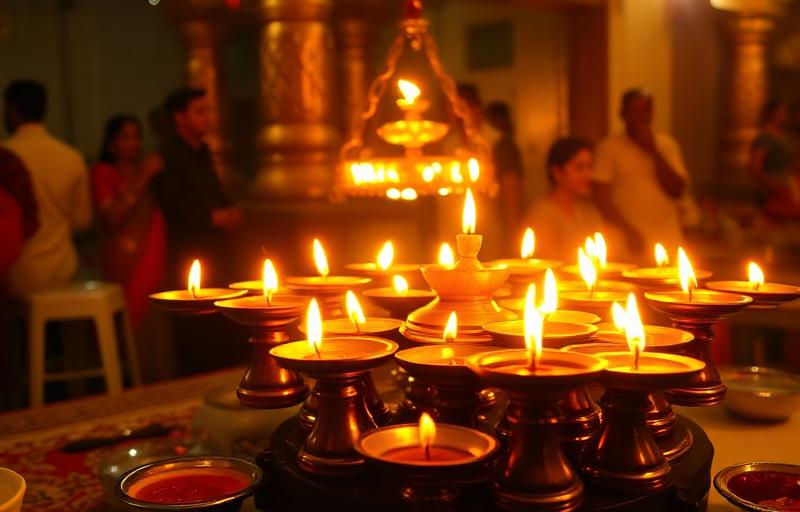
Why Sawan Turns These Temples Into India's Busiest Pilgrimage Circuit
Every one of India's major Shiva temples experiences a visible surge the moment Sawan begins on Thursday, 30 July 2026, and that surge is not evenly spread across the month. It concentrates sharply around the four Sawan Mondays (3, 10, 17 and 24 August), Sawan Shivratri (Tuesday, 11 August), and the closing Shravan Purnima (Friday, 28 August, also Raksha Bandhan), meaning the same temple can feel completely different depending on which day you choose to visit.
This list is deliberately built as a travel-planning guide, not a theology lesson. It covers ten real, nameable temples spanning the length and breadth of the country, from the Himalayan cave of Amarnath to the southern shores of Rameshwaram, mixing several of the twelve Jyotirlingas with other temples that carry their own distinct Sawan significance. For each one, the focus is on what genuinely changes about visiting it during this specific month, crowd patterns, special rituals, seasonal accessibility, rather than repeating the mythology behind why Shiva is worshipped there at all.
A practical note before the list: Sawan coincides with peak monsoon across most of India, which affects travel very differently depending on the region. Himalayan routes like Amarnath and Kedarnath can face weather-related delays, while temples in the plains see manageable rain but significantly heavier foot traffic than any other month. Building in flexible dates, and checking each temple's official advisory closer to your travel date, matters more during Sawan than at almost any other time of year.
1-3: Kashi Vishwanath, Mahakaleshwar and Somnath
1. Kashi Vishwanath, Varanasi (Uttar Pradesh). One of the twelve Jyotirlingas and arguably the single most visited Shiva temple in the world during Sawan, since the city of Varanasi itself, on the banks of the Ganga, is considered Shiva's own abode. The redeveloped Kashi Vishwanath Corridor connects the temple directly to the ghats, and Sawan Mondays here routinely draw crowds in the lakhs, with a separate fast-moving line specifically for pouring Ganga jal (jalabhishek) on the Jyotirlinga. The nearest airport is Varanasi's Lal Bahadur Shastri Airport, well connected to most major Indian cities.
2. Mahakaleshwar, Ujjain (Madhya Pradesh). The only Jyotirlinga where the famous Bhasma Aarti is performed daily before dawn, offering sacred ash to the lingam. Demand for this aarti's limited permits climbs to its highest point of the year during Sawan, particularly on the four Mondays, making advance booking essential rather than optional during this month. Indore's airport, about an hour and a half away by road, is the most practical gateway for most travellers.
3. Somnath, Gujarat. Traditionally regarded as the first among the twelve Jyotirlingas, standing directly on the Arabian Sea coast. Somnath's Sawan crowds are significant but generally more manageable than Kashi or Ujjain, and the temple's evening light-and-sound show adds a devotional atmosphere distinct from the more intense pilgrimage energy further north, making it a comparatively calmer option for families wanting a Jyotirlinga darshan during this month without the heaviest crowds.
4-6: Kedarnath, Bhimashankar and Trimbakeshwar
4. Kedarnath, Uttarakhand. The highest and most physically demanding of the twelve Jyotirlingas, reached via a trek through the Himalayas and typically open to pilgrims only from around late April or early May through the onset of winter. Sawan falls squarely within this open season, but monsoon conditions on the trekking route mean landslide risk and weather delays are genuinely higher during this month than in the drier early-season weeks, making flexible scheduling and checking real-time route advisories essential. Registration is mandatory for all pilgrims before starting the trek from Gaurikund or taking the helicopter service.
5. Bhimashankar, Maharashtra. Set inside the Sahyadri hills in a designated wildlife sanctuary, this Jyotirlinga offers a Sawan experience that combines pilgrimage with genuine natural scenery, lush monsoon greenery, waterfalls along the approach, and cooler hill air, distinct from the urban intensity of temples like Kashi. Crowds rise sharply on Sawan Mondays but the forest setting keeps the overall pace calmer than plains temples, and it is a comfortable day trip from Pune.
6. Trimbakeshwar, Nashik (Maharashtra). Uniquely significant as the source of the Godavari river, and one of the few Jyotirlingas with a three-faced lingam representing Brahma, Vishnu and Shiva together. Nashik's own Shravan calendar and the temple's location on a major Kanwar-adjacent route make Sawan Mondays here notably crowded, with many devotees combining the temple visit with a dip at the nearby Kushavarta Kund considered the Godavari's origin point.
7-8: Baidyanath Dham and the Amarnath Cave

7. Baidyanath Dham, Deoghar (Jharkhand). A rare site considered both a Jyotirlinga and one of the 51 Shakti Peethas simultaneously, which is why it is often referred to as Kamna Ling, the wish-fulfilling lingam. Deoghar becomes the endpoint of one of India's largest religious walks during Sawan, as lakhs of saffron-clad Kanwariyas arrive on foot from Sultanganj carrying Ganga jal, making this the single most crowded stretch of the entire Sawan calendar at this particular temple. Deoghar has its own airport with limited flights, though most pilgrims arrive by rail via nearby Jasidih Junction.
8. Amarnath Cave, Jammu & Kashmir. Not one of the twelve Jyotirlingas, but among the most physically striking pilgrimages in the country, a naturally forming ice lingam inside a Himalayan cave, reached via a demanding multi-day trek or helicopter service from Pahalgam or Baltal. The Amarnath Yatra's timing is set each year to conclude around Shravan Purnima, meaning the closing days of Sawan are traditionally the yatra's final and most devotionally charged stretch, drawing pilgrims specifically because of that calendar alignment. Registration through the official Shri Amarnathji Shrine Board and a medical fitness certificate are both mandatory well ahead of travel.
Both of these sites demand more physical preparation than the others on this list, Baidyanath for the sheer scale of walking crowds and Amarnath for its altitude and terrain, and both reward that effort with an intensity of atmosphere the more accessible temples cannot fully replicate.
9-10: Lingaraj Temple and Rameshwaram
9. Lingaraj Temple, Bhubaneswar (Odisha). A massive 11th-century temple complex and one of eastern India's most important Shiva shrines, worshipped in a form that combines aspects of both Shiva and Vishnu. Sawan Mondays see a steady, significant rise in local and regional pilgrim numbers here, and the temple's soaring deul (tower) and sprawling complex give it a very different visual and architectural character compared to the riverside intensity of Kashi or the cave setting of Amarnath, making it a worthwhile stop for anyone travelling through eastern India this month. Note that non-Hindus are traditionally not permitted inside the main sanctum, though a viewing platform outside offers a clear view of the complex.
10. Rameshwaram, Tamil Nadu. The southernmost of the twelve Jyotirlingas, and part of the Char Dham circuit, the Ramanathaswamy Temple is closely tied to the Ramayana, believed to be where Rama worshipped Shiva before the journey to Lanka. It is famous for having one of India's longest temple corridors, lined with over a thousand carved pillars, and for its 22 sacred wells (theerthams) where pilgrims traditionally bathe in sequence before darshan. Since Tamil Nadu largely follows a different regional calendar naming for this period, Rameshwaram's Sawan crowd is real but noticeably less frenetic than the north Indian Jyotirlingas, making it a good choice for a devotee wanting a Shiva pilgrimage during this month without the peak-Sawan crush. Madurai's airport, roughly three hours away by road, is the nearest major air link.
Planning a Multi-Temple Sawan Trip: Practical Advice
Attempting all ten of these temples in a single Sawan trip is not realistic for most travellers, given the distances involved span the entire subcontinent, so a smarter approach is to plan around regional clusters rather than a single sprawling itinerary.
- Central India cluster: Mahakaleshwar (Ujjain) pairs naturally with Omkareshwar, a short drive away, for travellers with a few extra days, though Omkareshwar sits outside this list of ten.
- Maharashtra cluster: Bhimashankar and Trimbakeshwar are close enough to combine in a single western Maharashtra trip, often alongside Mumbai or Pune as a base city.
- Eastern cluster: Baidyanath Dham (Deoghar) and Lingaraj Temple (Bhubaneswar) both sit within reasonable travelling distance of Kolkata, making eastern India a workable multi-temple loop.
- Himalayan cluster: Kedarnath and Amarnath both demand serious physical preparation and should not be combined into a single trip alongside lower-altitude temples; treat either as a dedicated, standalone pilgrimage with its own buffer days for weather delays.
A few trip-planning fundamentals that apply across all ten:
- Book accommodation well ahead of your travel dates, since Sawan pushes even modest pilgrim towns to full occupancy, especially around the four Mondays
- Pack for both devotion and monsoon weather: simple traditional clothing for temple entry, alongside a rain layer, given Sawan's overlap with peak monsoon almost everywhere in India
- Respect each temple's specific dress code and photography rules, since these vary meaningfully, from Mahakaleshwar's dhoti requirement to Kashi Vishwanath's strict no-phone sanctum policy
- Build in buffer days rather than a tight back-to-back schedule, since queue times, weather and local transport can all shift a plan by hours or even a full day during peak Sawan dates
📅 The Vandnaa App's 2026 calendar marks every Sawan Monday, Shivratri and Purnima date across the month, useful for timing a multi-temple trip around the crowd patterns described in this guide rather than walking in blind.
Quick Answers
Which Shiva temple in India is the most crowded during Sawan?+
Kashi Vishwanath in Varanasi and Baidyanath Dham in Deoghar are generally considered the two most crowded during Sawan, especially on the four Sawan Mondays, with Mahakaleshwar in Ujjain close behind due to Bhasma Aarti demand. Crowd levels at each spike specifically around Mondays, Shivratri and Purnima rather than staying constant through the month.
Is it safe to trek to Kedarnath or Amarnath during the Sawan monsoon season?+
Both remain officially open and operational during Sawan, but monsoon conditions increase the risk of landslides and weather-related delays on Himalayan routes compared to the drier early-season weeks. Checking official yatra advisories close to your travel date and keeping your schedule flexible is strongly recommended for both.
Do I need to visit on a Sawan Monday specifically, or is any day during the month meaningful?+
Any day within Sawan carries spiritual significance, since the entire month is dedicated to Shiva. Sawan Mondays and Sawan Shivratri simply carry additional emphasis and, as a practical consequence, significantly heavier crowds, so visiting on a regular weekday during the month can offer a calmer darshan experience at most of these temples.
Which of these 10 temples is best for a family visit with young children or elderly members?+
Somnath, Rameshwaram and Lingaraj are generally more accessible for families with young children or elderly members, since they do not require trekking and have relatively manageable crowd flow compared to Kashi Vishwanath, Baidyanath, Kedarnath or Amarnath during peak Sawan dates.
How many of the 12 Jyotirlingas are included in this list of 10 temples?+
Seven of the twelve Jyotirlingas appear in this list: Kashi Vishwanath, Mahakaleshwar, Somnath, Kedarnath, Bhimashankar, Trimbakeshwar and Baidyanath. The remaining three temples, Amarnath, Lingaraj and Rameshwaram's broader Char Dham association, were included for their own distinct Sawan significance beyond the Jyotirlinga list.
About the author
Pandit Mahesh Trivedi · Festival Traditions & Panchang
Pandit Mahesh leads the festival-date and Panchang content on Vandnaa. He cross-references multiple regional panchangs (Drik, Vaishnava, Bengali, Marathi) for every festival date published on the site.
Meet the Vandnaa editorial team →