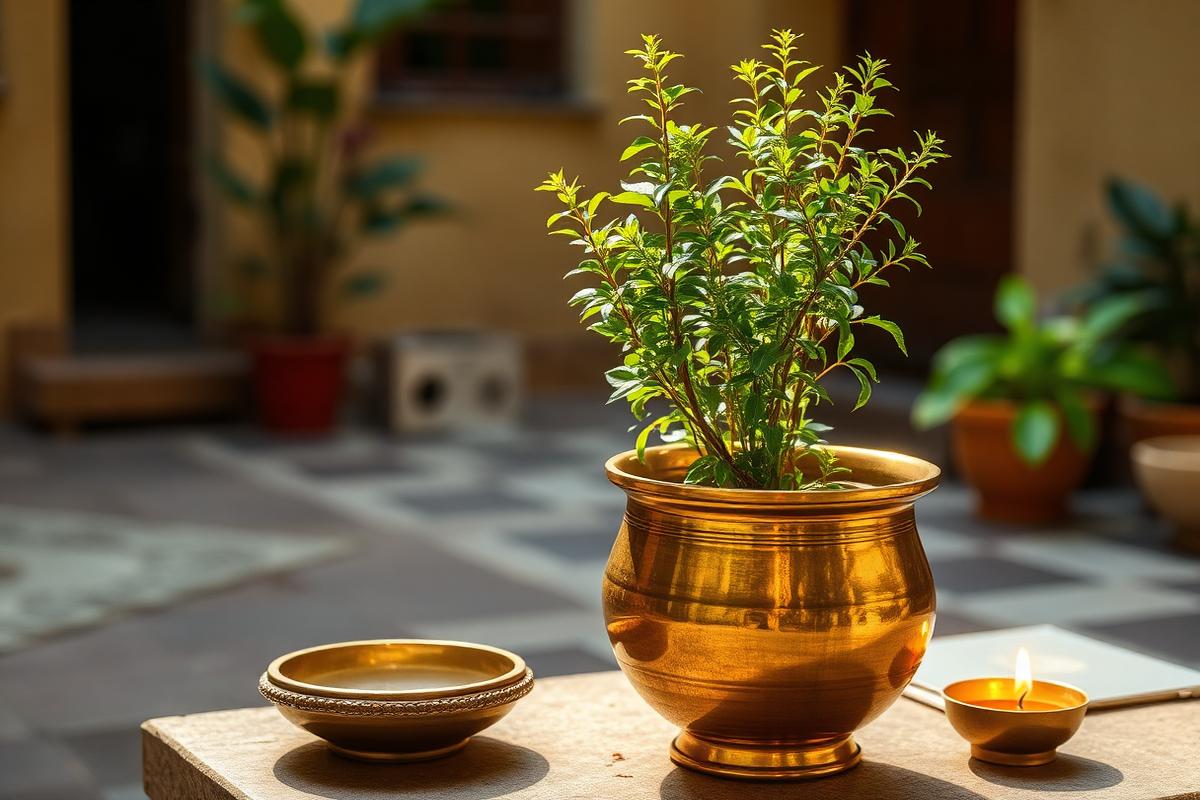
Why Planting a Bilva Tree Is Different From Offering Its Leaves
Almost every Shiv bhakt knows the practice of offering bel patra (bilva leaves) on the Shivling during Sawan, usually leaves bought at a flower stall or plucked from a tree in a temple courtyard or a neighbour's garden. It is a beautiful, essential act of Sawan worship. Planting a bilva tree yourself is a related but distinctly different act, one that Puranic texts treat as carrying its own separate, and in some ways greater, merit.
The difference lies in the nature of the two acts. Offering a leaf is a moment of worship; planting a tree is a commitment that outlives the moment, often outliving the person who plants it. A bilva tree, once established, can live and bear leaves for well over a hundred years, meaning a sapling planted this Sawan could still be offering leaves to worshippers generations from now, long after the person who planted it is gone. This is precisely why texts like the Skanda Purana and Padma Purana treat vriksha ropan (tree planting) as a distinct category of merit-generating action, separate from and additional to daily ritual worship.
There is also a practical, cyclical logic that Hindu tradition seems to have understood intuitively: the leaves offered in worship have to come from somewhere, and a tradition of continuously plucking leaves from wild or temple trees without anyone replenishing them is, over time, unsustainable. Planting your own bilva tree closes this loop. It transforms you from someone who only takes bel patra for worship into someone who also gives back the source of it, a shift in relationship to the ritual that many devotees describe as deepening their sense of participation in Sawan rather than simply performing it.
This distinction is worth sitting with before moving to the practical steps: this is not a replacement for offering leaves as usual, it is an additional, longer-horizon devotional act many households choose to take up during precisely this month.
The Sacred Origin of the Bilva Tree
The bilva tree's status in Shaivite worship is not incidental; multiple Puranic traditions describe it as intimately connected to both Shiva and Parvati, which is part of why it carries such weight specifically during their month.
One widely told account in the Shiva Purana holds that the bilva tree itself is a manifestation of Shiva, a svarupa (own form), which is why its leaves are considered acceptable and beloved offerings even on days when flowers are restricted. Another tradition connects the tree to Parvati directly, describing it as having sprung from drops of her sweat during a period of intense tapasya, or alternately holding that Goddess Lakshmi resides within the bilva tree, making it doubly auspicious, tied to both spiritual liberation through Shiva and material prosperity through Lakshmi.
The leaf itself carries layered symbolism that devotees are taught to hold in mind while offering it. Its distinctive trifoliate shape, three leaflets joined at a single stem, is read in multiple, overlapping ways across tradition:
- Representing Shiva's three eyes (trinetra)
- Mirroring the three prongs of his trishul (trident)
- Symbolising the three gunas - sattva, rajas and tamas - that the tree, and by extension the devotee, is meant to hold in balance
- Standing for the three worlds (triloka) - heaven, earth and the netherworld - over which Shiva's presence extends
This density of meaning packed into a single small leaf is part of why the bilva holds such an outsized place in Shiva worship relative to its physical size. Planting the tree that produces it is, in effect, planting a living source of all of this symbolism in your own home, rather than only encountering it through leaves gathered elsewhere.
Why Sawan Is the Ideal Month to Plant One
The case for planting a bilva tree specifically during Sawan rests on two overlapping reasons, one devotional and one straightforwardly practical, which happen to reinforce each other.
On the devotional side, Sawan is understood as the month when acts of worship, charity and merit-generating deeds carry amplified significance, since the entire month is considered dedicated to Shiva. Planting a tree that is itself regarded as his form, during the very month set aside for his worship, is treated by many priests as a particularly fitting alignment of act and season, similar in spirit to the broader tradition of vriksha daan (donating or planting trees) that many Puranic texts encourage during auspicious periods.
On the practical side, and this matters just as much for whether the tree actually survives, Sawan falls squarely within India's monsoon season, generally the single best window for planting most saplings across the subcontinent. The reasons are straightforward horticulture rather than anything mystical:
- Natural, consistent rainfall reduces the burden of manual watering during the fragile early root-establishment period
- Cooler, humid conditions compared to peak summer reduce transplant shock for a young sapling
- Softer, more workable soil, having absorbed the early monsoon showers, makes digging and root placement considerably easier than in dry, compacted summer ground
- Nurseries typically stock the widest range of sapling sizes during this season, anticipating monsoon planting demand
This overlap, a month spiritually dedicated to the tree's own deity coinciding with the best natural planting conditions for it, is part of why bilva planting during Sawan feels less like a coincidence and more like tradition responding sensibly to the agricultural calendar it has always lived alongside.
🔱 The Vandnaa App's Sawan calendar helps you plan your planting day around Somwar or Pradosh timings, so the ritual and the gardening line up.
Step-by-Step: How to Plant a Bilva Sapling With Devotion

Planting a bilva tree does not require priestly assistance, though some families do choose to have a short prayer led by an elder or a priest for a more formal occasion. The core steps are simple enough for anyone to follow.
- Choose a healthy sapling: A one to two-foot bilva sapling from a reputable nursery, with firm stems and no visibly damaged roots, is easier to establish than attempting to grow one from seed, which takes considerably longer and has a lower success rate for a home gardener.
- Pick the right spot: Bilva trees grow into substantial, thorny trees over time, so choose a spot with enough long-term space, ideally in a courtyard, garden corner or near a boundary wall. Many families following Vastu guidance avoid planting it directly facing the main entrance, preferring the north or northeast portion of the plot instead, though this is a household preference rather than a fixed religious rule.
- Dig and prepare the pit: A pit roughly twice the width of the sapling's root ball, mixed with a handful of compost or well-rotted manure, gives young roots an easier start in typically hard Indian garden soil.
- A simple sankalp before planting: Standing before the chosen spot, many devotees offer a short, personal prayer, silently or aloud, dedicating the tree to Shiva and stating an intention, for the family's wellbeing, for future generations to have bel patra to offer, or simply as an act of gratitude for the month.
- Plant and water with a milk-mixed first watering: After placing the sapling and firming the soil around it, the first watering is traditionally done with plain water mixed with a small amount of milk, echoing the milk abhishek given to the Shivling itself, though plain water is entirely acceptable if milk isn't available.
- Offer a bel patra from elsewhere at the base: Placing one bought or gifted bilva leaf at the base of the newly planted sapling, as a kind of symbolic continuity between the offering tradition and the planting tradition, is a small but meaningful closing gesture some families observe.
The entire process takes well under an hour and requires no special equipment beyond a spade and a bucket, well within reach for a typical household garden or even a large terrace planter.
Caring for Your Bilva Tree After Planting
One of the most reassuring things about the bilva tree, for anyone hesitant about taking on a new gardening commitment, is that it is a genuinely low-maintenance, hardy species once past its first year.
- Watering: Water regularly, roughly every two to three days, through the first year while the root system establishes itself. After that, bilva trees are notably drought-tolerant and thrive across most of India with rainfall alone in most regions, needing supplemental watering mainly during extended dry summer stretches.
- Sunlight: Bilva trees need full sun to grow well; a spot that receives direct sunlight for most of the day supports healthier, denser leaf growth than a shaded corner.
- Soil and fertiliser: The tree is not particular about soil quality and tolerates poor, rocky or alkaline soil better than most fruit-bearing trees, part of why it has traditionally grown wild across dry and semi-arid parts of India. Minimal fertiliser is needed beyond the initial compost at planting.
- Pruning: Light pruning to remove damaged or crossing branches in the early years helps the tree develop a stronger structural shape, though bilva generally requires far less active shaping than ornamental garden trees.
- Patience with leaves and fruit: A young sapling typically produces usable leaves within the first one to two years, though many households wait until the tree is a little more established before regularly plucking from it, allowing the plant to direct its energy toward growth first. The tree's distinctive hard-shelled fruit, used in Ayurveda and traditional cooking, generally takes considerably longer, often five years or more, to appear in meaningful quantity.
- Thorns: Bilva trees develop sharp thorns as they mature, worth keeping in mind when choosing a planting spot in a garden used by small children or pets.
With this modest level of care, a bilva tree planted this Sawan can realistically be expected to outlive the person who planted it, continuing to supply leaves for Shiv puja across multiple generations of the same family.
The Merit of Growing Your Own Bilva Tree
Puranic literature is fairly direct about the scale of merit associated with planting and nurturing a bilva tree, treating it as an act whose spiritual returns compound over time rather than being exhausted in a single moment, unlike most ritual acts.
- A living daily puja: Several traditional accounts hold that a person who plants and cares for a bilva tree earns merit equivalent to performing regular Shiva puja for as long as the tree lives, since the tree itself is considered a form of Shiva rather than merely an offering to him.
- A gift to future devotees: Once established, a single mature bilva tree can supply far more leaves than one household could ever use, meaning most families end up sharing leaves with neighbours, local temples or anyone who asks, extending the merit of the original planting outward to everyone who later offers those leaves in their own worship.
- Generational continuity: Unlike a single day's puja, which begins and ends, a planted tree becomes part of the family's physical and spiritual inheritance, something children and grandchildren grow up beside and eventually tend to themselves, carrying the original devotional act forward without any additional effort required to sustain its meaning.
- Environmental merit alongside spiritual merit: A mature bilva tree also provides shade, supports local birds and insects, and contributes to a garden's ecology, a practical dimension that many devotees see as entirely compatible with, rather than separate from, its religious significance.
For a household weighing whether this is worth the effort of a single afternoon's digging and a year of attentive watering, tradition's answer is unambiguous: very few single acts of devotion available to an ordinary householder are described as generating merit that continues, largely unattended, for a hundred years or more. Planting one bilva tree this Sawan is, in that sense, one of the highest-leverage devotional acts available to anyone with a small patch of earth to spare.
Frequently Asked Questions
Which direction is best for planting a bilva tree at home?+
Many families following Vastu guidance prefer the north or northeast portion of the plot, and avoid planting it directly facing the main entrance since it grows into a large, thorny tree. This is a household preference rather than a strict religious requirement.
How long does a bilva tree take to give leaves?+
A young sapling typically produces usable leaves within the first one to two years, though many households wait until the tree is a little more established before regularly plucking. The tree's fruit takes considerably longer, often five years or more.
Is it okay to plant a bilva tree in a pot?+
A bilva can be grown in a very large pot for its early years, but since it eventually grows into a substantial tree with a deep root system, it is best transferred to open ground when possible for long-term health.
What is the significance of the three leaflets of the bilva leaf?+
The trifoliate leaf is traditionally read as representing Shiva's three eyes, the three prongs of his trishul, the three gunas of sattva, rajas and tamas, and the three worlds over which his presence extends.
When during Sawan is the best time to plant a bilva sapling?+
Any day during Sawan works well given the monsoon conditions, though many devotees prefer a Sawan Somwar or a day with a favourable Pradosh Kaal for the added devotional significance of pairing the act with an auspicious puja window.
Can I offer leaves from my own newly planted tree right away?+
It is best to let the sapling establish itself for the first several months to a year before regularly plucking leaves, so the young plant can direct its energy toward growth. Many families symbolically offer a bought leaf at the base at the time of planting instead.
About the author
Pandit Mahesh Trivedi · Festival Traditions & Panchang
Pandit Mahesh leads the festival-date and Panchang content on Vandnaa. He cross-references multiple regional panchangs (Drik, Vaishnava, Bengali, Marathi) for every festival date published on the site.
Meet the Vandnaa editorial team →