One Vrat, Two Worlds
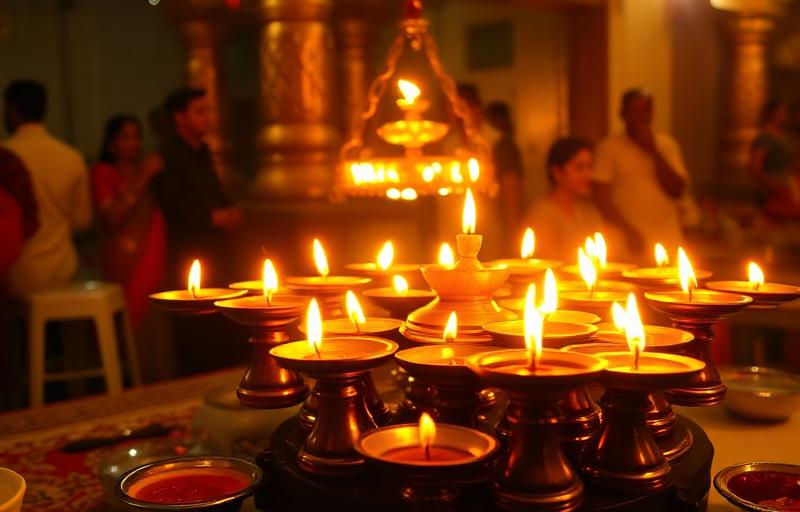
On any given Sawan Somwar in 2026, say the third one on 17 August, two devotees might be observing the exact same vrat, chanting the exact same Om Namah Shivaya, and yet living through almost entirely different days. One might walk barefoot at dawn to a centuries-old Shivling under a banyan tree at the edge of her village, alongside forty neighbours she has known her whole life. The other might set a phone reminder between back-to-back video calls, step away for six minutes to pour water over a palm-sized Shivling on an apartment shelf, and return to his laptop before the next meeting starts.
Both are keeping Sawan Somwar. Neither is doing it wrong. But the texture, pace and social context of the observance have diverged enormously as India has urbanised, and this gap is worth examining honestly rather than glossed over with a simple 'devotion is devotion everywhere' line, true as that line is.
This divergence isn't unique to Sawan, but the month makes it unusually visible because Sawan Somwar is one of the few vrats still widely observed across virtually every demographic, rural and urban, older and younger, which means both versions of the practice are thriving in parallel rather than one having simply replaced the other. India's rural population still sits close to 65 percent of the total, even as urban centres have absorbed enormous numbers of first and second-generation city dwellers who grew up with, and often still return to, village-style Sawan practices during visits home.
What follows is not a ranking of which version is more authentic, but a description of what each actually looks like today, and an honest look at what each gains and loses in the process.
The Village Experience: Community and Nature
In much of rural India, Sawan Somwar remains a deeply communal, outdoor experience shaped by proximity to natural elements that urban devotees often have to travel considerable distances to access.
- Walking to a natural or ancient Shivling: Many villages are built around, or within walking distance of, a Shivling that has stood for generations, sometimes under a peepal or banyan tree, sometimes beside a river or pond, sites that carry their own local legends passed down orally rather than documented anywhere.
- Temple bells at dawn: The sound of temple bells and conch shells at first light is a shared, public signal that the day's observance has begun, experienced collectively by an entire village rather than privately by an individual household.
- Kanwar processions passing through: Villages along traditional Kanwar Yatra routes see saffron-clad kanwariyas passing through on foot, carrying Ganga water for their local Shivling, turning the roads themselves into a visible, physical expression of the month's devotion for weeks at a stretch.
- Shared community kitchens for prasad: Larger village temples often organise a communal falahar meal after the evening aarti, cooked and shared collectively rather than each household preparing its own, reinforcing Sawan as a shared social occasion as much as a personal vrat.
- Rituals passed down orally by elders: Village priests and elders typically teach puja vidhi through direct, spoken instruction and hands-on demonstration across generations, rather than through books or apps, giving the practice a strong sense of unbroken local continuity.
- Unhurried time: Agricultural rhythms, particularly during the monsoon lull between sowing and the next major farm activity, often leave more open time for a longer, less rushed puja than a typical urban workday allows.
The defining feature of the village Sawan Somwar, in short, is that the individual vrat is embedded inside a visible, audible, physically present community doing the same thing at the same time.
The City Experience: Solo Practice and Convenience
Urban Sawan Somwar has developed its own distinct character, shaped less by community rhythm and more by the practical constraints and tools of city living.
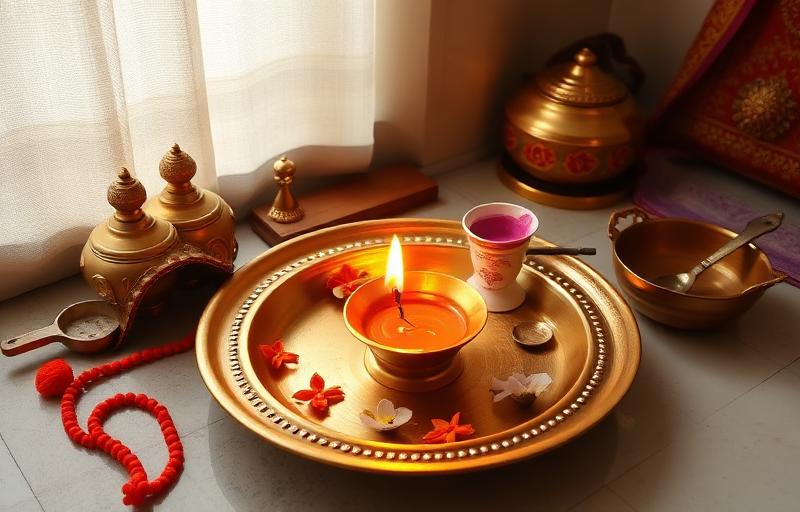
- Apartment puja corners: Most urban households manage devotion within a single shelf or small cupboard set aside as a puja corner, a compressed version of what might be a dedicated room or courtyard shrine in a village home.
- Temple queues and darshan slots: Popular city temples, especially during Sawan Somwar, often require devotees to queue for a fixed, timed darshan slot, sometimes booked in advance through an app, a very different rhythm from walking up to an always-accessible village Shivling.
- Online aarti streams: For those who cannot reach a temple at all, watching a livestreamed aarti from a major temple, sometimes thousands of kilometres away, has become a genuinely common substitute for physical temple presence.
- Gig-economy priests and puja services: Urban platforms increasingly offer on-demand pandits who can be booked for a home puja the way one might book a cab, a service largely without a rural equivalent, where priests are typically known personally over years.
- WhatsApp puja reminders and family group chats: Extended families now often coordinate Sawan observance, sharing vidhi steps, reminding each other of dates, and even exchanging photos of their individual puja setups, through a family WhatsApp group rather than being physically present together.
- Access to information, less time to use it: City devotees typically have far greater access to detailed vidhi instructions, mantra pronunciations and puja explainer videos than previous generations did, even as the actual time available to act on that information has shrunk considerably.
The defining feature of the city Sawan Somwar is almost the inverse of the village one: abundant information and access, but a fragmented, individual, time-pressured way of using it.
What's Lost and What's Gained
A fair comparison has to resist the temptation to romanticise the village version as automatically 'purer' or dismiss the city version as automatically 'diluted'. Both framings are too simple and, frankly, a little unfair to millions of devotees living each version sincerely.
What village practice tends to offer: a stronger sense of shared witness (worshipping visibly alongside people who have known you for years), direct contact with natural elements central to Shiva worship (real rivers, ancient trees, open sky), oral transmission of ritual detail that carries the specific flavour of local tradition, and generally less time pressure around the practice itself.
What it can lack: fewer resources for a devotee who wants to go deeper into the philosophy or Sanskrit behind a ritual they perform mostly by rote, and, for younger villagers increasingly connected to urban aspirations and jobs, sometimes a sense of obligation to a communal practice rather than a fully individually chosen one.
What city practice tends to offer: genuine flexibility for people balancing work and family obligations that would otherwise make any observance impossible, unprecedented access to explanatory content that helps devotees understand rather than only perform their rituals, and often a more deliberately, consciously chosen practice, since nothing about city life defaults a person into observing Sawan the way village social context might.
What it can lack: the ambient, constant reinforcement of a whole community observing together, direct access to rivers, ancient trees or ever-open natural shrines, and a general sense of unhurried time that many urban devotees describe missing most acutely.
The honest conclusion most priests and scholars land on is that both are complete, valid expressions of the same underlying vrat, shaped by circumstance rather than commitment, and that the specific gains of each are often exactly what the other is missing.
Kanwar Yatra as a Bridge Between Both Worlds
If any single Sawan tradition cuts across the rural-urban divide rather than sitting neatly on one side of it, it is the Kanwar Yatra. Every year during Sawan, millions of kanwariyas, a number that has grown into the tens of millions in recent years, walk to sites like Haridwar, Gaumukh or Sultanganj to collect Ganga water and carry it, often barefoot and over hundreds of kilometres, to offer at a Shivling of their choosing back home.
What makes Kanwar Yatra genuinely bridging rather than exclusively rural or urban is who actually takes part. The roads fill with factory workers from small towns, college students from Delhi and Mumbai on a break, farmers from villages along the route, and increasingly, young professionals treating the yatra almost like an intense, purposeful trek, all walking the same stretch of highway, chanting Bol Bam together, staying at the same informal roadside kanwar camps set up by local volunteers regardless of whether those volunteers come from a nearby village or a city-based religious organisation.
The yatra also physically carries village-style devotional practice into cities and back again: kanwariyas from rural areas walk through major urban centres en route, briefly filling city roads with a distinctly rural devotional energy, while urban participants carry the discipline and physical intensity of the walk back into their otherwise city-shaped religious life.
In this sense, Kanwar Yatra functions each Sawan as a kind of temporary, moving village, one that both rural and urban devotees step into together for a few days or weeks, regardless of where they spend the rest of the month. It is worth noting as the clearest evidence that the rural-urban divide in Sawan practice, while real, is not a wall; it has at least one very large, very visible gate that opens every year.
Carrying Tradition Forward, Wherever You Live
Perhaps the most useful way to close this comparison is to note that most Indian families today do not live entirely within one version or the other, they move between them. A young professional working in Bengaluru or Pune still returns to a village for major family occasions and slips comfortably back into the community-style Sawan Somwar of childhood. A grandmother who spent her whole life observing the vrat in a village may spend her later years in a child's city apartment, adapting her practice to a smaller space and a different pace without abandoning its substance.
This fluidity is, in many ways, the actual state of Sawan devotion in India today, less a clean rural-versus-urban split and more a spectrum that individual families and even individual people move across depending on the year, the city they are living in, and the stage of life they are at.
A few closing thoughts worth carrying forward regardless of where you observe Sawan Somwar:
- Geography changes the form of devotion, not its validity. A six-minute desk puja performed with full attention is not spiritually lesser than an hour-long village ceremony performed on autopilot, and the reverse is equally true.
- City devotees can deliberately borrow from village practice: joining a larger community puja on at least one of the four Mondays, visiting a temple in person rather than only streaming one, or calling a grandparent to hear how they observed Sawan growing up, are all ways of reconnecting with the communal texture city life often strips away.
- Village devotees have nothing to gain from feeling their practice is old-fashioned: the oral, communal, nature-connected version of Sawan Somwar is not a less developed stage that city practice has improved upon; it is a genuinely different, equally rich way of keeping the same faith.
📿 The Vandnaa App's puja reminders and step-by-step vidhi guide are built for exactly this in-between reality, useful whether you are observing Sawan Somwar in a village with patchy signal or a city apartment with no temple nearby.
What People Ask Most
Is a city-based Sawan Somwar vrat less powerful than a village one?+
No. Most priests and scholars agree that sincerity and intention (bhava) determine the value of a vrat, not the setting in which it is performed. A short, focused city puja is considered as complete as a longer village ceremony.
Why do natural, village Shivlings feel more significant to some devotees?+
Many of these Shivlings are self-manifested (swayambhu) or centuries old, tied to specific local legends, and set amid natural elements like rivers or ancient trees, all of which carry strong cultural and historical resonance for devotees connected to that place.
How has technology changed Sawan traditions in cities?+
Technology has introduced booked temple darshan slots, livestreamed aartis, on-demand priest booking, japa counter apps and family WhatsApp groups for coordinating rituals, making devotion more accessible even with limited time.
What role does Kanwar Yatra play in connecting village and city devotees?+
Kanwar Yatra brings rural and urban devotees onto the same roads, chanting the same Bol Bam and staying at the same camps, making it one of the few Sawan traditions that genuinely spans both worlds rather than belonging to just one.
Can I still observe meaningful Sawan rituals living alone in a city?+
Yes. A small home puja corner, a five-minute daily japa practice, a livestreamed aarti, and a visit to a nearby temple on at least one Somwar are all complete, meaningful ways to observe Sawan even without a surrounding community.
About the author
Pandit Mahesh Trivedi · Festival Traditions & Panchang
Pandit Mahesh leads the festival-date and Panchang content on Vandnaa. He cross-references multiple regional panchangs (Drik, Vaishnava, Bengali, Marathi) for every festival date published on the site.
Meet the Vandnaa editorial team →Explore on Vandnaa
Related Articles
Planting a Bilva (Bel) Tree in Sawan: Why It's Considered Auspicious
7 min read

Sawan Puja at Your Office Desk: A Simple Guide for Working Professionals
7 min read

Kanwar Yatra 2026: Significance, Rules, History & What to Expect
11 min read
Sawan Somwar 2026: Dates, Vrat Vidhi, Shiv Mantras & Why Mondays in Sawan Are So Powerful
10 min read