Why Ganga Water Is Considered the Most Sacred Liquid in Hinduism
Of all the rivers revered in Hindu tradition, Ganga occupies a singular position - not merely as a sacred river among many, but as a goddess in her own right, worshipped as Ganga Maa and believed to descend from the heavens themselves. The Puranic account describes King Bhagirath's extraordinary penance to bring Ganga down from the celestial Akashganga to liberate the souls of his ancestors, and Lord Shiva's role in catching her powerful descent in his matted locks (jata) so the force of her fall would not shatter the earth. This single act ties Ganga permanently to Shiva - her water is, in a sense, already Shiva's water before it ever touches a Shivling.
Because of this dual origin - descended from the heavens and tempered through Shiva's own hair - Ganga jal is regarded as swayं-shuddha, inherently self-purifying, unlike ordinary water which is understood to need external purification. This belief underlies several distinctive practices: Ganga jal is the only liquid considered acceptable to store indefinitely in the puja room without spoiling in the ordinary sense, it is used to purify other offerings before they are presented to a deity, and even a few drops are traditionally added to a dying person's mouth in the belief that it eases the soul's final passage.
Why devotees treat it differently from all other water:
- Its use spans the entire life cycle - naming ceremonies, weddings, and last rites all involve Ganga jal at some point
- It is the standard purifying agent sprinkled around a home or puja space before a major ritual begins
- Unlike river water in general, Ganga jal specifically is described in the Puranas as having the power to dissolve accumulated papa (sin) through faith-based contact, not merely physical washing
- Unlike tap or bottled water, a few drops of genuine Ganga jal are traditionally considered sufficient to sanctify an entire vessel of ordinary water for ritual use
This is the foundation on which the entire Sawan tradition of carrying and offering Ganga jal to Shiva is built.
Ganga's Special Bond With Lord Shiva
Shiva's iconography almost always includes a small stream of water flowing from his matted hair - this is Ganga herself, permanently seated in his jata since the day he broke her descent. This is why Shiva carries the name Gangadhara, the bearer of Ganga, and why Ganga jal is considered the single most appropriate liquid for his abhishek, more so than for any other deity's worship.
The logic devotees follow is direct and almost literal: if Ganga physically resides on Shiva's head in traditional iconography, then pouring Ganga jal over a Shivling is understood as returning a portion of what is already his, or completing a circuit - water that came from him, offered back to him. This is distinct from offering milk or honey, which are gifts from the devotee; Ganga jal abhishek carries the added layer of being water associated with Shiva's own form.
This connection deepens the Sawan-specific meaning:
- Sawan already centres on cooling Shiva's throat after he drank the Halahala poison during Samudra Manthan - Ganga jal, as water that literally touches his head in traditional depictions, is considered an especially potent cooling offering
- Temples along the Ganga's course, such as those at Haridwar, Rishikesh, Varanasi (Kashi), and Sultanganj, become natural starting points for Sawan pilgrimages precisely because devotees can access both the river and a major Shiv temple in one visit
- The Kanwar Yatra tradition of carrying Ganga jal specifically (rather than water from any other river) to a local or distant Shiva temple is a direct expression of this Ganga-Shiva bond, turning a personal journey into a re-enactment of returning Ganga to Shiva
This is also why, among India's many sacred rivers - Yamuna, Godavari, Narmada, Kaveri - it is Ganga jal specifically that dominates Sawan's ritual vocabulary, even though other rivers are deeply revered in their own right for other occasions.
Why Kanwariyas Carry Ganga Jal Specifically, Not Any River Water
The Kanwar Yatra is built entirely around one non-negotiable detail - the water carried in the kanwar's twin pots must be Ganga jal, collected at a recognised ghat, most commonly Haridwar, Gaumukh, or Sultanganj in Bihar. No other river's water is considered an acceptable substitute within this specific tradition, even though those other rivers hold their own sanctity for different rituals.
The reasoning ties directly back to the Shiva-Ganga bond described above: the entire point of the Kanwar Yatra is to physically transport the water most closely identified with Shiva's own form back to a Shiva temple, completing a devotional circuit. Substituting a different river's water would sever that specific symbolic link, even if the alternate water were equally sacred in its own tradition.
Once collected, the water is treated with particular strictness:
- The filled kanwar must not touch the ground from the moment it is collected until it is offered at the destination temple - it is carried on the shoulder and handed between companions during rest
- Many kanwariyas observe a strict vegetarian, often fully sattvic diet and abstain from alcohol and physical intimacy for the yatra's duration, treating the water they carry as something requiring bodily purity from the one who bears it
- The water is typically sealed in the kanwar pots immediately after collection to prevent it from being adulterated or mixed with ordinary water along the route
- On reaching the destination temple, the jalabhishek is usually timed for Sawan Shivratri or a Sawan Somwar for maximum auspiciousness, though many kanwariyas offer it the same day they arrive
For those not undertaking the yatra, this same water can still be obtained: sealed, tested Ganga jal is available from established temples, some verified religious retailers, and family members who have made the pilgrimage - the merit of the water's sanctity is understood to lie in the river itself, not exclusively in the act of personally walking the distance.
How to Store Ganga Jal at Home Correctly
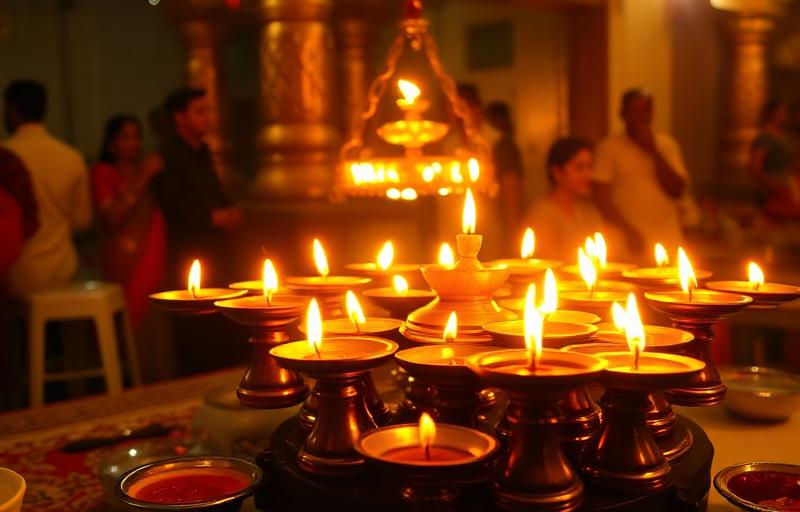
One of the most distinctive traditional beliefs about Ganga jal is that, unlike ordinary water, it does not putrefy or grow stagnant even after being stored for months or years - a claim repeated across generations of households that keep a sealed bottle in their puja room indefinitely. Interestingly, water researchers have noted that Ganga water does show unusually high dissolved oxygen levels and certain bacteriophage activity in parts of its course, which some point to as a partial scientific echo of this long-held belief, though devotees primarily hold the belief on faith rather than laboratory grounds.
Correct storage practice:
- Keep Ganga jal in a clean copper, brass, or glass vessel - plastic is tolerated but traditionally considered less suitable for long-term storage of sacred substances
- Store it in the puja room or a clean, elevated shelf, never on the floor or in the kitchen near non-vegetarian food preparation areas
- Keep the container tightly sealed between uses to prevent dust, insects, or contamination from entering
- Label the container if you have multiple bottles, particularly if one batch is reserved for a specific upcoming ritual like a wedding or last rites
- Avoid dipping a used hand or a soiled spoon directly into the storage vessel - pour out only what is needed into a separate small container for daily use
Refilling and topping up: Many households top up a mostly-used bottle of Ganga jal with fresh regular water, on the belief that even a small quantity of original Ganga jal is enough to sanctify the whole vessel. This is a widely accepted practice, especially for families who received the water from a relative's pilgrimage years ago and want to make it last, though a small reserved portion of the original, unmixed water is often kept separately for the most important rituals.
Using Ganga Jal for Sawan Puja Without Doing the Yatra
Not every devotee can walk to Haridwar or join a kanwar group, and tradition has never treated this as a lesser form of devotion. Ganga jal obtained through ordinary means, used with the same sincerity, carries the same puja validity as water carried on foot across hundreds of kilometres - the yatra is a specific tapasya (austerity) chosen by some devotees, not a precondition for the water's sanctity itself.
Practical ways to use Ganga jal in your home Sawan puja:
- A few drops added to a full lota of ordinary water before abhishek is traditionally considered sufficient to sanctify the entire vessel for pouring over the Shivling
- Keep a small dedicated dropper bottle of Ganga jal separate from your larger reserve bottle, making it easy to add a few drops daily without opening and exposing the main stock
- On the four Sawan Mondays (3, 10, 17 and 24 August 2026) and on Sawan Shivratri (11 August 2026), many households use a slightly larger portion - a small cupful mixed into the abhishek water - to mark these especially significant days
- If no Ganga jal is available at all, tradition holds that any clean water offered with full devotion and the chanting of Om Namah Shivaya is completely acceptable; the mantra 'Gange cha Yamune chaiva...' invoking all sacred rivers by name is sometimes recited over ordinary water specifically to symbolically invite Ganga's presence into it
A note on authenticity: With demand rising every Sawan, unverified sellers sometimes sell ordinary tap water labelled as Ganga jal. Buying from an established temple trust, a well-known religious goods store, or a family member's verified pilgrimage supply remains the most reliable way to ensure what you are storing and offering is genuine.
📅 The Vandnaa App's Sawan calendar marks all four Sawan Somwar dates and Sawan Shivratri, so you know exactly which days call for that extra portion of Ganga jal in your abhishek.
What Tradition Says About Ganga Jal's Purity
Devotional literature treats Ganga jal's purity as operating on two levels that are rarely separated in practice but are worth understanding individually. The first is physical purity - the belief, reinforced by the river's unusual self-oxygenating properties in parts of its course, that the water resists the kind of decay ordinary stored water undergoes. The second, and far more central to worship, is spiritual purity - the capacity attributed to Ganga jal to cleanse papa (accumulated negative karma) through faith-based contact, a property no amount of physical filtration is believed to replicate.
This is why Ganga jal occupies a category of its own in ritual hierarchy:
- It is the closing offering in most abhishek sequences - after milk, curd, honey, ghee, and sugar, a final rinse of pure Ganga jal is poured to complete the sequence, symbolically washing the Shivling clean after the richer offerings
- A few drops are added to the charnamrit (sanctified liquid) distributed to devotees after most major pujas, regardless of which deity is being worshipped
- It is considered appropriate to sprinkle lightly on a new home, a new vehicle, or important documents and instruments before their first use, extending its purifying role beyond the puja room
The devotee's takeaway for this Sawan is straightforward: whether your Ganga jal travelled a thousand kilometres on a kanwariya's shoulder or came from a sealed bottle bought from a trusted source, its role in your puja is the same - to close the abhishek with the one water tradition holds to already belong to Shiva. The intention behind pouring it matters at least as much as its distance travelled.
Reader Questions Answered
Does Ganga jal expire or go bad over time?+
Traditional belief holds that genuine Ganga jal does not putrefy even after years of storage, unlike ordinary water. Some researchers attribute this to the river's unusually high dissolved oxygen levels in parts of its course. Devotees still store it in clean, sealed containers away from contamination as good practice.
Can I use tap or bottled water if I don't have any Ganga jal?+
Yes, completely. Tradition holds that clean water offered with sincere devotion and the chanting of Om Namah Shivaya is fully acceptable for Shiv puja. Ganga jal is considered especially auspicious, but its absence does not invalidate your worship.
How much Ganga jal is actually needed for one Shivling abhishek?+
Very little. A few drops added to a full lota of ordinary water is traditionally considered sufficient to sanctify the entire vessel, since Ganga jal's spiritual property is believed to transfer to the water it is mixed with.
Is it acceptable to mix Ganga jal with regular water at home?+
Yes, this is a widely accepted household practice, especially to make a limited quantity of Ganga jal last longer. Many families keep a small unmixed portion aside for the most significant rituals while topping up their daily-use bottle with regular water.
Where can I buy authentic Ganga jal if I cannot travel to the river myself?+
Established temple trusts, well-known religious goods stores, and verified online retailers affiliated with major temples are the most reliable sources. Be cautious of unverified sellers, as demand during Sawan sometimes leads to ordinary water being mislabelled.
Can Ganga jal be used in daily puja throughout the year, not just in Sawan?+
Yes, Ganga jal is used year-round across Hindu households for daily puja, purification of the home, and major life-cycle rituals. Sawan simply sees its use intensify because of the month's specific focus on Shiva abhishek.
About the author
Pandit Mahesh Trivedi · Festival Traditions & Panchang
Pandit Mahesh leads the festival-date and Panchang content on Vandnaa. He cross-references multiple regional panchangs (Drik, Vaishnava, Bengali, Marathi) for every festival date published on the site.
Meet the Vandnaa editorial team →