Parvati, Fertility and the Colour of New Life
Walk into any bangle shop in North India during the first week of Sawan and one colour takes over every shelf: green. Ask why, and most people will say 'it's tradition' - but the tradition has a specific origin, and it isn't arbitrary.
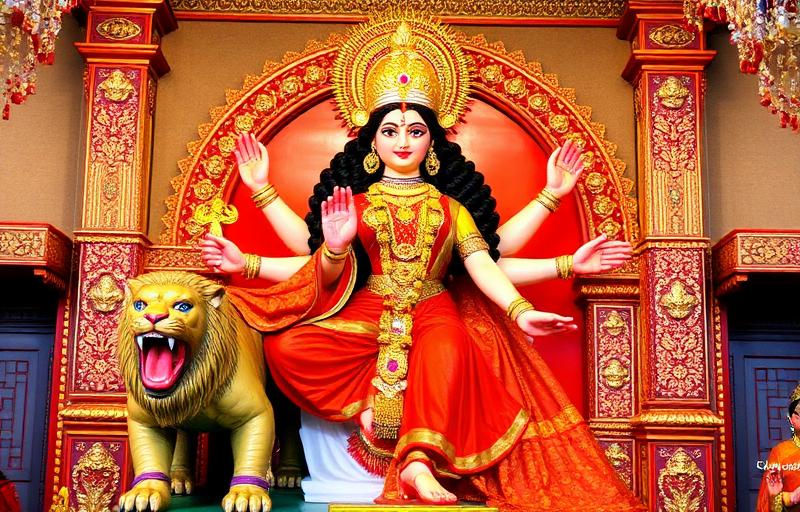
Sawan arrives at the peak of the monsoon, when the parched brown landscape of an Indian summer turns green almost overnight. Fields fill with new paddy, trees put out fresh leaves, and the earth itself looks reborn. In a culture that reads nature as a language of the divine, this seasonal rebirth became inseparable from Goddess Parvati, who is worshipped throughout Sawan as Shiva's consort and as the embodiment of shakti, fertility and marital devotion. Green, as the colour of new growth, became her colour by association - the visual language of a goddess who represents life renewing itself.
The Parvati tapasya connection deepens this further. Sawan is remembered as the month in which Parvati performed rigorous tapasya to win Shiva as her husband - a story of patience, discipline and devotion rewarded. Women observing Sawan rituals, particularly unmarried girls praying for a good husband and married women praying for their husband's wellbeing, wear green partly to align themselves symbolically with Parvati's own devotion and eventual fulfilment.
Fertility is the second, older layer. Long before it became attached to a specific goddess's iconography, green was already the subcontinent's shorthand for fertility, growth and abundance - the same instinct that makes green central to harvest festivals across cultures. In Sawan, married women wearing green are considered to be inviting this fertility and prosperity into their households, not just decorating themselves.
Together, these two threads - a goddess associated with renewal, and a season that visibly renews the earth - are why green became Sawan's signature colour rather than any other shade.
How Green Shows Up: Bangles, Mehendi and Sarees
The symbolism would stay abstract if it didn't translate into what women actually wear and do - and in Sawan, green shows up in very concrete, specific ways:
Green glass bangles (choodiyan): The most visible marker. Sets of green bangles, often paired with red, are worn through Sawan and especially on Teej and Sawan Somwar. Glass is deliberately chosen over metal in many regions - the delicate clink of glass bangles is considered auspicious sound, and the fragility itself is symbolic of the care a marriage requires.
Green sarees and suits: Many women specifically buy or wear a green saree, lehenga or suit for Hariyali Teej and Sawan Somwar temple visits. In Rajasthan and parts of Gujarat, a specific green 'poshak' (traditional dress) is associated with Teej celebrations. In Maharashtra, the Mangala Gauri Vrat (observed on Sawan Tuesdays) often sees women in green sarees with gold borders.
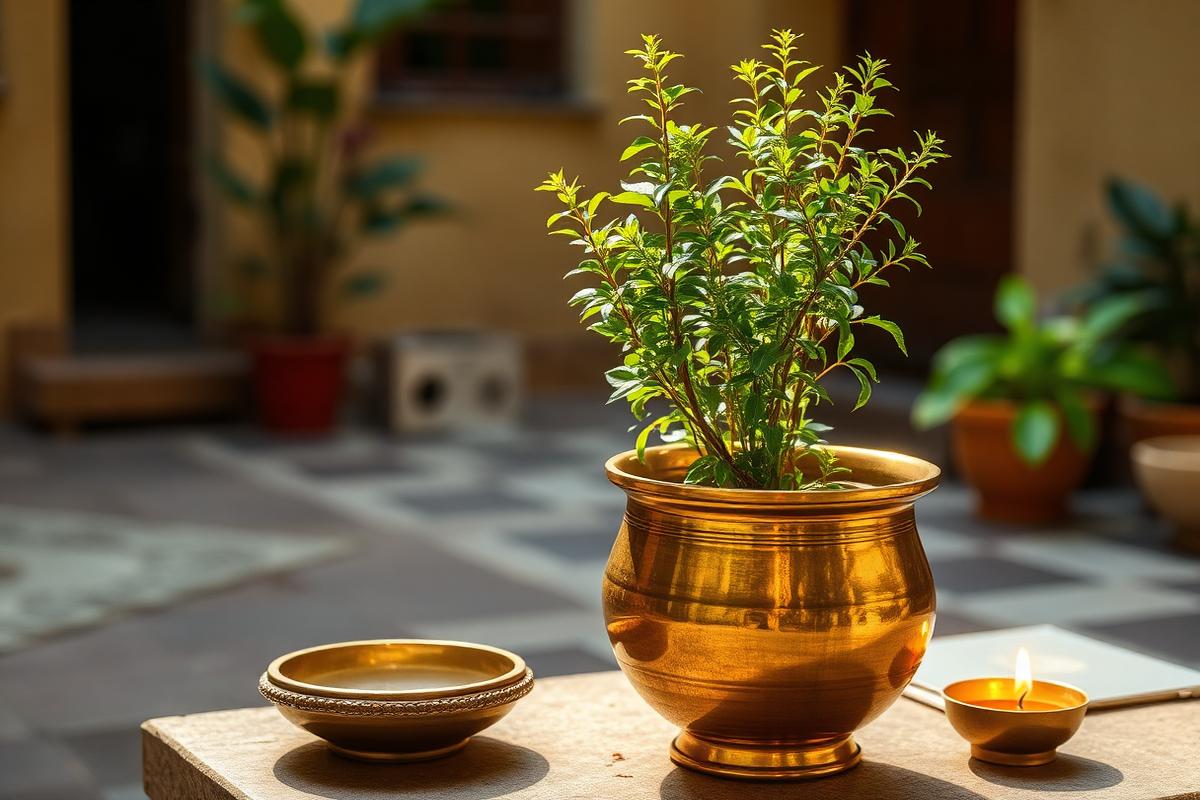
Green mehendi motifs and dyes: While mehendi paste itself is naturally brown-green before it dries, some Sawan celebrations also use green colour powder (gulal) or green thread (mauli) in décor. Fresh mehendi leaves themselves - the plant - are considered auspicious to keep in the house during Sawan.
Green in puja items: Betel leaves (paan), bel patra, durva grass, and fresh green coconut fronds used in Sawan and Teej pujas all reinforce the same colour code - the puja thali of a Sawan Somwar or Mangala Gauri vrat is rarely without something green in it.
Nose rings, bindis and accessories: In some regional traditions, particularly in eastern UP and Bihar, green stone jewellery (like emerald-toned glass) is specifically worn during Sawan alongside the more commonly discussed bangles and sarees, rounding out the colour from head to wrist.
Sinjara: The Ritual That Sends Green to Married Daughters
One of the clearest examples of green's role in Sawan isn't something women buy for themselves - it's something sent to them. Sinjara (also spelled Sinjhara) is a pre-Teej ritual observed widely across Rajasthan, Haryana, Uttar Pradesh and parts of Punjab, where parents send a gift package to their married daughters in the days before Hariyali Teej.
What a Sinjara package traditionally contains:
- Green glass bangles (the centrepiece of the gift)
- A green saree, suit or lehenga
- Mehendi (henna cones or leaves)
- Sweets, especially ghevar - a disc-shaped, honeycombed sweet strongly associated with Sawan and Teej in North India
- Seasonal fruits and sometimes fresh coconut
Why it exists: In traditional joint-family structures, a married daughter often lived with her in-laws far from her parental home, and Sawan (with its swings, songs and Teej festivities) was one of the few culturally sanctioned times she would visit her maika (maternal home). Sinjara became the physical expression of that connection - parents ensuring their daughter had everything needed to celebrate Teej in the green and gold of the season, whether she came home or celebrated at her in-laws' house.
The ritual today: While joint-family distances have changed, Sinjara remains widely practised, especially in Rajasthan and Haryana, often now happening alongside a phone call or a courier package rather than an in-person visit. Some families extend the tradition to include gifts for the son-in-law too.
Regional cousins of the same idea: Bihar and eastern UP have a comparable custom during Sawan tied to Kajari songs and gift-giving; Bengal's Jhulan season similarly involves families sending sweets and new clothes to married women. The specific name changes, but the underlying gesture - parents keeping a married daughter wrapped in the season's green and its promise of prosperity - repeats across regions.
How the Tradition Changes Across India

Green in Sawan is a genuinely pan-Indian idea, but it doesn't look identical everywhere - regional cultures have shaped it into distinct local practices:
Rajasthan: Perhaps the most elaborate expression, with the Sinjara ritual, dedicated green 'poshak' outfits for Teej, and the Teej Mata procession in Jaipur where the goddess idol itself is dressed in vivid green and gold. Green lac bangles (lakh ki choodiyan) are a Rajasthani speciality for this season.
Haryana and Western UP: Green bangles and Sinjara are equally strong here, often paired with the folk festival Teej ke geet (Teej songs) sung by women gathered in courtyards, and swings (jhula) decorated with green mango leaves.
Maharashtra: The connection shows up through Mangala Gauri Vrat, observed on Sawan Tuesdays by newly married women for up to five years after marriage. Green sarees with a gold zari border are the customary attire, and a green blouse-piece is often part of the vrat's traditional gifting between women (vaan).
Bihar and Eastern UP: Green appears alongside the Kajari folk song tradition, sung specifically during Sawan about the rains, separation, and a woman's longing for her husband or parental home - green bangles and clothing are worn during these gatherings.
Bengal: Less centred on the colour green specifically and more on the Jhulan Yatra swing festival, though married women (especially newly married ones) do traditionally wear green and red for the season's rituals, echoing the same colour pairing seen in bangles elsewhere.
South India: Sawan/Shravan is observed with less colour-specific emphasis, though Shravana Shukravar (Fridays) for Goddess Lakshmi and Varalakshmi Vratam do favour certain auspicious colours, and green is among those considered favourable for prosperity-linked rituals, if not as singularly dominant as in the north.
What stays constant everywhere is the underlying logic: green marks a season of renewal, and women wearing it are participating in that renewal rather than simply following a dress code.
Green and Red: Sawan's Suhaag Colour Code
Indian festival colours are rarely random - each major festival has an unspoken 'colour code' tied to what the season looks like, and Sawan's is unmistakably green paired with red.
Why this specific pairing: Red has long represented marital status and auspiciousness on its own (sindoor, the classic bridal colour), but in Sawan, red alone isn't considered to capture the season - it needs green alongside it to represent the monsoon's fertility. The two together form what is often called the 'suhaag' colour combination: red for marital commitment, green for the life and abundance a marriage is meant to bring.
Compare this to other festivals: Karva Chauth in October leans almost entirely red - the fasting wife, the moon, the sindoor, all point to a single-colour intensity around marital devotion. Vasant Panchami in spring favours yellow, echoing mustard fields in bloom. Sawan's green follows that same logic - the festival colour mirrors what is actually happening outside the window that month.
Unmarried women and green: It isn't only married women who follow the colour code. Unmarried girls observing Sawan Somwar vrat or Mangala Gauri-adjacent rituals also wear green, praying specifically for a Shiva-like husband - the same prayer tradition associated with Parvati's own tapasya. For them, green functions less as a marker of current status and more as an invocation of the future they are praying for.
What is avoided: In many of the same communities that emphasise green and red in Sawan, plain white or unembellished black are traditionally avoided for festive wear during this period, since both are associated with mourning rather than the season's celebratory, fertile mood. This isn't a strict rule everywhere, but it is common enough to explain why Sawan markets are so overwhelmingly green-and-red and rarely feature those two colours.
The result is a colour code that isn't really about fashion preference at all - it's a visual calendar, where the clothes and bangles a woman wears literally announce which festival month it is.
Beyond Fashion: What Wearing Green Is Believed to Invite
Strip away the shopping and the bangles for a moment, and the belief underneath green in Sawan is fairly specific: it is worn as an active invitation, not passive decoration.
For married women: Wearing green through Sawan, and especially on Hariyali Teej and Mangala Gauri Vrat days, is believed to invite marital harmony, protect the husband's wellbeing, and secure the couple's prosperity for the year ahead. This connects directly to the vrat kathas told on these days, many of which centre on Parvati's devotion being rewarded with an unbreakable marriage to Shiva.
For unmarried women: Green is worn while praying for a husband who embodies Shiva's qualities - steadfast, devoted, dependable. This is explicitly part of the Sawan Somwar vrat tradition, where young women fast and pray specifically for this outcome.
Solah Shringar connection: Teej and Sawan Somwar are among the occasions when women perform solah shringar - the traditional sixteen adornments (from mehendi and bangles to bindi, sindoor and anointed hair) - in full. Green bangles and a green garment are typically one or two of those sixteen elements, meaning the colour isn't standalone but part of a complete ritual appearance.
A living tradition, not a costume: It's worth being clear that this isn't treated as dress-up. Many women who wear green only occasionally through the rest of the year make a point of wearing it specifically during Sawan precisely because of what it's believed to invite - the colour is chosen with intention, not habit.
Practically, for anyone observing Sawan rituals this year: if you're taking part in Mangala Gauri Vrat on the four Sawan Tuesdays (4, 11, 18 and 25 August 2026) or Hariyali Teej, wearing green isn't a rigid requirement, but it is the traditional and widely followed choice, and most women who grew up around these rituals will tell you it simply doesn't feel like Teej without it.
📿 The Vandnaa App's festival calendar marks Hariyali Teej, Mangala Gauri Vrat and every Sawan ritual date in one place, so you never have to look up what falls when.
What People Ask Most
Is wearing green in Sawan compulsory for women?+
No, it's a strong tradition rather than a religious mandate. Nothing in Shastric texts requires it, but generations of practice have made green the customary colour for Sawan, Teej and Mangala Gauri Vrat, especially in North and West India.
Why is green specifically linked to Goddess Parvati rather than another goddess?+
Parvati is worshipped through Sawan as Shiva's consort and as shakti embodying fertility, patience and devotion. Since Sawan itself is the monsoon month when the earth turns green, the goddess most associated with this period naturally absorbed the colour as her symbolic association.
What is Sinjara and who observes it?+
Sinjara is a pre-Teej ritual, mainly in Rajasthan, Haryana and Western UP, where parents send green bangles, clothes, mehendi and sweets like ghevar to their married daughters before Hariyali Teej, as a gesture of continued care and connection.
Can unmarried women wear green in Sawan too?+
Yes, and many do - especially those observing Sawan Somwar vrat while praying for a good life partner. Green in this context is worn as an invocation for the future rather than a marker of current marital status.
Does the green-in-Sawan tradition exist outside North India?+
It's strongest in North and Western India (Rajasthan, Haryana, UP, Maharashtra), but the underlying idea - dressing in a colour associated with the season's dominant festival - appears in other regional forms too, like Bengal's Jhulan season attire, even where green specifically isn't as central.
What colours are traditionally avoided during Sawan and Teej?+
Plain white and unembellished black are generally avoided for festive wear, as both are more commonly associated with mourning in many Indian communities rather than the celebratory, fertile mood of the monsoon festivals.
About the author
Pandit Mahesh Trivedi · Festival Traditions & Panchang
Pandit Mahesh leads the festival-date and Panchang content on Vandnaa. He cross-references multiple regional panchangs (Drik, Vaishnava, Bengali, Marathi) for every festival date published on the site.
Meet the Vandnaa editorial team →