Same Month, Two Calendars: Why the Dates Do Not Quite Match
Before comparing rituals, it helps to understand a genuinely confusing structural fact: North and South India do not calculate the lunar month of Shravana the same way, even though both are working from the same underlying lunar cycle. North India, along with most Hindi-speaking states, follows the Purnimanta system, where a month runs from one full moon to the next, meaning Sawan begins right after Ashadha's full moon and closes on its own full moon, Shravan Purnima, which in 2026 falls on Friday, 28 August, also celebrated as Raksha Bandhan.
Most of South and West India, including Maharashtra, Karnataka, Andhra Pradesh, Telangana and Tamil Nadu, instead follows the Amanta system, where a month runs from one new moon to the next. Because of how these two systems overlap, the bright fortnight (Shukla Paksha) of a given lunar month, the two weeks building up to its full moon, is actually the same set of calendar days in both systems. What differs is which dark fortnight (Krishna Paksha) gets attached to it: the Purnimanta system attaches the dark fortnight that follows the full moon, while the Amanta system attaches the one that precedes it. The practical result is that the Amanta Shravana month runs its full length roughly two weeks later than the Purnimanta Sawan, even though both months share that same central bright-fortnight stretch.
Why this matters for devotees: festivals that fall specifically in the shared bright fortnight, such as Nag Panchami and the Shravan Purnima or Raksha Bandhan date itself, land on essentially the same day across most of India regardless of which calendar a region follows. Festivals or vrats defined by the dark fortnight portion of the month, however, can genuinely fall on different calendar weeks depending on the region, which is exactly why a Sawan-related date seen in a North Indian almanac can look mismatched against a South Indian one for the same-named month.
North India: Kanwar Yatra and the Sawan Somwar Culture
In North India, roughly the belt spanning Uttar Pradesh, Bihar, Delhi, Haryana, Rajasthan, Punjab and Jharkhand, Sawan's identity is dominated by two closely linked practices.
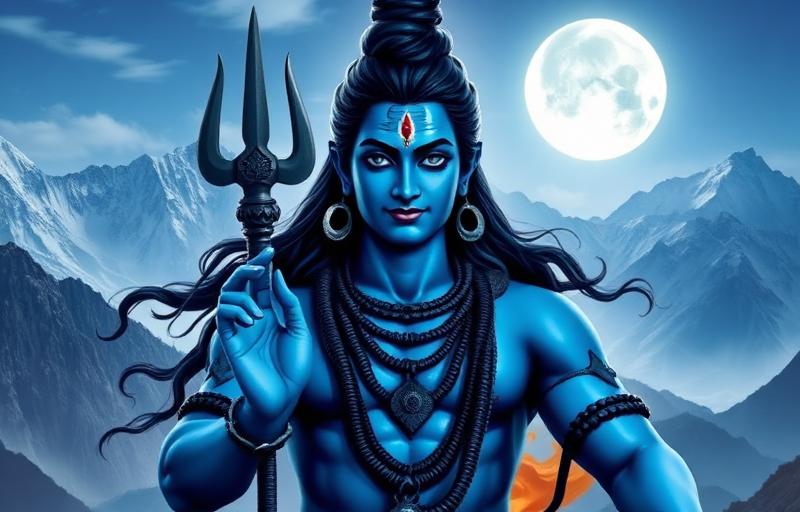
- Kanwar Yatra: Millions of devotees, called Kanwariyas, walk on foot, sometimes hundreds of kilometres, carrying Ganga water in decorated containers slung from a shoulder pole, to offer at a Shiva temple back home or at a major pilgrimage site. This is arguably the most visible, large-scale public expression of Sawan anywhere in India, transforming highways across the north into rivers of saffron-clad walkers.
- Sawan Somwar Vrat: The four Mondays of the month (3, 10, 17 and 24 August 2026) are treated as the structural backbone of the entire month, with widespread fasting, evening Shiv puja and jalabhishek observed by a large share of Hindu households regardless of how strictly religious they are the rest of the year.
- Mangala Gauri Vrat: Observed by many women on the Tuesdays of the month (4, 11, 18 and 25 August 2026), specifically for marital wellbeing and family harmony, running in parallel to the Monday-focused Shiva observance.
- Hariyali Teej and green traditions: Married and unmarried women wearing green bangles and clothing, applying mehendi, and celebrating Hariyali Teej with swings (jhula) are strongly associated with North Indian Sawan specifically, tied to Parvati's own tapasya and the season's monsoon greenery.
The overall character of North Indian Sawan is intensely public and communal: temple bells, highway processions, and a shared, visible fasting culture that touches nearly every household in some form.
South India: A Different Calendar and Different Emphasis
South India observes the Amanta Shravana month with a noticeably different emphasis, shaped by both the calendar difference described above and a distinct set of regional deity traditions.
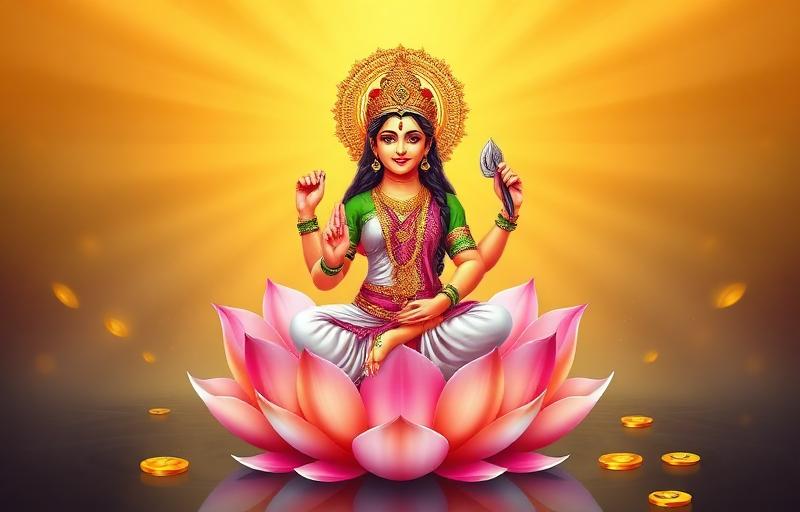
- Varalakshmi Vratam: Arguably the single most prominent Shravana observance across Andhra Pradesh, Telangana, Karnataka and Tamil Nadu, celebrated on a specific Friday within the month and dedicated to Goddess Lakshmi rather than centring exclusively on Shiva. Married women perform an elaborate home puja for family prosperity, a scale of observance that has no direct one-to-one equivalent in North Indian Sawan practice.
- Avani Avittam (Upakarma): A significant ritual observed on Shravana Purnima by Brahmin communities across South India, particularly Tamil Nadu, Karnataka and Andhra Pradesh, involving the ceremonial renewal of the sacred thread (yajnopavita or janeu). This is a distinctly South Indian institutional practice with no direct North Indian Sawan parallel.
- Shravana Shukravar (Friday) emphasis: Where North India's structural day is Monday for Shiva, several South Indian communities give comparatively greater weight to Fridays within Shravana for goddess-centred worship, alongside continued respect for Mondays at Shiva temples.
- Naming and regional identity: The month is called Shravana Masam in Telugu-speaking regions and by similar related names elsewhere in the south, and while Shiva temples absolutely see increased footfall throughout, the singular, almost exclusive Shiva-and-fasting focus that defines North Indian Sawan is balanced by significant goddess-centred worship running alongside it.
This is not a lesser or lighter observance, simply a differently weighted one, with Lakshmi and Gowri worship carrying comparable cultural weight to Shiva worship during this specific month in much of the south.
Side by Side: The Rituals That Differ Most
Placed directly against each other, a few contrasts stand out most clearly for anyone comparing the two regions.
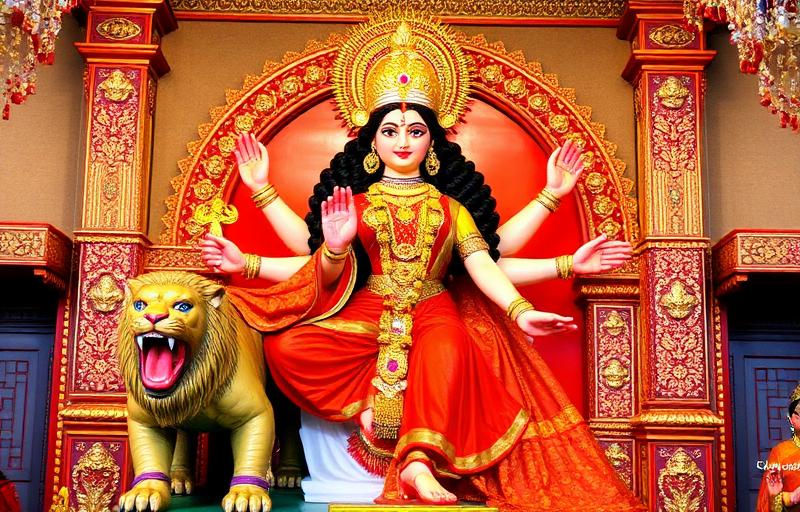
- Primary deity focus: North India's Sawan is overwhelmingly Shiva-centred, with goddess worship (Mangala Gauri, Hariyali Teej) running as a secondary, marriage-focused thread. South India's Shravana gives Lakshmi and various Gowri forms a role at least equal to, and in household practice sometimes greater than, Shiva-specific fasting.
- The walking pilgrimage culture: Kanwar Yatra's scale of foot pilgrimage carrying river water has no true South Indian Shravana equivalent of comparable size; South Indian Shiva pilgrimage traditions exist strongly but are not structurally tied to this specific month in the same organised, mass-walking way.
- Fasting structure: North Indian Sawan Somwar vrat is built around a single weekly fasting day (Monday) repeated four times; South Indian Varalakshmi Vratam is a single, once-a-month elaborate ritual day rather than a weekly repeated fast.
- Sacred thread renewal: Avani Avittam is a uniquely South Indian Brahmin-community institution with no Sawan parallel in the north.
- Colour and adornment customs: Green bangles, mehendi and jhula swings are distinctly North Indian Sawan markers; South Indian Shravana observance does not carry this same green-and-mehendi visual identity, instead expressing festivity through elaborate kolam or rangoli patterns and gold jewellery worn during Varalakshmi Vratam.
Seeing these side by side makes clear that "Sawan" and "Shravana" are not simply regional dialect names for an identical observance, but genuinely two related, overlapping, yet distinctly weighted festival traditions sharing the same lunar month.
What Remains Common Across Both Regions
Despite the real differences in calendar and emphasis, enough shared ground exists that a devotee moving between regions, for work, marriage or travel, is never entirely starting from scratch.
- Reverence for Shiva remains universal. Even in regions where Shravana's dominant public festival is Lakshmi-focused, Shiva temples still see meaningfully higher footfall throughout the month compared to the rest of the year, and Mondays retain their significance as Shiva's day nationwide.
- Rudrabhishek is practised pan-India. Water and milk abhishek on a Shivling, regardless of regional calendar or naming convention, remains a consistent, recognisable ritual from Kashmir to Kanyakumari during this general period.
- Om Namah Shivaya and core Shiva mantras cross every regional line. Sanskrit mantra chanting does not change with the Purnimanta-Amanta calendar shift; the Panchakshari mantra is chanted identically whether in a Varanasi temple or a Chennai one.
- Fasting as a spiritual practice, broadly, is respected everywhere, even where the specific structure, weekly versus monthly, single-deity versus multi-deity, differs from one region to the next.
- Family-centred, home-based ritual remains the norm across both regions, with the household puja space, rather than only the temple, serving as the primary site of daily observance throughout the month in both traditions.
🙏 The Vandnaa App carries puja vidhi, mantras and vrat guidance that work across regional traditions, useful whether your household follows Sawan Somwar, Varalakshmi Vratam, or both.
A Practical Note for Devotees Moving Between Regions
For the growing number of Indian households that relocate across regions for work, marriage or education, understanding these differences is not just academic; it shapes real, practical decisions during this month.
- If you have married into or moved to a region with a different Shravana tradition, it is entirely reasonable to continue observing your own family's Sawan Somwar vrat while also participating respectfully in your new region's Varalakshmi Vratam or other local customs, rather than treating it as an either-or choice.
- Checking a reliable regional panchang matters more than relying on memory for anyone managing both a North Indian family's Sawan dates and a South Indian spouse's or in-laws' Shravana dates, since the dark-fortnight dates genuinely diverge between the two calendars even in the same year.
- Temple visits abroad or in a mixed community often default to whichever regional tradition is locally dominant, so a Gujarati or Punjabi household living in Chennai, for instance, may find local Shiva temples following South Indian Shravana scheduling for certain events even while the household itself keeps North Indian Monday-based observance at home.
- None of these differences reflect a "more correct" version of Sawan. Both the Purnimanta and Amanta traditions are equally valid, equally ancient regional expressions of the same underlying reverence for this sacred lunar month, shaped by centuries of distinct local history rather than any doctrinal disagreement.
Understanding both traditions, rather than assuming one is the default and the other a variation, is genuinely useful for any Hindu household with roots or connections spanning both halves of the country.
What People Ask Most
Why does South India's Shravana month not start on the same date as North India's Sawan?+
North India follows the Purnimanta lunar calendar (month ends on a full moon) while most of South and West India follows the Amanta calendar (month ends on a new moon). Both share the same bright fortnight, but the dark fortnight attached to it differs, making the Amanta Shravana month run roughly two weeks later in its full span than the Purnimanta Sawan.
Is Kanwar Yatra observed in South India as well?+
Kanwar Yatra, at the scale seen in North India, is not a comparable South Indian Shravana tradition. South Indian Shiva devotion during this period expresses itself through temple worship and regional observances rather than a mass foot pilgrimage carrying river water, though small local variations of water-offering pilgrimages do exist in pockets.
What is Varalakshmi Vratam and how is it different from Sawan Somwar vrat?+
Varalakshmi Vratam is a single-day, elaborate home puja dedicated to Goddess Lakshmi, observed on a specific Friday in Shravana by married women across Andhra Pradesh, Telangana, Karnataka and Tamil Nadu for family prosperity. Sawan Somwar vrat, by contrast, is a weekly Shiva-focused fast repeated on all four Mondays of the month in North India.
Do South Indian Shiva temples get less crowded during Shravana compared to North India?+
South Indian Shiva temples do see increased footfall during Shravana, but the crowd intensity generally does not match North Indian Sawan Monday levels, since South Indian devotional attention during this month is shared more evenly between Shiva worship and major goddess-centred observances like Varalakshmi Vratam.
What is Avani Avittam and is it related to Sawan at all?+
Avani Avittam, also called Upakarma, is a South Indian Brahmin community ritual observed on Shravana Purnima involving the ceremonial renewal of the sacred thread (yajnopavita). It falls on the same bright-fortnight date shared by both calendars, but it is a distinct institutional practice with no direct equivalent in North Indian Sawan observance.
If my family follows North Indian Sawan but I now live in South India, which traditions should I follow?+
There is no conflict in following both. Many households continue their own family's Sawan Somwar vrat and mantras while also respectfully participating in local Shravana customs like Varalakshmi Vratam. Checking a regional panchang for the correct local dates is more useful than assuming one tradition overrides the other.
About the author
Pandit Mahesh Trivedi · Festival Traditions & Panchang
Pandit Mahesh leads the festival-date and Panchang content on Vandnaa. He cross-references multiple regional panchangs (Drik, Vaishnava, Bengali, Marathi) for every festival date published on the site.
Meet the Vandnaa editorial team →