An Entire Month of Restraint: The Maharashtrian Shravan Overview
Maharashtra follows the Amanta lunar calendar, so its Shravan month runs on a slightly different full span than North India's Purnimanta Sawan, though both share the same central bright fortnight. What genuinely sets Maharashtra apart, though, is not just calendar mechanics but the sheer breadth of daily-life observance the month commands.
In a great many Maharashtrian households, particularly among traditional and Brahmin communities, the entire month, not just specific fasting days, is treated as a period of dietary and lifestyle restraint. Many families avoid non-vegetarian food and eggs for all thirty-plus days of Shravan, not merely on Mondays, treating the whole month with the kind of dietary discipline that North Indian households typically reserve for individual vrat days. This is one of the clearest markers that distinguishes Maharashtrian Shravan practice from the Monday-specific fasting culture common further north.
The month is also unusually rich in named, day-specific observances layered on top of each other: Mondays for Shiva, Tuesdays for Mangala Gauri among newly married women, Fridays for Jivati Puja and goddess worship, and Saturdays sometimes marked for Maruti (Hanuman) in certain households, meaning that in a devout Maharashtrian home, almost every single day of the week carries its own specific ritual identity throughout the month rather than the observance concentrating heavily on one weekday alone.
This density of daily ritual, combined with month-long dietary discipline, is what gives Shravan in Maharashtra its particular, unmistakable local texture.
Shravani Somvar and the Distinctly Maharashtrian Shukravar
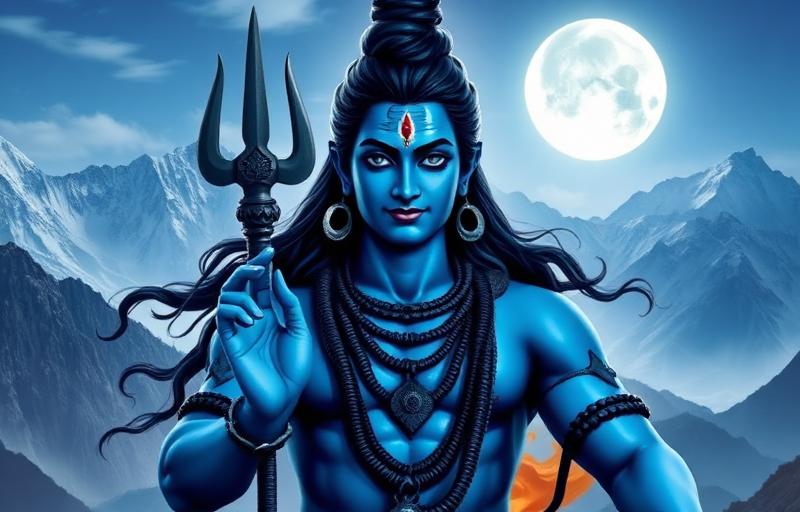
Monday, called Shravani Somvar in Marathi, follows broadly the same Shiva-fasting pattern familiar across India: temple visits, jalabhishek, and a phalahar-style vrat observed by many, though Maharashtrian households often extend this with specific local sweets and Marathi-language aartis.
Friday, however, is where Maharashtra diverges most distinctly, centred on Jivati Puja, a tradition with no direct equivalent in most North Indian Sawan practice. Jivati is worshipped in the form of a small printed picture, showing a goddess figure surrounded by children, rather than a carved idol, and mothers specifically perform this puja for the health, protection and long life of their children. The image is typically displayed on a wall near the household's puja space throughout Shravan and into the following month of Bhadrapada, garlanded and offered simple items like turmeric, kumkum and flowers each Friday.
What makes Jivati Puja notable within the broader landscape of Sawan traditions is its specific, narrow focus, it is not a general prosperity or marital-wellbeing prayer like Mangala Gauri, but one squarely centred on children's welfare, performed almost exclusively by mothers rather than the whole family together. In many Maharashtrian homes, the small Jivati picture is kept year after year, a familiar, recognisable fixture of Shravan Fridays that children themselves grow up recognising as distinctly their mother's monthly ritual.
Between Shravani Somvar's Shiva focus and Shukravar's Jivati and goddess worship, the Maharashtrian week during this month effectively runs two full, parallel devotional tracks rather than one.
Mangalagaur: A Night of Games for Newly Married Women
While Mangala Gauri Vrat exists in some form across parts of North India as well, Maharashtra's version, Mangalagaur, has evolved a distinctly festive, social character that goes well beyond a standard puja.
Who observes it: Newly married women, specifically during the first five years following their wedding, observe Mangalagaur on the Tuesdays of Shravan, praying for their husband's long life and a harmonious married life, worshipping Goddess Parvati in her Gauri form alongside a Shivling.
What makes it distinctly Maharashtrian is what happens after the puja itself concludes. Rather than the day ending quietly, women gather, often at the natal home (maher) of the newly married woman, for an entire night of traditional games and songs, a custom that has essentially made Mangalagaur as much a social celebration as a religious vrat. Well-known games include:
- Fugadi: A rhythmic, spinning circular dance performed in pairs, holding hands and turning in coordinated motion
- Jhimma: A similar group circle dance with its own distinct rhythm and hand-clapping pattern
- Bhendya: A word game built around Marathi verses, often played late into the night as energy and laughter build
These games are typically played through the night, sometimes literally until dawn, accompanied by traditional Marathi songs (Mangalagauriche khel songs), turning what begins as a solemn vrat into one of the most anticipated social occasions of the Maharashtrian Shravan calendar, particularly for women in the early years of marriage who look forward to reconnecting with friends and family at their maher during this specific festival.
Naga Panchami in Maharashtra: Regional Do's and Don'ts
Naga Panchami, falling on Monday, 17 August 2026, is observed across most of India, but Maharashtra applies a specific set of kitchen and household restrictions on this day that are distinctly regional in character.
Common Maharashtrian Naga Panchami practices:
- No cutting or frying vegetables with a knife or on a griddle on this day. Many households prepare all necessary vegetables the evening before, since using a blade or cooking on a tava is traditionally avoided, tied to a broader theme of not harming or cutting anything on a day dedicated to serpent worship.
- No digging, plowing or tilling the earth, extending the same non-harm principle to the soil itself, since snakes are believed to live within it.
- Worship of Nagoba, a folk name for the snake deity, through printed or drawn images and small clay or silver idols rather than live snakes, a shift that has become far more common as the display of live snakes by snake charmers has declined and become more restricted in recent decades.
- Offering milk, turmeric, kumkum and flowers to these images or idols, along with rice flour designs (rangoli) near the household threshold specific to the day.
A distinct regional variation on food preparation: because knives and cutting are restricted, many Maharashtrian households prepare specific dishes that do not require chopping on the day itself, such as puran poli or other pre-prepared sweets, planning the day's entire menu around this single restriction well in advance.
This emphasis on non-harm through kitchen practice, rather than just temple ritual, is one of the more distinctive regional expressions of Naga Panchami found in Maharashtra.
Narali Purnima and Pola: Two More Distinct Maharashtrian Days
Two further observances round out Shravan's uniquely Maharashtrian character, both tied closely to the state's coastal and agricultural life.
Narali Purnima falls on the same day as Shravan Purnima and Raksha Bandhan (Friday, 28 August 2026) but carries an entirely separate meaning along Maharashtra's Konkan coast. Fishing communities mark this day as the ceremonial end of the monsoon fishing ban, offering a fresh coconut (narali in Marathi) to the sea, worshipped as Varuna Devta or simply the sea itself, as thanks for safety through the monsoon and as a prayer for a bountiful, safe fishing season ahead. Boats are decorated, and the coastal atmosphere on this day carries a distinctly maritime, livelihood-centred devotion quite different from the domestic, family-oriented feel of Raksha Bandhan celebrated the same day inland.
Pola, a festival honouring bullocks and oxen central to Maharashtra's agricultural economy, is traditionally observed on Shravan Amavasya, also called Pithori Amavasya, the new moon marking the end of the Amanta Shravan month, particularly in Vidarbha and parts of western Maharashtra. Farmers wash, decorate and garland their bullocks, give them a rest from labour for the day, and lead them in a small village procession, a direct expression of gratitude toward animals essential to rural livelihoods, timed deliberately at the very close of this sacred month.
Both festivals share a common thread with the rest of Maharashtrian Shravan: gratitude expressed toward the natural and working world, the sea, the soil and the animals that sustain daily life, rather than devotion directed only at temple deities.
Maharashtrian Shravan Food: The Falahar Dishes That Went National
Maharashtra's contribution to Shravan is not limited to puja and games; a surprising number of the falahar dishes now eaten during vrat days across the whole of North India actually originated in, or were popularised by, Maharashtrian kitchens.
- Sabudana khichdi: Perhaps the single most widely recognised vrat food in India today, this tapioca-pearl preparation with roasted peanuts, cumin and green chilli is a genuinely Maharashtrian invention, now eaten during Sawan Somwar fasts, Navratri and Ekadashi across states that have no direct Shravan connection to Maharashtra at all.
- Varai (bhagar): A preparation using sama or barnyard millet rice, treated as a grain substitute permitted during vrat, cooked simply with ghee, cumin and peanuts, forming a staple base meal on fasting days throughout the month.
- Rajgira: Amaranth flour, used to make thalipeeth (a savoury flatbread) or laddoos, is another Maharashtrian vrat staple that has since travelled well beyond the state's borders.
- Kokum sherbet: A tangy, cooling drink made from the kokum fruit native to the Konkan coast, popular through the humid Shravan month as a refreshing, fasting-friendly beverage between meals.
What ties this back to the wider theme of Maharashtrian Shravan is the same instinct for restraint applied thoughtfully rather than harshly: these dishes were developed specifically to make month-long or day-long fasting genuinely sustainable, nutritious and satisfying, not merely symbolic deprivation, a practical culinary wisdom that has quietly shaped vrat food culture for the whole country.
🪔 The Vandnaa App's puja vidhi collection includes region-specific guidance, useful for Maharashtrian households wanting the correct Jivati and Mangalagaur puja steps alongside standard Sawan Somwar vidhi.
Reader Questions Answered
Do all Maharashtrian families avoid non-vegetarian food for the entire month of Shravan?+
Not universally, but it is a widespread practice among many traditional and Brahmin Maharashtrian households, who avoid non-vegetarian food and eggs for the whole month rather than only on specific fasting days. Practice varies by family, community and personal choice, so it is not a rule that applies to every single household in the state.
What is Jivati Puja and who performs it?+
Jivati Puja is a Maharashtrian Shravan Friday tradition where mothers worship a small printed image of the goddess Jivati, shown surrounded by children, praying for the health, protection and long life of their own children. It is performed almost exclusively by mothers and displayed near the household puja space through the month.
How is Mangalagaur different from the general Mangala Gauri Vrat observed elsewhere in India?+
The core puja is similar, worship of Goddess Gauri by newly married women, but Maharashtra's Mangalagaur has developed a distinct social dimension: an entire night of traditional games like Fugadi, Jhimma and Bhendya, often celebrated at the woman's natal home, turning the observance into as much a social gathering as a religious vrat.
Is Narali Purnima the same festival as Raksha Bandhan?+
They fall on the exact same day, Shravan Purnima (28 August 2026), but carry different meanings. Raksha Bandhan celebrates the sibling bond nationwide, while Narali Purnima is a coastal Maharashtrian tradition where fishing communities offer coconuts to the sea to mark the end of the monsoon fishing ban.
When is Pola celebrated, and is it part of Shravan?+
Pola is traditionally observed on Shravan Amavasya (Pithori Amavasya), the new moon that closes the Amanta Shravan month, particularly in Vidarbha and western Maharashtra. It honours bullocks and oxen central to the region's agricultural life, marking the very end of the sacred month with a festival of gratitude toward working animals.
About the author
Pandit Mahesh Trivedi · Festival Traditions & Panchang
Pandit Mahesh leads the festival-date and Panchang content on Vandnaa. He cross-references multiple regional panchangs (Drik, Vaishnava, Bengali, Marathi) for every festival date published on the site.
Meet the Vandnaa editorial team →