Sawan Purnima 2026: The Date That Closes the Month
Sawan Purnima 2026 falls on Friday, 28 August 2026 - the final day of the holy month of Shravan, which began on 30 July 2026. It is, quite literally, the day the moon completes its cycle back to full brightness after starting the month at zero (Amavasya fell on 12 August), and it is also, on the very same date, Raksha Bandhan.
Purnima, the full moon day of every lunar month, is already considered auspicious in its own right across the Hindu calendar - a day of completion, fullness and culmination, generally favoured for worship, charity and spiritually significant undertakings. Sawan Purnima carries all of that standard Purnima significance, plus the accumulated weight of being the final day of Shiva's own month - the culmination of four Sawan Somwars, Sawan Shivratri, Hariyali Amavasya, Nag Panchami and Mangala Gauri Vrat, all leading up to this one closing date.
Why this particular Purnima gets so much more attention than the other eleven or twelve Purnimas in a Hindu year comes down almost entirely to what else happens to fall on it: Raksha Bandhan, the festival celebrating the bond between brothers and sisters, observed nationally and among the Hindu diaspora worldwide. For most people, 'Sawan Purnima' and 'Raksha Bandhan' aren't experienced as two separate facts about the same day - they're a single occasion, and the rest of this guide is really about untangling why that pairing exists at all, rather than being coincidental.
Understanding that connection changes how the day feels - not just the end of a religious month, and not just a festival for siblings, but one continuous thread of protection and devotion that Sawan has been building toward since 30 July.
Why Raksha Bandhan Falls on Shravan Purnima Specifically
The pairing of Raksha Bandhan with Shravan Purnima isn't arbitrary - it traces back to a Vedic ritual that predates the sibling-focused festival most people associate with the day now.
The Vedic root: Shravani/Upakarma. In ancient practice, Shravan Purnima was the day Brahmins and Vedic students (especially those who had completed their upanayana, the sacred thread ceremony) would perform Upakarma - a ritual renewal of their yajnopavit (sacred thread), along with recitation of Vedic hymns and Rishi Tarpan. As part of this observance, priests would also tie a protective thread, a raksha sutra, around the wrists of their patrons and community members, invoking blessings and protection for the year ahead. This thread-tying act, performed specifically on Shravan Purnima, is the literal ancestor of what we now call 'Raksha Bandhan' - the word itself means 'bond of protection.'
How it broadened from a priestly ritual to a sibling festival: Over centuries, the practice of tying a protective thread expanded well beyond the Brahmin-patron relationship. Multiple mythological stories became attached to the custom, reinforcing and popularising it in different eras and regions:
- Indra and Indrani: One of the oldest cited legends has Indra's wife Sachi (Indrani) tying a protective thread on Indra's wrist before his battle against the asuras, helping secure his victory
- Yama and Yamuna: The river goddess Yamuna is said to have tied a rakhi on her brother Yama, the god of death, who granted her immortality in return - some households invoke this story specifically when a sister ties rakhi for her brother's long life
- Rani Karnavati and Humayun: A more historical (though debated) account has the Rajput queen Karnavati sending a rakhi to Mughal emperor Humayun requesting protection for her kingdom
- Draupadi and Krishna: Draupadi is said to have torn a strip of her saree to bandage Krishna's bleeding finger, and Krishna vowed to protect her in return - a moment many consider the emotional template for the modern brother-sister rakhi bond
By the time these layered stories had accumulated, the specific date - Shravan Purnima - was already fixed by the original Vedic Upakarma tradition, and every subsequent legend simply attached itself to a day whose significance was already established.
The Deeper Thread: Protection Runs Through All of Sawan
Once you know Raksha Bandhan's origin as a protection ritual, its placement at the very end of Sawan stops looking like a scheduling coincidence and starts looking like a thematic conclusion - because protection is arguably the single idea that runs underneath the entire month.
It starts with Sawan's founding myth. Every guide to Sawan returns to the same story: during the Samudra Manthan, the deadly Halahala poison threatened to destroy all of creation, and Lord Shiva drank it to protect the universe, holding it in his throat and becoming Neelkanth. The reason devotees pour water and milk on the Shivling all through Sawan is a direct, continuous act of gratitude for that one act of protection - the entire month's central ritual (jalabhishek) exists because of it.
It continues through Sawan's ancestor and nature rituals. Hariyali Amavasya's tarpan is an act of honouring and, in a sense, protecting the memory and peace of one's ancestors. Nag Panchami's worship of serpent deities is traditionally linked to protection from snake bite and Kaal Sarp-related affliction for the coming year. Even the tree-planting associated with Hariyali Amavasya is a protective act aimed outward, at the environment itself.
And it culminates in Raksha Bandhan. A sister tying a rakhi and a brother vowing protection in return is, structurally, the exact same gesture as the Vedic priest's original raksha sutra - protection invoked through a thread, blessed and sealed with intention - just narrowed from a community-wide blessing to the specific, personal bond between siblings.
Seen this way, Sawan's calendar isn't a loose collection of unrelated festivals stacked into one month. It's a month-long meditation on protection - divine (Shiva saving creation), ancestral (tarpan), natural (Nag Panchami, tree planting) and finally personal (Raksha Bandhan) - with each ritual scaling the same idea down to a more intimate level than the one before it, ending with the most personal version of all: the bond between a specific brother and a specific sister.
Upakarma and Rishi Tarpan: The Ritual Most People Don't See
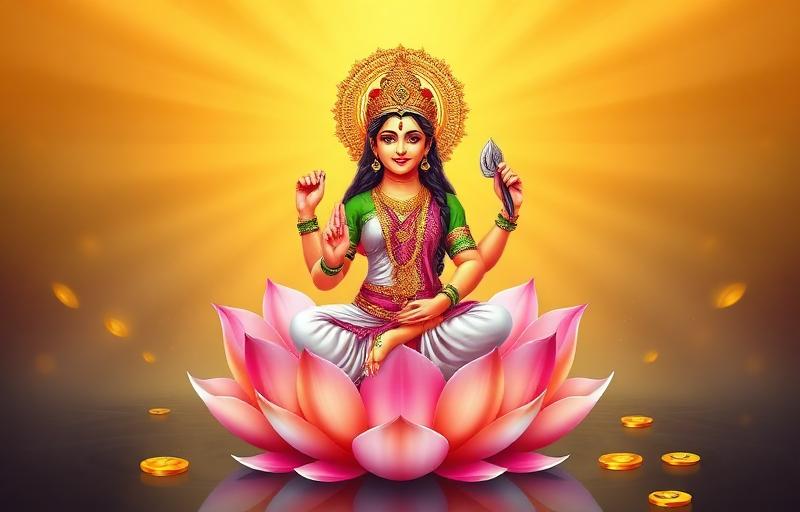
While Raksha Bandhan's rakhi-tying dominates how most of India experiences Sawan Purnima, the original Vedic ritual it grew out of is still actively performed the same day in more traditional and priestly households and communities, largely out of public view.
Upakarma (also called Shravani or Rishi Tarpan day) involves several distinct elements performed by those who wear the sacred thread (yajnopavit):
- Removing the old sacred thread worn since the last Upakarma (typically a year prior)
- Ganapati puja and a purification ritual (snana/achamana) before the main ceremony
- Reciting the Gayatri Mantra a specific number of times, often 108 or more, as part of the renewal
- Wearing the new yajnopavit, formally re-committing to Vedic study and duty for the year ahead
- Rishi Tarpan - offering water to the sages (rishis) who compiled and preserved the Vedas, thanking them for the transmission of that knowledge
Who observes this today: Primarily Brahmin communities and those formally initiated through upanayana, though the ritual is open in principle to anyone who has undergone the sacred thread ceremony. It's most visibly practised in temple towns and traditional Vedic learning centres, often at riverbanks or temple tanks specifically set up for the day's tarpan.
Gayatri Japam Day: Because of the Gayatri Mantra's central role in Upakarma, Shravan Purnima is also observed by many as a day dedicated specifically to intensive Gayatri chanting, treated as one of the most potent days of the year to recite it, independent of whether a person is formally performing the thread-renewal ritual.
Why this matters for understanding the day fully: Raksha Bandhan's rakhi-tying is, in effect, a simplified, popularised, universally accessible version of what Upakarma's priests were already doing on this exact date for centuries before - tying a thread and invoking protection - just extended from a Vedic community ritual to every Hindu household with a brother and sister.
📅 The Vandnaa App's calendar shows Sawan Purnima and Raksha Bandhan muhurat together for your city, along with a Sawan-completion puja reminder for the same day.
Narali Purnima, Kajari Purnima and Jhulan Purnima: The Day's Other Names
Raksha Bandhan and Upakarma aren't the only observances layered onto Shravan Purnima - depending on the region and community, the same date carries several other distinct names and rituals, each reflecting a different relationship with the season.
Narali Purnima (Coconut Full Moon): Observed prominently along the Konkan coast, in Maharashtra and Gujarat, by fishing communities. On this day, fishermen offer a coconut to the sea (specifically to Varuna, the god of water and oceans), seeking his blessing and protection before resuming sea voyages after the monsoon fishing ban ends. 'Nariyal' means coconut, and the coconut offering is considered both a gesture of gratitude and a request for safe waters ahead - another variation on the same protection theme running through the day.
Kajari Purnima: Celebrated mainly in parts of Uttar Pradesh, Bihar and Madhya Pradesh, particularly among farming communities, this observance centres on the sowing of the season's crop and is accompanied by Kajari folk songs about the monsoon, sung by women - connecting back to the same Kajari singing tradition associated with Sawan's swings and Teej festivities covered elsewhere in this Sawan series. Some traditions tie it to worship of the Earth and crop goddesses for a good harvest.
Jhulan Purnima: As covered in more depth separately, this marks the culmination of Jhulan Yatra, the Vaishnav festival in which Radha-Krishna idols are swung on decorated swings through the days leading up to this Purnima, observed prominently in Vrindavan, Puri and Bengal.
Why one day carries so many names: Shravan Purnima sits at a genuinely significant convergence point - the end of a sacred lunar month, the peak of the monsoon, and a day with deep Vedic ritual roots - which is exactly the kind of date around which multiple, independently evolved regional and community traditions tend to cluster over centuries, each shaped by local livelihood (fishing, farming) or local devotional focus (Vaishnav, Shaiva, Vedic) rather than contradicting one another.
Observing Sawan's End and Raksha Bandhan Together
For most families, 28 August 2026 will be experienced primarily as Raksha Bandhan, but knowing it's also Sawan Purnima adds a few practical and meaningful layers worth building into the day.
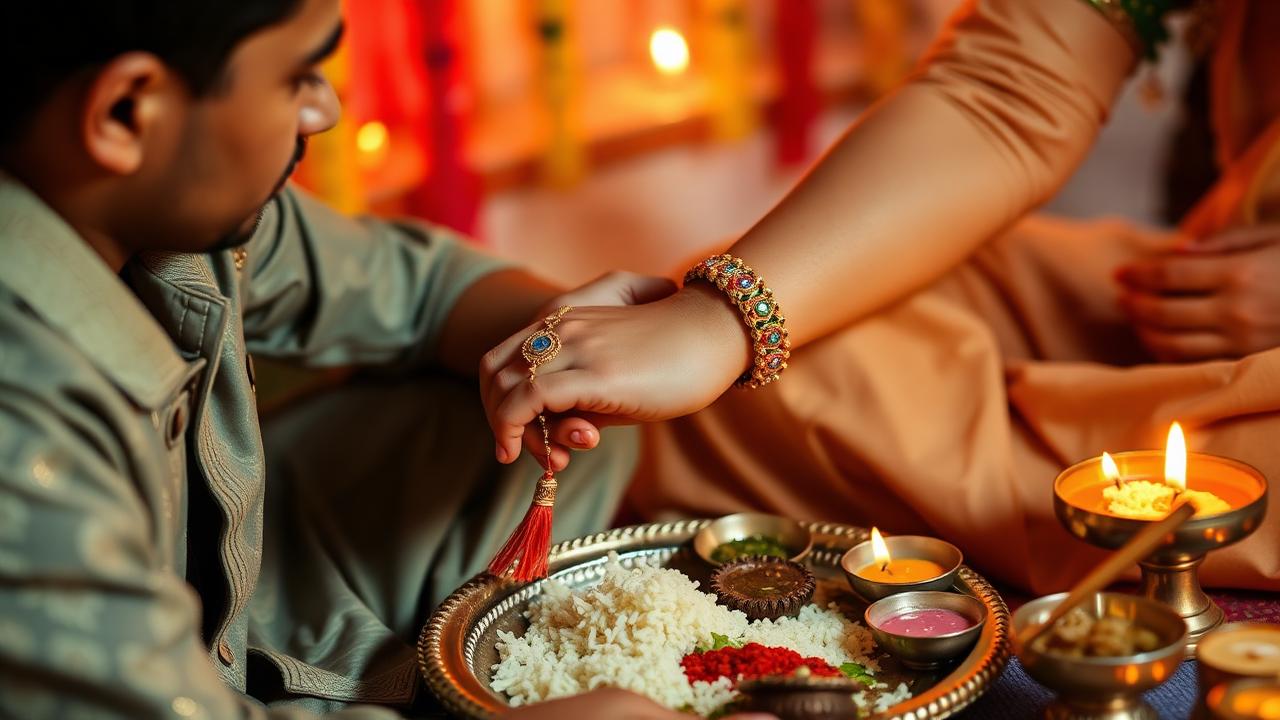
A suggested flow for the day: 1. Morning: A final Shiva abhishek if you've been observing Sawan's rituals through the month - a fitting close to four weeks of jalabhishek, marking the completion of the vow (sankalp) taken at the month's start 2. Late morning: Rakhi ceremony - the sister applies tilak, ties the rakhi, performs aarti, and the brother offers a gift and a vow of protection; check the specific muhurat (auspicious window) and any Bhadra kaal timing for your city before fixing the exact hour, since Bhadra is traditionally avoided for tying rakhi 3. Afternoon/evening: If your family observes Upakarma or Gayatri Japam traditions, this is typically performed earlier in the day, often before the rakhi ceremony itself 4. Evening: A closing puja or simply lighting a diya to mark Sawan's end is a common, low-effort way to acknowledge the month's completion alongside the day's bigger celebration
For siblings living apart: the protection theme doesn't require physical presence - couriered rakhis, video-call ceremonies, and rakhis tied to a photograph in front of the family's puja space are all widely accepted modern adaptations that keep the day's core meaning (a vow of mutual protection and care) intact.
One thing worth remembering: Raksha Bandhan's date moves every year with the lunar calendar, but it will always fall on Shravan Purnima - so the deeper connection covered in this guide isn't a one-time 2026 coincidence, it's the reason the festival exists on this date at all, every single year.
Common Questions From Devotees
Is Raksha Bandhan always on Sawan Purnima, or does that only apply to 2026?+
It's always on Shravan Purnima, every single year - that's the fixed rule, not a 2026-specific coincidence. Only the corresponding Gregorian calendar date changes annually as the lunar calendar shifts.
What is Upakarma and is it the same as Raksha Bandhan?+
Upakarma is the older Vedic ritual - performed by those wearing the sacred thread - of renewing the yajnopavit and performing Rishi Tarpan on Shravan Purnima. Raksha Bandhan grew out of the same day's tradition of tying a protective thread, but today refers specifically to the sibling-focused rakhi ceremony most households observe.
What is Narali Purnima and how is it related to Raksha Bandhan?+
Narali Purnima is observed by fishing communities along the Konkan coast, Maharashtra and Gujarat on the same date, involving a coconut offering to the sea god Varuna for safe fishing voyages. It shares the day's date and its underlying protection theme, but is a separate, distinct regional observance.
Does Sawan officially end on Purnima, or does it continue after Raksha Bandhan?+
Sawan (Shravan) officially ends on Shravan Purnima itself - 28 August 2026. Raksha Bandhan, falling on this exact day, effectively marks both the close of the sacred month and the festival in one date.
Why do some households observe Gayatri Japam specifically on this day?+
Because the Gayatri Mantra is central to the Upakarma ritual traditionally performed on Shravan Purnima, the day is considered especially potent for Gayatri chanting, and many observe it intensively regardless of whether they perform the full thread-renewal ceremony.
Can Raksha Bandhan be tied on a different day if Sawan Purnima timing doesn't work for a family?+
The tithi and any Bhadra kaal restriction determine the precisely auspicious window within the day, not the day itself, which stays fixed to Shravan Purnima. Families unable to meet in person on the exact day commonly adjust the celebration to a nearby weekend while still tying the rakhi with the same intention.
About the author
Pandit Mahesh Trivedi · Festival Traditions & Panchang
Pandit Mahesh leads the festival-date and Panchang content on Vandnaa. He cross-references multiple regional panchangs (Drik, Vaishnava, Bengali, Marathi) for every festival date published on the site.
Meet the Vandnaa editorial team →Explore on Vandnaa
Related Articles

Sawan Amavasya 2026: Date, Significance & Rituals
7 min read
Raksha Bandhan 2026: Date, Shubh Muhurat, Puja Vidhi, Rakhi Mantras & Bhadra Timing
9 min read

The Sawan Jhula: Origin & Significance of the Monsoon Swing Tradition
7 min read
Sawan Shivratri 2026: Date, Puja Vidhi, Significance & Mantras
9 min read