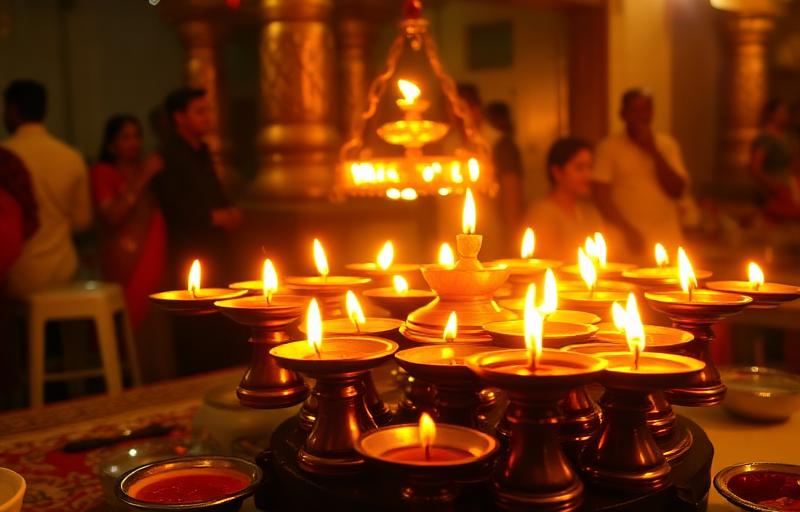
What the Solah Somwar Vrat Involves
The Solah Somwar Vrat is a devotional commitment to observe sixteen consecutive Mondays dedicated to Bhagwan Shiva, undertaken for a specific wish, gratitude for one already fulfilled, or simply sustained devotion. Unlike the four Sawan Somwars, which are tied to a single calendar month, the Solah Somwar Vrat can begin on any Monday of the year, most commonly started during Sawan, Margashirsha or right after a significant life event such as marriage.
The vrat's core structure repeats weekly for sixteen Mondays:
- A day-long fast, typically phalahar (fruit and milk-based) rather than nirjala, since sustaining sixteen consecutive weeks on a waterless fast is impractical for most devotees.
- A Shivling abhishek with water, milk or panchamrit, accompanied by Om Namah Shivaya japa.
- Reading or listening to the Shiv Mahima or Somwar Vrat Katha, the traditional story explaining the vrat's origin and benefits, on each of the sixteen Mondays.
- Wearing yellow or white clothing on the day, colours traditionally associated with this specific vrat.
- Avoiding salt (except sendha namak) and grains during the fast, similar to other Shiva vrats.
What distinguishes the Solah Somwar Vrat from an ordinary Monday fast is the fixed count and the requirement, in most traditions, that all sixteen Mondays be observed without a broken sequence; missing one is generally understood to mean restarting the count from the beginning, though practices on this point vary somewhat between regional traditions and individual priests' guidance.
Because Sawan already places four Mondays close together within a single month, many devotees choose to begin their Solah Somwar count at the start of Sawan specifically, using the month's natural momentum to establish the habit before continuing it into the following months.
How the Four Sawan Mondays Fit Into the Count
For a devotee who began a Solah Somwar Vrat before or during Sawan, this year's four Sawan Mondays, 3, 10, 17 and 24 August, count as ordinary numbered Mondays within that sequence; Sawan does not add extra weight or a bonus count to the Solah Somwar cycle specifically, even though the same four Mondays also happen to fulfil that month's separate Sawan Somwar observance.
This dual counting is actually one of the more practical aspects of starting a Solah Somwar Vrat in or around Sawan: a devotee observing both the Sawan Somwar tradition and a Solah Somwar Vrat simultaneously does not need to perform two separate fasts or two separate pujas on the same Monday. A single day's fast, abhishek and Shiv Mahima reading satisfies both observances at once, since their core practices overlap almost completely.
Where the two do differ slightly is in intention. The Sawan Somwar vrat is generally kept for the general merit of worshipping Shiva during his most sacred month, without necessarily being tied to a specific personal wish, while the Solah Somwar Vrat traditionally centres on a defined sankalp made at the very start of the sixteen-week cycle. A devotee doing both together might therefore hold two intentions in mind on the same Monday: the broader devotion of Sawan, and the specific wish behind the sixteen-week vrat.
For someone who started their Solah Somwar count on the first Sawan Somwar (3 August 2026), the four Sawan Mondays represent Mondays one through four of the sixteen, leaving twelve more consecutive Mondays to complete after Sawan ends on 28 August, stretching into Bhadrapada and Ashwin before the cycle closes.
Tracking Your Count: Signs the Cycle Is Nearing Completion
Keeping an accurate count across sixteen consecutive weeks is the single most practical challenge of this vrat, and devotees who lose track sometimes end up uncertain about whether they are on Monday twelve or fourteen, which matters because the udyapan ceremony is meant to follow immediately after the sixteenth.
A few practical ways to stay accurate:
- Mark each Monday on a physical calendar or a phone note the same evening the fast is completed, rather than relying on memory across four months.
- Note the specific date alongside the count, not just the number, so that a missed week is immediately visible rather than discovered only when the total feels off.
- Keep the Shiv Mahima or Vrat Katha booklet itself as a tracker, many printed versions include a small chart for marking each of the sixteen Mondays as they are completed.
- If a Monday is missed, most priests advise restarting the count from the beginning rather than skipping ahead, though some traditions allow continuing with a note of the gap; clarifying this with a family priest at the very start of the vrat avoids confusion sixteen weeks in.
For a devotee who began on the first Sawan Somwar, 3 August 2026, and kept the sequence unbroken, the sixteenth Monday would fall in late November 2026, well past Sawan itself, which is why this article focuses on how Sawan's four Mondays fit into the count rather than claiming the whole vrat concludes within Sawan.
Recognising the count is nearing its end, roughly the twelfth to fourteenth Monday, is the right time to start planning the udyapan itself, since it involves some advance preparation, such as arranging for a priest, inviting family, or preparing the specific prasad the closing ritual calls for.
Udyapan Vidhi: Step by Step
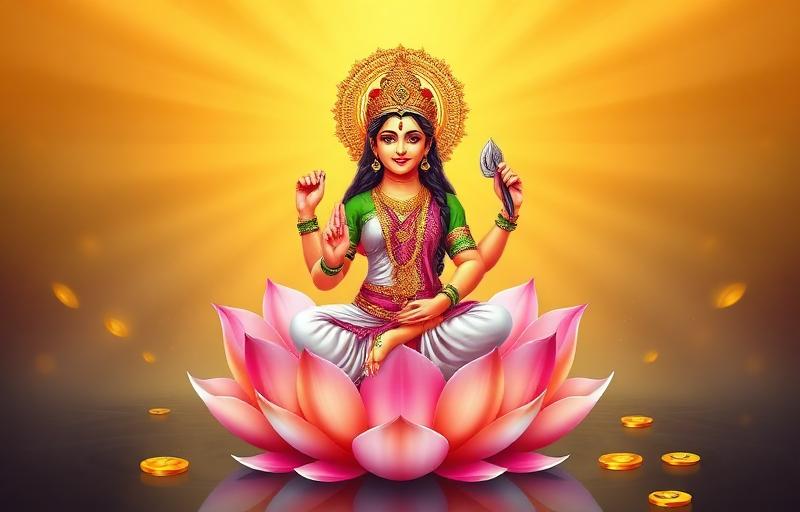
Udyapan marks the formal completion of the Solah Somwar Vrat, performed on or shortly after the sixteenth Monday, and is treated as a distinct ceremony from any single week's regular puja.
- Sankalp of completion: The ceremony begins with a formal acknowledgement that the sixteen-week vow has been fulfilled, spoken with the same intention as the original sankalp made at the start.
- A more elaborate abhishek: Typically includes water, milk, curd, honey, ghee and sugar (panchamrit), along with Ganga jal if available, offered with greater ceremony than a routine Monday's abhishek.
- Sixteen of everything: A distinguishing feature of this udyapan is offering items in multiples of sixteen wherever practical, sixteen bel patra, sixteen types of flowers where feasible, or sixteen small lamps, symbolically matching the sixteen weeks completed.
- Havan (optional but common): Many families include a small havan as part of udyapan, with a priest reciting Shiva mantras while offerings are made to the sacred fire.
- Feeding Brahmins or the needy: Traditionally, sixteen Brahmins, or a smaller symbolic number if that is not practical, are fed as part of the ceremony, alongside a broader meal offered to family and guests.
- Distribution of prasad: Sweets, often kheer or halwa, prepared specifically for the occasion, are distributed to everyone present and sometimes sent to neighbours and relatives who could not attend.
- A closing prayer of gratitude: Rather than asking for anything further, the udyapan's closing moments are meant to express thanks for the vrat's completion, regardless of whether the original wish has yet been fulfilled.
A priest is commonly engaged for this ceremony, though a simplified home version, without a havan, is also considered valid if resources or space are limited.
Timing Guidance for 2026
Because the Solah Somwar Vrat's start date varies by individual, there is no single udyapan date that applies to every devotee the way Sawan's fixed dates do. That said, a few timing principles help devotees plan their own specific udyapan for 2026:
- The udyapan should follow the sixteenth Monday, ideally on that same day or within the following few days, rather than being delayed by weeks, since the ceremony is meant to close the cycle promptly.
- Avoid scheduling it during inauspicious periods such as a Rahu Kaal window on the chosen day, or during a period of mourning in the family; a family priest or a Panchang can confirm whether the intended date carries any specific restriction.
- Devotees who began on 3 August 2026 (the first Sawan Somwar) and kept an unbroken sequence would reach their sixteenth Monday around late November 2026, making that period the natural udyapan window for this specific group.
- Devotees who began earlier in the year, such as during Margashirsha of the previous year or after a wedding earlier in 2026, should count forward from their own start date rather than assuming any connection to Sawan's calendar.
- If the sixteenth Monday falls on a day with another major festival, some families prefer shifting the udyapan to the following Monday for a less crowded, more focused ceremony, though this is a matter of convenience rather than requirement.
- Consulting a family priest close to the actual sixteenth Monday, rather than months in advance, gives the most accurate reading of that specific date's suitability, since Panchang details can shift the recommendation slightly.
The one constant across all cases is that Sawan is a common and auspicious starting point for the vrat, not its ending point.
What If Your Sixteenth Monday Doesn't Fall in Sawan?
For most devotees, the answer to this is straightforward: it usually will not, and that is entirely expected. Sixteen consecutive weeks span almost exactly four months, so a vrat begun in Sawan naturally concludes well outside it, typically somewhere in Margashirsha or early Paush depending on the exact starting Monday. There is no requirement, in any mainstream tradition, that the Solah Somwar Vrat begin or end within Sawan specifically; Sawan is simply a popular and auspicious month to start it, not a container the entire vrat must fit inside.
This matters because some devotees mistakenly believe the vrat needs to be compressed into Sawan's four Mondays, and either give up on the idea when they realise four weeks isn't enough, or feel they have done something incorrectly when their udyapan lands in a completely different season. Neither concern is warranted. The sixteen-week structure is independent of any specific month; Sawan's role is limited to being an emotionally and practically convenient starting point, since the devotional momentum, the temple visits, the family's shared observance of Sawan Somwar, make picking up the habit easier than starting cold in an ordinary month.
For those who specifically want their entire vrat, start to udyapan, to fall within a single auspicious season, Shravan through Kartik (roughly August to November) covers most of the traditional festival-dense months and is often suggested by priests as a natural sixteen-week arc for devotees who prefer that continuity, though this remains a matter of personal preference rather than scriptural requirement.
Whatever the exact months involved, what matters most is the unbroken weekly discipline itself, not which specific calendar months happen to hold the sixteenth Monday.
📅 The Vandnaa App lets devotees mark their own Solah Somwar start date and get a weekly reminder through all sixteen Mondays, regardless of which months they fall in.
Reader Questions Answered
Do all four Sawan Mondays count toward my Solah Somwar Vrat?+
Yes, if your Solah Somwar count is already running, the Sawan Mondays count as ordinary numbered Mondays in that sequence. A single fast and puja on each date satisfies both the Sawan Somwar and Solah Somwar observances together.
What happens if I miss one Monday during the sixteen-week cycle?+
Most priests advise restarting the count from the beginning if a Monday is missed, though some regional traditions allow noting the gap and continuing. It is worth clarifying this with a family priest at the start of the vrat.
Does the Solah Somwar Vrat have to start and end within Sawan?+
No. Sixteen consecutive weeks span roughly four months, so a vrat begun in Sawan will naturally conclude well after it ends. Sawan is simply a popular, auspicious starting point, not a requirement for the whole cycle.
What is offered during the udyapan ceremony?+
A fuller abhishek with panchamrit, offerings in multiples of sixteen where practical, an optional havan, feeding Brahmins or those in need, and distributing prasad such as kheer or halwa to everyone present.
Can women observe the Solah Somwar Vrat, and is it different for unmarried devotees?+
Yes, both married and unmarried devotees, men and women, observe this vrat. Unmarried devotees often keep it for a good marriage or life partner, while married devotees typically keep it for family wellbeing; the ritual structure itself remains the same.
Is a priest necessary for the udyapan, or can it be done at home?+
A priest is commonly engaged, especially if a havan is included, but a simplified home version without a havan, focused on the abhishek, offerings and prasad distribution, is also considered valid.
About the author
Pandit Mahesh Trivedi · Festival Traditions & Panchang
Pandit Mahesh leads the festival-date and Panchang content on Vandnaa. He cross-references multiple regional panchangs (Drik, Vaishnava, Bengali, Marathi) for every festival date published on the site.
Meet the Vandnaa editorial team →Explore on Vandnaa
Related Articles
Sawan's Fourth Somwar 2026: How to Observe the Final Monday
7 min read
Turning Your Sawan Vrat Into a Longer Shiva Sadhana Beyond the Month
7 min read

8 Benefits of Sawan Somwar Vrat: Health & Spiritual Advantages
7 min read
Sawan Somwar 2026: Dates, Vrat Vidhi, Shiv Mantras & Why Mondays in Sawan Are So Powerful
10 min read