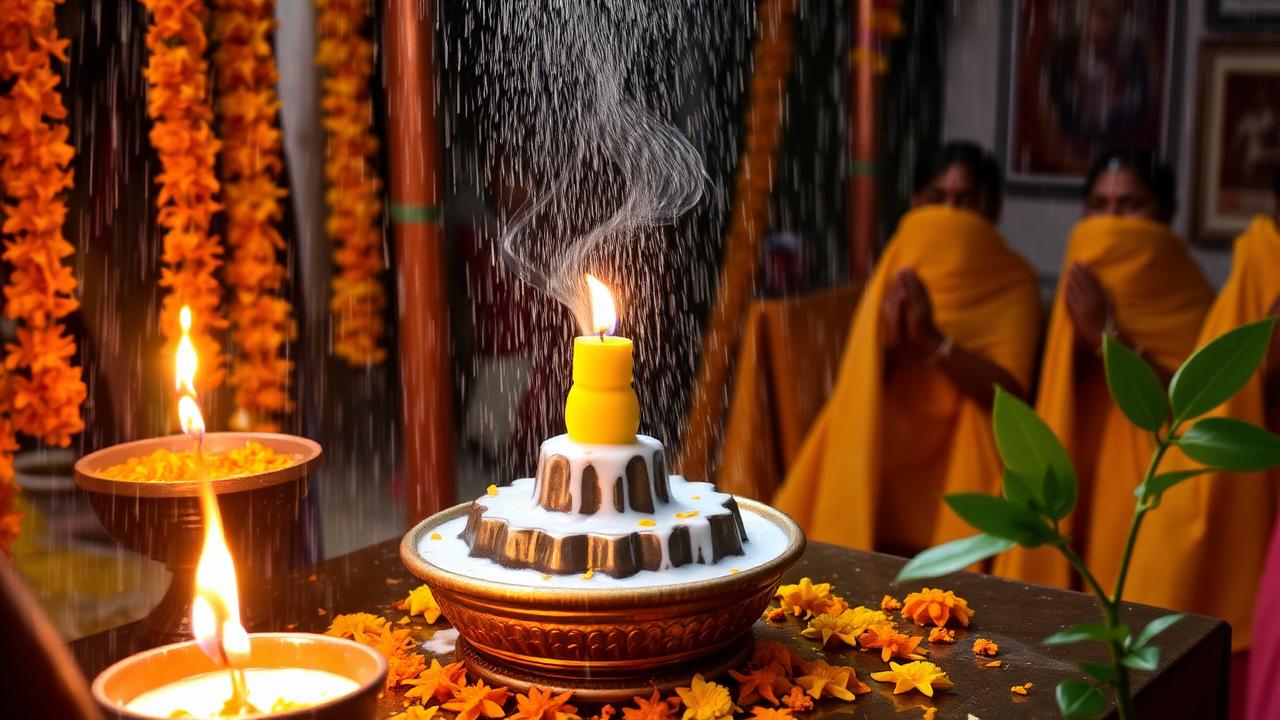
Why Even Small Mistakes Matter in Sawan Vrat
Sawan Somwar vrat is not simply about skipping a meal. It is a sankalp - a formal vow taken before Lord Shiva, and in Hindu tradition, a broken or carelessly kept vow is believed to carry less phal (fruit) than one observed with full awareness. This is why elders insist that intention and correctness matter as much as the fasting itself.
Most devotees who slip up are not being lazy or insincere. They simply were never taught the finer rules, because these details tend to pass down orally from grandmother to daughter-in-law rather than being written anywhere formal. A first-time vrati might genuinely not know that certain flowers are forbidden on the Shivling, or that eating a stray grain of rice technically breaks a falahar-only fast.
The good news: none of these seven mistakes require you to abandon the vrat or start over from scratch. Hindu tradition is remarkably forgiving of honest error - there is no vrat police, and Shiva is described across the Puranas as Bholenath, the innocent-hearted one who is pleased by sincerity even when the ritual form is imperfect. A vrat performed with ninety percent correctness and full devotion still outweighs a mechanically perfect vrat performed without feeling.
That said, learning the actual rules matters, because:
- Repeating the same error every Monday for four weeks compounds the shortfall rather than resolving it
- Some mistakes, like consuming onion-garlic without realising it was in a cooked dish, can be corrected simply by being more alert while shopping and cooking
- Understanding the reasoning behind a rule, not just the rule itself, makes it far easier to follow consistently
This guide walks through the seven mistakes seen most often among Sawan devotees, arranged from the most common food-related slips to the deeper attitude mistakes that matter just as much as anything you eat or skip.
Mistakes 1 & 2: Getting the Falahar Food Wrong
Mistake 1: Eating grains disguised as falahar. Sabudana (tapioca pearls), kuttu ka atta (buckwheat flour) and singhare ka atta (water chestnut flour) are the backbone of a Sawan falahar thali, but packaged versions of these often contain hidden fillers. Cheap sabudana papad and bought kuttu puri mixes are sometimes cut with regular wheat flour or besan to reduce cost. Always check the ingredient list, or better, buy from a trusted source and prepare it at home. Sendha namak (rock salt) is the only permitted salt, and this is another frequent slip since many packaged namkeens use ordinary iodised salt.
Mistake 2: Treating falahar as a free-for-all buffet. A falahar meal is still a vrat meal, meant to be light and sattvic, not an excuse to eat fried sabudana vada, potato chips and sweets in unlimited quantity through the day. Overeating fried falahar foods defeats the purpose of the fast, which is meant to lighten the body and sharpen focus for evening puja, not leave you heavier than a normal eating day. Traditional guidance suggests one proper falahar meal after the evening Shiv puja, with fruit, milk, or a handful of nuts permitted earlier in the day if needed for health reasons.
How to avoid both:
- Cook falahar dishes at home using ingredients you have personally checked rather than pre-made packets
- Keep the meal simple - boiled or roasted rather than deep fried, wherever possible
- Remember the fast is broken only after darshan and abhishek, not the moment hunger strikes at four in the afternoon
- Keep a small printed list of permitted and forbidden ingredients on the kitchen shelf during Sawan so the whole family avoids an accidental slip
Mistakes 3 & 4: Offering Items Shiva's Puja Never Accepts
Mistake 3: Offering kewra, ketaki, champa or coconut water on the Shivling. According to a well-known Puranic account, the ketaki flower once gave false testimony in a dispute between Brahma and Vishnu over who was supreme, and Shiva cursed it to never be used in his worship again. Champa is excluded for a related reason in some regional traditions, and coconut water is generally avoided as an abhishek liquid because a whole coconut, not the water alone, is the customary offering in most Shaiva practice. Devotees who unknowingly buy a mixed flower garland from a general flower seller sometimes include these without realising it.
Mistake 4: Breaking bilva leaves the wrong way. Bel patra (bilva leaves) are the single most important offering in Shiv puja, but the leaf must be whole, ideally with three leaflets joined at a single stem, unbroken and unblemished, with the smooth side placed downward and the textured side up. Plucking fresh leaves directly from the tree on a Monday or on Sawan Shivratri itself is traditionally avoided - the accepted practice is to pluck on the preceding Sunday and store the leaves in water so they remain fresh for the next day's puja. A torn or dried-out leaf is still offered rather than discarded in a pinch, but it should not be the default choice when better leaves are available.
Quick fix: Buy bel patra a day in advance from a trusted flower vendor near a Shiv temple, rinse gently, and store in a bowl of water overnight. Keep kewra, ketaki, champa and coconut water off your offering tray entirely - when in doubt, plain water, milk, bilva leaves and white flowers are always safe choices that Shiva's puja never refuses.
Mistake 5: Breaking the Fast Too Early or Skipping Evening Puja
The single most common mistake reported by Sawan vratis is impatience with timing. The traditional structure of a Sawan Somwar vrat is built around the evening Shiva puja, not the clock on the wall - the fast is meant to be broken only after this puja and abhishek are complete, typically within the pradosh kaal window roughly ninety minutes before and after sunset.
Why devotees slip here: Office hours, school pickups, and long commutes mean many working devotees reach home exhausted and hungry by seven or eight in the evening, and the temptation to grab a quick falahar snack before puja - 'just this once' - is strong. Once this happens on the first Monday, it becomes psychologically easier to repeat on the following three, quietly eroding the discipline the vrat is meant to build.
Skipping puja altogether is the deeper version of this mistake. Some devotees, pressed for time, eat their falahar meal and consider the day's vrat 'done' without ever performing abhishek or even a two-minute Om Namah Shivaya japa. Fasting without worship is only half the practice - the Puranas frame Sawan Somwar as a day of both upvas (fasting) and puja (worship) together, and the two are not interchangeable.
Practical fix for busy schedules:
- Keep a small travel puja kit - a tiny Shivling or photo, a bottle of water, and a few bilva leaves - so puja can be done even away from home
- If reaching a temple is impossible, five minutes of jalabhishek with tap water at home, while chanting the Panchakshari mantra, is considered valid and sincere
- Set a phone reminder thirty minutes before sunset so puja happens before hunger takes over decision-making
- Treat the evening puja as non-negotiable and the meal as what comes after, never the reverse
📿 The Vandnaa App sends a gentle Sawan Somwar reminder before sunset each Monday, along with a do's-and-don'ts checklist, so you can catch these seven mistakes before they happen rather than after.
Mistakes 6 & 7: Breaking Continuity and Turning Vrat Into Competition
Mistake 6: Giving up after missing one Monday. Life happens - illness, travel, a family emergency, or a work deadline can genuinely make fasting unsafe or impossible on a given Sawan Somwar. The mistake is not missing a day; it is assuming the entire vrat is now 'ruined' and abandoning the remaining Mondays out of guilt or embarrassment. Traditional guidance is far more practical: if a Monday is missed for a genuine reason, a devotee can perform a simple prayaschitta (corrective act) - visiting a Shiv temple as soon as possible, offering water and bilva leaves, and mentally renewing the sankalp - then continuing with the remaining Mondays as planned. An incomplete-but-sincere vrat carries real merit; an abandoned one carries none.
Mistake 7: Turning devotion into comparison. Social media has quietly introduced a mistake that did not exist a generation ago - devotees posting elaborate puja thalis, hours-long temple queues, and elaborate abhishek setups, which can make a simpler home puja feel inadequate by comparison. This comparison mindset is, according to traditional teaching, more damaging to the spirit of the vrat than any food slip-up. The Bhagavad Gita's teaching on nishkama karma - action without attachment to outcome or recognition - applies directly here: a vrat performed for validation carries a different intention than one performed quietly for Shiva alone.
How to protect against both:
- Write your sankalp down, even a one-line note, before Sawan begins, including a reminder to yourself that missing a day does not cancel the vow
- Mute or limit puja-related social media during Sawan if comparison is triggering guilt rather than inspiration
- Remember that a five-minute home jalabhishek performed with full attention outweighs an elaborate ritual performed for an audience
- Focus each Monday on your own relationship with Shiva, not anyone else's version of devotion
What to Do If You Have Already Slipped Up
If you are reading this after already making one or more of these mistakes this Sawan, the tradition's response is remarkably gentle: correct, don't abandon. Hindu vrat practice has always included the concept of prayaschitta - a small corrective offering or act that restores the spirit of a vow without requiring the devotee to restart from zero.
A simple correction ritual you can do today: 1. Visit a Shiv temple, or set aside five quiet minutes before your home Shivling or photo 2. Offer a lota of water while mentally acknowledging the specific slip - 'I ate before puja last Monday' or 'I used the wrong salt' 3. Chant Om Namah Shivaya eleven or 108 times with full attention 4. Recommit verbally or mentally to following the remaining Mondays more carefully 5. Offer bilva leaves and a simple diya as a gesture of renewed intention
For food-related slips specifically, many households follow the practice of donating food to a Brahmin, a temple, or simply feeding someone in need on the next available day, as a way of balancing the unintended lapse.
The larger lesson these seven mistakes point to is that Sawan Somwar vrat was never designed as a test to be passed or failed perfectly. It is a monthly rhythm of remembering Shiva through small, repeated acts of restraint and offering. A devotee who fasts imperfectly but shows up every single Monday with genuine intention is, in the tradition's own telling, closer to Shiva's heart than one who fasts with flawless technique but a distracted mind.
Frequently Asked Questions
Can I drink water during Sawan Somwar vrat?+
Yes. Most devotees observe a phalahar-style vrat where water, milk, and fruit are permitted throughout the day, with the one proper meal taken only after evening puja. A strict nirjala (waterless) fast is a separate, more advanced practice and is not required for Sawan Somwar unless you choose it deliberately.
What happens if I accidentally eat something not allowed during the vrat?+
An honest, unintentional slip does not cancel your vrat's merit. Traditional guidance suggests offering a simple prayaschitta - a lota of water and a few minutes of Om Namah Shivaya japa at a Shiv temple or your home altar - and continuing with the remaining Mondays as planned.
If I miss one Sawan Somwar completely, should I stop the vrat for the rest of the month?+
No. Missing one Monday due to illness or a genuine emergency does not invalidate the vrat you have already kept. Perform a simple corrective offering when you are able, and resume the remaining Sawan Mondays - an incomplete but sincere vrat still carries real merit.
Does hidden onion or garlic in cooking oil or masalas break the vrat?+
It is considered an unintentional lapse rather than a deliberate break, since intention matters greatly in vrat tradition. To avoid it altogether, cook falahar dishes at home in a separate, clean pan using only rock salt, cumin, and ghee, and avoid pre-made masalas or restaurant food during vrat days.
Can married women follow the same rules as the Solah Somwar vrat during Sawan?+
Yes, the core rules - falahar food, evening puja, and abstaining from grains - are largely shared. The Solah Somwar vrat is a specific 16-week vow usually undertaken for marriage or family wellbeing, while Sawan Somwar vrat is a four-week seasonal observance; married women can keep either, or both together, following the same dietary and puja guidelines.
What if I genuinely don't have time for a full evening puja on a busy Monday?+
A short, focused puja is far better than none at all. Even five minutes of jalabhishek with plain water at home, chanting Om Namah Shivaya while offering a bilva leaf, is considered valid and sincere. What matters most is that some form of worship happens before the fast is broken, not the length of the ritual.
About the author
Pandit Mahesh Trivedi · Festival Traditions & Panchang
Pandit Mahesh leads the festival-date and Panchang content on Vandnaa. He cross-references multiple regional panchangs (Drik, Vaishnava, Bengali, Marathi) for every festival date published on the site.
Meet the Vandnaa editorial team →