
Who Was Shabari?
Shabari was an aged tribal woman, a devotee who lived in a simple hermitage near the Pampa lake in the forest. As a young woman she had come to the ashram of the sage Matanga to serve. The sages there, before leaving their bodies, told her that one day Lord Rama himself would come to her, and she should wait for him.
With complete faith, Shabari waited - for years, even decades. Every single day she swept the path, gathered fresh flowers, and went out to pick sweet berries (ber), believing that her Lord might arrive that very day. Her whole life became one long, patient act of waiting in love.
The Story of the Tasted Berries
During their search for Sita, Lord Rama and Lakshmana came to Shabari's hermitage. When she saw them, her decades of waiting bore fruit - she was overwhelmed with joy and bowed at Rama's feet.
Wishing to feed her Lord the very best, she offered the berries she had gathered. But out of simple, loving care, she had first tasted each berry herself to be sure she gave him only the sweet ones and threw away the sour ones. By the rules of ritual purity, such half-eaten (jhootha) food should never be offered to anyone, let alone a divine guest.
Yet Lord Rama, seeing only the love in her heart, ate the berries with delight and praised their sweetness. Lakshmana hesitated, but Rama gently taught him that no offering is sweeter than one given with pure devotion. Shabari, blessed by his darshan and his words, attained liberation.
The Lesson of Shabari Ke Ber
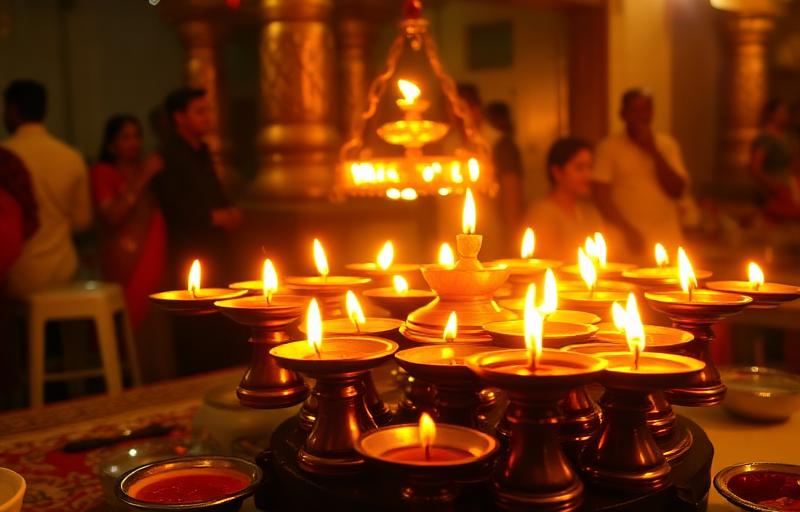
The story of Shabari's berries is one of the most beloved in the Ramayana because it overturns every outer measure of worth:
- Devotion over ritual: What looked impure by rule was pure by love. The Lord measures the heart, not the form.
- Patience and faith: Shabari waited a lifetime without doubt. True bhakti does not lose hope.
- Beyond caste and status: A poor tribal woman became Rama's honoured devotee, teaching that God belongs to all who love him.
- Simplicity: She had nothing grand to offer - only wild berries and a full heart. That was enough.
Shabari teaches every devotee that the smallest offering, given with genuine love, reaches God more surely than the grandest ritual offered without it.
What People Ask Most
Why did Shabari taste the berries before offering them to Rama?+
Out of simple, loving care. She tasted each berry to make sure she offered her Lord only the sweet ones and discarded the sour ones. Her intention was pure love, which is why Rama happily accepted them.
What is the main lesson of the Shabari story?+
That pure devotion matters more than ritual purity, caste or status. God looks at the love in the heart, not at outer rules. The smallest offering given with sincere bhakti reaches the divine.
What is Navadha Bhakti that Rama taught Shabari?+
Navadha Bhakti means the nine forms of devotion that Lord Rama describes to Shabari in the Ramcharitmanas - including satsang, listening to katha, service of the guru, singing the Lord's praises, chanting his name, virtue, seeing God in all beings, contentment and surrender.
Where did the meeting of Rama and Shabari take place?+
At Shabari's hermitage near the Pampa lake in the forest, where she had served at the ashram of sage Matanga. Rama and Lakshmana came there during their search for Sita.
About the author
Pandit Ravindra Sharma · Vedic Rituals & Bhakti, 22+ years
Pandit Ravindra is the Vandnaa editorial team's resident specialist on aarti, chalisa, and daily devotion. He has performed home and temple pujas across Varanasi and Delhi for over two decades and contributes the bhakti-focused articles on this site.
Meet the Vandnaa editorial team →