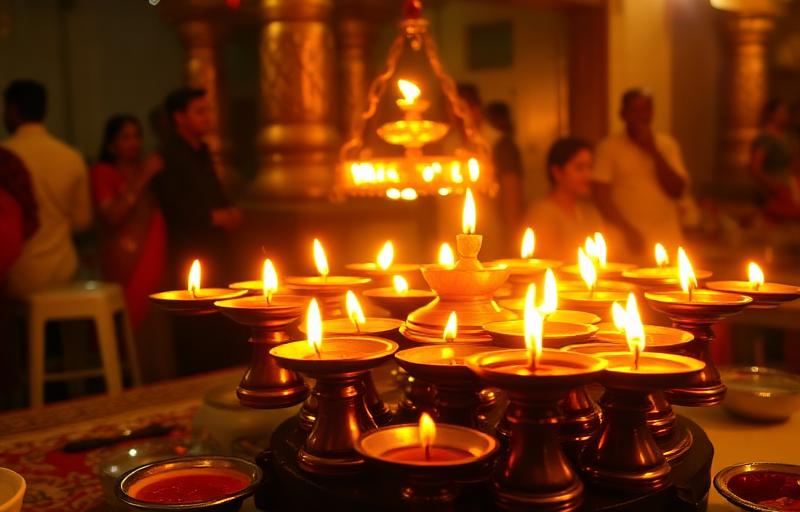
What Is the Shanti Path?
The Shanti Path (peace prayer) is among the most beloved of all Hindu prayers because it asks nothing for oneself alone - it prays for the happiness and well-being of every being. Drawn from the Upanishads, it expresses the heart of Sanatana Dharma: that all life is one family (vasudhaiva kutumbakam).
These verses are chanted at the start and close of pujas, yajnas, classes and gatherings, and end with 'Om Shanti Shanti Shanti' - peace invoked three times, for peace in the body, the mind and the world. To chant the Shanti Path is to widen the heart beyond the self and bless the whole of creation.
Peace Prayers - Shlokas, Transliteration & Meaning
1. Om Sarve Bhavantu Sukhinah:
ॐ सर्वे भवन्तु सुखिनः सर्वे सन्तु निरामयाः । सर्वे भद्राणि पश्यन्तु मा कश्चिद्दुःखभाग्भवेत् ॥ ॐ शान्तिः शान्तिः शान्तिः ॥
Om Sarve Bhavantu Sukhinah Sarve Santu Niramayah, Sarve Bhadrani Pashyantu Ma Kashchid-duhkha-bhag-bhavet. Om Shanti Shanti Shanti.
Meaning: May all be happy, may all be free from illness, may all see what is auspicious, may no one suffer. Om peace, peace, peace.
2. Asato Ma Sad Gamaya (from the Brihadaranyaka Upanishad):
ॐ असतो मा सद्गमय । तमसो मा ज्योतिर्गमय । मृत्योर्मा अमृतं गमय । ॐ शान्तिः शान्तिः शान्तिः ॥
Om Asato Ma Sad Gamaya, Tamaso Ma Jyotir-gamaya, Mrityor-ma Amritam Gamaya. Om Shanti Shanti Shanti.
Meaning: Lead me from the unreal to the real, from darkness to light, from death to immortality. Om peace, peace, peace. This is a prayer for inner truth, knowledge and the deathless Self.
When & How to Chant the Shanti Path
- At the start and end of puja: Traditionally the Shanti Path opens and closes worship, prayers and study, dedicating them to universal peace.
- Morning or evening: It is a beautiful daily prayer - chant it once in the morning to bless the day, or in the evening to close it in peace.
- In gatherings: It is recited at the end of community events, classes and satsangs to send everyone home with goodwill.
- Chant slowly and clearly: Take care with each word; let the three 'Shanti' at the end be slow and serene.
- Feel the meaning: As you chant, genuinely wish happiness for all beings - family, strangers, even those who trouble you. That intention is the prayer's true power.
Benefits & Inner Meaning

- A wider, kinder heart: Praying for all beings dissolves selfishness and grudges, replacing them with goodwill.
- Inner peace: Repeating 'Shanti' three times settles the body, mind and surroundings into calm.
- A higher aim: Asato Ma turns the mind toward truth, knowledge and the eternal Self, lifting it above petty worries.
- A blessing on every act: Beginning work, study or worship with the Shanti Path dedicates it to the good of all.
- Unity: It expresses the core truth that all life is one family, healing division with compassion.
The Shanti Path is short, simple and deeply moving. Made a daily habit, it gently reshapes the heart toward peace and care for the whole world.
Frequently Asked Questions
What does Om Sarve Bhavantu Sukhinah mean?+
It means 'May all be happy, may all be free from illness, may all see what is auspicious, may no one suffer.' It is a universal prayer for the well-being of every being, ending with 'Om Shanti Shanti Shanti'.
What is the meaning of Asato Ma Sad Gamaya?+
From the Brihadaranyaka Upanishad, it prays 'Lead me from the unreal to the real, from darkness to light, from death to immortality.' It is a prayer for inner truth, knowledge and the deathless Self.
Why is 'Shanti' chanted three times?+
The threefold 'Om Shanti Shanti Shanti' invokes peace at three levels - in oneself (body and mind), in one's surroundings, and in the wider world or unseen forces - asking that nothing disturb the peace within or without.
When should I chant the Shanti Path?+
It is traditionally chanted at the start and close of puja, study and gatherings, but it can also be a daily morning or evening prayer. Anytime you wish to bless the day and all beings, it is fitting.
About the author
Acharya Vinaya Kapoor · M.A. Sanskrit, Mantra & Stotra Studies
Acharya Vinaya holds an M.A. in Sanskrit from Banaras Hindu University and writes the mantra and stotra commentary on Vandnaa. Her focus is on accurate pronunciation, traditional context, and helping modern readers connect with classical texts.
Meet the Vandnaa editorial team →