What Is Shiva's Third Eye?
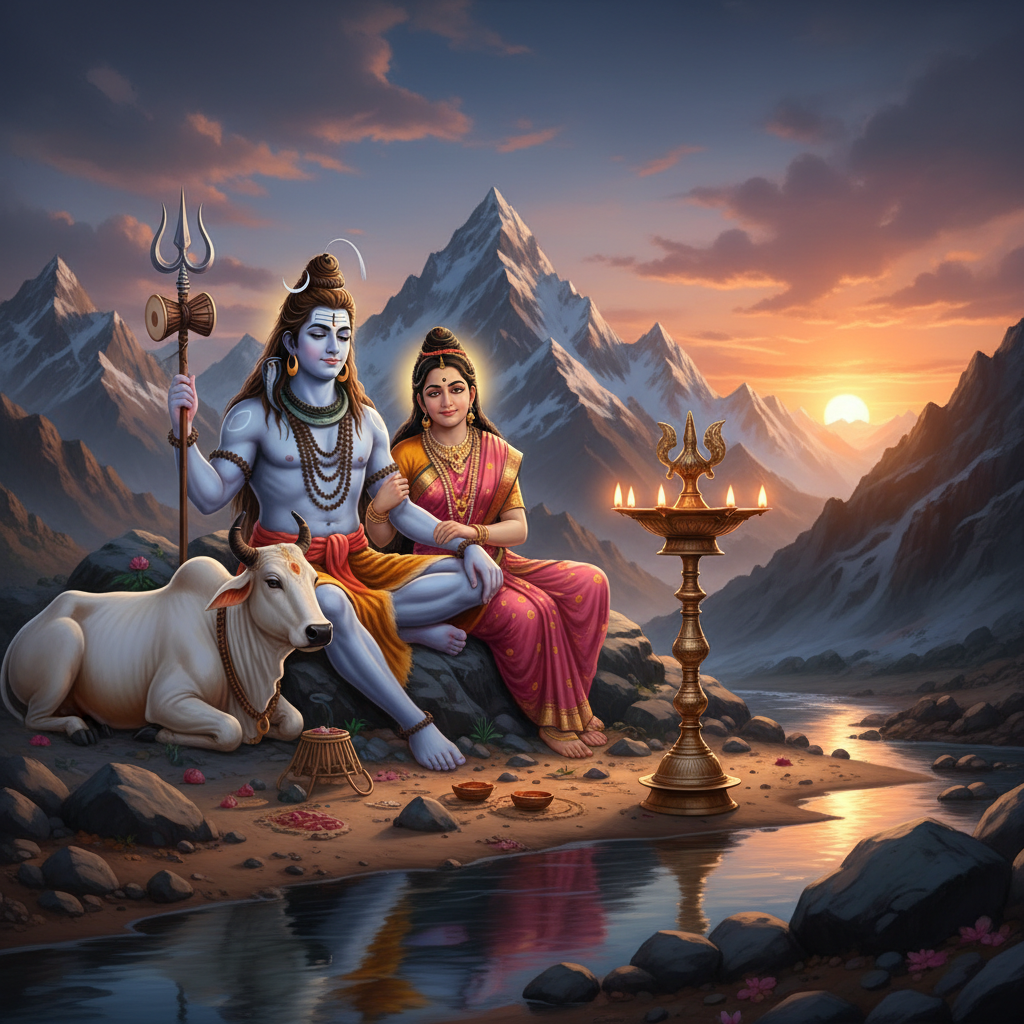
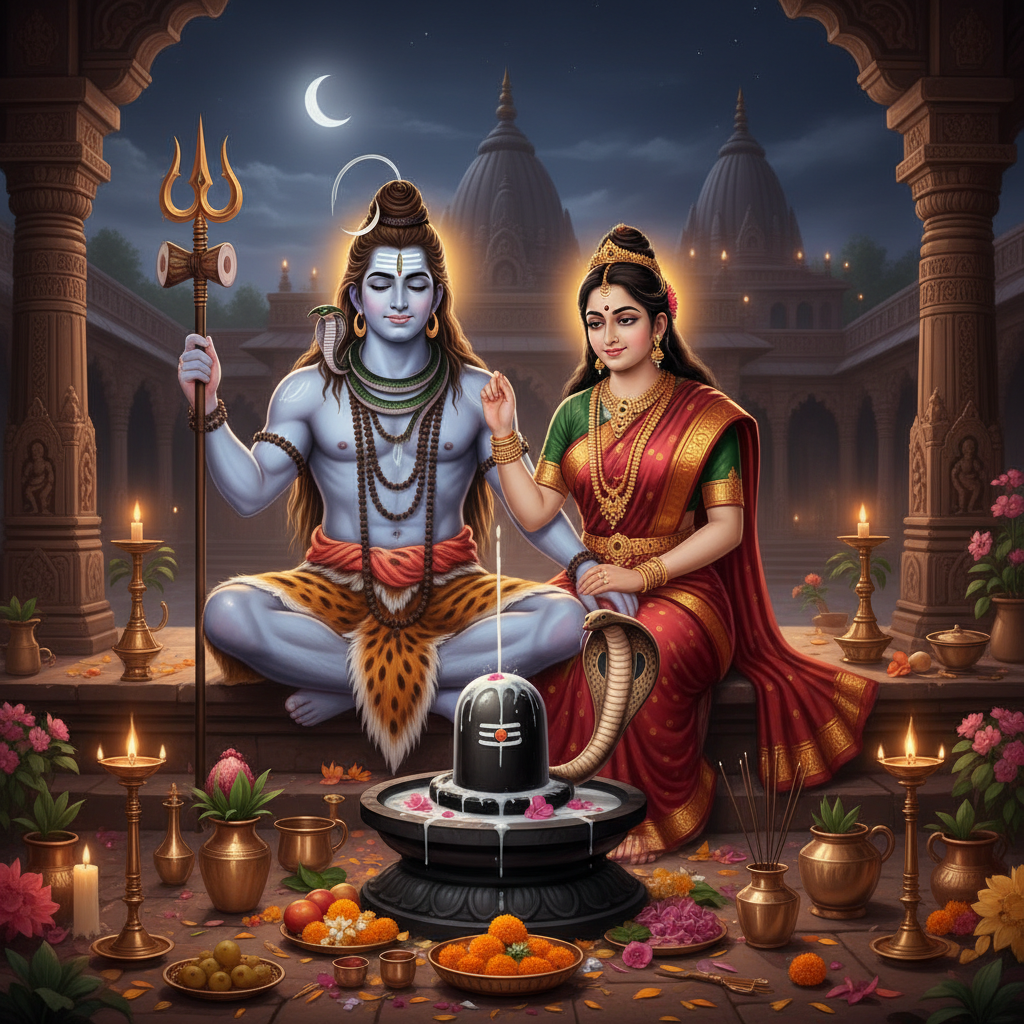
Shiva is often depicted with a third eye, placed vertically in the centre of his forehead, earning him the name Trinetra, meaning "the three-eyed one." Unlike his two physical eyes that perceive the ordinary world, this eye is regarded in tradition as the eye of inner vision, insight and spiritual wisdom, capable of perceiving truths hidden from ordinary sight.
This third eye is generally shown closed, opening only in moments of great cosmic significance, and is one of the most recognizable and revered elements of Shiva's iconography.
The Katha of Kama Dahan
The most well-known account associated with Shiva's third eye is the katha of Kama Dahan, in which Kamadeva, the god of desire, is said to have disturbed Shiva's deep meditation in order to awaken love for Parvati within him. Tradition holds that Shiva, upon being disturbed, opened his third eye and released a fire so intense that it reduced Kamadeva to ashes.
This episode is understood not as an act of cruelty, but as a teaching on the immense power that arises when deep meditative focus is broken, and on Shiva's role as one who burns away that which disrupts higher consciousness.
Deeper Significance
The third eye is widely understood as a symbol of the wisdom that destroys ignorance, much as fire consumes what obstructs it. Devotees see it as a reminder that true sight goes beyond the physical, encouraging inner reflection over surface judgment.
In broader yogic and spiritual traditions, the space between the eyebrows where the third eye is placed is also associated with deep concentration and higher awareness, connecting this symbol to meditative practice well beyond mythology alone.
How Devotees Reflect on This

Devotees often apply tilak or vibhuti on the forehead at the same spot associated with Shiva's third eye, as an act of devotion and a reminder to seek inner clarity. During meditation or japa, some focus their attention on this point, chanting Om Namah Shivaya, seeking the wisdom this eye represents.
Temples dedicated to Shiva, particularly during Maha Shivratri, see devotees offering prayers specifically invoking Trinetra, asking for the removal of ignorance and confusion from their lives.
A Practical Takeaway
Shiva's third eye teaches devotees to look beyond appearances and surface reactions, seeking a deeper, wiser understanding of situations before responding. It is a call to cultivate inner clarity rather than reacting from confusion.
Reflecting on this symbol is an act of faith and love, not a transaction, guiding devotees toward a calmer and wiser way of seeing the world.
Reader Questions Answered
What does Shiva's third eye represent?+
Shiva's third eye represents inner wisdom and insight that goes beyond ordinary sight, capable of destroying ignorance and illusion, according to tradition.
What happened when Shiva opened his third eye?+
According to the katha of Kama Dahan, Shiva opened his third eye when his meditation was disturbed, releasing a fire that reduced Kamadeva to ashes.
Why is Shiva called Trinetra?+
Shiva is called Trinetra, meaning "the three-eyed one," because of the additional vertical eye on his forehead symbolizing inner wisdom and insight.
About the author
Anjali Mehta · Editor, M.A. Religious Studies
Anjali is the managing editor for Vandnaa and oversees the festival and vrat coverage. She holds an M.A. in Religious Studies and reviews every published article for accuracy, accessibility, and tradition-fidelity.
Meet the Vandnaa editorial team →