What Is the Shubham Karoti Kalyanam Shloka?
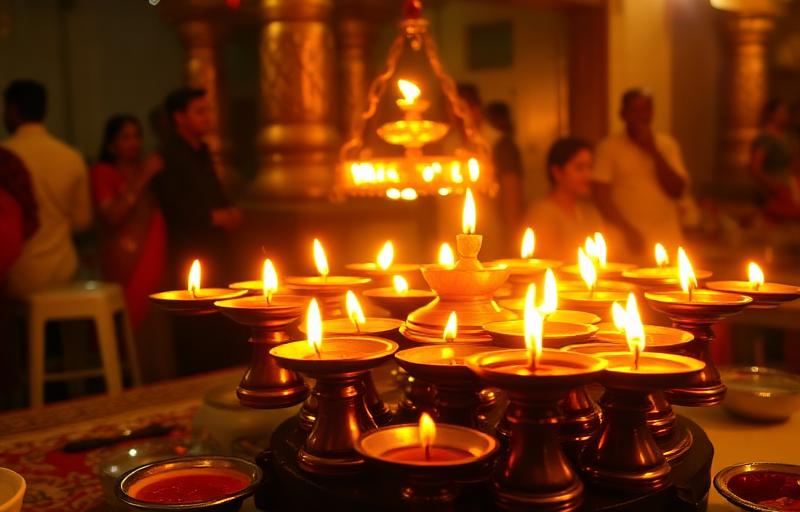
Shubham Karoti Kalyanam is the shloka of the evening lamp. As dusk falls and the diya is lit before the home shrine or at the doorstep, family members - very often the children - fold their hands before the flame and recite this verse, which ends with the beloved phrase dīpajyotir namo'stute, 'O light of the lamp, salutations to you'. The shloka greets the flame as a living presence that brings auspiciousness, welfare, health and prosperity, and that destroys śatru-buddhi, the enemy-like tendencies of the mind. In countless Indian homes, especially in Maharashtra where the custom of children reciting shubhankaroti at lamp-lighting time is a cherished evening ritual, this verse marks the moment the household turns from the day's work toward prayer, study and rest. It is one of the first shlokas a child learns and one of the last habits an elder gives up.
Full Shloka in Devanagari with Transliteration
The main verse recited at lamp-lighting:
शुभं करोति कल्याणम् आरोग्यं धनसम्पदा। शत्रुबुद्धिविनाशाय दीपज्योतिर्नमोऽस्तुते॥
śubhaṁ karoti kalyāṇam ārogyaṁ dhanasampadā, śatrubuddhivināśāya dīpajyotirnamo'stute
It is very often followed by a second verse that sees the lamp's light as the Supreme itself:
दीपज्योतिः परब्रह्म दीपज्योतिर्जनार्दनः। दीपो हरतु मे पापं दीपज्योतिर्नमोऽस्तुते॥
dīpajyotiḥ parabrahma dīpajyotir janārdanaḥ, dīpo haratu me pāpaṁ dīpajyotirnamo'stute
Meaning of the second verse: 'The light of the lamp is the Supreme Brahman; the light of the lamp is Janardana (Vishnu). May the lamp remove my wrongdoing; O light of the lamp, salutations to you.' Together the two verses form the complete deep namaskar of the evening.
Word-by-Word Meaning
Here is the main verse, word by word: 1. śubham - auspiciousness, that which is good and pure 2. karoti - does, brings about, creates 3. kalyāṇam - welfare, blessedness, lasting wellbeing 4. ārogyam - health, freedom from disease 5. dhana-sampadā - wealth and prosperity (dhana is wealth, sampadā is abundance, fortune) 6. śatru-buddhi-vināśāya - for the destruction of enmity of intellect (śatru is enemy, buddhi is intellect or tendency of mind, vināśāya means for the destruction of) - understood as both ill-will from others and hostile, negative thinking within oneself 7. dīpa-jyotiḥ - the light (jyotiḥ) of the lamp (dīpa) 8. namo'stute - salutations to you (namaḥ astu te)
Overall meaning: 'You bring auspiciousness, welfare, health and prosperity, and destroy hostile tendencies of the mind - O light of the lamp, salutations to you.'
Deeper Meaning - Light Against the Inner Enemies

The most striking phrase in the shloka is śatru-buddhi-vināśāya. It does not pray for the destruction of enemies, but for the destruction of enemy-mindedness - the jealousy, anger, fear and resentment that make enemies of others in our own heads. The flame is the perfect teacher for this. A diya gives light without asking who stands before it, burns upward however it is tilted, and ends darkness not by fighting it but simply by being present. In Hindu thought the lamp is agni, the witness deity, and jyoti (light) is the standing symbol of jnana, knowledge: just as one small flame dispels a roomful of darkness, one moment of true understanding dispels years of confusion. Bowing to the lamp at dusk - the sandhyā, the join between day and night - is thus a daily renewal of an inner vow: let what is dark in me yield to light.
The Sandhya Diya Ritual - When and How
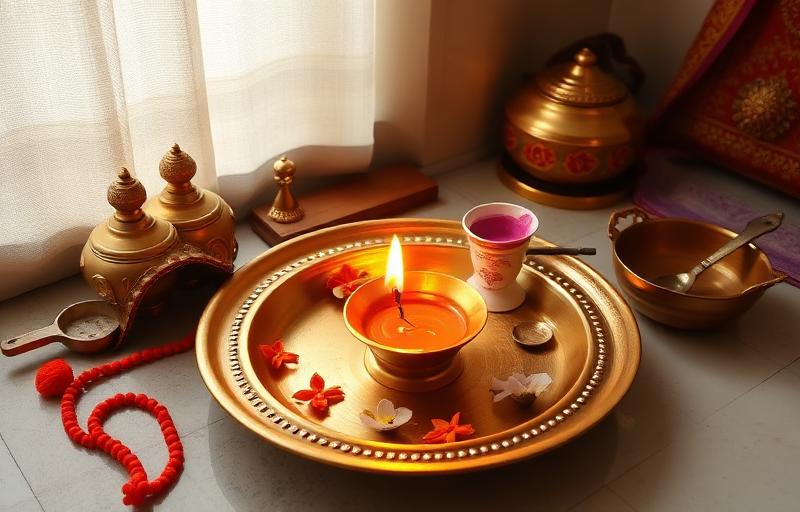
The evening lamp is traditionally lit at godhuli bela, the twilight period around sunset. A simple home practice: 1. Wash hands and tidy the puja space or doorstep a few minutes before sunset. 2. Use a clean diya with ghee or sesame oil and a cotton wick; place it before the deity, near the tulsi plant, or at the threshold facing the home. 3. Light the lamp, fold your hands and recite Shubham Karoti Kalyanam, followed by the dīpajyotiḥ parabrahma verse. 4. Family members, especially children, can join in; many homes follow with a short aarti or the evening's prayers. 5. Let the lamp burn safely; never blow it out - extinguish it, if needed, with a flower or by waving the hand. Tradition holds that Goddess Lakshmi visits homes that are lit and welcoming at dusk, which is why the evening diya is never skipped in observant households, even on the busiest days.
Teaching Children the Diya Shloka
Generations of Indian children have learnt shubhankaroti as their evening signal: lamps lit, hands folded, play paused, study about to begin. The shloka suits young learners perfectly - it is short, melodic and attached to a glowing flame that naturally holds a child's attention. Ways to make it stick: 1. Give the child a role: let them carry the matchbox to you, ring the bell or place a flower by the diya (an adult handles the flame). 2. Sing it to the same simple tune every evening; melody carries memory. 3. Explain it in one line: 'we thank the light for chasing away darkness and bad feelings'. 4. Link it to a routine - shloka first, then dinner or study - so the habit anchors itself. 5. Praise participation, not pronunciation. A child who bows to light every evening quietly absorbs the deepest lesson of the tradition: brightness, inside and outside, is something you welcome daily, not something you wait for.
Benefits of the Evening Diya and Its Shloka
Why preserve this small ritual in a world of electric light? Families who keep it describe layered benefits: 1. A peaceful transition - the shloka marks a clean boundary between the day's rush and the evening's calm, which modern routines badly lack. 2. Protection of the mind - praying daily for the end of śatru-buddhi is a gentle, repeated correction of anger and negativity. 3. Auspiciousness and abundance - the verse explicitly invokes welfare, health and prosperity, and tradition links the lit evening home to Lakshmi's grace. 4. Family bonding - two minutes when every generation stands before the same flame, saying the same words their grandparents said. 5. Foundation for children - an early, joyful association between light, gratitude and discipline. The diya costs a spoon of oil. What it buys - a daily moment of shared stillness and an inherited prayer against one's own darkness - cannot be priced.
Quick Answers
What does Shubham Karoti Kalyanam mean?+
It is a salutation to the lamp's light: 'You bring auspiciousness, welfare, health and prosperity, and destroy hostile tendencies of the mind - O light of the lamp, salutations to you (deepjyoti namostute).' It is recited when the evening diya is lit.
When should the Shubham Karoti shloka be recited?+
At lamp-lighting time in the evening, traditionally during godhuli bela around sunset, when the sandhya diya is lit before the home shrine, the tulsi plant or the doorstep. Many families also recite it when lighting the lamp for morning puja.
What does shatru-buddhi-vinashaya mean - does it curse enemies?+
No. The prayer asks for the destruction of shatru-buddhi, enemy-mindedness - the hostility, jealousy and negative thinking within minds, including our own. It seeks the end of enmity itself rather than harm to any person, which is why it is considered ideal for children.
What is the deepjyoti parabrahma verse that follows it?+
Deepjyotih parabrahma deepjyotir janardanah, deepo haratu me papam deepjyotirnamostute - 'The lamp's light is the Supreme Brahman, the lamp's light is Janardana (Vishnu); may the lamp remove my wrongdoing; O light of the lamp, salutations to you.' Together the two verses form the full evening deep namaskar.
Why should a diya never be blown out with the mouth?+
The flame is revered as agni, a sacred presence, and blowing breath on it is considered disrespectful. If the lamp must be put out, tradition suggests extinguishing it by waving a hand or flower, or letting it burn out naturally in a safe place.
At what age can children start learning this shloka?+
As soon as they can speak in small sentences, usually around three or four years. Children learn it by hearing it daily at lamp-lighting time rather than by formal teaching. Keep the flame handled by adults, the tune consistent and the mood joyful, and the shloka stays for life.
About the author
Acharya Vinaya Kapoor · M.A. Sanskrit, Mantra & Stotra Studies
Acharya Vinaya holds an M.A. in Sanskrit from Banaras Hindu University and writes the mantra and stotra commentary on Vandnaa. Her focus is on accurate pronunciation, traditional context, and helping modern readers connect with classical texts.
Meet the Vandnaa editorial team →