What Chandan Symbolizes in Worship
Chandan (sandalwood) is treasured in Hindu worship as a cooling, calming, and purifying substance. Its soothing fragrance and cool touch make it a symbol of serenity and inner peace, the qualities a devotee seeks during prayer. Applied as a sacred paste, chandan is offered to deities and worn by worshippers as a mark of devotion and sanctity. It represents the calming of the restless mind and the cooling of the ego, preparing one for sincere worship. In many traditions, the fragrance of sandalwood is considered pleasing to the gods and is used to perfume idols, garlands, and the puja space. Because it cools and quiets, chandan is closely tied to meditation, focus, and the gentle, peaceful mood of devotion.
Types of Chandan - White and Red Gandha
Two main forms of chandan are used in worship. White sandalwood (safed chandan or shwet chandan) is the cooling, fragrant paste most associated with Vishnu and his forms, and is widely used for tilak and to anoint idols. Red sandalwood (rakta chandan or lal chandan), a deep red wood, is offered especially in Devi worship and to certain forms of the divine, valued for its rich colour. The fragrant paste in general is often called gandha, meaning the scented offering. Vaishnav traditions favour vertical white-chandan tilak, while Devi and some other traditions use red. Choosing the right type for the deity you worship is part of the care that makes the offering complete and respectful, so it is worth knowing which form your family tradition follows.
The Chandan Tilak and the Forehead
The most familiar use of chandan is the tilak applied to the forehead, between the eyebrows. This spot corresponds to the ajna point, regarded in tradition as a centre of awareness and focus. Applying cool chandan there is believed to calm the mind, steady attention, and bring a sense of composure before worship. The shape of the tilak often signals one's tradition - a vertical line or U-shape for Vaishnavas, a different mark for others. Beyond identity, the tilak is a reminder that the wearer is engaged in something sacred. When you place chandan between the brows with a quiet mind, you mark yourself as a devotee and invite the calm, inward focus that meaningful prayer requires.
How Chandan Is Prepared on a Sil
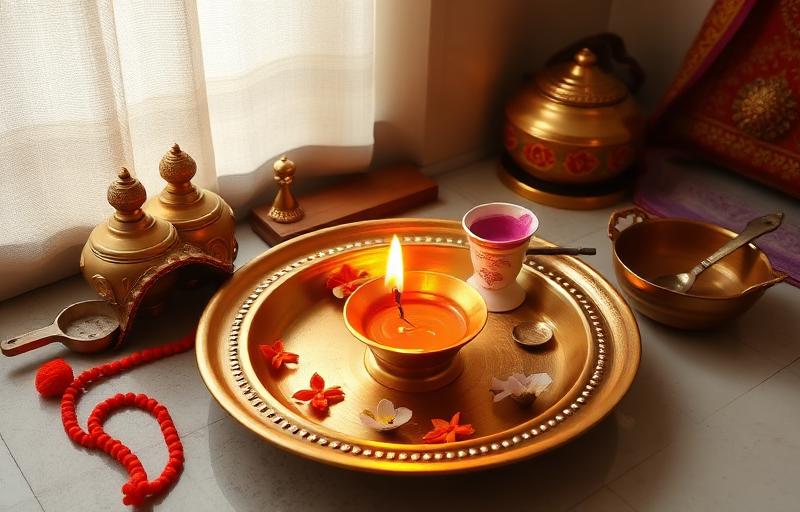
Traditionally, fresh chandan paste is ground by hand for each puja: 1. Take a clean sil (flat grinding stone) or a small round sandalwood-grinding stone called a sahaan. 2. Sprinkle a few drops of clean water on the stone. 3. Hold a piece of sandalwood and rub it in slow, circular strokes against the wet stone. 4. Continue until a smooth, fragrant paste collects; add water a little at a time to control the consistency. 5. Gather the paste with a clean finger or spoon and place it in a small bowl for offering and tilak.
Grinding the paste fresh is itself a meditative act, filling the room with fragrance and settling the mind before worship begins. Ready-made chandan powder mixed with water can be used when fresh grinding is not possible.
Fragrance, Focus, and the Mood of Devotion
Part of chandan's value lies in its fragrance, long cherished in Indian homes and temples. Tradition holds that the cool, woody scent helps quiet a restless mind and create an atmosphere of calm that supports prayer and meditation. We share this as traditional and cultural wisdom rather than a medical claim. When the puja space carries the gentle scent of sandalwood, it naturally feels set apart from everyday life, encouraging the devotee to slow down and turn inward. This is why sandalwood is used not only as tilak but also in incense, garlands, and the bathing of idols. The fragrance becomes a quiet companion to worship, marking the time as sacred and helping focus gather around the act of devotion.
Do's and Don'ts with Chandan
A few respectful habits keep the chandan offering proper: 1. Do use clean water and a clean sil or bowl when preparing the paste. 2. Do apply tilak with the ring finger, to the deity first and then to yourself. 3. Do offer the appropriate type, such as white chandan for Vishnu and red where tradition prescribes it. 4. Don't let the paste dry out, spoil, or gather dust before use; prepare a small fresh quantity. 5. Don't apply chandan carelessly or while distracted; the calm, focused mood is part of the offering. 6. Don't use scented cosmetic creams in place of genuine sandalwood for the deity.
As with all offerings, sincerity matters most. A small amount of pure chandan applied with a quiet, devoted mind honours the deity more than an elaborate but hurried use.
What People Ask Most
Why is chandan used in Hindu worship?+
Chandan is valued as a cooling, calming and purifying substance whose fragrance is pleasing to the deities. It symbolizes serenity and is offered to gods and worn as tilak to mark devotion.
What is the difference between white and red chandan?+
White sandalwood is the cooling fragrant paste associated mainly with Vishnu and used widely for tilak, while red sandalwood is a deep red wood offered especially in Devi worship and valued for its colour.
Why is chandan tilak applied between the eyebrows?+
The spot between the brows corresponds to the ajna point, regarded as a centre of focus and awareness. Cool chandan applied there is believed to calm the mind and steady attention before worship.
How is chandan paste made at home?+
Rub a piece of sandalwood in slow circular strokes against a clean wet sil or sahaan stone, adding a few drops of water, until a smooth fragrant paste forms. Ready-made powder with water can be used too.
Which deities are offered chandan?+
White chandan is especially offered to Vishnu and his forms and is also used for Shiva, while red chandan is favoured in Devi worship. The fragrant paste, called gandha, is part of general puja offerings.
Can I use sandalwood cosmetic cream instead of real chandan?+
For offering to the deity, genuine sandalwood paste or pure chandan powder is preferred. Scented cosmetic creams are not used for the deity, since the authentic substance carries the ritual meaning.
About the author
Pandit Mahesh Trivedi · Festival Traditions & Panchang
Pandit Mahesh leads the festival-date and Panchang content on Vandnaa. He cross-references multiple regional panchangs (Drik, Vaishnava, Bengali, Marathi) for every festival date published on the site.
Meet the Vandnaa editorial team →