Why a Simple Blade of Grass Pleases Ganesha
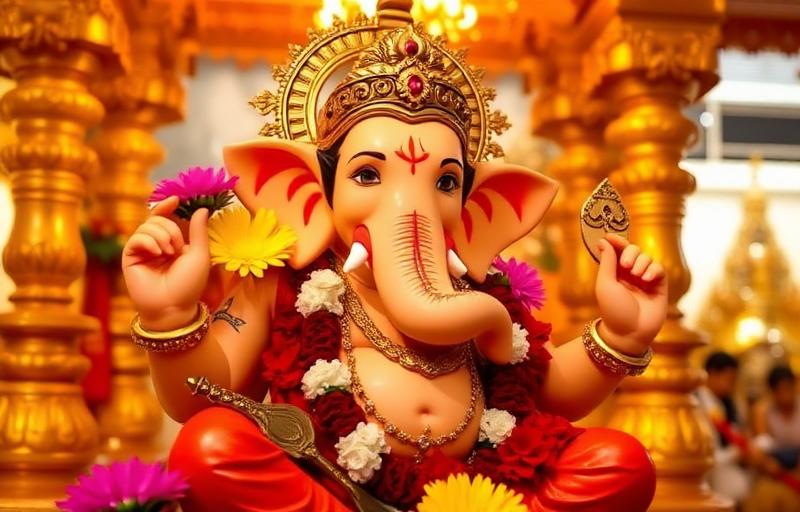
Among all the deities of the Hindu pantheon, Ganesha has the humblest favourite offering. He may be adorned with gold, offered silver modaks and dressed in silk, but tradition is unanimous: nothing pleases the remover of obstacles like fresh durva grass. Durva, called doob in Hindi (botanically Cynodon dactylon), is the soft, three-bladed grass that grows freely in every courtyard and roadside in India. The shastras place it alongside modak and red flowers as the three offerings Ganesha cherishes most, and many traditions hold that a Ganesh puja without durva is incomplete. There is a beautiful lesson hidden in this: the lord who commands the ganas of Shiva asks not for wealth but for a blade of grass picked with love. In Ganesh worship, devotion always outweighs expense - and durva is the proof.
The Analasura Katha - How Durva Cooled Ganesha
The Puranic katha behind durva centres on Analasura, a demon born of fire (anala means fire), whose burning gaze scorched the three worlds and devoured sages and devas alike. When no one could stop him, the devas turned to the young Ganesha. In the battle that followed, Ganesha took on a vast form and simply swallowed the fire-demon whole. Analasura was finished, but his fire now blazed inside Ganesha's stomach, causing unbearable burning. Every remedy failed - the cooling moon on his head, Vishnu's lotus, the serpent of Shiva, even streams of sandal paste. At last, sages arrived and placed bundles of 21 durva blades on Ganesha's head. The moment the humble grass touched him, the burning ceased completely. Moved by this, Ganesha declared that whoever offers him durva with devotion would earn merit equal to the grandest worship.
Why 21 Durva - The Meaning of the Sets and Blades
Durva is offered in counted sets, and the numbers carry meaning. The classic offering is 21 durva, echoing the 21 bundles that cooled Ganesha in the katha and matching the 21 modaks offered on Ganesh Chaturthi. Tradition reads 21 as the sum of our whole instrument of life: 5 organs of action, 5 organs of perception, 5 pranas, 5 elements and 1 mind - offering 21 durva is offering one's entire being. Each shoot, called a durvankura, should ideally carry 3 or 5 blades on a single stem. The three blades are said to represent the presence of Ganesha with Riddhi and Siddhi, or the trinity of Brahma, Vishnu and Mahesh resting in one stalk. If 21 are not available, devotees offer sets of 3, 5 or 11 - always an auspicious odd count, never a careless handful.
How to Pick and Offer Durva - The Durvankura Vidhi

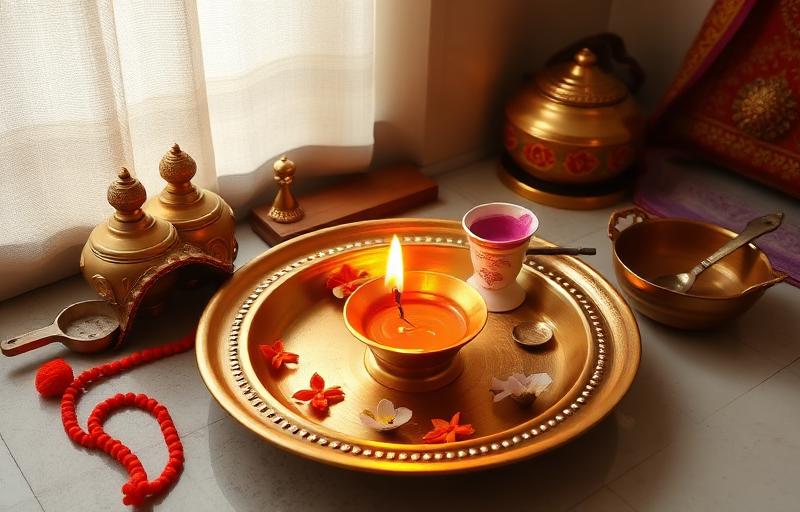
Offering durva is simple, but tradition asks for care at every step. 1. Pick young, tender shoots in the morning from a clean place - a garden, a washed courtyard or a pot at home. Avoid grass from roadside filth or drains. 2. Wash the durva gently in clean water. 3. Arrange 21 shoots, or sets of 3 or 5 blades, with the tips together. 4. Dip the tips in clean water or light sandal paste. 5. Offer at Ganesha's feet or place softly on his crown while chanting Om Gam Ganapataye Namah or the offering line idam durvankuram samarpayami. Many devotees follow the spirit of the Durva Namavali, offering one durva with each name of Ganesha - Om Ganadhipaya Namah, Om Umaputraya Namah, Om Vighnarajaya Namah and so on - so that grass and name together become a complete garland of devotion.
Which Deities Receive Durva - And Which Do Not
Durva belongs to Ganesha first, but its place in ritual is wider. It appears in sankalp, where a few blades are held with rice and water while taking the vow of the puja; it decorates the kalash in most ceremonies; and it is offered during Satyanarayan katha and many griha-pravesh and vivah rites. Yet tradition also draws clear boundaries. By widespread custom, durva is not offered to Goddess Durga - the shastras keep certain offerings deity-specific, and durva is excluded from Devi worship in most regional traditions. The mirror of this rule is equally famous: tulsi is never offered to Ganesha, owing to the Puranic account of the mutual vow between Tulsi and Ganesha. These pairings remind devotees that Hindu ritual is a language with grammar - what delights one deity is respectfully withheld from another, and following these courtesies is itself a form of attentive devotion.
Durva on Ganesh Chaturthi and Wednesdays
Two occasions raise durva from a daily offering to a central rite. On Ganesh Chaturthi, the offering of 21 durva with 21 modaks is part of the established puja vidhi, and during the festival days fresh durva is placed on the murti each morning. The second occasion is weekly: Wednesday (Budhwar) is honoured as Ganesha's day, and devotees who keep the Budhwar vrat make durva the heart of their simple worship - a few sets of doob, a piece of jaggery and a heartfelt Om Gam Ganapataye Namah. Sankashti Chaturthi, observed each lunar month, follows the same pattern with durva offered in the evening moonlit puja. The beauty of these observances is their accessibility. Durva costs nothing and grows everywhere, so the poorest and the richest devotee stand before Ganesha with exactly the same offering in hand.
Benefits of Offering Durva to Ganesha
Tradition lists generous fruits for this humble offering. Foremost is the removal of vighna - obstacles in work, studies, new ventures and family matters - for durva reaches the deity whose very office is clearing the path. The katha adds a second gift: as durva cooled Ganesha's burning, its offering is believed to cool the devotee's own inner heat - anger, restlessness and anxiety - bringing a settled, peaceful mind. Households that offer durva regularly are said to attract Riddhi and Siddhi, prosperity and accomplishment, the two consorts who accompany Ganesha wherever he is honoured. And there is a quieter benefit that needs no scripture: stepping out at dawn to pick fresh grass, washing it, counting 21 shoots and offering them with a mantra is a small daily act of mindfulness that anchors the whole day in devotion before the world makes its demands.
What People Ask Most
How many durva should be offered to Ganesha?+
The classic count is 21 durva, echoing the katha in which 21 bundles cooled Ganesha and matching the 21 modaks of Ganesh Chaturthi. If 21 are not available, offer sets of 3, 5 or 11 shoots - always an odd, counted number offered with care rather than a random handful.
Can I pick durva from anywhere?+
Pick durva only from clean places - a garden, a washed courtyard or a pot grown at home. Avoid grass growing near drains, garbage or busy roadsides. Pick tender young shoots in the morning, wash them in clean water before offering, and never offer dried or wilted blades.
Which mantra is chanted while offering durva?+
The simplest is Om Gam Ganapataye Namah, spoken with each set, or the offering line idam durvankuram samarpayami. Devotees who wish to go deeper offer one durva with each name of Ganesha - Om Ganadhipaya Namah, Om Umaputraya Namah, Om Vighnarajaya Namah and so on, in the spirit of the Durva Namavali.
Why is durva not offered to Goddess Durga?+
By widespread tradition, certain offerings are kept deity-specific, and durva is excluded from Devi worship in most regions, just as tulsi is never offered to Ganesha. The shastras treat these pairings as ritual courtesies. When worshipping Durga, offer red flowers and the items prescribed for Devi instead.
Can durva be offered every day, or only on special days?+
Durva can be offered daily, and a fresh blade with a sincere mantra is always welcome. Wednesdays, Ganesh Chaturthi and Sankashti Chaturthi are considered especially fruitful for the offering. If daily picking is difficult, offering durva every Wednesday keeps the weekly rhythm of Ganesh worship alive.
What should be done with durva after the puja?+
Offered durva should never go into the trash. Traditionally it is placed at the base of a tree or in a potted plant, returned to a garden bed, or immersed in flowing water along with other nirmalya. Letting the sacred grass return to the earth completes the cycle of the offering respectfully.
About the author
Pandit Mahesh Trivedi · Festival Traditions & Panchang
Pandit Mahesh leads the festival-date and Panchang content on Vandnaa. He cross-references multiple regional panchangs (Drik, Vaishnava, Bengali, Marathi) for every festival date published on the site.
Meet the Vandnaa editorial team →