What the Swastik Symbol Means
The swastik is one of the oldest and most sacred symbols in Hinduism, a sign of auspiciousness, well-being and good fortune. The word comes from the Sanskrit 'su-asti' - su meaning good or well, and asti meaning 'to be' or 'it is'. Together it means 'may all be well' or 'let there be well-being'.
It is drawn as a cross with four arms, each bent at a right angle, usually in auspicious red or vermilion. For thousands of years, the swastik has been a blessing mark in Hindu homes, temples and rituals - a simple, beautiful prayer for prosperity and peace, made visible in a single auspicious sign.
The Four Arms & Their Meaning
The swastik's four arms are rich with meaning, and the tradition reads them in several beautiful ways:
- The four Vedas: Rigveda, Yajurveda, Samaveda and Atharvaveda.
- The four directions: East, west, north and south - showing that auspiciousness spreads everywhere.
- The four purusharthas (goals of life): Dharma (righteousness), Artha (prosperity), Kama (fulfilment) and Moksha (liberation).
- The four yugas: Satya, Treta, Dwapara and Kali.
- The four ashramas (stages of life): Brahmacharya, Grihastha, Vanaprastha and Sannyasa.
The central point from which the arms spread is often seen as the source of all creation, and the dots placed in the quadrants represent the divine presence. The right-facing swastik, with arms turning toward the right, is the most common auspicious form, symbolising the forward, life-giving movement of the sun and of dharma.
Why the Swastik Is Drawn at Pujas & Entrances
The swastik is drawn at the start of nearly every sacred act and at the threshold of the home:
- Mark of an auspicious beginning: No puja, havan, wedding or new venture is considered complete without first drawing the swastik. It invites well-being upon whatever is being begun.
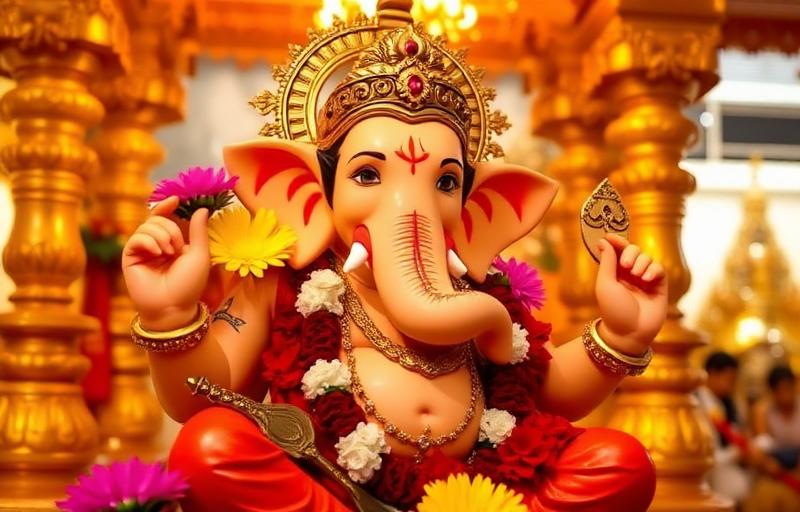
- At the doorway: A swastik on the main door or above the entrance is believed to welcome positive energy, prosperity and the blessing of Lord Ganesha into the home, and to keep negativity away.
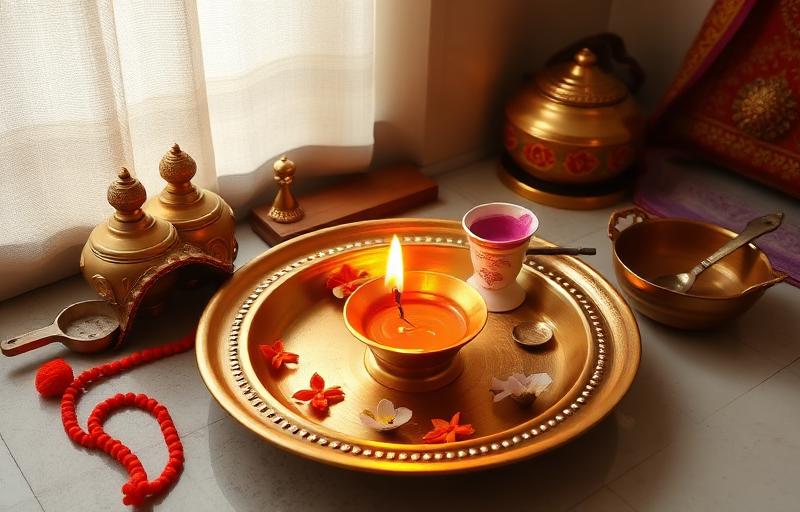
- On the puja thali and kalash: It is drawn on the puja plate, the kalash and account books, especially at Diwali, alongside 'Shubh' and 'Labh' to invoke auspiciousness and gain.
- Connection to Ganesha: The swastik is closely linked to Lord Ganesha, the remover of obstacles and the deity worshipped first, so it carries his blessing of an unobstructed, fortunate start.
Drawn with roli, sindoor or rice paste, the swastik turns any space into a place ready to receive divine grace.
How to Draw It & Its Blessings
How to draw the swastik: 1. Use an auspicious material - roli (red paste), sindoor, kumkum, haldi or rice flour paste. 2. Draw a clean upright cross (a plus sign), then add the four arms each bending toward the right. 3. Many add a dot in each of the four quadrants and sometimes the words 'Shubh' and 'Labh' on either side. 4. Draw it with a calm, devotional mind, ideally after bathing, at the start of the puja or before a new beginning.
Its blessings:
- Invokes auspiciousness, prosperity and well-being
- Welcomes positive energy and the grace of Ganesha
- Marks a sacred and fortunate beginning to any work
- Brings a feeling of peace, protection and shubh (goodness) into the home
Simple to draw yet rich in meaning, the swastik is a daily way for Hindus to begin everything with a prayer for the well-being of all - the very spirit of 'su-asti'.
What People Ask Most
What does the swastik symbol mean?+
Swastik comes from the Sanskrit 'su-asti', meaning 'may all be well' or 'let there be well-being'. It is one of the oldest and most sacred Hindu symbols of auspiciousness, good fortune and the divine, drawn at the start of every sacred act.
What do the four arms of the swastik represent?+
The four arms are read in several ways - the four Vedas, the four directions, the four goals of life (dharma, artha, kama, moksha), the four yugas, and the four stages of life (ashramas). Together they show auspiciousness spreading in all directions.
Why is the swastik drawn at the entrance of a home?+
A swastik at the main door welcomes positive energy, prosperity and the blessing of Lord Ganesha, and is believed to keep negativity away. It marks the home as an auspicious space ready to receive divine grace.
Why is the swastik linked to Lord Ganesha?+
The swastik is closely associated with Lord Ganesha, the remover of obstacles who is worshipped first in every ritual. Drawing it invokes his blessing for an unobstructed, fortunate beginning, which is why it appears at the start of pujas and on puja thalis.
About the author
Anjali Mehta · Editor, M.A. Religious Studies
Anjali is the managing editor for Vandnaa and oversees the festival and vrat coverage. She holds an M.A. in Religious Studies and reviews every published article for accuracy, accessibility, and tradition-fidelity.
Meet the Vandnaa editorial team →