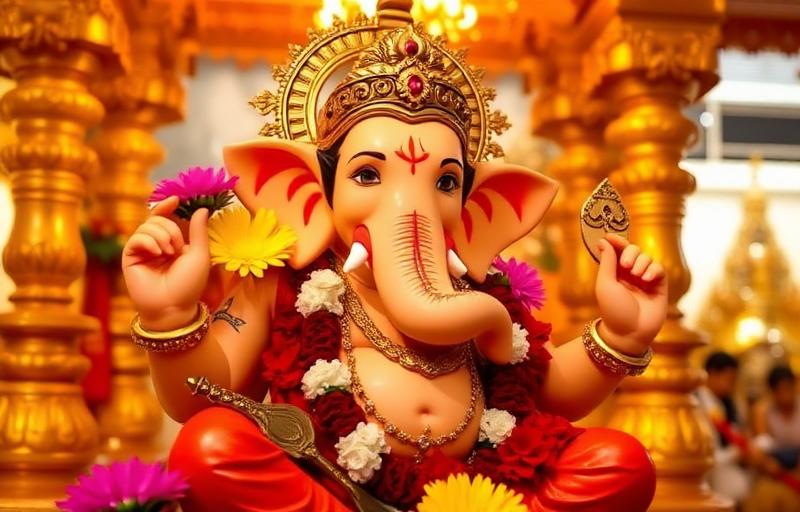
What Is the Sankatnashan Ganesh Stotra?
The Sankatnashan Ganesh Stotra - literally 'the hymn that destroys troubles' - is a short, powerful prayer to Lord Ganesha drawn from the Narada Purana. Its name itself promises relief: sankat means crisis or trouble, and nashan means destruction.
The stotra is built around the twelve sacred names of Ganesha. Sage Narada teaches that one who recites these twelve names with devotion - in the morning, at noon and in the evening - is freed from fear of obstacles and granted success in their undertakings.
Because it is short, easy to memorise and deeply effective, it is one of the most widely chanted Ganesha prayers for removing barriers in study, work, health and worship.
Opening Verse & the 12 Names
The stotra begins:
प्रणम्य शिरसा देवं गौरीपुत्रं विनायकम्। भक्तावासं स्मरेन्नित्यमायुःकामार्थसिद्धये॥ Pranamya shirasa devam, Gauri-putram Vinayakam. Bhaktavasam smarennityam, ayuh-kama-artha-siddhaye. (Bowing my head to the Lord, the son of Gauri, Vinayaka, who dwells in his devotees, one should remember him daily for long life, fulfilment of desires and prosperity.)
Then the twelve names of Ganesha are recited:
1. Sumukha (सुमुख) - the beautiful-faced 2. Ekadanta (एकदन्त) - the single-tusked 3. Kapila (कपिल) - the tawny-coloured 4. Gajakarnaka (गजकर्णक) - the elephant-eared 5. Lambodara (लम्बोदर) - the large-bellied 6. Vikata (विकट) - the formidable / huge 7. Vighnanasha (विघ्ननाश) - the destroyer of obstacles 8. Vinayaka (विनायक) - the supreme leader 9. Dhumraketu (धूम्रकेतु) - the smoke-bannered 10. Ganadhyaksha (गणाध्यक्ष) - the lord of the ganas 11. Bhalachandra (भालचन्द्र) - the one with the moon on his forehead 12. Gajanana (गजानन) - the elephant-faced
The phalashruti promises that reciting these names removes the fear of obstacles, and that doing so at the three junctions of the day (morning, noon, evening) brings freedom from worries and lasting success.
Benefits of the Stotra
- Removal of troubles: As its name says, the stotra is chanted to dissolve obstacles, crises and worries from life.
- Success in undertakings: Reciting it before exams, work, travel or new ventures is believed to ensure smooth completion.
- Long life and prosperity: The opening verse itself invokes ayuh (long life), kama (fulfilment of desires) and artha (prosperity).
- Courage and confidence: Remembering Ganesha as Vighnanasha steadies the mind and removes fear.
- Easy daily practice: Being short and rhythmic, it is simple to recite three times a day for those seeking relief from difficulties.
The phalashruti specifically praises reciting it for six months for relief from troubles and for a full year for greater success, always with faith and regularity.
How to Chant the Stotra
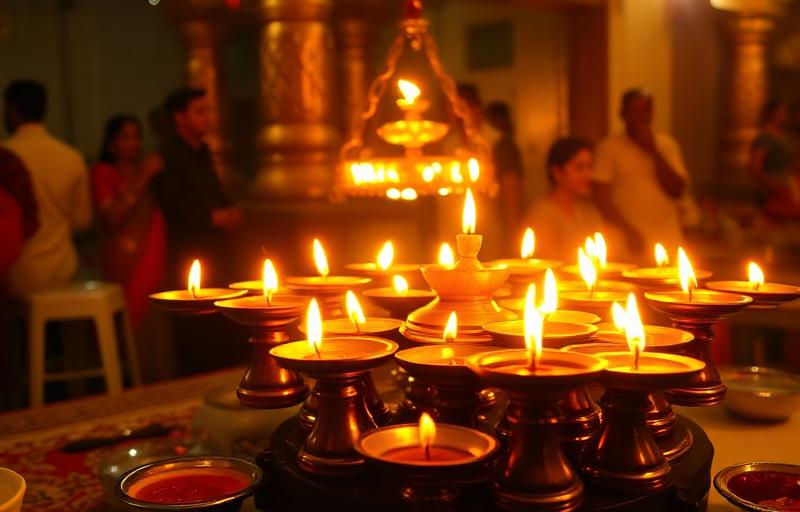
1. Time: Traditionally recited at the three junctions of the day - morning, noon and evening (trikala). If only once, the morning after a bath is ideal. 2. Setup: Sit before a Ganesha image, light a lamp and offer durva grass, red flowers and modak or laddoo if available. 3. Recite the opening verse followed by the twelve names, then the phalashruti, with calm attention to each name. 4. Repetitions: Some recite the stotra 3, 11 or 21 times when seeking relief from a specific difficulty. 5. Wednesdays and Chaturthi: These days are especially dear to Ganesha and good for deeper practice. 6. Close: End with 'Om Gam Ganapataye Namah,' a short aarti and prasad.
Clear pronunciation and a calm, trusting heart matter far more than speed.
Reader Questions Answered
What is the Sankatnashan Ganesh Stotra?+
It is a short hymn from the Narada Purana that praises Lord Ganesha by his twelve names. Its name means 'the hymn that destroys troubles', and it is chanted to remove obstacles and bring success.
What are the 12 names of Ganesha in this stotra?+
They are Sumukha, Ekadanta, Kapila, Gajakarnaka, Lambodara, Vikata, Vighnanasha, Vinayaka, Dhumraketu, Ganadhyaksha, Bhalachandra and Gajanana - each describing a sacred quality or form of Lord Ganesha.
How many times a day should it be recited?+
Tradition recommends reciting it three times a day - in the morning, at noon and in the evening (trikala). If time is limited, reciting it once in the morning with devotion is also beneficial.
Can it be recited for a specific problem?+
Yes. Devotees often recite it 3, 11 or 21 times when facing a particular difficulty. The phalashruti praises sustained recitation over six months to a year for relief from troubles and lasting success.
About the author
Acharya Vinaya Kapoor · M.A. Sanskrit, Mantra & Stotra Studies
Acharya Vinaya holds an M.A. in Sanskrit from Banaras Hindu University and writes the mantra and stotra commentary on Vandnaa. Her focus is on accurate pronunciation, traditional context, and helping modern readers connect with classical texts.
Meet the Vandnaa editorial team →