The Temple at Angadipuram
The Thirumandhamkunnu Bhagavathy temple stands at Angadipuram in Malappuram district, Kerala, on a low hill.
What is there:
- A temple in the Kerala style, on rising ground, with a walled compound
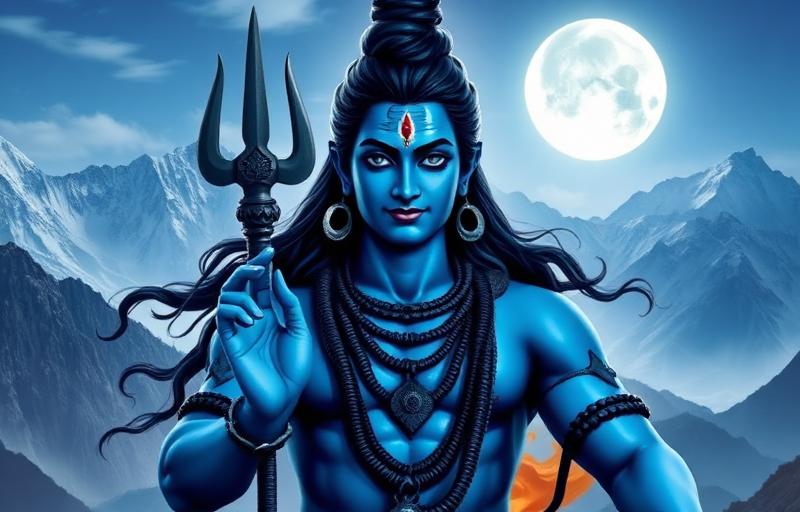
- The deity Bhagavathy, the goddess, in a fierce form
- A Shiva linga, which the katha explains
- The full apparatus of a major Malabar temple, including grounds for the pooram
Whose temple it was. Thirumandhamkunnu was the paradevata, the tutelary deity, of the Valluvanad rulers, one of the principal chiefly houses of central Kerala before the region was consolidated.
That relationship is the key to the temple's history. A ruling house's tutelary deity is not simply the deity they happened to worship. It is the shrine where the house's authority was validated, where its undertakings were sworn, and where its most serious decisions were taken.
What happened here. This temple is where the chaver warriors of Valluvanad took their vow before setting out for the Mamankam at Thirunavaya, in what is one of the most extraordinary episodes in the history of the Indian subcontinent.
That needs the whole story, and it is set out below.
The Katha of Mandhata
The temple's origin story explains why a Bhagavathy temple has a Shiva linga in it, which is the first thing a visitor notices.
As it is told:
- The sage Mandhata performed severe austerities to obtain a linga from Shiva
- Shiva was pleased and granted him a linga to take away and install
- The linga was in fact an Ardhanarishvara form, containing both Shiva and Parvati
- When Mandhata took it, Parvati's portion remained with Shiva, or by another telling she was displeased at being taken from her place
- As the linga was installed, the goddess manifested from it in a fierce form as Bhadrakali
- The temple therefore holds both, and the goddess became the presiding deity
The hill takes the sage's name, and Thirumandhamkunnu is read as the sacred hill of Mandhata.
What the story is doing. This is a very common structure in Kerala and it has a specific function.
- Kerala's religious landscape has an extremely strong Bhagavathy tradition, running under and alongside the Sanskritic deities
- Many Bhagavathy shrines are old, local and connected to the region's own forms of worship
- Stories of this kind connect the local goddess to the pan Indian tradition, without displacing her
- The result is a temple where the goddess is unmistakably in charge and the Shiva linga is present as part of her own origin
Why that matters in Kerala specifically. The Bhagavathy of a Kerala temple is not simply a regional name for Durga.
She is fierce, she is local, she is frequently connected with Kali and with the killing of Darika, she is served with forms of worship including kalamezhuthu and theyyam and possession, and her festivals have a very different character from those of the great male deities.
A visitor who arrives expecting a gentler mother goddess of the north Indian type will find something considerably more formidable.
The Mamankam
To understand what happened at this temple, you need to know what the Mamankam was.
The festival:
- A great assembly held at Thirunavaya on the Bharathappuzha river in central Kerala
- Held once every twelve years
- It was a gathering of the region, with trade, ritual and the assertion of authority
- Presiding over it carried enormous prestige, and the right to preside was the point of the whole thing
Who presided:
- The Valluvakonathiri, the ruler of Valluvanad, held the presidency by tradition
- At some stage, the Zamorin of Calicut, the rising power on the Malabar coast, took the presidency by force
- Valluvanad did not accept this and never conceded it
What Valluvanad did about it. This is the extraordinary part.
- At each Mamankam, Valluvanad sent chaver warriors to Thirunavaya
- Chaver means those who have chosen death, or the death band
- They came from specific families holding this duty by inheritance
- They took their vow at Thirumandhamkunnu, before the goddess, and at the family's own shrines
- They then travelled to Thirunavaya, entered the assembly ground, and attacked toward the Zamorin's position through his guards
- The Zamorin's forces at the Mamankam numbered in the thousands. The chaver numbered a handful, sometimes fewer than a dozen
- They were killed. All of them, every time
- The bodies were disposed of in a pit, the manikkinar, the well at the site
- Twelve years later, the next group came
This continued across generations, through Mamankam after Mamankam, until the festival itself ended in the eighteenth century.
They never had any prospect of success. Everyone involved knew it. They came anyway.
What the Chaver Were Doing
It is worth asking honestly what to make of this, because a modern reader's first instinct is not the historical one.
What it was not:
- It was not a military strategy. Nobody thought a dozen men would defeat an army
- It was not madness. The chaver were from established families, they trained, and the practice was organised and institutional across generations
- It was not coerced in any simple sense. The duty was inherited and the honour attached to it was very great
What it was:
- A legal claim, made physically. Valluvanad's position was that the presidency was theirs and had been taken. Sending the chaver was the annual, or rather duodecennial, restatement of that claim
- A refusal to concede. A right that is never contested lapses. A right contested every twelve years, at the cost of lives, does not
- A matter of honour in a society where honour was a practical currency, and where a house that acquiesced would have lost standing it could not recover
How to hold it now. This deserves neither romanticisation nor easy condemnation.
- These were real young men from real families, who died in numbers over centuries in a contest nobody could win
- The families who sent them had, in their own understanding, no honourable alternative
- A political system in which the only available form of protest is to send your sons to be killed is a system that has failed the people in it
- And the courage involved was genuine and is remembered as such in Kerala
All four of those statements are true at once, and any account that keeps only some of them is doing something dishonest.
What survives. The manikkinar at Thirunavaya is still there. The chaver families are remembered. The Mamankam ended in the eighteenth century, and Thirunavaya today is a quiet place on a river.
Thirumandhamkunnu is where they made the vow, which is why the temple carries this history and not only its festival.
The Pooram and Kalamezhuthu
The temple's own festival is a major Malabar occasion and belongs to a family of Kerala festival forms.
The pooram:
- Held in the Malayalam month of Meenam, generally March or April
- It runs across a number of days
- Processions with caparisoned elephants, percussion ensembles and the full apparatus of a Kerala festival
- Large crowds from across the district and beyond
Kalamezhuthu. This is one of the distinctive art forms associated with Bhagavathy worship in Kerala and is worth explaining.
- A large image of the deity is drawn on the floor in coloured powders
- The colours are natural, made from rice flour, turmeric, charcoal, burnt husk and leaf powders, giving white, yellow, black, red and green
- The work is done freehand, by hand, without any outline or stencil, by practitioners of specific communities
- The images are large, filling a floor, and take hours
- They are worked from the centre outward
What happens to it afterwards. This is the part that surprises people.
- Once the drawing is complete and the ritual performed, the image is erased
- It is wiped out deliberately, as part of the ritual, not left to fade
- The whole thing is made in order to be destroyed the same night
Why. The image is not a picture of the deity. It is a temporary residence made for the deity to occupy during the ritual, and when the ritual is over the residence is dismantled.
The same logic runs through Ganesh visarjan, Durga immersion, the temporary temple at Kottiyoor and the rangoli redrawn each morning. Indian practice makes beautiful things for occasions and then removes them, and the removal is part of the offering rather than a loss.
Associated forms. Kalamezhuthu is accompanied by pattu, singing, and by ritual performance, and it is closely related to the wider complex of Bhagavathy worship in Kerala that includes theyyam in the north and mudiyettu and other forms further south.
Visiting Thirumandhamkunnu
Getting there
- Angadipuram, Malappuram district, Kerala
- Angadipuram has a railway station on the Shoranur to Nilambur line
- About 30 km from Malappuram and roughly 50 km from Palakkad
- Kozhikode and Kochi have the nearest airports
- Buses run from Perinthalmanna, which is adjacent
Timings
- The temple opens early, before dawn, with morning and evening sessions and a long midday closure. Check locally
When to go
- October to February for the most comfortable weather
- The pooram in Meenam, March or April, for the festival
- Navratri and the Devi observances
- Early morning on an ordinary day
Dress and conduct
- Kerala temple rules apply. Men must remove upper garments and wear a mundu, and trousers and shirts are not permitted inside
- Women should wear a sari, set mundu or salwar
- Non Hindus are not permitted inside many Kerala temples, and the rule is applied. Check before travelling if it affects your party
- Photography inside is not permitted
Seeing kalamezhuthu
- It is performed as part of ritual rather than as a display, and timing depends on the temple's schedule and on sponsored observances
- Ask at the temple whether anything is scheduled
- If you watch, do not walk on or near the drawing, do not photograph without asking, and stay where you are directed
Combining the visit
- Thirunavaya, on the Bharathappuzha, about 40 km away, where the Mamankam was held and where the manikkinar is. It is a quiet place now and worth going to with the history in mind
- Perinthalmanna and Malappuram towns
- Nilambur and its teak forests, including the world's oldest teak plantation
- Kozhikode and the Malabar coast
- Thrissur, for the pooram, is within reach to the south
On visiting Thirunavaya afterwards. If you do the two together, do them in that order, temple first and river second. The vow was taken here and carried there, and walking the same sequence gives you the story in the order it happened.
A closing thought. Kerala's temples are usually written about for their elephants, their percussion and their remarkable architecture, all of which this one has. It is also the room in which, once every twelve years for a very long time, somebody's son said goodbye.
Reader Questions Answered
Where is the Thirumandhamkunnu temple?+
At Angadipuram in Malappuram district, Kerala, on a low hill. Angadipuram has a railway station on the Shoranur to Nilambur line, is about 30 km from Malappuram and roughly 50 km from Palakkad, with Kozhikode and Kochi the nearest airports.
What is the katha of Mandhata?+
The sage Mandhata performed severe austerities to obtain a linga from Shiva, which was in fact an Ardhanarishvara form containing both Shiva and Parvati. When he took it, Parvati's portion remained with Shiva or she was displeased, and as the linga was installed the goddess manifested from it as Bhadrakali. The temple holds both and the goddess is the presiding deity.
What was the Mamankam?+
A great assembly held at Thirunavaya on the Bharathappuzha once every twelve years, with trade, ritual and the assertion of authority. The Valluvakonathiri of Valluvanad held the presidency by tradition until the Zamorin of Calicut took it by force, and Valluvanad never conceded it.
Who were the chaver?+
Warriors from specific Valluvanad families holding the duty by inheritance, whose name means those who have chosen death. They took their vow at Thirumandhamkunnu, travelled to Thirunavaya, entered the assembly ground and attacked toward the Zamorin through thousands of guards. They numbered a handful and were killed every time, and twelve years later the next group came.
What is kalamezhuthu?+
A large image of the deity drawn on the floor in natural coloured powders made from rice flour, turmeric, charcoal, burnt husk and leaf powders, worked freehand without outline or stencil, taking hours. Once the ritual is performed the image is deliberately erased, since it is a temporary residence for the deity rather than a picture of one.
Can I visit Thirunavaya as well?+
Yes. It is on the Bharathappuzha about 40 km away, where the Mamankam was held and where the manikkinar, the well into which the chaver bodies were put, still is. It is a quiet place now. If you do both, go to the temple first and the river second, which is the order in which it happened.
About the author
Anjali Mehta · Editor, M.A. Religious Studies
Anjali is the managing editor for Vandnaa and oversees the festival and vrat coverage. She holds an M.A. in Religious Studies and reviews every published article for accuracy, accessibility, and tradition-fidelity.
Meet the Vandnaa editorial team →