The Temple at Vaikom
The Vaikom Mahadeva temple stands at Vaikom in Kottayam district, Kerala, near the backwaters.
What is there:
- A large temple in the Kerala style, with a circular sreekovil, the sanctum, and a copper roof
- A very large walled compound with a koothambalam, the temple theatre
- The deity Vaikathappan, Shiva, in a linga held to be extremely old
- A tall deepastambham, the lamp post, before the temple
- Extensive grounds, banyan trees and a tank
Where it stands. Vaikom is among the oldest and most important Shiva temples in Kerala, and it forms a group with Ettumanoor and Kaduthuruthy.
The three together. Tradition holds that visiting all three before noon on the same day fulfils what a devotee asks for, and devotees do attempt it. The three are within reach of each other, and the timing is what makes it a discipline rather than an outing.
What Vaikom is known for. Two things, and they are very different from each other.
- Vaikathashtami, the temple's twelve day festival, one of the great occasions of the Kerala calendar
- The Vaikom Satyagraha of 1924 and 1925, a campaign over the right to use the public roads around the temple, which is one of the foundational events of social reform in India
Both belong to the same place, and a visitor should know about both.
The Three Lingas of Kharasura
The katha explains why the three temples are grouped, and it is another instance of a story type that recurs across India.
As it is told:
- An asura named Kharasura performed severe austerities and obtained three lingas from Shiva at Kailasa
- He carried them, one in each hand and one held in his teeth or at his neck depending on the telling
- On the way he stopped, and set them down
- They became fixed where they were placed
- The three are the lingas at Vaikom, Ettumanoor and Kaduthuruthy
What happened to Kharasura. Different tellings vary, and in the Vaikom tradition he is understood to have attained liberation at the place, which is why the asura who could not carry the lingas any further is not remembered as a failure.
Why this story keeps recurring. We have already seen it at Koteshwar in Kutch with Ravana, and at Namakkal with Hanuman, and it appears at Gokarna and at a great many other sites.
The standard structure:
- A powerful being obtains something valuable through real effort
- There is a condition attached to keeping it, usually about not setting it down
- The condition is broken, generally through circumstance rather than malice
- The object stays where it fell and becomes a shrine
Why the tradition tells so many versions of this. It answers a specific question, which is why a sacred object is here rather than somewhere more obviously appropriate.
A linga that came from Kailasa should be at Kailasa. The story explains how it ended up in Kottayam district, and it does so in a way that does not require the deity to have chosen the location. The location was an accident of a journey, which is a more believable account of how things end up where they are.
The additional detail here is the three. One story explains three temples at once, and binds them into a group that devotees then travel between, which is efficient work for a single katha.
The Vaikom Satyagraha
The events of 1924 and 1925 at Vaikom are among the most important in the history of Indian social reform, and they need setting out accurately.
What the issue was. It was narrower than temple entry and, for that reason, harder to defend.
- The roads immediately surrounding the temple were public roads
- People of communities classified as avarna, outside the four varnas, were barred from using them
- The bar applied to the roads, not only to the temple. A person could not walk past the temple on a public street
- Distance rules applied more widely in Kerala at the time, prescribing how far certain communities had to remain from others
What happened:
- A campaign began in March 1924, organised through the Congress in Kerala, with T K Madhavan among its principal initiators
- Volunteers walked on the prohibited roads and were arrested
- K Kelappan and others led the movement locally
- E V Ramasamy, later known as Periyar, came from Tamil Nadu, took part, was jailed, and is remembered in Kerala as Vaikom Veerar
- Sree Narayana Guru supported the campaign and opened his own institutions to volunteers
- Gandhi visited Vaikom in March 1925 and met parties on both sides
- The satyagraha continued for around twenty months
- It ended in November 1925, with the roads opened, though the settlement was partial and further struggle followed
Why it mattered beyond Vaikom:
- It was among the first sustained satyagrahas on a purely social question rather than a political one
- It brought together Congress nationalists, the Narayana Guru movement, and the emerging non brahmin movement of Tamil Nadu, which was an unusual coalition
- It set the pattern for the temple entry campaigns that followed, leading eventually to the Temple Entry Proclamation of 1936 in Travancore, which opened state temples to all Hindus
How to hold this history. It belongs to the temple as much as the festival does.
A visitor walking freely on the road around the Vaikom temple is walking on ground that people were beaten and jailed to be allowed to walk on, within the lifetime of people's grandparents. That is worth a moment's attention on the way in.
Vaikathashtami
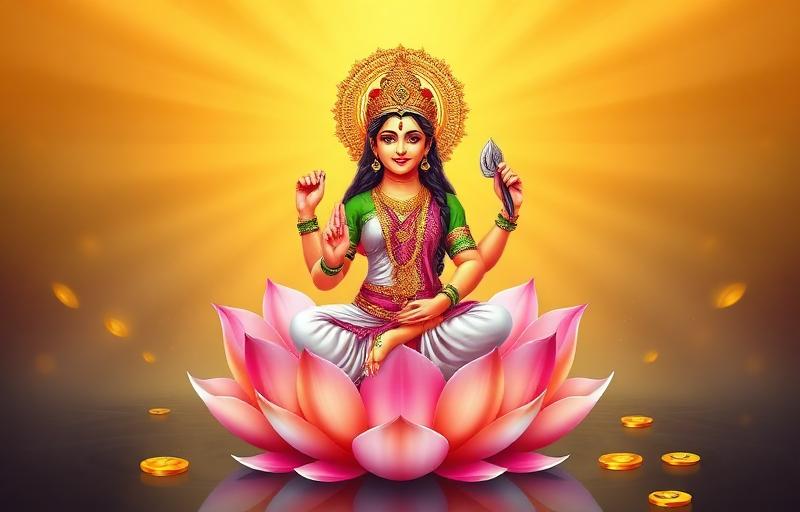
The temple's great festival runs for twelve days in the Malayalam month of Vrischikam, generally November or December, and ends on Ashtami.
What happens across the days:
- Daily processions with caparisoned elephants, the temple's percussion ensembles and the full apparatus of a Kerala temple festival
- Melam, the percussion performance that is the heart of a Kerala festival, with panchari and other patterns
- Very large crowds through the twelve days
- Traditional performing arts in the koothambalam
The Ashtami itself. The final day carries the episode the festival is named for.
- The deity of the Udayanapuram Subrahmanya temple, understood as the son, comes to Vaikom to meet his father
- The father and son meet, and the meeting is the emotional centre of the whole festival
- Before dawn the son departs to return to his own temple
- The Kudamaruthu ritual accompanies the departure, and the tradition describes the father's grief at the parting
What is being staged. As at Madurai's Chithirai festival, the tradition takes deities of the highest theological standing and puts them into a family situation that everybody in the audience already understands.
A father and son who see each other once a year, for one night, and part before dawn, is not an abstract idea. In a state with the migration history Kerala has, it is a good many people's actual lives.
Kerala temple festivals generally. It is worth knowing what to expect, since they are unlike festivals elsewhere in India.
- Elephants in ceremonial caparison, standing in a line, bearing the deity's image and ceremonial umbrellas
- Panchavadyam and melam, percussion ensembles of considerable length and complexity, which are performances in their own right and are followed closely by knowledgeable audiences
- Kudamattam, the changing of ornamental umbrellas, performed in sequence
- A strong emphasis on musical structure rather than on spectacle alone
On temple elephants. There has been sustained and legitimate concern about their welfare, and regulations govern their use. If you attend, keep well clear of the animals, never approach or attempt to touch one, follow the barriers, and be aware that incidents involving elephants at Kerala festivals do happen.
The Feeding at Vaikom
Vaikom is known across Kerala for its prathal, the feast served at the temple, and this deserves a section because feeding is central to what a temple does.
What happens:
- The temple serves a full meal to devotees, and it is well known for both the quality and the scale of it
- Vaikathashtami brings enormous numbers to be fed
- The offering of a feast is itself a form of vow fulfilment. A devotee may sponsor a prathal
Annadanam as a religious act. The giving of food is treated across Indian traditions as among the highest forms of giving, and the reasoning is worth stating.
- Food is the one gift that must be repeated. A person fed today is hungry tomorrow, so the obligation never closes
- It is given without any assessment of who deserves it, which is what distinguishes it from most charity
- The recipient is not required to be grateful, to be poor, or to be anything in particular
Where this is done at scale in India:
- The Golden Temple at Amritsar, whose langar feeds tens of thousands daily in a tradition where communal eating is a founding principle
- Puri Jagannath, whose kitchen is among the largest in the world
- Tirupati, Guruvayur, Shirdi, Vaishno Devi and every major shrine
- Countless small temples, gurudwaras and dargahs doing the same thing on a smaller scale
Why the eating together matters. In a society organised by rules about who may eat with whom, a temple that feeds everyone in a single hall is making a statement whether or not it intends to.
That is why the langar was constructed the way it was, and why community kitchens recur in reform movements across Indian religious history. Sitting on the floor in a line and being served the same food is a very difficult thing to argue with.
At Vaikom, given the history of the roads outside, the fact that the temple is best known in Kerala for feeding people is not a small irony. It is arguably the more durable answer to the question the satyagraha was asking.
Visiting Vaikom
Getting there
- Vaikom, Kottayam district, Kerala, near the backwaters
- About 35 km from Kottayam and roughly 40 km from Ernakulam
- Kottayam and Ernakulam have railway stations, and Kochi has the airport
- Buses run frequently. Boat services on the backwaters also connect the area
Timings
- The temple opens very early, well before dawn, as Kerala temples do, and has morning and evening sessions with a long midday closure
- The early morning opening is worth making the effort for. Kerala temples at that hour, with oil lamps and no electric light, are a different experience
When to go
- October to February for the most comfortable weather
- Vaikathashtami in Vrischikam, November or December, for the twelve day festival
- Mahashivratri
- Mondays and Pradosham
Dress and conduct
- Kerala temple rules are specific and enforced. Men must remove upper garments and wear a mundu. Trousers and shirts are not permitted inside
- Women should wear a sari, set mundu or salwar. Check current rules
- Non Hindus are not permitted inside many Kerala temples including this one, and the rule is applied at the gate. Check before travelling if it affects your party
- Photography inside is not permitted
- Leave footwear and phones at the counters
The three temple circuit
- Vaikom, Ettumanoor and Kaduthuruthy, all three before noon on the same day, which is the traditional undertaking
- Ettumanoor is about 20 km away and is known for its mural of Nataraja and its gold elephants
- Plan the route and the timings in advance, since the whole point is completing it before noon
Around Vaikom
- The backwaters, with boat services and houseboats
- Kumarakom, on Vembanad lake, with its bird sanctuary
- Kottayam town
- Ernakulam and Fort Kochi
A closing thought. Vaikom will give you a very good meal, a very early morning, an excellent festival if your timing is right, and a road outside that people once went to prison for the right to walk on. Very few temples put all of that in one compound.
Frequently Asked Questions
What was the Vaikom Satyagraha?+
A campaign from March 1924 to November 1925 over the right of communities classified as avarna to use the public roads surrounding the Vaikom temple, from which they were barred. T K Madhavan and K Kelappan were among its leaders, E V Ramasamy came from Tamil Nadu and was jailed, Sree Narayana Guru supported it, and Gandhi visited in March 1925.
Why did it matter beyond Vaikom?+
It was among the first sustained satyagrahas on a purely social rather than political question, brought together Congress nationalists, the Narayana Guru movement and the emerging non brahmin movement of Tamil Nadu in an unusual coalition, and set the pattern for the temple entry campaigns that led to the Temple Entry Proclamation of 1936 in Travancore.
What is the katha of the three lingas?+
An asura named Kharasura obtained three lingas from Shiva at Kailasa through severe austerities, carried them, stopped on the way and set them down, whereupon they became fixed where they were placed. The three are the lingas at Vaikom, Ettumanoor and Kaduthuruthy, and in the Vaikom tradition Kharasura attained liberation at the place.
What happens at Vaikathashtami?+
A twelve day festival in Vrischikam, November or December, with daily processions, caparisoned elephants and melam. On the final day the deity of the Udayanapuram Subrahmanya temple, understood as the son, comes to meet his father, and departs before dawn with the Kudamaruthu ritual marking the parting.
What are the temple's dress rules?+
Kerala temple rules are specific and enforced. Men must remove upper garments and wear a mundu, and trousers and shirts are not permitted inside. Women should wear a sari, set mundu or salwar. Non Hindus are not permitted inside many Kerala temples including this one, and the rule is applied at the gate.
What is the three temple circuit?+
Visiting Vaikom, Ettumanoor and Kaduthuruthy all before noon on the same day, which tradition holds fulfils what a devotee asks for. Ettumanoor is about 20 km away and is known for its Nataraja mural and gold elephants. Plan the route and timings in advance, since completing it before noon is the whole point.
About the author
Pandit Ravindra Sharma · Vedic Rituals & Bhakti, 22+ years
Pandit Ravindra is the Vandnaa editorial team's resident specialist on aarti, chalisa, and daily devotion. He has performed home and temple pujas across Varanasi and Delhi for over two decades and contributes the bhakti-focused articles on this site.
Meet the Vandnaa editorial team →Explore on Vandnaa
Related Articles
Thirunelli: The Temple in the Forest Where the Dead Are Remembered
8 min read
Ambalappuzha: The Temple That Lost a Chess Game and Has Been Paying Ever Since
8 min read
Arattupuzha: The Oldest Pooram, and the Temples That Arrived Late
8 min read
Haripad: Kerala's Great Murugan Temple and the Burden Carried to It
8 min read