The Temple at Thiruvarur
The Thyagaraja temple stands at Thiruvarur in Tamil Nadu, in the Kaveri delta, and it is one of the largest temple complexes in the state by area.
What is there:
- A very large walled complex with multiple enclosures, gopurams and corridors
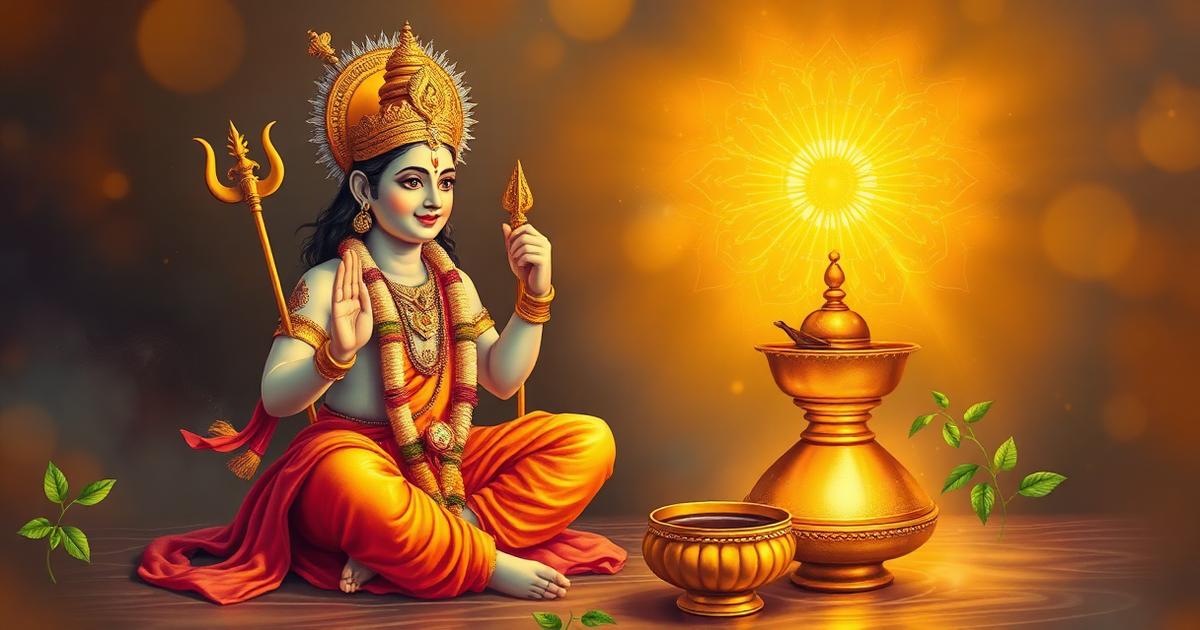
- The Thyagaraja shrine, holding a Somaskanda image, Shiva with Uma and Skanda together
- The Vanmikanathar shrine, the Shiva linga which is the temple's older core
- Kamalalayam, the temple tank, among the largest in India
- The ther, the temple car, which is among the largest in Asia
The deity. Thyagaraja here is not the same as the composer of that name, and the two get confused. The deity's form is Somaskanda, and he is also called Vidhividangar.
What the temple is known for:
- The Ajapa Natanam, the dance of the breath, which is this deity's particular dance
- Its place at the head of the seven Vidanga sthalas
- Its very large car festival
- Its extraordinary density of associations with Tamil Shaiva literature, saints and history
Thiruvarur is one of those places that carries far more than one article can hold. It is the birthplace of a Nayanar saint, the setting of the most famous story about justice in Tamil tradition, and the birthplace of all three composers of the Carnatic trinity.
The Ajapa Natanam
The dance at Thiruvarur is the temple's central idea and it is one of the more beautiful concepts in Shaiva thought.
What ajapa means:
- Japa is the repetition of a mantra, done deliberately
- Ajapa is the repetition that happens without being done
- The reference is to the breath. The tradition hears the inbreath as so and the outbreath as ham, giving soham, meaning I am that, or read the other way as hamsa, the swan
- That syllable pair repeats with every breath, continuously, whether or not anyone is paying attention
- The count usually given is 21,600 breaths in a day, and each one is understood as a repetition of the mantra
What that makes the dance:
- Shiva's dance at Thiruvarur is the Ajapa Natanam, danced to the rhythm of the breath
- It is therefore continuous, and it does not stop while anything is alive
- It is not performed for an audience and is not seen
- The devotee does not watch it. The devotee is the rhythm it is danced to
Compare this with Chidambaram. The Ananda Tandava, the dance of bliss at Chidambaram, is the most famous image in Indian art, reproduced in bronze thousands of times and instantly recognisable.
Thiruvarur's dance has no image of that kind, because it cannot be depicted. What can be depicted is a moment. A rhythm that is co extensive with breathing cannot be, and the tradition did not try.
What the concept achieves. It closes the distance between the deity and the devotee completely. If the dance follows your breath, then the deity is not somewhere being worshipped. He is keeping time to you, right now, and will stop when you do.
The Seven Vidanga Sthalas
Thiruvarur heads a group of seven temples, and the katha that connects them is worth setting out.
The story:
- Muchukunda, a Chola king, gave assistance to Indra
- As a reward he asked for the Thyagaraja image that Indra possessed
- Indra, reluctant to part with it, had six replicas made and offered Muchukunda the seven together, expecting him to fail to identify the original
- Muchukunda identified it correctly
- Indra gave him all seven, and Muchukunda installed them at seven places
The Saptavidanga sthalas and their dances:
- Thiruvarur, the Ajapa Natanam, the dance of the breath
- Thirunallar, the Unmatta Natanam
- Nagapattinam, the Paravara Taranga Natanam, the dance of the ocean waves
- Thirukkaravasal, the Kukkuta Natanam, the dance of the cock
- Thirukkuvalai, the Bhringa Natanam, the dance of the bee
- Vedaranyam, the Hamsapada Natanam, the dance of the swan's step
- Thirukkolili, the Kamala Natanam, the dance of the lotus
What the scheme does. Each of the seven has the same deity in the same form, and each dances differently.
That is a precise and rather elegant idea. It says that what a deity is does not change from place to place, but what he does there is local. Each temple gets its own dance, and the pilgrim who does all seven has seen one god move in seven ways.
Why identification stories recur. Muchukunda picking the original from seven identical images is a story type found across Indian tradition, and it always makes the same point.
The test is never about looking harder. It is about whether the person has the relationship that lets them know. Muchukunda can tell which is the real one because he already knows the deity, which is not a skill anyone can acquire by inspection.
The King Who Executed His Own Son
Thiruvarur is the setting of the most famous story about justice in the Tamil tradition, and it is worth telling in full.
Manuneedhi Cholan:
- A Chola king of Thiruvarur, remembered for absolute impartiality
- At his palace hung a bell which anyone could ring to demand justice, at any hour, and the king was bound to hear them
What happened:
- The king's son, driving his chariot, ran over and killed a calf
- The calf's mother, the cow, came to the palace and rang the bell with her head
- The king came out, learned what had happened, and understood what the cow was asking for
- He judged that a life had been taken and a life was owed
- He had his own son placed in the road and had the chariot driven over him
What happens next varies in the telling, and in most versions Shiva intervenes and restores the son, having tested the king. But the tradition does not treat that as the point.
Why this story matters so much in Tamil culture:
- It is the standard reference for impartial justice, and it is invoked in political and legal rhetoric to this day
- The petitioner is an animal, which removes every possible consideration of status, wealth or influence
- The accused is the king's own son, which removes every possible excuse
- The bell is available to anyone, which is the institutional point rather than a personal virtue
The uncomfortable part, which is not usually dwelt on. It is a story in which a father kills his child. The tradition preserves that without softening it, because softening it would remove the whole force of the example.
A representation of the king and the cow with the bell is a familiar image in Tamil Nadu, and versions of it appear at Thiruvarur and elsewhere. What it is depicting is a ruler doing the hardest possible thing because a rule applied to him too.
The Birthplace of the Carnatic Trinity
Thiruvarur has a claim in the history of Indian music that no other town can match.
All three composers of the Carnatic trinity were born here:
- Tyagaraja, whose kritis in Telugu are the core of the Carnatic vocal repertoire and who was a devotee of Rama
- Muthuswami Dikshitar, whose compositions in Sanskrit are dense, slow and constructed with great structural sophistication
- Syama Sastri, the eldest of the three, whose smaller output is technically formidable
All three belong to the eighteenth and nineteenth centuries, and all three were born in the same town.
What they did between them. The three shaped the Carnatic tradition into the form it has today.
- They composed in the kriti form, which became the central vehicle of the tradition
- Between them they covered a very large number of ragas, including ragas that survive mainly because one of them used it
- Their compositions are still the core repertoire, learned by every student and performed at every concert
- They were devotional composers. The kritis are songs addressed to deities, and the music is inseparable from that
Why Thiruvarur. It is a fair question and the answer is not mysterious.
The Kaveri delta in this period had a very high concentration of temples, temple patronage, court patronage under the Thanjavur Marathas, and a settled community of families in which music was a hereditary occupation.
A town with a major temple, an established musical establishment attached to it, and a network of teaching families is where musicians come from. The trinity is remarkable, but the conditions that produced them were not accidental.
The Thyagaraja aradhana, the annual gathering at Tiruvaiyaru where musicians assemble to sing Tyagaraja's compositions at his samadhi, is one of the major events of the Carnatic year, and it is held at Tiruvaiyaru rather than Thiruvarur, since that is where he lived and died.
Visiting Thiruvarur
Getting there
- Thiruvarur, Tamil Nadu, in the Kaveri delta
- Thiruvarur has a railway station and is connected to Thanjavur, Kumbakonam and Nagapattinam
- Roughly 55 km from Thanjavur and 50 km from Kumbakonam
- Tiruchirappalli is the nearest airport, about 130 km
Timings
- Open in morning and evening sessions with a long midday closure. Check locally
- The complex is very large. Allow real time rather than a quick darshan
When to go
- November to February for the most comfortable weather
- The Thiruvarur ther festival in Panguni, the Tamil month from mid March, when the temple car is drawn. This is the major event
- Mahashivratri and Arudra Darshan in Margazhi
- Ordinary weekdays for a quiet look at the complex
The temple car
- The Thiruvarur ther is among the largest in Asia, and its drawing is an enormous undertaking
- The crowd is very large and the car is very heavy
- Do not get between the ropes and the car. Do not push forward in a dense crowd. There are enough turns on the rope
- Keep children held and agree a meeting point
- Follow the organisers without argument. Car festivals have had serious accidents in India
What to see inside
- The Thyagaraja shrine and the Vanmikanathar linga
- The Kamalalayam tank, which is worth walking round
- The corridors and the enclosures. This is a temple to wander in rather than to walk through
- The representation of Manuneedhi Cholan and the cow
Dress and conduct
- Men may be expected to remove upper garments in the sanctum area. Check
- Women should dress conservatively
- Photography inside is restricted
Combining the visit
- Kumbakonam and its cluster of temples
- Nagapattinam, Vedaranyam and Thirunallar, all Vidanga sthalas, if you want to follow the seven
- Thanjavur for the Brihadeeswarar temple
- Tiruvaiyaru, where Tyagaraja lived and where the annual aradhana is held
A closing thought. Chidambaram's dance is the one on every poster, and it is magnificent. Thiruvarur's dance has no poster, because it is happening in your chest while you read this, which is either a lovely idea or a very demanding one depending on how seriously you take it.
Quick Answers
What is the Ajapa Natanam?+
The dance of Shiva at Thiruvarur, danced to the rhythm of the breath. Japa is deliberate repetition of a mantra; ajapa is repetition that happens without being done, referring to the breath heard as soham or hamsa. The dance is therefore continuous, is not performed for an audience, and the devotee is the rhythm it is danced to.
What are the seven Vidanga sthalas?+
Thiruvarur with the Ajapa Natanam, Thirunallar with the Unmatta Natanam, Nagapattinam with the dance of the ocean waves, Thirukkaravasal with the dance of the cock, Thirukkuvalai with the dance of the bee, Vedaranyam with the swan's step and Thirukkolili with the lotus dance. Each has the same deity in the same form, dancing differently.
What is the Muchukunda katha?+
The Chola king Muchukunda gave assistance to Indra and asked for the Thyagaraja image Indra possessed. Indra, reluctant to part with it, had six replicas made and offered all seven, expecting him to fail. Muchukunda identified the original correctly, Indra gave him all seven, and he installed them at the seven Vidanga sthalas.
What is the story of Manuneedhi Cholan?+
A Chola king of Thiruvarur hung a bell anyone could ring to demand justice. His son, driving a chariot, ran over and killed a calf. The cow rang the bell with her head, and the king judged that a life was owed and had his own son placed in the road and the chariot driven over him. It is the standard Tamil reference for impartial justice.
Why is Thiruvarur important in Carnatic music?+
All three composers of the Carnatic trinity were born there: Tyagaraja, whose Telugu kritis are the core of the vocal repertoire; Muthuswami Dikshitar, whose Sanskrit compositions are structurally sophisticated; and Syama Sastri, the eldest. The Kaveri delta at that period had temples, temple and court patronage, and hereditary musical families.
What should I be careful about at the car festival?+
The Thiruvarur ther is among the largest in Asia, the crowd is very large and the car is very heavy. Do not get between the ropes and the car, do not push forward in a dense crowd since there are enough turns on the rope, keep children held, agree a meeting point, and follow the organisers without argument.
About the author
Pandit Ravindra Sharma · Vedic Rituals & Bhakti, 22+ years
Pandit Ravindra is the Vandnaa editorial team's resident specialist on aarti, chalisa, and daily devotion. He has performed home and temple pujas across Varanasi and Delhi for over two decades and contributes the bhakti-focused articles on this site.
Meet the Vandnaa editorial team →