The Temple at Thiruvanmiyur
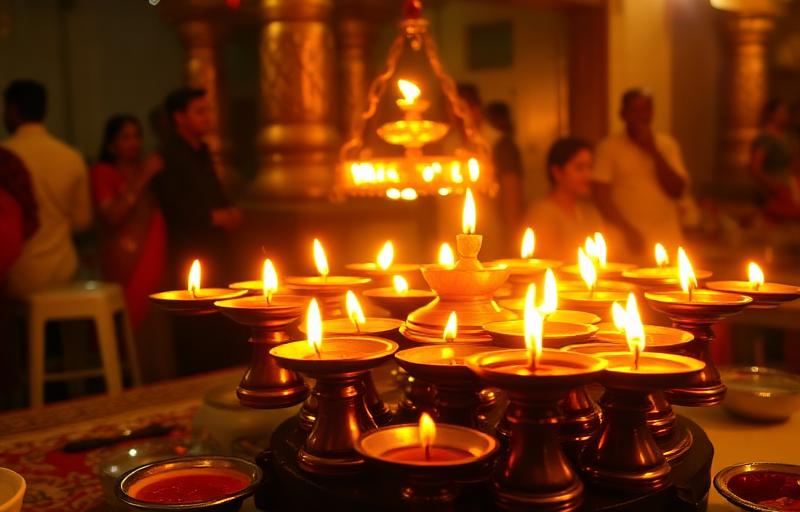
The Marundeeswarar temple stands at Thiruvanmiyur in south Chennai, a short distance from the coast.
What is there:
- A temple with a gopuram, prakaras and a tank, in a dense urban neighbourhood
- The deity Marundeeswarar, Shiva, with the goddess Tripurasundari
- A shrine associated with Valmiki
- Chola period inscriptions, from the temple's expansion under Chola patronage
- Traffic, shops and apartment blocks pressing up to the compound wall
The name. Marundu means medicine in Tamil, and Marundeeswarar is the lord of medicine.
The town's name. Thiruvanmiyur is generally derived from Thiru Valmiki Ur, the town of Valmiki, the author of the Ramayana, who is held to have worshipped here.
Why this temple is worth writing about. Chennai has a number of ancient temples, and Kapaleeshwarar at Mylapore is the famous one. Marundeeswarar is less visited and has a more specific character.
It is a healing shrine. People come here when somebody is ill, and the temple's whole tradition, its name, its katha and its associations, is about medicine. That gives it a different feel from a temple people visit for darshan in general.
Agastya and the Herbs
The katha here concerns Agastya, and he is one of the most consequential figures in the tradition of the south.
The story at this temple:
- Agastya came to Shiva here seeking knowledge of the medicinal properties of plants
- Shiva taught him which herbs act on which condition
- The deity accordingly became Marundeeswarar, the lord of medicine
- Devotees have come here since for relief from illness
Who Agastya is. He is a sage of very wide reach and it is worth setting out what is attributed to him.
- He is the sage who came south, and in the tradition he is the figure through whom Vedic learning entered the Tamil country
- The Vindhya story has the mountain growing to block the sun, and Agastya asking it to bow while he crossed and remain so until he returned, which he never did
- He is credited with the Agattiyam, held to be the earliest Tamil grammar, now lost
- He is regarded as the first of the Siddhars and the founding figure of Siddha medicine
- He appears in the Ramayana, giving Rama weapons in the forest
- He is one of the Saptarishi in some listings
What that combination represents. Agastya is the figure through whom the tradition explains the arrival of a whole culture in the south, and the fact that he is credited with grammar, medicine and Vedic learning together is the point.
He is not a specialist. He is the person who brought the entire package, and every field that wanted to claim antiquity in the Tamil country claimed him.
Why medicine attaches to him specifically. Siddha medicine is the traditional medical system most strongly associated with Tamil Nadu, and its texts are in Tamil.
A system that is Tamil in language and content needs a founder who belongs to both worlds, and Agastya, a northern sage who came south and wrote in Tamil, is exactly that figure.
Siddha and the Temple
The relationship between temples and traditional medicine is worth understanding, and it needs stating carefully.
What Siddha is:
- A traditional medical system associated principally with Tamil Nadu, with its literature in Tamil
- Attributed to the Siddhars, a group of figures usually counted as eighteen, with Agastya at their head
- It uses plant, mineral and metallic preparations, and has its own theory of the body based on the three humours and on the five elements
- It is recognised in India under the AYUSH system alongside Ayurveda, Unani, Yoga, Naturopathy and Homoeopathy, with government colleges and registered practitioners
How temples and medicine were connected historically:
- Temples were the institutions that held land, revenue and staff in a locality, and many maintained facilities that would now be described as medical
- Chola inscriptions record temples with hospitals attached, listing physicians, surgeons, nurses, medicines and the beds provided
- Herbal knowledge was held by lineages that were often attached to temple establishments
- A shrine associated with healing would attract the sick, and where the sick gather, medical practice follows
So a temple named for medicine is not a metaphor. It sits in a tradition where the same institution often did both.
What needs saying clearly. People come to Marundeeswarar because someone in the family is ill, and it would be irresponsible to write about that without being direct.
- Serious illness needs modern medical diagnosis and treatment. Delay in getting a diagnosis costs outcomes, and for many conditions it costs lives
- If you are using a traditional system alongside, tell your doctor what you are taking. Some traditional preparations interact with prescribed drugs, and some metallic preparations require proper qualification to prepare and prescribe
- Buy such preparations only from registered practitioners and licensed manufacturers. Unregulated products have caused documented harm
- A temple visit is not a treatment, and nothing in this tradition claims it replaces one
What a temple like this actually offers a family with someone ill is something else, and it is not nothing. It gives them a place to go, an act to perform and a way to hold hope, at a time when the medical process consists largely of waiting.
Valmiki and the Town's Name
The town takes its name from a sage, and the association is worth setting out.
Thiruvanmiyur is generally derived from Thiru Valmiki Ur, the sacred town of Valmiki, and the temple has a shrine associated with him.
Who Valmiki is:
- The author of the Ramayana, the earliest of the two great Sanskrit epics
- Called the Adi Kavi, the first poet
- The tradition holds that he was a highway robber before his transformation, encountered by sages who set him to repeat a mantra, and that he remained in meditation so long that an anthill grew over him, from which he takes his name, since valmika means anthill
- In the Ramayana itself, he shelters Sita after her exile from Ayodhya, and her sons Lava and Kusha are raised at his ashram and learn the epic from him
The origin of the shloka. The tradition's account of how poetry itself began is attached to Valmiki and is worth telling.
- He saw a hunter shoot one of a pair of krauncha birds, and the surviving bird cried out
- Overcome, he spoke a curse at the hunter, and found that it had come out in metre, in a form he had not intended
- That utterance is held to be the first shloka, and the word for grief, shoka, is played against shloka in the tradition's own account
- Brahma then instructed him to compose the Ramayana in that metre
What that story says. It places the origin of Sanskrit poetry in an involuntary cry of pity at the killing of a bird.
That is a remarkable thing for a literary tradition to claim about itself. It says poetry begins not in craft, not in praise and not in inspiration in the ordinary sense, but in someone being unable to bear what they have just seen.
A town named after that poet, with a temple where a sage was taught how to heal, is a reasonable pair of associations for one small stretch of coast to carry.
Old Temples in a New City
Chennai presents itself as a modern city, and its temple geography tells a different story that is worth following.
What the city actually sits on:
- Mylapore, with the Kapaleeshwarar temple, is far older than Madras and was a significant settlement and port
- Thiruvottiyur, to the north, has an ancient Shiva temple with a long Shaiva tradition
- Thiruvanmiyur, to the south, has this temple
- Triplicane has the Parthasarathy temple, a Divya Desam
- All of these existed before the East India Company built Fort St George in 1639, and the city grew up between and around them
What that means. Madras was not founded on empty ground. It was founded in the gaps between existing settlements, each with its own temple, and those temples are still where they were.
How the city grew around them:
- The colonial city developed around the fort and along the north south axis
- The old settlements were absorbed as neighbourhoods, keeping their names and their temples
- Twentieth century expansion, and then the IT corridor along the Old Mahabalipuram Road, filled in everything between
- Thiruvanmiyur today is a dense residential and commercial suburb near the start of that corridor
What it feels like to visit. You turn off a road with software offices and apartment towers, and there is a Chola period temple with an inscription on its wall recording a gift of lamps.
That contrast is the ordinary condition of Indian cities and is worth noticing rather than romanticising. The temple is not a survival from another world. It is a working institution in this one, used by the people who live in those apartments, and its car park is full of two wheelers.
The coast. Thiruvanmiyur beach is a short walk away, and the coastline running south from here goes to Mahabalipuram, about fifty kilometres down, which has the great Pallava rock cut monuments and is one of the essential sites in Indian art.
A visitor with a day can do Marundeeswarar, the beach, and Mahabalipuram, which covers rather a lot of the Tamil coast's history in one drive.
Visiting Marundeeswarar
Getting there
- Thiruvanmiyur, south Chennai, Tamil Nadu, a short distance inland from the beach
- Thiruvanmiyur has an MRTS station, and the temple is a short distance from it
- Buses and autos serve the area from across the city
- Chennai airport is roughly 20 km, and Chennai Central and Egmore are the main railway stations
Timings
- Open in morning and evening sessions with a midday closure, as is standard for Tamil temples. Check locally
- Mondays and Pradosham days are busier, as at Shiva temples generally
When to go
- November to February for the most comfortable weather. Chennai is hot and humid from March, and April to June is severe
- Mahashivratri, the temple's principal occasion
- Pradosham, twice a month, which draws Shiva devotees across the city
- Early morning, both for the temperature and for a quieter temple
Practical notes
- Dress conservatively. Men may be expected to remove upper garments in the sanctum area at some Tamil temples, so check
- Leave footwear at the counters
- Photography inside is restricted
- The area is congested. Public transport is easier than driving
- Carry water. Chennai humidity is punishing outside the winter months
Look for the inscriptions. Chola period inscriptions on the walls record gifts to the temple. You will not be able to read them without Tamil and some epigraphic training, but knowing what they are changes how you look at a wall.
Combining the visit
- Thiruvanmiyur beach, a short walk
- Ashtalakshmi temple at Besant Nagar, on the shore, a modern temple of unusual design
- Kapaleeshwarar at Mylapore, the city's most famous temple, with the Mylapore tank and the surrounding streets
- Parthasarathy at Triplicane
- Mahabalipuram, about 50 km south along the coast road, which should be a full day of its own
A closing thought. There is a particular kind of visitor at a temple like this, and you will see them if you look. Somebody has come alone, on a weekday morning, before work, because a scan is due or a parent is in hospital. They will be there for four minutes and then leave. The temple is open at that hour for exactly that reason.
Quick Answers
Why is the deity called Marundeeswarar?+
Marundu means medicine in Tamil, so Marundeeswarar is the lord of medicine. The katha holds that Agastya came to Shiva here seeking knowledge of the medicinal properties of plants and was taught which herbs act on which condition, and devotees have come since for relief from illness.
Who is Agastya?+
The sage who came south, through whom the tradition holds Vedic learning entered the Tamil country. He is credited with the Agattiyam, held to be the earliest Tamil grammar and now lost, is regarded as the first of the Siddhars and the founding figure of Siddha medicine, appears in the Ramayana giving Rama weapons, and features in the Vindhya story.
Can a temple visit treat illness?+
No, and nothing in this tradition claims it replaces treatment. Serious illness needs modern medical diagnosis and treatment, and delay in getting a diagnosis costs outcomes and sometimes lives. If you use a traditional system alongside, tell your doctor what you are taking, since some preparations interact with prescribed drugs.
What is Siddha medicine?+
A traditional medical system associated principally with Tamil Nadu, with its literature in Tamil, attributed to the Siddhars, usually counted as eighteen with Agastya at their head. It uses plant, mineral and metallic preparations and is recognised in India under the AYUSH system, with government colleges and registered practitioners.
Why is the town called Thiruvanmiyur?+
It is generally derived from Thiru Valmiki Ur, the sacred town of Valmiki, the author of the Ramayana, who is held to have worshipped here, and the temple has a shrine associated with him. Valmiki is called the Adi Kavi, the first poet, and takes his name from valmika, meaning anthill.
What else is worth seeing nearby?+
Thiruvanmiyur beach a short walk away, the Ashtalakshmi temple at Besant Nagar on the shore, Kapaleeshwarar at Mylapore with its tank and surrounding streets, Parthasarathy at Triplicane, and Mahabalipuram about 50 km south along the coast road, which deserves a full day of its own.
About the author
Pandit Ravindra Sharma · Vedic Rituals & Bhakti, 22+ years
Pandit Ravindra is the Vandnaa editorial team's resident specialist on aarti, chalisa, and daily devotion. He has performed home and temple pujas across Varanasi and Delhi for over two decades and contributes the bhakti-focused articles on this site.
Meet the Vandnaa editorial team →