The Rock and What Is Around It
Namakkal is a town in Namakkal district, Tamil Nadu, built around a single enormous rock rising out of the plain.
What is there:
- The rock, a great mass of stone perhaps sixty five metres high, with a fort on top
- Rock cut cave temples at its base, dating to around the seventh or eighth century, with large relief panels
- The Narasimha cave temple and the Ranganatha cave temple
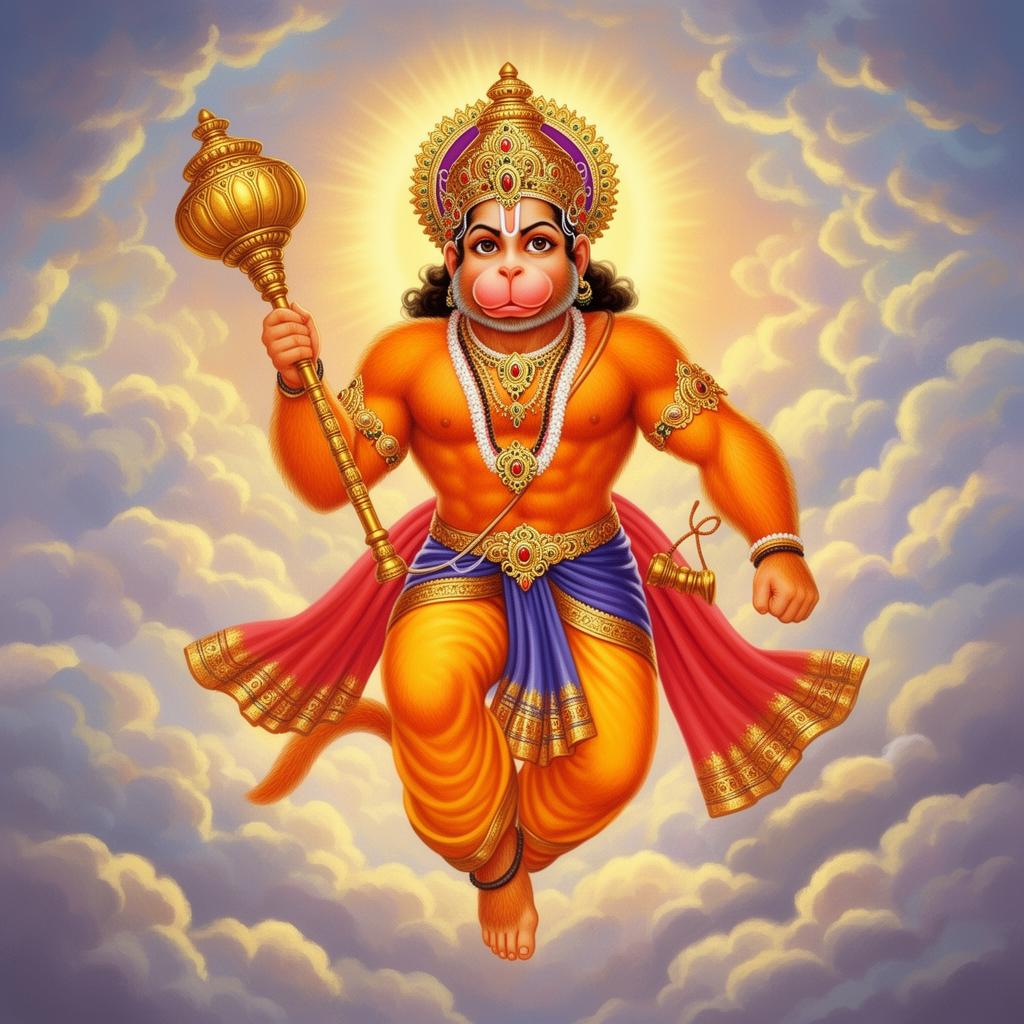
- The Anjaneyar temple, with a very large standing Hanuman carved from a single stone, in the open
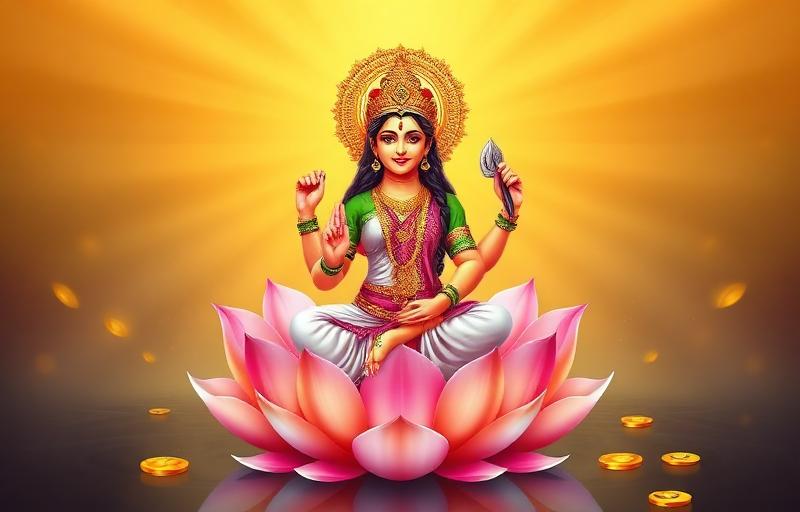
- Namagiri Thayar, the goddess, whose shrine is part of the Narasimha temple
The elements that make Namakkal worth the journey:
- The cave temples are among the better examples of early rock cut work in the Tamil country
- The Hanuman stands under the open sky, with no roof over him, which is deliberate
- The goddess here has a connection to one of the most extraordinary lives in the history of mathematics
What the town is otherwise. Namakkal is an ordinary busy district town, known regionally for its poultry industry and its lorry body building. There is nothing about the approach to prepare you for what is at the base of the rock.
The Hanuman Who Is Still Growing
The Anjaneyar at Namakkal is the image most visitors come for, and the reason he has no roof is the interesting part.
What is there:
- A standing Hanuman, carved from a single stone, given as around eighteen feet
- He stands in the open, facing the Narasimha temple across the way
- His hands are folded in anjali, in worship
- There is no vimana, no roof and no enclosure above him
Why no roof. The tradition holds that Hanuman here is still growing, and that any roof built over him would in time have to come down.
The katha:
- Hanuman was carrying a saligrama given to him, and had been told not to set it down
- At Namakkal he stopped to perform his sandhya vandanam, the daily worship at the junctures of the day
- He needed both hands, and asked a woman present to hold the stone, or in other tellings set it down briefly
- The stone became fixed and grew into the hill
- Hanuman remained here, facing it, in worship
What the story does. This is the same story type as Koteshwar in Kutch and Gokarna in Karnataka, where a powerful figure carrying a sacred object is told not to set it down, does so, and the object stays.
The difference here is what happens to the carrier. Ravana at Gokarna leaves in frustration. Hanuman at Namakkal stays, folds his hands and begins worshipping the thing he was carrying.
That is entirely in character, and it is why the two stories feel so different despite having the same structure. The tradition knows exactly who it is dealing with in each case.
On the growing. Whether a stone image can grow is not a question that troubles the tradition, which has a great many images described as growing, sweating, changing colour or moving. The roofless Hanuman is a built consequence of that belief, which is more interesting than the belief itself. Somebody decided not to build a roof, and nobody has since.
The Cave Temples
The rock cut temples at the base of the hill are the oldest thing at Namakkal and are worth proper attention.
What they are:
- Two cave temples cut into the rock, generally placed around the seventh or eighth century
- The Narasimha cave, with large relief panels
- The Ranganatha cave, with a reclining Vishnu
- The reliefs include Trivikrama, the Vamana avatar striding across the worlds, and other Vaishnava subjects
Rock cut architecture and why it matters:
- Before temples were built, they were cut, excavated into living rock rather than constructed from blocks
- The great examples run from Ajanta and Ellora in Maharashtra to Badami in Karnataka and Mahabalipuram in Tamil Nadu
- The technique requires working top down, since there is no scaffolding and no possibility of correcting a mistake by replacing a block
- Every cubic metre removed is permanent
What that implies about the sculptors. A rock cut temple is carved by people who cannot make a mistake. There is no undo. A wrongly cut surface stays wrong forever, and a wrongly judged depth ruins the panel.
That is a rather astonishing way to work, and it produced some of the finest sculpture in the world.
Trivikrama deserves a note. The Vamana avatar is Vishnu as a dwarf brahmin who asks the asura king Bali for three paces of ground, is granted it, and then grows to cover the earth with one step and the heavens with the second, asking where to place the third. Bali offers his own head.
The subject is a favourite of rock cut sculptors because it allows an enormous diagonal figure with one leg raised, filling a wall, and it appears at Badami, Mahabalipuram, Ellora and here.
Bali, it should be said, comes out of the story well. He is one of the chiranjivi, permitted to return once a year, and that return is the festival of Onam in Kerala.
Namagiri Thayar and Ramanujan
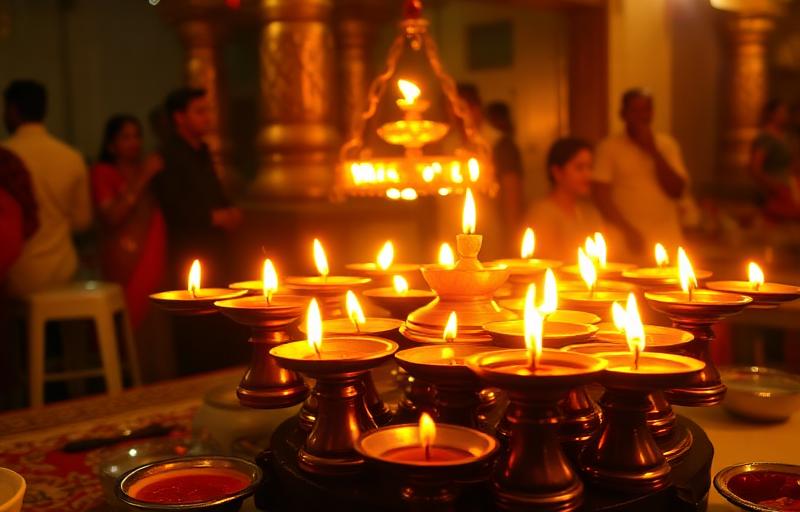
The goddess of Namakkal has a connection to modern intellectual history that no other Indian temple deity can claim in the same way.
Srinivasa Ramanujan:
- Born in 1887 at Erode, raised at Kumbakonam, and among the most extraordinary mathematicians who has ever lived
- Largely self taught, working from a couple of textbooks, he produced results of a depth and strangeness that professional mathematicians found difficult to categorise
- He wrote to G H Hardy at Cambridge in 1913, and Hardy, after initial disbelief, recognised what he was looking at and brought him to England
- He died in 1920, at thirty two
- His notebooks are still being worked through, and results in them have continued to be proved and applied for a century
The goddess. Namagiri Thayar of Namakkal was the family deity, and Ramanujan was explicit about her role in his work.
- He said that the goddess appeared to him, and that formulae came to him in dreams and on waking
- He is recorded as having said that an equation had no meaning for him unless it expressed a thought of God
- His decision to travel to England, which was a serious matter for an orthodox brahmin family, is connected in the accounts to a dream in which the family received her sanction
How to hold this. It is worth being careful, and the carefulness cuts both ways.
- It would be condescending to explain away what Ramanujan said about his own work as a manner of speaking. He said it repeatedly and appears to have meant it
- It would be incorrect to present it as evidence that a deity does mathematics, which is not a claim the tradition itself makes in that form
- What can be said is that the most creative mathematician of his century understood his own results as given rather than constructed, and named the giver
Why that is interesting regardless of what you believe. Mathematicians have often described discovery as finding rather than making, and the experience of a result arriving whole is very widely reported.
Ramanujan had a vocabulary for that experience, and it was the vocabulary of his family's temple. A visitor to Namakkal is standing in front of the deity a man credited with results that are still being unpacked a hundred years later.
Narasimha and the Roofless Sanctum
The principal deity at Namakkal is Narasimha, and the temple's arrangement is unusual.
Narasimha, in brief:
- The fourth avatar of Vishnu, the man lion
- Hiranyakashipu obtained a boon that he could not be killed by man or beast, indoors or outdoors, by day or night, on the ground or in the air, by any weapon
- His son Prahlada was a devotee of Vishnu, and the father persecuted him for it
- Asked whether his god was in a pillar, Prahlada said yes. Hiranyakashipu struck the pillar and Narasimha emerged from it
- He killed the asura on a threshold, at twilight, on his lap, with his claws, being neither man nor beast
- Every term of the boon was met exactly, and none of it protected him
Why the story is told the way it is. The boon is a piece of legal drafting, and the killing is a demonstration that a sufficiently clever contract still has gaps.
But the point is not cleverness. The point is that Prahlada was right. He said his god was present in the pillar, and the pillar was struck to prove him wrong, and his god came out of it.
What the tradition takes from this. Narasimha is the deity of the moment when protection collapses. He is approached in situations of danger, of persecution and of impossible odds, and he is one of the fiercest deities in the Vaishnava fold.
At Namakkal. The Narasimha sanctum here is associated with an unusual feature, that the shrine is understood to be open above rather than covered by a vimana in the usual way, which connects with the tradition about the deity and the hill.
What that arrangement produces is a temple where two of the principal images, Narasimha and the Hanuman facing him, are both associated with the open sky. It is an unusual configuration, and standing between them with the rock above is the reason to make the trip.
Visiting Namakkal
Getting there
- Namakkal, Namakkal district, Tamil Nadu
- Roughly 55 km from Salem and about 90 km from Tiruchirappalli, which has the nearest airport
- Namakkal has a railway station, and Salem is the larger junction
- The town is on the Salem to Karur road and is easy to reach by bus or car
Timings
- The temples open in morning and evening sessions with a midday closure. Check locally
- The fort on the rock has its own visiting hours
When to go
- November to February for the most comfortable weather. It gets very hot here from March
- Narasimha Jayanti in Vaishakha, and Hanuman Jayanti, for the temples' occasions
- Early morning, both for the light on the cave reliefs and for the climb to the fort
What to see, in order
- The Anjaneyar temple and the open air Hanuman, which is what most people come for
- The Narasimha cave temple and its reliefs, particularly the Trivikrama
- The Ranganatha cave
- The shrine of Namagiri Thayar
- The climb to the fort on the rock, for the view over the plain
Practical notes
- The fort climb is a set of steps and is exposed. Carry water and go early
- Photography rules differ between the caves and the working shrines. Ask
- Dress conservatively, and remove footwear where required
- The cave reliefs are ancient and vulnerable. Do not touch them
Combining the visit
- Salem and the Yercaud hills, a short drive north
- Kolli Hills, east of Namakkal, with waterfalls and the Arapaleeswarar temple, and one of the more attractive hill drives in Tamil Nadu
- Tiruchirappalli, with the Rockfort temple and Srirangam, to the south
- Kumbakonam and the Chola country are further east
A note for anyone interested in Ramanujan. Kumbakonam, where he grew up, is a couple of hours away, and his house there has been preserved. Erode, where he was born, is to the west. Namakkal, Kumbakonam and Erode make a small circuit that follows a particular life.
A closing thought. Very few temples give you an image that has to be left uncovered because it is not finished growing. Fewer still give you, in the same complex, the deity a man thanked for the mathematics that is still being understood a century after he died at thirty two.
What People Ask Most
Why does the Namakkal Hanuman have no roof?+
Tradition holds that Hanuman here is still growing, so any roof built over him would in time have to come down. The image is a standing Hanuman carved from a single stone, given as around eighteen feet, hands folded in worship, facing the Narasimha temple across the way.
What is the katha of the saligrama?+
Hanuman was carrying a saligrama and had been told not to set it down. At Namakkal he stopped to perform his sandhya vandanam, needed both hands, and either asked a woman present to hold the stone or set it down briefly. The stone became fixed and grew into the hill, and Hanuman remained here facing it in worship.
What is the connection with Ramanujan?+
Namagiri Thayar of Namakkal was the family deity of Srinivasa Ramanujan, the mathematician, and he was explicit that the goddess appeared to him and that formulae came in dreams and on waking. His decision to travel to England is connected in the accounts to a dream in which the family received her sanction.
How old are the cave temples?+
They are generally placed around the seventh or eighth century. There are two, the Narasimha cave with large relief panels including a Trivikrama, and the Ranganatha cave with a reclining Vishnu. They are among the better examples of early rock cut work in the Tamil country.
What is the Narasimha katha?+
Hiranyakashipu obtained a boon that he could not be killed by man or beast, indoors or outdoors, by day or night, on the ground or in the air, by any weapon. He persecuted his son Prahlada for devotion to Vishnu, struck a pillar to disprove him, and Narasimha emerged and killed him on a threshold at twilight on his lap with his claws, meeting every term exactly.
What else can I see near Namakkal?+
Salem and the Yercaud hills a short drive north, the Kolli Hills to the east with waterfalls and the Arapaleeswarar temple, Tiruchirappalli to the south with the Rockfort temple and Srirangam, and Kumbakonam and the Chola country further east. Kumbakonam, where Ramanujan grew up, is a couple of hours away.
About the author
Pandit Ravindra Sharma · Vedic Rituals & Bhakti, 22+ years
Pandit Ravindra is the Vandnaa editorial team's resident specialist on aarti, chalisa, and daily devotion. He has performed home and temple pujas across Varanasi and Delhi for over two decades and contributes the bhakti-focused articles on this site.
Meet the Vandnaa editorial team →