The Temple Without Salt
The Oppiliappan temple, also written Uppiliappan and known in the hymns as Thiruvinnagar, stands near Thirunageswaram, a short distance from Kumbakonam in Thanjavur district, Tamil Nadu.
What is there:
- A large temple with a gopuram, corridors and a tank called the Ahoraatra Pushkarini
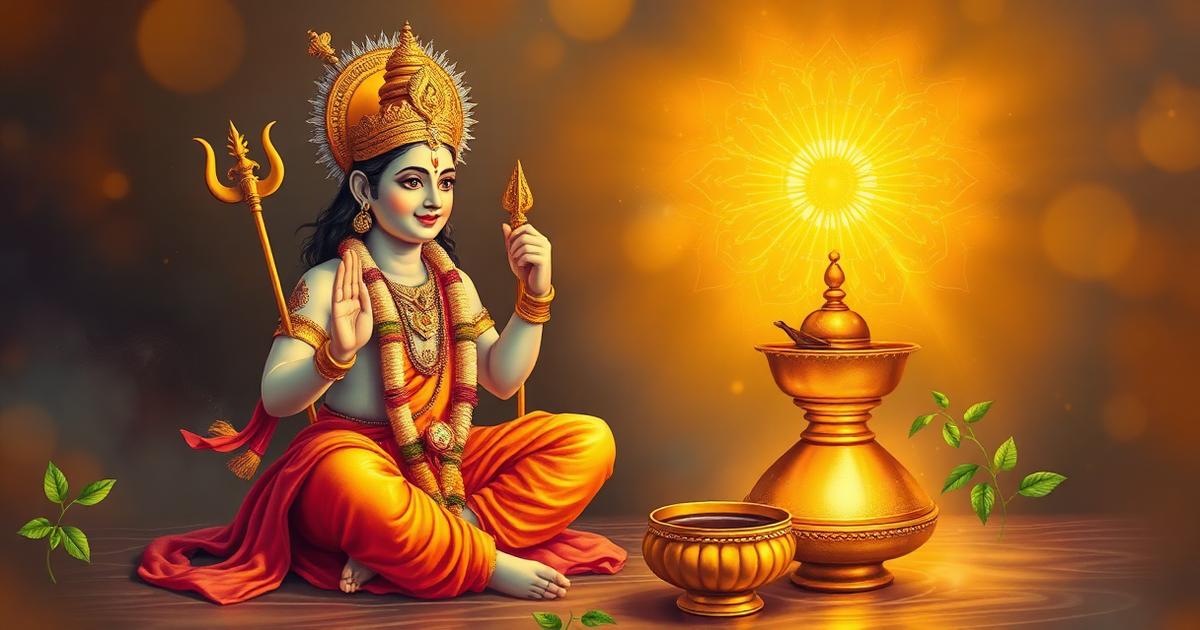
- The deity Oppiliappan, a standing form of Vishnu, with Bhumidevi as Bhumi Nachiyar beside him
- A shrine associated with Markandeya
- A tulasi connection running through the temple's story and practice
The rule the temple is known for:
- No salt is used in any offering made to the deity
- The prasadam distributed to devotees contains no salt
- This applies without exception and has done for as long as the temple's tradition records
The name says so. Uppu is salt in Tamil, and Uppiliappan is the one without salt. Oppiliappan, the more common form, is read as the one without comparison.
Why a rule like this is worth an article. Temples have dietary rules everywhere, and most of them are prohibitions of the ordinary kind, on meat, on onion and garlic, on particular days.
A prohibition on salt, in a cuisine where salt is fundamental, for one deity, at one temple, because of something someone said at a wedding, is a different order of thing. It is a promise, kept literally, for a very long time.
The Katha of the Marriage
The story is short and it accounts for everything about the temple.
As it is told:
- Markandeya, the sage, performed austerities desiring that Lakshmi be born as his daughter
- She was born to him from beneath a tulasi plant, and grew up in his care as Bhumidevi
- Vishnu came to Markandeya's ashram in the form of an old brahmin, and asked for the girl's hand
- Markandeya objected. She was very young, she was not yet capable of running a household, and she did not even know how to season food properly. She could not judge salt
- The old brahmin replied that this was no obstacle. He would eat his food without salt
- The marriage took place, and the deity has taken no salt since
What the story is doing:
- The objection is a practical one from a father, not a theological one, and it is exactly the sort of thing a father would say
- The reply removes the obstacle by accepting a permanent restriction rather than by arguing
- The restriction is then observed, forever, by the deity's own kitchen
Why this is a better story than it looks. The tradition could easily have had Vishnu reveal himself, demonstrate that the objection was absurd, and settle the matter by authority. That is what happens in a great many such stories.
Instead he accepts the terms. A god who wants something agrees to a permanent inconvenience in order to get it, and then keeps to it.
What the temple is, therefore. It is not primarily a monument to a marriage. It is a record of a promise, and the salt free kitchen is the promise still being kept by people who were not there when it was made.
What Prasad Actually Is
A temple defined by what its food does not contain is a good occasion to think about prasad properly, since it is one of the most misunderstood parts of Hindu practice.
What prasad is:
- Food offered to the deity first, and then distributed
- The word means grace or favour, and what the devotee receives is understood as the deity's grace made edible
- The offering is called naivedya, and what returns is prasad
- The transformation is in the offering and return, not in the ingredients
Why the food matters so much:
- Feeding is the central act of hospitality in Indian culture, and the deity is treated as a guest and a householder
- A temple's daily routine is largely a cooking and serving schedule, with meals at fixed times
- Many temples are famous for a specific prasad, and it is not incidental. It is what that deity is known to like
Examples across India:
- Tirupati and its laddu, which is made in enormous quantity and is protected as a product
- Puri Jagannath and the Mahaprasad, cooked in earthen pots in a stacked arrangement over wood fires and sold in the Ananda Bazaar
- Guruvayur and its payasam
- Kashi Vishwanath and its specific offerings
- Golden Temple at Amritsar and the langar, in a different tradition but the same instinct
What Oppiliappan adds. Most temple food traditions are about including something distinctive. This one is about excluding something universal.
The result is unusual. A visitor tastes the prasad and immediately notices the absence, which means the story is transmitted through the food itself. You do not need to be told the katha. You can tell there is something missing, and then you ask.
That is a very efficient way to keep a story alive for a thousand years.
Bhumidevi and the Tulasi

The goddess here is Bhumidevi, and the tulasi connection running through the story is worth drawing out, since both are among the most present and least discussed elements of Vaishnava practice.
Bhumidevi:
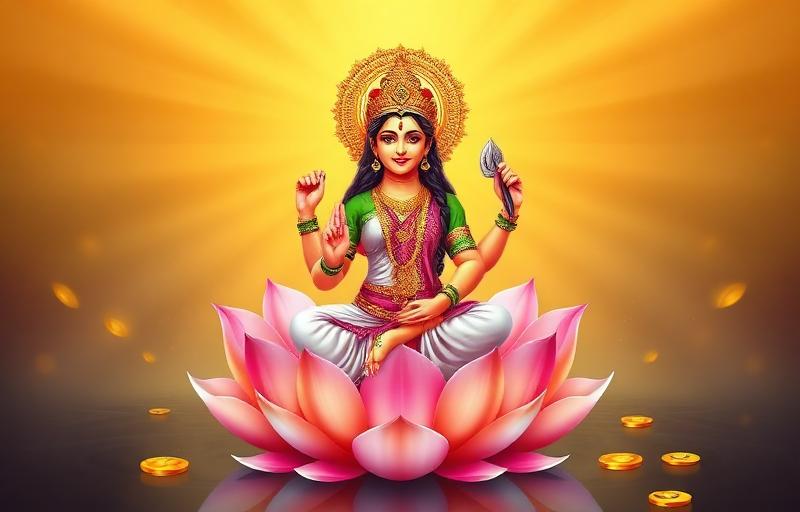
- The earth as a goddess, and one of the two consorts of Vishnu in the standard Sri Vaishnava arrangement, alongside Sridevi, Lakshmi
- She is the one Varaha rescued from beneath the waters, which is the episode carved at Udayagiri and across India
- She is the mother of Narakasura in one tradition, and it is she who asks that his death be remembered as a day of rejoicing, which is why Naraka Chaturdashi is observed
- Andal, the only woman among the Alvars, is understood as an incarnation of Bhumidevi, having been found as a child in the earth of a tulasi garden by Periyalvar
That last connection matters here. Bhumidevi is found in the earth, under a tulasi plant, in both the Andal tradition and the Oppiliappan katha. It is the same pattern twice.
Tulasi:
- The plant is treated as a goddess in her own right and as inseparable from Vishnu
- No Vaishnava offering is complete without a tulasi leaf, and it is placed on the food and on the deity
- A tulasi vrindavan, the raised planter, stands in the courtyard of a very large number of Hindu households
- The plant is watered daily, lit with a lamp in the evening, and is not cut casually
- Tulasi Vivah, her marriage to Vishnu in the form of the shaligram, is observed in Kartika and marks the start of the wedding season
Why a plant occupies this position. The tulasi is genuinely useful medicinally, grows easily, and is present in almost every courtyard, which is exactly the kind of thing a household tradition attaches to.
A deity you can grow in a pot, water every morning and be reprimanded by your grandmother for neglecting is a different order of religious object from anything in a sanctum, and for a great many families it is the one they interact with most.
Keeping a Promise for a Thousand Years
The salt rule is one instance of something Indian temples do a great deal of, and it is worth looking at as a category.
Other temples with rules of this kind:
- Temples where the deity is understood to have a specific dislike, and the item is excluded permanently
- Temples where a particular community holds an inherited right or duty, because of something an ancestor did
- Temples where a lamp has been kept continuously burning for centuries
- Temples where a specific route, order or timing must be followed because of an event in the katha
- Shrines where an offering promised in a story is still made daily
What these arrangements have in common. In each case, something that happened once has been converted into a permanent obligation on people who had nothing to do with it.
Why institutions do this. It is easy to be dismissive, and worth resisting the impulse.
- A rule observed without exception for centuries is a demonstration of reliability, which is what a religious institution is selling
- It gives every generation something specific to hand over, which is how transmission actually works
- It makes the story unavoidable, since anyone who encounters the practice has to be told why
- It costs something. A kitchen that cannot use salt is genuinely harder to run, and the difficulty is the point
What the tradition understands by a promise. This is the deeper thing, and it connects to a great deal else.
Indian religious literature is full of people bound by what they said. Dasharatha is destroyed by a promise. Bhishma spends a lifetime under a vow. Bali gives away everything because he said he would. Harishchandra loses his kingdom, his family and his standing rather than go back on his word.
Against that background, a deity who agreed to eat without salt and has done so ever since is not an eccentricity. He is behaving exactly as the tradition's heroes behave, and the temple kitchen is holding up its end.
Visiting Oppiliappan
Getting there
- Near Thirunageswaram, about 6 km from Kumbakonam, Thanjavur district, Tamil Nadu
- Kumbakonam has a railway station and is the practical base
- Roughly 40 km from Thanjavur and 90 km from Tiruchirappalli, which has the nearest airport
- Autos and taxis run from Kumbakonam
Timings
- Open in morning and evening sessions with a long midday closure, as is standard in Tamil temples. Check locally
When to go
- November to February for the most comfortable weather
- Purattasi, the Tamil month from mid September, which is the great Vishnu month in Tamil Nadu, and Sravana nakshatra days within it
- Vaikuntha Ekadashi in Margazhi
- The temple's annual Brahmotsavam
Dress and conduct
- As at Tamil Vaishnava temples generally, men are usually expected to remove upper garments in the sanctum area, and traditional dress is preferred. Check at the entrance
- Women should dress conservatively
- Photography inside is restricted. Ask
- Leave footwear at the counters
The prasad
- Try it, and notice what is not in it. That is the entire point of coming
- If you are on a low salt diet for medical reasons, this is one temple where the prasad is not a problem, which is a small and genuine convenience
Combining the visit
- Kumbakonam and its temples, including Sarangapani and Adi Kumbeswarar, are 6 km away
- Thirunageswaram, next door, with its own well known temple
- Darasuram and the Airavatesvara temple, roughly 10 km
- Swamimalai, one of the six principal Murugan shrines, is close by
- Gangaikonda Cholapuram, about 35 km north
The whole cluster around Kumbakonam is one of the richest concentrations of living temples in India, and it can absorb three days without repetition.
A closing thought. Most temples make their point through scale, or through carving, or through the crowds they attract. This one makes its point by leaving something out of the food, and has done so consistently for longer than most countries have existed.
Reader Questions Answered
Why is no salt used at Oppiliappan?+
Because of a promise in the katha. When Vishnu came as an old brahmin to ask for Markandeya's daughter Bhumidevi, Markandeya objected that she was too young and could not even judge salt. The suitor replied that he would eat his food without salt, the marriage took place, and the deity has taken none since.
Where is the temple?+
Near Thirunageswaram, about 6 km from Kumbakonam in Thanjavur district, Tamil Nadu. Kumbakonam has a railway station and is the practical base, roughly 40 km from Thanjavur and 90 km from Tiruchirappalli, which has the nearest airport.
What does prasad actually mean?+
Food offered to the deity first and then distributed. The word means grace or favour, and what the devotee receives is understood as the deity's grace made edible. The offering is called naivedya and what returns is prasad, so the transformation is in the offering and return rather than in the ingredients.
Who is Bhumidevi?+
The earth as a goddess and one of the two consorts of Vishnu in the standard Sri Vaishnava arrangement, alongside Sridevi. She is the one Varaha rescued from beneath the waters, and Andal, the only woman among the Alvars, is understood as an incarnation of her, having been found as a child in the earth of a tulasi garden.
Why does tulasi matter so much in Vaishnava practice?+
The plant is treated as a goddess in her own right and as inseparable from Vishnu. No Vaishnava offering is complete without a tulasi leaf, a tulasi vrindavan stands in a very large number of Hindu courtyards, the plant is watered daily and lit with a lamp, and Tulasi Vivah in Kartika marks the start of the wedding season.
What should I combine with the visit?+
Kumbakonam and its temples including Sarangapani and Adi Kumbeswarar, 6 km away; Thirunageswaram next door; Darasuram with the Airavatesvara temple about 10 km off; Swamimalai, one of the six principal Murugan shrines; and Gangaikonda Cholapuram about 35 km north. The cluster can absorb three days.
About the author
Pandit Ravindra Sharma · Vedic Rituals & Bhakti, 22+ years
Pandit Ravindra is the Vandnaa editorial team's resident specialist on aarti, chalisa, and daily devotion. He has performed home and temple pujas across Varanasi and Delhi for over two decades and contributes the bhakti-focused articles on this site.
Meet the Vandnaa editorial team →