Fifteen Days
Trivikrama Panditacharya, thirteenth century, is the author of the most recited Sanskrit hymn in the Madhva tradition, and he wrote it after losing an argument.
Who he was
A scholar of standing, of a brahmana family of Kavu, near Kasaragod, in the coastal country where the modern Kerala and Karnataka border runs.
And he held a court position, under the Kadamba ruler of the region, Jayasimha, which meant he was the person the ruler would send if a religious question needed settling.
And he was an Advaitin.
Which is the ordinary position for a scholar of his training in that period, and the school he was expected to defend.
The debate
He went to argue with Madhvacharya.
And the accounts give fifteen days.
Which is worth pausing on, because it tells you something about what these encounters actually were.
A formal debate in this tradition was not a performance. It ran under rules: each side stated the other's position first, in a form the other would accept, then raised objections, then answered them, and a decision was reached by the assembly or by the losing party conceding.
And fifteen days is a long argument. Nobody sustains that against a serious opponent by being wrong quickly. Trivikrama was a good scholar and the length of the debate is the evidence for it.
And he conceded.
What he did afterwards
Took initiation from Madhva and stayed.
And this series has now recorded this shape so many times that it is worth naming as a pattern:
- Arunandi Sivacharya, master of all the agamas, sitting down in front of a child
- Yadava Prakasha, taking initiation from the student he had expelled
- Vedanti Madhava, becoming Nanjiyar after losing to Parasara Bhattar
- Trivikrama, after fifteen days
And the observation is the same each time: these are the episodes a tradition would suppress if it were managing its reputation, and they are in the record because the people who kept them thought changing your mind in public was not a disgrace.
Which is a standard worth having. The question is not whether you can hold a position for fifteen days. It is what you do on the sixteenth.
What Madhva asked him to write
A commentary.
The Tattvapradipa, on Madhva's own Brahma Sutra Bhashya, and the tradition says Madhva asked him for it directly.
Which is a specific use of a converted opponent, and a shrewd one: the person best placed to explain a position to people who do not hold it is somebody who did not hold it until recently.
Trivikrama knew exactly what an Advaitin would object to, because he had spent fifteen days raising the objections himself.
And then he wrote the hymn.
The Vayu Stuti
Forty one verses in Sanskrit, and it is recited every day by a very large number of people.
What it praises
Vayu, in his three incarnations.
Which requires the doctrine from the Jayatirtha entry in this batch: in Dvaita, Vayu is Mukhyaprana, the chief life breath, the highest of all created souls and the intermediary between the divine and everything else.
And he has appeared three times:
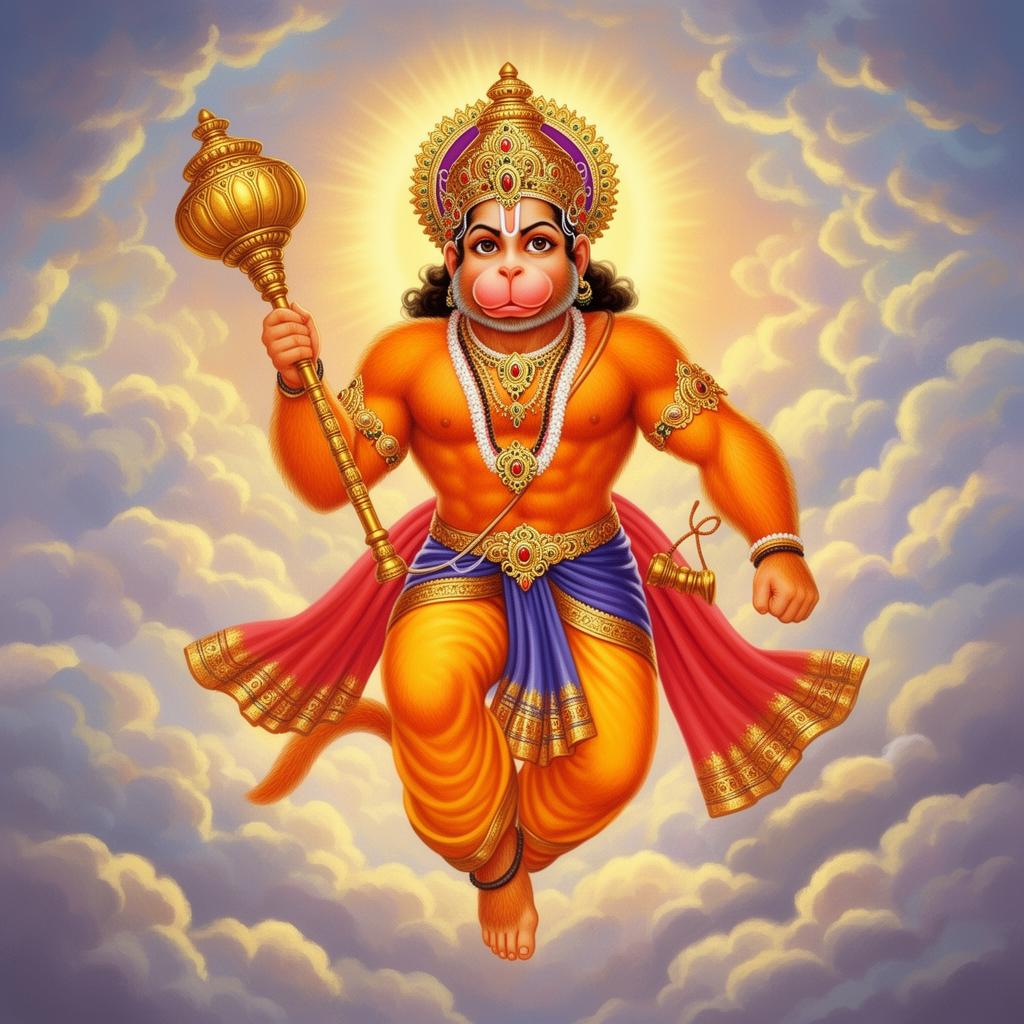
- Hanuman, in the Ramayana
- Bhima, in the Mahabharata
- Madhvacharya, in the thirteenth century
And the Vayu Stuti works through all three, in order, in dense and highly wrought Sanskrit.
How it is actually recited
In three parts, and only the middle one is Trivikrama's.
One. The Nakha Stuti.
Two verses on the nails of Narasimha, and the tradition attributes them to Madhvacharya himself.
Two. The Vayu Stuti proper.
Trivikrama's forty one verses.
Three. The Mangalashtaka.
The closing verses of auspiciousness.
And the whole thing is recited as one continuous text, in that order, and that is how you will hear it.
What it sounds like
Dense.
This is not a simple hymn and it is worth saying so. The Sanskrit is elaborate, the metre is demanding, and the verses are packed with compound words and with allusions to episodes in the Ramayana and Mahabharata that the reciter is assumed to know.
It is a court poet's Sanskrit, and Trivikrama was a court poet.
And it is chanted at speed, in a distinctive style, and hearing a group of people do it properly is one of the more impressive sounds in Indian devotional practice.
Its place in daily life
Very large.
Across the Madhva communities of Karnataka, coastal Andhra, Maharashtra and the diaspora, the Vayu Stuti is recited daily, often in the morning, often in groups, and children learn it by hearing it.
And it is associated with Hanuman generally, which extends its use well beyond people who hold Dvaita positions: a great many people who could not state the doctrine of pancha bheda recite the Vayu Stuti.
Which is normal. Most devotional practice runs ahead of doctrine and does not wait for it.
The efficacy claims, handled plainly
The Vayu Stuti is widely held to be protective, and it is recited for relief from difficulty, from illness, from fear, and from obstruction.
And this app's position is the one it has taken throughout:
Recite it. It is free, it is available in print and in recordings everywhere, it is beautiful, and reciting something daily with attention is a genuine practice with genuine effects on the person reciting.
And do not substitute it for treatment. If you are ill, see a doctor, and take the medicine, and recite the hymn as well if you want to.
And do not pay anybody to recite it for you as a remedy. The text is public, the recordings are free, and anybody who tells you that a paid recitation by a specialist will fix a problem in your life is selling something.
Which the tradition itself would say. The Haridasa material in this batch is unanimous that the name is free and the whole point of it is that it costs nothing.
His other works
Tattvapradipa, the commentary Madhva asked him for.
Ushaharana, a mahakavya, a full length court epic, on the story of Usha and Aniruddha, which is a straightforwardly literary work rather than a devotional one and which shows what he could do.
And a Vishnu Stuti.
Which together make him one of the few figures in this series who was a first rate professional poet before he was anything else, and it shows: the Vayu Stuti is a technically formidable piece of Sanskrit written by somebody who had been doing that for a living.
His Son, and How We Know Anything About Madhva
Narayana Panditacharya, Trivikrama's son, wrote the book that everything known about Madhvacharya's life comes from.
The Sumadhva Vijaya
Sixteen sargas, cantos, in Sanskrit verse, and it is the biography of Madhvacharya.
And it is the source. Every account of Madhva's life, in every language, including the entry in this app, descends from it.
Why it is unusually good as a source, for what it is
Because of who wrote it and when.
Narayana Panditacharya was the son of a direct disciple. His father debated Madhva for fifteen days and then lived in his community, and the son grew up among people who had known the man personally.
Which puts the biography one generation from its subject, and that is very close by the standards of this literature. Most of the saints in this series are documented by communities writing two, three or five centuries later.
Why it still has to be read as what it is
It is hagiography, written by an insider, for the community.
Which means specific things:
- The miracles are in it and they are not incidental. Madhva lifts enormous weights, walks on water, subdues wild animals, and produces food from nothing
- The doctrine is assumed, so Madhva is presented throughout as the incarnation of Vayu, and the book is structured to demonstrate it
- Opponents are opponents. They lose, they are shown as having lost, and their positions are given in the form a Madhva author would give them
And this app applies the same standard here it has applied to every tradition in this series. A community's own account of its founder is where you start and not where you finish, and treating it as neutral history is not honest.
The Manimanjari, and a warning about it
Narayana Panditacharya's other work, a shorter account of the history leading up to Madhva.
And parts of it are polemical in a way that should be flagged.
It contains hostile accounts of Shankara and of the Advaita tradition, presented as history, and they are not history. They are the sectarian narrative of a rival school at the height of a live dispute, and they should not be read as an account of what Shankara was or did.
This app's position, stated plainly
Shankara, Ramanuja and Madhva are the three great Vedanta acharyas and this app has entries on all three, treating each on its own terms.
They disagreed profoundly and the disagreements are real and worth understanding.
And the polemical literature each school produced about the others is not a reliable source about the others. Reading Madhva's tradition on Shankara, or the Advaita polemics on Madhva, tells you what the disputes felt like from inside and does not tell you what the other side held.
For that, read what each of them actually wrote, which is available, in translation, and which is a better use of the time than the polemics on either side.
Where to go
- Kavu, near Kasaragod, Kerala, associated with Trivikrama
- Udupi, Karnataka, the Krishna temple and the ashta mathas, which is the centre of everything in this batch
- Pajaka, near Udupi, Madhva's birthplace
- The Anantheshwara temple at Udupi
- Any Madhva household in the morning, where the Vayu Stuti is being recited before breakfast
The Short Version
Who: Trivikrama Panditacharya, thirteenth century, of a brahmana family of Kavu near Kasaragod, a court scholar under the Kadamba ruler Jayasimha and an Advaitin, which was the ordinary position for a scholar of his training in that period.
The debate: he went to argue with Madhvacharya, and the accounts give fifteen days. A formal debate in this tradition ran under rules, with each side stating the other's position first in a form the other would accept, then raising objections, then answering them. Fifteen days is a long argument, and nobody sustains that against a serious opponent by being wrong quickly, so the length is the evidence that he was a good scholar. He conceded, took initiation, and stayed. This series has now recorded the same shape several times, with Arunandi sitting down in front of a child, Yadava Prakasha taking initiation from the student he expelled, and Vedanti Madhava becoming Nanjiyar. The question is not whether you can hold a position for fifteen days; it is what you do on the sixteenth.
The Vayu Stuti: forty one Sanskrit verses praising Vayu in his three incarnations, Hanuman, Bhima and Madhvacharya, since in Dvaita Vayu is Mukhyaprana, the highest of created souls and the intermediary between the divine and everything else. It is recited in three parts: the Nakha Stuti, two verses on the nails of Narasimha attributed to Madhva himself; Trivikrama's forty one verses; and the closing Mangalashtaka. It is not a simple hymn, being elaborate court Sanskrit packed with compounds and allusions, chanted at speed in a distinctive style. It is recited daily across the Madhva communities of Karnataka, coastal Andhra, Maharashtra and the diaspora, and its association with Hanuman extends its use far beyond people who hold Dvaita positions.
On efficacy: recite it, since it is free, widely available in print and recordings, beautiful, and reciting something daily with attention is a genuine practice. Do not substitute it for treatment: if you are ill, see a doctor and take the medicine and recite the hymn as well if you want. And do not pay anybody to recite it for you as a remedy, since the text is public and the recordings are free, which the tradition itself would say.
His other works: the Tattvapradipa, the commentary on Madhva's Brahma Sutra Bhashya that Madhva asked him for, which is a shrewd use of a converted opponent since he knew exactly what an Advaitin would object to; the Ushaharana, a full length court epic on Usha and Aniruddha; and a Vishnu Stuti.
His son: Narayana Panditacharya wrote the Sumadhva Vijaya, sixteen cantos in Sanskrit verse, the biography of Madhvacharya from which every account of his life descends. It is unusually close to its subject, being written by the son of a direct disciple, one generation away, where most saints in this series are documented centuries later. But it is hagiography written by an insider: the miracles are central, the doctrine is assumed throughout, and opponents are shown losing. His other work, the Manimanjari, contains hostile accounts of Shankara presented as history, and they are not history but the sectarian narrative of a rival school during a live dispute.
Common Questions From Devotees
Who was Trivikrama Panditacharya?+
A thirteenth century scholar of a brahmana family of Kavu near Kasaragod, who held a court position under the Kadamba ruler Jayasimha and was an Advaitin. He debated Madhvacharya for fifteen days, conceded, took initiation, and stayed. Madhva asked him to write the Tattvapradipa, a commentary on his own Brahma Sutra Bhashya, and Trivikrama also wrote the Vayu Stuti, the most recited Sanskrit hymn in the Madhva tradition, and the Ushaharana, a full length court epic. His son Narayana Panditacharya wrote the Sumadhva Vijaya, the biography of Madhvacharya.
What is the Vayu Stuti?+
Forty one Sanskrit verses by Trivikrama Panditacharya praising Vayu in his three incarnations, Hanuman, Bhima and Madhvacharya, since in Dvaita Vayu is Mukhyaprana, the chief life breath, the highest of all created souls and the intermediary between the divine and everything else. It is recited in three parts as one continuous text: the Nakha Stuti, two verses on the nails of Narasimha attributed to Madhvacharya himself; the Vayu Stuti proper; and the closing Mangalashtaka. It is not a simple hymn, being elaborate court Sanskrit packed with compound words and with allusions to Ramayana and Mahabharata episodes the reciter is assumed to know, and it is chanted at speed in a distinctive style. It is recited daily across the Madhva communities of Karnataka, coastal Andhra, Maharashtra and the diaspora.
Should I pay someone to recite the Vayu Stuti for me?+
No. The text is public, print editions and recordings are freely available everywhere, and anybody who tells you that a paid recitation by a specialist will fix a problem in your life is selling something. The tradition itself would say the same: the Haridasa material from this same community is unanimous that the name is free and that the whole point of it is that it costs nothing. Recite it yourself if you want to. It is beautiful, and reciting something daily with attention is a genuine practice with genuine effects on the person reciting. But do not substitute it for treatment: if you are ill, see a doctor, take the medicine, and recite the hymn as well if you want to.
What is the Sumadhva Vijaya?+
The biography of Madhvacharya, in sixteen cantos of Sanskrit verse, written by Narayana Panditacharya, the son of Trivikrama. Every account of Madhva's life in every language descends from it. It is unusually close to its subject for this kind of literature, since its author was the son of a direct disciple and grew up among people who had known Madhva personally, putting it one generation away, where most saints in this series are documented by communities writing two, three or five centuries later. It must still be read as what it is: hagiography written by an insider for the community, in which the miracles are central rather than incidental, the doctrine that Madhva is the incarnation of Vayu is assumed throughout and the book is structured to demonstrate it, and opponents are shown losing with their positions given in the form a Madhva author would give them.
Is the Manimanjari a reliable account of Shankara?+
No, and this should be flagged. The Manimanjari is Narayana Panditacharya's shorter account of the history leading up to Madhva, and parts of it contain hostile accounts of Shankara and the Advaita tradition, presented as history. They are not history: they are the sectarian narrative of a rival school at the height of a live dispute. This app's position is that Shankara, Ramanuja and Madhva are the three great Vedanta acharyas, that it has entries on all three treating each on its own terms, that they disagreed profoundly and the disagreements are real and worth understanding, and that the polemical literature each school produced about the others is not a reliable source about the others. Reading Madhva's tradition on Shankara, or the Advaita polemics on Madhva, tells you what the disputes felt like from inside but not what the other side held. For that, read what each of them actually wrote.
Why do traditions record their scholars losing debates?+
Because the people who kept these accounts thought changing your mind in public was not a disgrace. This series has recorded the same shape several times: Arunandi Sivacharya, called master of all the agamas, sitting down in front of a child; Yadava Prakasha taking initiation from the student he had expelled; Vedanti Madhava, a scholar with several hundred students, becoming Nanjiyar after losing to Parasara Bhattar; and Trivikrama conceding after fifteen days. These are the episodes a tradition would suppress if it were managing its reputation, and they are in the record instead. The standard it offers is worth having: the question is not whether you can hold a position for fifteen days, but what you do on the sixteenth.
About the author
Pandit Ravindra Sharma · Vedic Rituals & Bhakti, 22+ years
Pandit Ravindra is the Vandnaa editorial team's resident specialist on aarti, chalisa, and daily devotion. He has performed home and temple pujas across Varanasi and Delhi for over two decades and contributes the bhakti-focused articles on this site.
Meet the Vandnaa editorial team →