Significance of Tulsi
Tulsi (holy basil) is revered as the most sacred plant in the Sanatan tradition - not merely an herb, but Goddess Tulsi, also known as Vrinda, the beloved of Lord Vishnu. No worship of Vishnu, Krishna or their forms is complete without a leaf of tulsi, and the Tulsi Vivah - the symbolic marriage of Tulsi to Lord Vishnu (as Shaligram) on Kartik Shukla Dwadashi - marks the start of the Hindu wedding season.
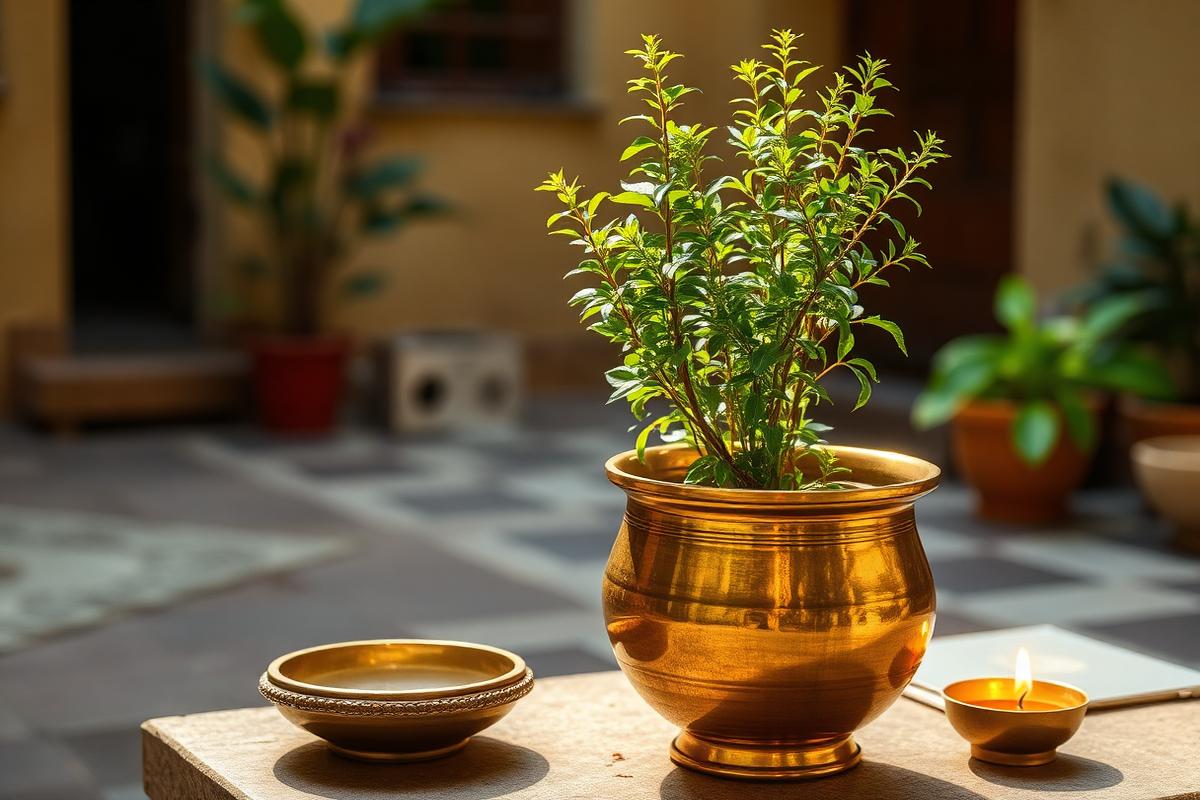
A tulsi plant placed on a raised platform (Tulsi Chaura/Vrindavan) in the courtyard is the spiritual heart of a traditional home. Watering it, lighting a lamp before it at dusk, and circumambulating it are daily acts of devotion believed to bring purity, peace and prosperity, and to keep negativity away.
Tulsi represents purity, surrender and unwavering devotion. To care for her is to invite the grace of Lord Vishnu into the home.
The Tulsi Mantra & Meaning
The Tulsi pranam mantra (for offering and circumambulation):
Mahaprasada Janani Sarva Saubhagya Vardhini, Aadhi Vyadhi Hara Nityam Tulasi Tvam Namostu Te.
Meaning: O Tulsi, mother of great prasad, increaser of all good fortune, ever the remover of physical and mental ailments - I bow to you.
The Tulsi stuti mantra:
Tulasi Shriya Maha Lakshmir Vishnu Priya Cha Vishnu Mata Cha, Namastubhyam Namastubhyam Namastubhyam Namo Namah.
Meaning: O Tulsi, who are Shri and Mahalakshmi, dear to Vishnu and revered as his mother - salutations again and again to you.
A simple daily mantra while watering or worshipping:
Om Tulasyai Namah
Meaning: Om, I bow to Goddess Tulsi.
While picking a tulsi leaf for puja, devotees gently seek her permission and avoid plucking on Sundays, Ekadashi and after dusk, as a mark of respect.
Benefits of Daily Tulsi Worship
- Grace of Lord Vishnu: Tulsi is his beloved; her worship draws Vishnu and Lakshmi's blessings into the home.
- Purity and positivity: Tulsi is believed to purify the surroundings and keep negative energy away.
- Peace and harmony: Lighting a lamp before tulsi at dusk brings calm and a sattvic atmosphere to the household.
- Prosperity and well-being: The pranam mantra calls her the increaser of all good fortune and remover of ailments.
- Spiritual merit: Offering even a single tulsi leaf to Vishnu or Krishna is said to please the Lord more than grand offerings.
Daily watering and an evening lamp, along with the mantra, are simple acts that traditional homes cherish as a foundation of family well-being.
Daily Tulsi Puja Vidhi
Morning: 1. After bathing, offer fresh water to the tulsi plant (women traditionally do this with a clean vessel). 2. Offer roli, akshat, a flower and chant Om Tulasyai Namah or the pranam mantra. 3. Circumambulate the plant and bow with folded hands.
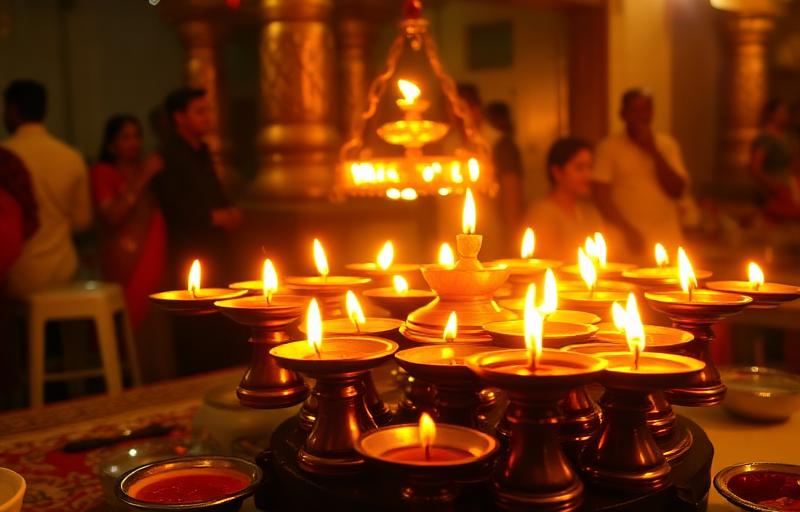
Evening (sandhya): 1. Light a ghee or sesame-oil diya at the base of the tulsi at dusk - a deeply auspicious daily practice. 2. Offer incense and a brief prayer for the family's peace and prosperity.
Care & respect:
- Keep the tulsi platform clean; do not let it dry out or wither.
- Avoid plucking leaves on Sundays, Ekadashi, Dwadashi and after sunset.
- On Kartik Purnima and Tulsi Vivah, perform special worship and a symbolic marriage of Tulsi with Shaligram.
Consistency and devotion matter more than elaborate ritual - a daily lamp and the mantra are enough to honour her.
Frequently Asked Questions
What is the simplest Tulsi mantra?+
The simplest is 'Om Tulasyai Namah', meaning 'I bow to Goddess Tulsi', chanted while watering or worshipping the plant. The pranam mantra 'Mahaprasada Janani...' is also widely recited.
Why is Tulsi so sacred to Lord Vishnu?+
Tulsi is revered as Vrinda, the beloved of Lord Vishnu, and worship of Vishnu, Krishna or their forms is incomplete without a tulsi leaf. The Tulsi Vivah celebrates her symbolic marriage to Vishnu as Shaligram.
On which days should tulsi leaves not be plucked?+
By tradition, tulsi leaves are not plucked on Sundays, Ekadashi, Dwadashi or after sunset, as a mark of respect to the goddess. Leaves needed for puja are gathered gently with her permission at other times.
Why is a lamp lit before tulsi in the evening?+
Lighting a diya at the tulsi plant at dusk is a daily act of devotion believed to bring peace, purity and prosperity, keep negativity away, and invite the grace of Goddess Tulsi and Lord Vishnu into the home.
About the author
Acharya Vinaya Kapoor · M.A. Sanskrit, Mantra & Stotra Studies
Acharya Vinaya holds an M.A. in Sanskrit from Banaras Hindu University and writes the mantra and stotra commentary on Vandnaa. Her focus is on accurate pronunciation, traditional context, and helping modern readers connect with classical texts.
Meet the Vandnaa editorial team →