The Springs at Unai
Unai is a village in Vansda taluka of Navsari district, in the forested southeastern corner of Gujarat where the state meets the Dangs and the Sahyadri foothills.
What is there:
- Hot springs, rising naturally from the ground, which give the place its name. The Gujarati unu, meaning hot, is the root
- Built kunds, tanks into which the spring water is channelled for bathing
- The temple of Unai Mata, the goddess of the place, beside the springs
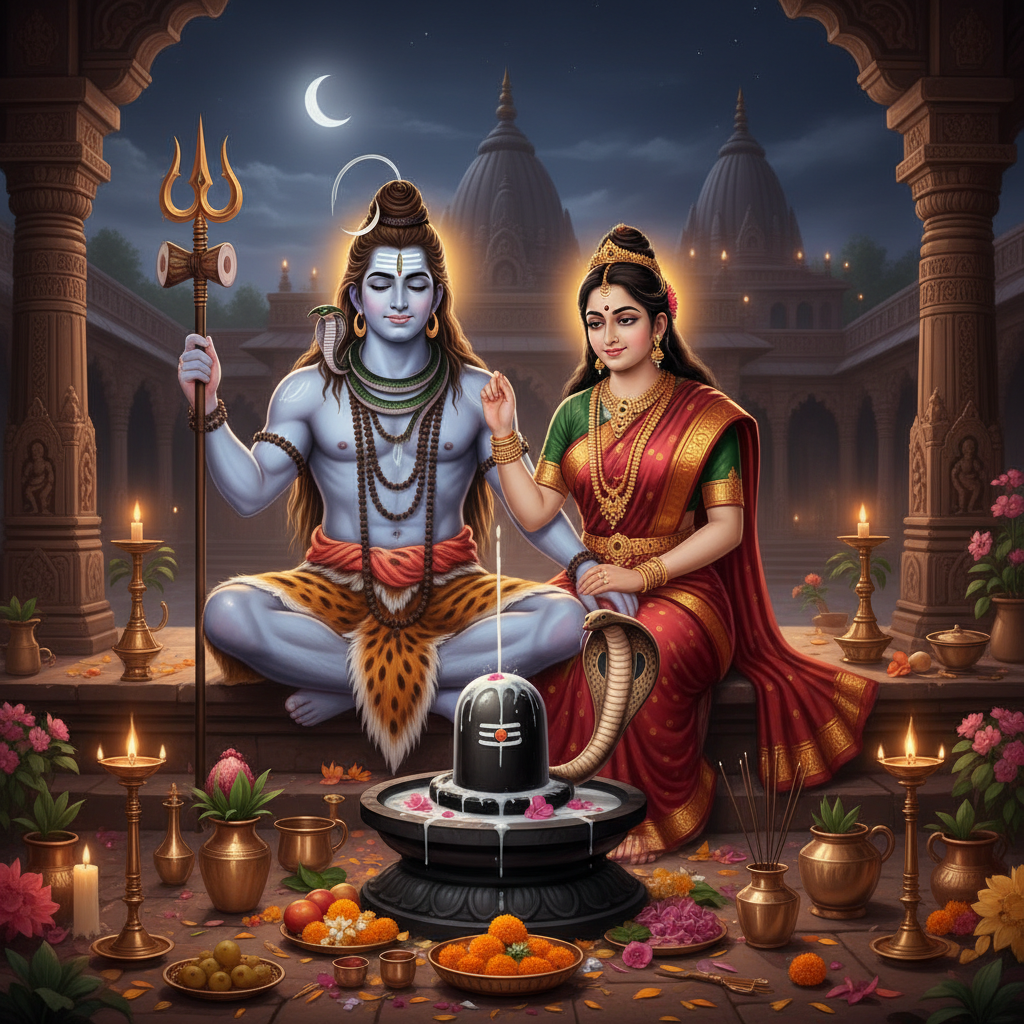
- A Shiva shrine and other subsidiary shrines in the complex
- Bathing facilities that are separated for men and women
The water:
- It emerges genuinely hot, and steams visibly in cool weather
- It carries a sulphurous smell, as such springs generally do
- The flow is continuous and does not depend on the season in the way surface water does
Hot springs occur across India wherever the geology allows it, and almost every one of them has a shrine. Manikaran in Himachal, Rajgir in Bihar, Bakreshwar in Bengal, Tattapani in Himachal and Atri in Odisha are all the same arrangement, and in each case the tradition has an explanation for the heat.
At Unai the explanation involves an arrow, and it belongs to a story that is written across this entire region.
The Arrow in the Ground
The katha is told in more than one form locally, and the variants are worth setting out because they show the same story adapting.
The common frame:
- Rama, Sita and Lakshmana passed through this country during the years of vanvas, the forest exile
- At Unai, Rama shot an arrow into the ground
- Hot water came up where it struck, and has come up ever since
Why he did it, in the different tellings:
- That sages living in the forest here were suffering from a skin affliction, and Rama opened the spring so that they could be healed
- That Sita needed to bathe and there was no suitable water, so Rama provided it
- That the water was needed for the rites and daily observances of the forest ashrams
The goddess. Unai Mata is the deity of the place, worshipped at the temple beside the springs, and local practice treats her and the water as inseparable. Bathing and darshan go together, and the springs are not regarded as a separate amenity from the shrine.
What this kind of katha is doing. Explaining a landscape feature is the oldest work myth does, and hot springs invite it particularly strongly because the heat is genuinely startling.
The interesting thing at Unai is which explanation was chosen. The spring is not attributed to a demon, a curse or an accident. It is attributed to a deliberate act of provision, done for other people, by a figure in exile who had very little himself at the time.
That is a specific choice about what the water means, and it shapes how it is used. A spring understood as a gift given to the sick is going to be a place where the sick come.
The Dangs as Ramayana Country
Unai does not stand alone. The whole forested belt here is mapped onto the exile years, and the sites form a connected local geography.
What else is in this country:
- Shabari Dham at Subir in the Dangs, associated with Shabari, the woman of the forest who waited for Rama and offered him berries she had tasted first to ensure they were sweet
- A Pampa Sarovar in the Dangs, connected with the same episode, distinct from the Pampa Sarovar near Hampi
- Unai, with the springs
- Numerous smaller local sites attached to the passage of Rama, Sita and Lakshmana through the hills
The Shabari episode deserves saying plainly, because it is one of the most important passages in the Ramayana for what the tradition teaches about devotion:
- Shabari was an ascetic woman of a forest community, outside the social categories that mattered to the priesthood of the time
- She waited many years, keeping her guru's word that Rama would come
- When he came, she offered him berries she had tasted first
- He ate them, and the text does not treat this as a concession or an act of condescension
Why this belt claims these associations. It is genuinely forested hill country, of the kind the exile is described as passing through, and it lies on a plausible route between the north and the Deccan.
But the more useful observation is that these are Adivasi regions, and the Ramayana associations here are held by communities that were historically outside the caste order. The story that a forest woman fed Rama and was honoured for it belongs to them in a direct way, and it is not accidental that this is the episode the region keeps closest.
Bathing at the Springs
The springs are used, not only visited, and the practice needs describing along with its limits.
What people do:
- Bathe in the kunds into which the spring water is channelled
- Separate arrangements exist for men and women
- Take darshan at the Unai Mata temple, generally after bathing
- Many come specifically for skin conditions and long standing aches, on the strength of the katha and of long local usage
- Vows are made and fulfilled, and families come for children's first observances
Why hot springs attract healing claims everywhere:
- Mineral rich warm water does genuinely relieve muscular and joint discomfort, which anyone who has sat in one can confirm
- Sulphur compounds have a long history in traditional treatment of skin complaints across many cultures
- Warmth, rest and immersion have real effects on how people feel, independent of anything else
Where the limits are, stated plainly. This matters, because people travel to Unai in hope.
- A hot spring is not a treatment for any diagnosed skin disease, and bathing is not a substitute for dermatological care. Persistent rashes, patches, ulcers, changes in a mole or anything that is spreading need a doctor, and some of those conditions are serious and treatable when caught early
- Do not bathe with open wounds, ulcers or broken skin. Shared warm water is a good medium for infection
- Do not drink the spring water
- The water is genuinely hot. Test before entering, enter slowly, and do not stay in long
- People with heart conditions, low or high blood pressure, diabetes with reduced sensation in the feet, and pregnant women should be cautious with hot immersion and should ask a doctor first
- Never leave children unsupervised near hot water
None of this is an argument against going. The tradition here understands the spring as something Rama provided so that the unwell could be helped, and that is a good reason to visit. It is not a reason to skip a hospital.
The Calendar and the Fair
Unai has a steady stream of visitors through the year and specific occasions when the village fills.
The pattern:
- A fair is held at Unai, drawing people from across the surrounding talukas and from the Dangs
- Navratri, both in Chaitra and in Ashwin, brings devotees to the goddess
- Ram Navami in Chaitra is observed, given the shrine's Ramayana connection
- Mahashivratri at the Shiva shrine within the complex
- Winter months generally see more visitors, since the hot springs are most welcome in cool weather
Who comes:
- Families from Navsari, Valsad, Surat and the surrounding districts
- Adivasi communities of the region, including Dangi, Kukna, Warli and Bhil families, for whom this is a local shrine rather than a distant pilgrimage
- Travellers on the Saputara route, since the hill station is the region's main destination and Unai is close to it
A note on the region's character. South Gujarat's forest belt is one of the more overlooked parts of the state. Visitors go to Saputara for the hill air, and pass through some of the most interesting cultural country in Gujarat without stopping.
The Dangs in particular has its own festivals, its own musical traditions, and the Dang Darbar held around Holi, at which the traditional chiefs of the region are formally received, a ceremony continued from the colonial period.
If you are coming for the springs, allow time to see the country around them. The shrine is small. The region is not.
Visiting Unai
Getting there
- Unai, Vansda taluka, Navsari district, south Gujarat
- Roughly 65 km from Navsari and about 80 km from Surat by road
- Bilimora and Navsari are the nearest railway stations, and Surat has the airport
- The village is on the road toward Waghai and Saputara, so it is easy to include on that route
When to go
- November to February is best. Hot springs are far more pleasant in cool weather, and south Gujarat is humid the rest of the year
- The monsoon, June to September, makes the surrounding hills green and the waterfalls run, though travel is harder
- Navratri and the local fair for the shrine at its busiest
- Avoid the hot months if the springs are your reason for coming
At the site
- Bathing kunds, with separate arrangements for men and women
- The Unai Mata temple and the Shiva shrine
- Carry a change of clothes and a towel. Facilities are basic
- Keep valuables secure, or leave them in the vehicle with someone
Safety at the springs
- The water is genuinely hot. Test before entering, go in slowly and do not stay long
- Do not enter with open wounds or broken skin, and do not drink the water
- People with heart conditions, blood pressure problems or diabetes should ask a doctor before hot immersion
- Keep children within reach at all times
Practical notes
- Dress modestly. This is a working shrine in a village, not a resort spa
- Carry cash. Facilities are limited
- Food is basic and local. Vansda and Waghai have more options
Combining the visit
- Saputara, Gujarat's hill station, is the obvious pairing
- Shabari Dham at Subir in the Dangs, and the local Pampa Sarovar
- Vansda National Park and the Waghai botanical garden
- Gira falls near Waghai, spectacular in and after the monsoon
A closing thought. Most Ramayana sites in India commemorate something dramatic, a battle, a birth, a departure. Unai commemorates a small practical act, someone in difficult circumstances arranging hot water for people who were unwell. It is a modest thing for a tradition to build a shrine around, and it says something about what the tradition actually values.
Common Questions From Devotees
Where is Unai Mata?+
At Unai village in Vansda taluka, Navsari district, in the forested southeastern corner of Gujarat, roughly 65 km from Navsari and about 80 km from Surat. Bilimora and Navsari are the nearest railway stations, and the village lies on the road toward Waghai and Saputara.
What is the katha of the hot springs?+
That Rama, Sita and Lakshmana passed through this country during the forest exile, and Rama shot an arrow into the ground at Unai, after which hot water came up. The tellings differ on why, variously that sages here were suffering from a skin affliction, that Sita needed to bathe, or that the forest ashrams needed water.
Can the springs cure skin conditions?+
A hot spring is not a treatment for any diagnosed skin disease and bathing is not a substitute for dermatological care. Persistent rashes, patches, ulcers, changes in a mole or anything spreading need a doctor, and some such conditions are serious and treatable when caught early. Warm mineral water genuinely relieves aches, which is a different claim.
What precautions should I take at the springs?+
Test the water before entering since it is genuinely hot, go in slowly and do not stay long. Do not enter with open wounds or broken skin, and do not drink the water. People with heart conditions, blood pressure problems or diabetes should ask a doctor before hot immersion, and children should be kept within reach at all times.
What else in this region is connected to the Ramayana?+
Shabari Dham at Subir in the Dangs, associated with Shabari who waited for Rama and offered him berries she had tasted first, and a local Pampa Sarovar connected with the same episode, distinct from the one near Hampi. Numerous smaller sites in these hills are attached to the passage of Rama, Sita and Lakshmana.
When is the best time to visit?+
November to February, since hot springs are far more pleasant in cool weather and south Gujarat is humid the rest of the year. Navratri and the local fair bring the largest crowds, and the monsoon greens the hills and fills the waterfalls though travel is harder.
About the author
Anjali Mehta · Editor, M.A. Religious Studies
Anjali is the managing editor for Vandnaa and oversees the festival and vrat coverage. She holds an M.A. in Religious Studies and reviews every published article for accuracy, accessibility, and tradition-fidelity.
Meet the Vandnaa editorial team →