What Is Vaikuntha?
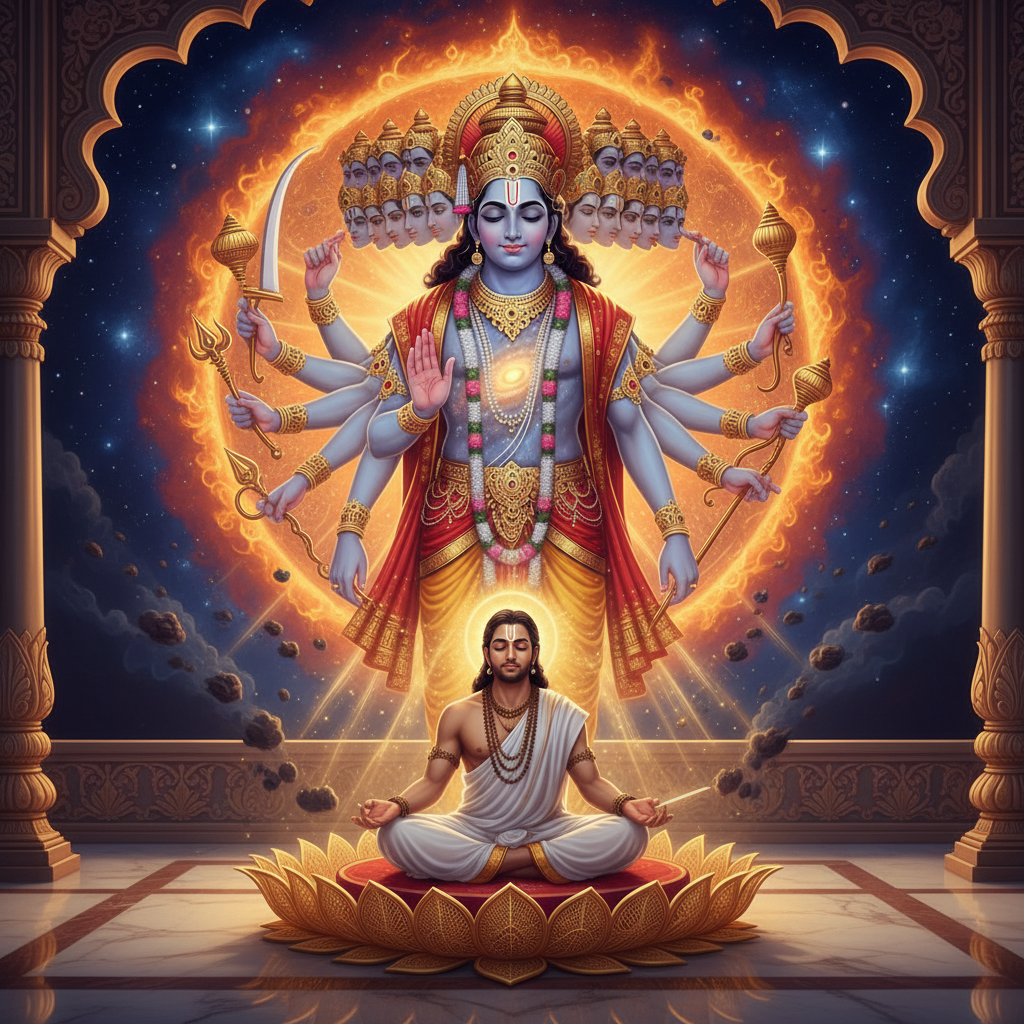
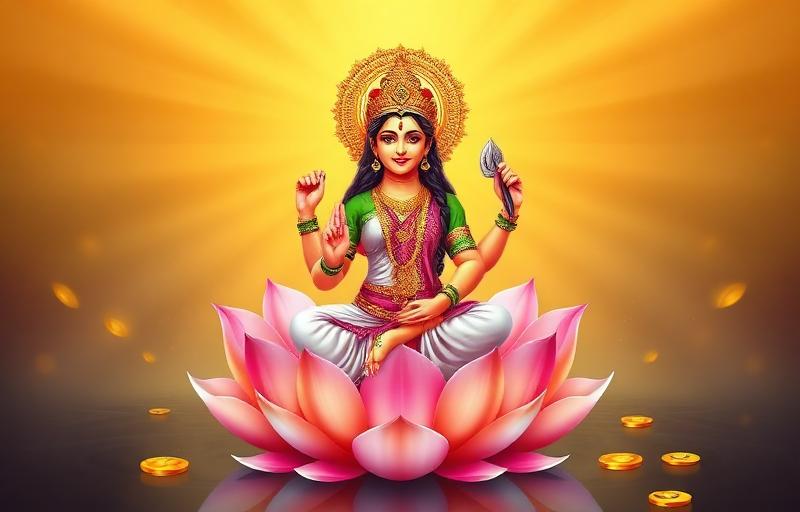
Vaikuntha is described in Hindu scripture as the highest spiritual realm, the eternal abode of Lord Vishnu beyond the material universe and its endless cycle of birth and death. Here, Vishnu resides forever with Goddess Lakshmi, surrounded by liberated souls who have attained moksha and now live in eternal service and devotion to him.
Unlike the material heavens described for those who accumulate good karma, Vaikuntha is spoken of as a realm beyond time itself, untouched by decay or change. It is the ultimate destination held before every devotee walking the path of bhakti, the goal that gives meaning to a life of worship.
Vaikuntha in the Puranas
The Vishnu Purana and Bhagavata Purana describe Vaikuntha in vivid, symbolic detail, a realm built of gold and precious gems, filled with gardens of divine lotuses, where time does not age anyone and sorrow cannot enter. Two gatekeepers, Jaya and Vijaya, guard its entrance, a detail devotees often recall along with the story of how the four Kumaras cursed them and caused their temporary births on earth as demons who could only be liberated by Vishnu himself.
In these texts, Vishnu is seated or reclining in Vaikuntha in his four-armed form, attended constantly by Lakshmi and celestial sages. Scriptures are clear that such descriptions point beyond ordinary geography, toward a state of consciousness reserved for the purest devotion.
The Symbolic Meaning of Vaikuntha
For devotees, Vaikuntha represents freedom from maya, the illusion that binds the soul to endless cycles of desire and rebirth. It is not merely a reward reached after death, but a symbol of the state a devotee can begin to touch even in this life through steady faith, humility and surrender.
Many teachers within the Vaishnava tradition explain that a heart fixed on Vishnu, free of envy and ego, already carries a reflection of Vaikuntha within it. The abode, in this sense, is as much an inner reality as an eternal destination, a reminder that the goal of devotion is closeness to the divine rather than any material gain.
How Devotees Reflect on Vaikuntha
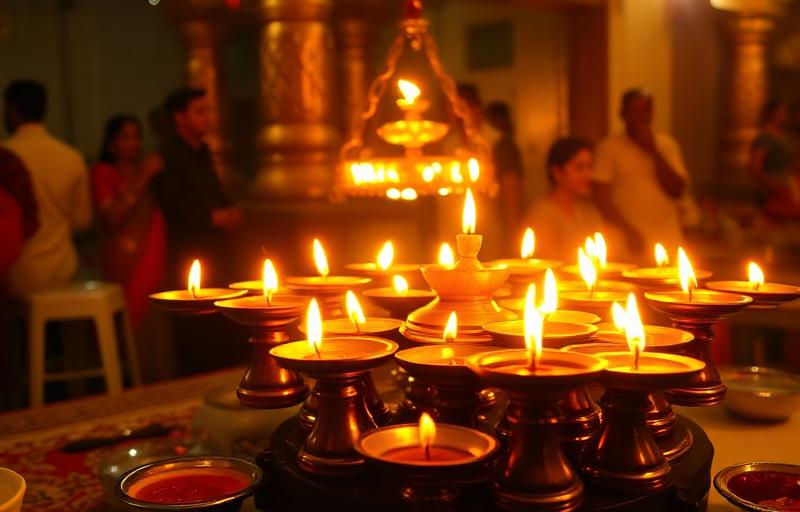
The most widely observed practice tied to Vaikuntha is Vaikuntha Ekadashi, considered one of the most sacred fasting days of the year for Vaishnava devotees. Many Vishnu temples, such as the Ranganathaswamy Temple at Srirangam, open a special northern gateway called the Vaikuntha Dwaram on this day, and devotees believe that passing through it in a spirit of devotion brings them closer to the blessings of Vaikuntha.
On this day and throughout the year, devotees chant Vishnu's names, recite the Vishnu Sahasranama, and keep a fast or vigil, using the day to turn attention away from worldly distraction and toward remembrance of the divine.
Benefits and a Devotee's Takeaway
As per tradition, reflecting on Vaikuntha and its qualities of peace, beauty and freedom from sorrow inspires devotees to soften their attachment to worldly excess and to cultivate patience, gratitude and steadiness of mind. It offers hope: that a life sincerely devoted to Vishnu is never without meaning or direction.
The deeper takeaway devotees carry from Vaikuntha is simple - the destination matters less than the direction of the heart. Worship is an act of faith and love, not a transaction, and every small act of devotion is understood as a step, however small, toward that eternal abode.
Common Questions From Devotees
What does the word Vaikuntha literally mean?+
Vaikuntha is traditionally understood to mean a place 'without obstacles or hindrance,' referring to a realm free from the limitations, sorrow and confusion of the material world.
Is Vaikuntha the same as swarga (heaven)?+
No, tradition distinguishes the two. Swarga is a temporary heavenly realm attained through good karma, while Vaikuntha is described as Vishnu's eternal abode, reached through devotion and grace, not karma alone.
What is Vaikuntha Ekadashi?+
Vaikuntha Ekadashi is a sacred fasting day, usually in the month of Margashirsha or Pausha, when many Vishnu temples open a special gateway and devotees fast and pray, believing it draws them closer to Vishnu's blessings.
About the author
Pandit Mahesh Trivedi · Festival Traditions & Panchang
Pandit Mahesh leads the festival-date and Panchang content on Vandnaa. He cross-references multiple regional panchangs (Drik, Vaishnava, Bengali, Marathi) for every festival date published on the site.
Meet the Vandnaa editorial team →