Born on a Journey
Vallabhacharya founded Pushtimarg, which is among the most distinctive devotional traditions in India, and one whose practice is unlike anything else described in this series.
Who he was:
- Born 1479 at Champaranya, near what is now Raipur in Chhattisgarh
- To Lakshmana Bhatta and Illamma, a Telugu brahmana family from Andhra who had settled at Varanasi
- Born during a journey: the family had left Varanasi because of political disturbance, and the birth happened on the road, in a forest
- The child was born prematurely and, by the tradition's account, was thought not to have survived and was left under a tree, and was found alive
That detail matters for what he later taught. The tradition's founder was, in its own account, a child who was given up on and turned out to be alive.
What he did:
- Studied at Varanasi
- Made three circuits of India on foot, the prithvi parikrama, teaching and debating
- Established eighty four seats where he gave discourses on the Bhagavata, the Chaurasi Baithak, which are pilgrimage sites in the tradition
- Debated at Vijayanagara under Krishnadevaraya, where the tradition holds he defeated the assembled scholars on the question of the supremacy of the non dual position, and was offered honours he declined
- Married Mahalakshmi and had two sons, Gopinath and Vitthalnath
- Took sannyasa at the end of his life and, by tradition, entered the Ganga at Varanasi in 1531
The householder point. It matters for the tradition.
Vallabha was a grihastha, married with children, for almost all of his life, and Pushtimarg is a householder tradition. Its acharyas are hereditary, married, and lead households.
That is unusual among the Vedanta traditions, where the founders and successors are generally sannyasis, and it shapes the whole character of the practice.
What he wrote:
- Anubhashya, his commentary on the Brahma Sutras, left incomplete and finished by his son Vitthalnath
- Subodhini, his commentary on the Bhagavata Purana, also incomplete
- Tattvartha Dipa Nibandha
- Shodasha Granthas, sixteen short works, which are what most followers actually use
- Siddhanta Rahasya, on the Brahma sambandha
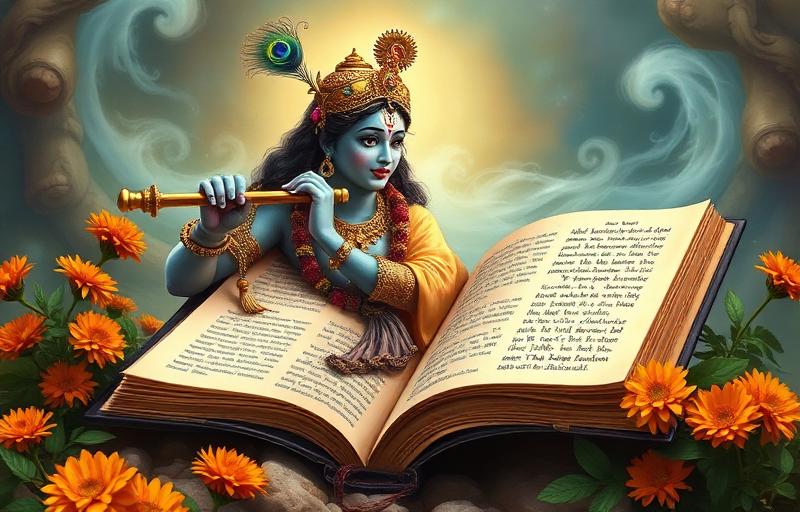
The Shodasha Granthas include the Madhurashtakam, eight verses each line of which ends with madhuram, sweet.
Adharam madhuram, vadanam madhuram - his lips are sweet, his face is sweet.
It is one of the most widely sung Sanskrit devotional pieces in India, known far beyond the sampradaya, and most people who sing it do not know it is Vallabha's.
The Yamunashtakam, also in the sixteen, is eight verses on the Yamuna, which has a specific and elevated place in Pushtimarg theology as Krishna's own river and as a form of his grace.
Shuddhadvaita
The position: pure non dualism, in which the world is real and is Brahman itself, without any transformation or any illusion.
Why it is called pure. Because it is non dualism without maya.
Advaita is non dualism plus maya: the world appears but is not ultimately real, and its appearance is explained by ignorance.
Shuddhadvaita drops the maya. The world is real. It is Brahman. Nothing has been superimposed and nothing needs to be removed.
The technical term. Avikrita parinama, unmodified manifestation.
- The world is Brahman manifesting, not Brahman changing into something
- Gold made into ornaments is the standard image: the ornaments are real, they are gold, and the gold has not become something else
- Brahman manifests as the world by his own will, without being altered
What Brahman is, in this school:
- Sat, being; chit, consciousness; and ananda, bliss
- In the world, sat is manifest and the other two are concealed
- In souls, sat and chit are manifest and ananda is concealed
- In Krishna, all three are fully manifest
So the difference between a stone, a soul and Krishna is not a difference of substance. It is a difference in how much of the same thing is showing.
Krishna is the supreme. Specifically Krishna, not Vishnu of whom Krishna is an avatara.
The Bhagavata's statement that Krishna is bhagavan svayam, God himself rather than a portion, is taken literally and is foundational.
Purushottama, the highest person, is the term, and the supreme is Krishna in Vrindavan, playing, with the gopis, which the school treats as the highest form rather than as an episode.
Why this matters practically. Because it changes what the world is for.
If the world is real and is Brahman, then:
- Renunciation is not the point, since there is nothing false to renounce
- The body, the household, food, cloth, music and beauty are not obstacles
- They are the material of service
- A tradition on this footing will not produce ascetics; it will produce an extremely elaborate and sensuous worship
And that is exactly what Pushtimarg produced.
The comparison across the five. Since this series has now covered them all.
- Shankara: the world is not finally real; maya
- Ramanuja: the world is real and is Brahman's body
- Madhva: the world is real and is permanently other than Brahman
- Nimbarka: the world is both different and non different from Brahman
- Vallabha: the world is real and simply is Brahman, unmodified
Vallabha's is the position that requires the least explaining away and produces the most affirmative attitude to ordinary existence.
Pushtimarg
The name. Pushti means nourishment, and in the Bhagavata's usage it is the Lord's grace, that which nourishes.
Marg is path. Pushtimarg is the path of grace.
The three paths and the three kinds of souls. The school's characteristic division.
- Pravaha: souls carried along by the current of the world, not seeking anything beyond it
- Maryada: souls following the rules, the path of scriptural injunction, discipline and effort, who reach their goal in proportion to what they do
- Pushti: souls chosen, on whom grace acts without cause and without proportion to effort
What distinguishes pushti:
- It is nirhetuka, without cause. Nothing the soul did produced it
- It is not proportional to merit, discipline or knowledge
- It cannot be obtained by any means, because obtaining it by means would make it maryada
- A soul on the pushti path may not appear outwardly different from anybody else
Why this is a strong position. Because it removes the entire economy of religious achievement.
If grace is unearned, then:
- Comparison between devotees is meaningless
- Anxiety about whether you are doing enough is misplaced
- Elaborate discipline is not a qualification
- And the appropriate response is not effort but service
The problem with it, which the school is aware of: if grace is arbitrary, why do anything at all.
The answer: because grace produces the desire to serve, and the service is the sign rather than the cause. A person who wants to serve is already being acted on.
That is the same logic as Nammalvar's in the Sri Vaishnava tradition, arrived at independently.
Brahma sambandha. The initiation.
- A formal initiation given by the acharya
- The devotee dedicates everything, sarva samarpana, to Krishna: body, senses, possessions, family, self
- The mantra given is the Gopijana Vallabha mantra
- After it, everything the devotee has and uses is understood to belong to Krishna, and its use is service rather than consumption
What follows practically. This is the distinctive part.
After brahma sambandha, nothing is used before it has been offered. Food, cloth, ornaments, music: they are prepared for Krishna, offered, and then taken as prasad.
So the devotee's own eating, dressing and living are, in the tradition's understanding, the leftovers of an act of service.
That converts ordinary domestic life into the practice, which is exactly what a philosophy holding that the world is real and is Brahman ought to produce.
Seva rather than puja. The terminological point matters.
Puja is worship: ritual offered to a deity by a worshipper.
Seva is service: what you do for somebody in your household who is present, needs looking after, and is a child.
Pushtimarg calls its practice seva, and the difference is not verbal.
The deity is Krishna as a child, and the daily routine is what you would do for a child: wake him, bathe him, dress him, feed him, take him out to play, bring him back, feed him again, and put him to bed.
The Eight Times of the Day
Ashtayam seva. The service of the eight watches, and it is the most elaborate daily devotional routine in India.
The eight darshans:
- Mangala: waking. The deity is roused, and the first darshan of the day is given
- Shringara: dressing and ornamenting, with the day's clothes, jewellery and flowers
- Gwal: he is prepared to go out with the cows
- Rajbhog: the principal meal of the day, elaborate
- Utthapan: waking from the afternoon rest
- Bhog: a light meal
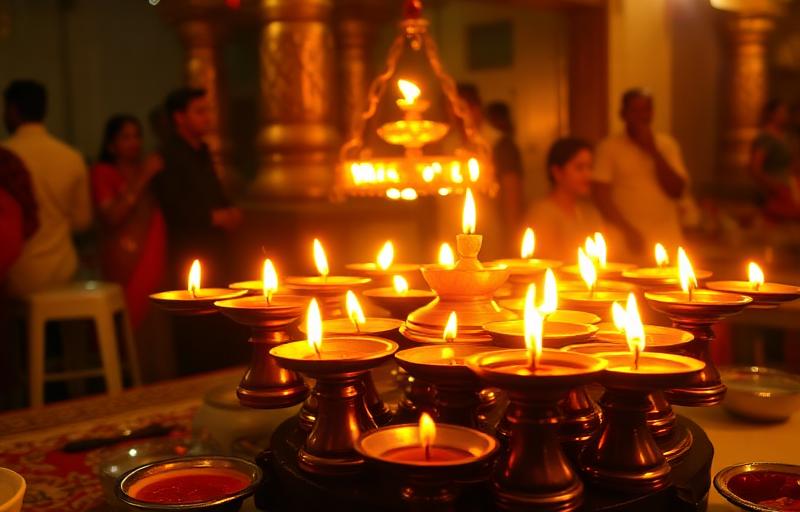
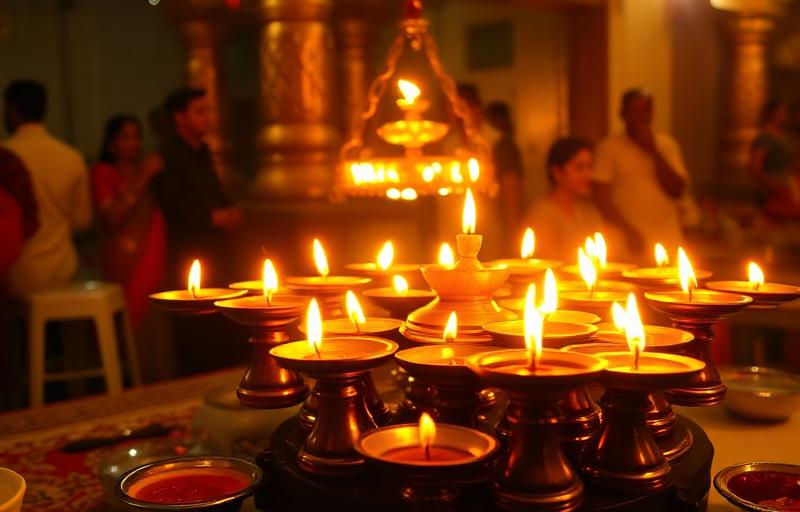
- Sandhya Arti: the evening lamp, after his return from grazing
- Shayan: putting him to bed
What changes each day:
- The clothes, which follow a seasonal and festival calendar of great complexity
- The ornaments, which are specified
- The flowers
- The food, which follows the season
- The pichhwai, the painted cloth hung behind the image, which changes with the occasion
- The ragas sung, which are assigned by time of day and season
The seasonal element. This is what makes Pushtimarg distinctive.
The service follows the weather. In summer the deity is dressed in light cloth, given cooling foods, fanned, and offered water features. In winter he is dressed warmly, given quilts, and offered hot food.
A child in the household would be treated that way. That is the logic.
Haveli sangeet. The music.
- Pushtimarg developed its own musical tradition, haveli sangeet, sung in the temple which is called a haveli, a house, rather than a mandir
- It uses dhrupad forms
- Ragas are assigned to the eight periods and to seasons
- It is one of the sources of north Indian classical music, and the Ashtachhap poets' compositions are its repertoire
The Ashtachhap. The eight seals, eight poets whose compositions form the tradition's devotional literature.
Four appointed by Vallabha:
- Surdas, the greatest, the blind poet of Braj
- Kumbhandas
- Paramananda Das
- Krishna Das
Four by his son Vitthalnath:
- Nandadas
- Chaturbhujdas
- Chhitswami
- Govindswami
Surdas is treated in his own entry elsewhere in this app. His Sur Sagar is one of the great works of Hindi devotional literature, and his songs of the child Krishna are what a very large number of people in north India know as Krishna bhakti.
Kumbhandas deserves a line. Summoned to Akbar's court at Fatehpur Sikri, he went, and afterward composed a pad saying that the road there was hard, that he had to see the faces of people he did not want to see, and that a devotee's business is at Govardhan and nowhere else.
Where the seva happens:
- In havelis, the sampradaya's temples, which are built as houses rather than as temples: no gopuram, no shikhara, a courtyard, and rooms
- And in homes, where the same routine is followed at whatever scale is possible
The household form. This is what most followers actually do.
A small image or a shaligram, in a room set aside, served with as much of the eight period routine as the household can manage: waking, dressing, offering food before eating, and putting to sleep.
Many households do a reduced form: waking, one offering, and the evening. The tradition accepts that.
Shrinathji and Nathdwara
Shrinathji is the principal deity of the sampradaya and the image has a specific history.
The image:
- Krishna lifting Govardhan, with the left arm raised
- Carved from black stone
- The tradition holds it emerged from Govardhan hill itself: first an arm, then the face, over a period, and was found and worshipped there
- Vallabha identified it and established its worship
The move to Nathdwara:
- The image was at Jatipura, on Govardhan, in Braj
- In 1672, during the reign of Aurangzeb, it was moved for safety
- It travelled west, through Agra and Kota, looking for a place
- At Sinhad, in Mewar, the cart's wheels sank and would not move, and that was taken as the sign
- Rana Raj Singh of Mewar offered protection
- The temple was established there and the place became Nathdwara, the door of the Lord
How to describe this period. Honestly and without extending it.
- Images were moved for safety from a number of places during the seventeenth century, and this is one
- Aurangzeb's policies included the destruction of temples in a number of documented cases, and this is a matter of historical record
- It is also true that Mughal policy varied enormously across rulers and periods, that many temples received Mughal grants including under Aurangzeb, and that the picture is not uniform
- And the relevant point for a devotional guide is what people did: they carried an image several hundred kilometres, found a ruler willing to protect it, and kept the worship going
What should not be done with it: used against people alive now. The seventeenth century is not a description of your neighbours.
Nathdwara now:
- In Rajsamand district, Rajasthan, around 48 kilometres from Udaipur
- The Shrinathji haveli, which is built as a house and is called the Nandalaya, the house of Nanda
- Eight darshans daily, at published times, each brief
- Extremely large numbers, particularly at festivals
- The Annakut at Govardhan Puja, the day after Diwali, when an enormous mountain of food is offered and then distributed, is the great festival
Visiting Nathdwara:
- Darshan times are published and are short, sometimes a few minutes each. Check the schedule and arrive before
- Photography of the deity is not permitted and this is enforced strictly
- Very crowded at festivals; Annakut, Janmashtami and Holi are the peaks
- Mobile phones are generally not allowed inside
- Around 48 kilometres from Udaipur, which is the practical base
Pichhwai painting. Worth going for on its own.
- The painted cloth hung behind Shrinathji, changed according to the season and festival
- A distinct school of painting, developed at Nathdwara
- Depicting Krishna with cows, the raas, the seasons, Govardhan, and the festival scenes
- Still made at Nathdwara, and workshops can be visited
- Antique pichhwais are in museums worldwide
The seven svarupas. Vallabha's descendants divided the principal images among the family lines.
Vitthalnath's seven sons each received a svarupa, a principal image, and established a gadi, a seat:
- Shrinathji at Nathdwara
- Navanitapriyaji, also at Nathdwara
- Mathureshji at Kota
- Vitthalnathji at Nathdwara
- Dwarkadhishji at Kankroli
- Gokulnathji at Gokul
- Gokulchandramaji at Kamvan
- Madanmohanji at Kamvan
The seats are at Nathdwara, Kankroli, Kota, Gokul, Kamvan and elsewhere, and each has its own line of acharyas, hereditary and married.
The Chaurasi Baithak. The eighty four seats where Vallabha gave discourses, which are a pilgrimage circuit in the sampradaya, spread across India from Braj to the far south.
Practice
The Madhurashtakam. The place to start, and most people already know it.
- Eight verses, each line ending in madhuram
- Adharam madhuram vadanam madhuram is the opening
- It describes Krishna's lips, face, eyes, smile, heart, walk, flute, hands, feet, dance, dress, everything, and says of each that it is sweet
- Widely available with translation and in very many recordings
- Sung in households across India with no connection to the sampradaya
Why it works. It has no doctrine in it at all.
It is a list of a person's features with one word applied to each, and it is repetitive by design. The effect is cumulative rather than argumentative.
The Yamunashtakam. Eight verses on the Yamuna, also in the sixteen works, and recited particularly in Braj.
Household seva, if you want the practice.
- The full form requires initiation and a trained understanding of the routine, and is done under an acharya
- A reduced form is what most households do and is available to anybody:
A workable household version:
- Keep a small image or picture of the child Krishna
- Wake him in the morning: open the curtain or the door of the shrine, and greet him
- Offer food before you eat, anything you are eating, and then take it as prasad
- Sing something, even one line
- Put him to sleep at night: close the curtain
That is four moments and it takes a few minutes in total.
On offering food before eating. This is the practice that transfers best and it is worth trying.
The habit of pausing before a meal, offering it, and then eating it as something received rather than taken, changes the meal. It is a small discipline with a disproportionate effect, and it costs nothing.
On initiation. A note.
Brahma sambandha is given by an acharya of one of the gadis, and it is a formal relationship rather than a technique. It is not necessary in order to sing the Madhurashtakam, offer food, or visit Nathdwara.
If you want it, the route is to approach a gadi, and the sampradaya's institutions are accessible.
Places:
- Nathdwara, Rajasthan, 48 kilometres from Udaipur
- Kankroli, Rajasthan
- Kota, Rajasthan
- Gokul and Kamvan, in Braj
- Jatipura and Govardhan, where Shrinathji was
- Champaranya, near Raipur, his birthplace
- The Chaurasi Baithak circuit
When to go:
- Annakut, at Govardhan Puja, the day after Diwali, which is the great festival
- Janmashtami
- Holi and the Phag season in Braj
- October to March for weather
Reading:
- The Shodasha Granthas, sixteen short works, in translation
- The Madhurashtakam and Yamunashtakam first
- Surdas and the Ashtachhap poets, which is where the tradition's devotional literature is
- The Subodhini on the Bhagavata, if you want the commentary
A closing thought
A child was born on a road in a forest in what is now Chhattisgarh, thought not to have survived, and left under a tree.
He was found alive, grew up, walked round India three times, and worked out a philosophy in which nothing about the world is false, nothing needs to be renounced, and nothing whatever is earned.
The practice he founded on it is that you wake a child in the morning, dress him according to the weather, feed him before you eat, take him out in the afternoon, bring him home, sing to him in a raga appropriate to the hour, and put him to bed.
And everything you then eat is what he left.
Quick Answers
Who was Vallabhacharya?+
The founder of Pushtimarg, born in 1479 at Champaranya near present day Raipur to a Telugu brahmana family that had settled at Varanasi. He was born during a journey after the family left Varanasi because of disturbance, was thought not to have survived and was left under a tree, and was found alive. He studied at Varanasi, made three circuits of India on foot, established the eighty four Baithaks, married and had two sons, and taught Shuddhadvaita.
What is Shuddhadvaita?+
Pure non dualism, meaning non dualism without maya. The world is real and is Brahman itself, without any transformation and without any illusion. The technical term is avikrita parinama, unmodified manifestation, and the image is gold made into ornaments: the ornaments are real, they are gold, and the gold has not become something else. Sat, chit and ananda are all Brahman, with sat manifest in the world, sat and chit in souls, and all three fully manifest in Krishna.
What is Pushtimarg?+
The path of grace, from pushti meaning nourishment. The school divides souls into pravaha, carried along by the world; maryada, following rules and reaching their goal in proportion to effort; and pushti, chosen souls on whom grace acts without cause and without proportion to anything they did. Grace cannot be obtained by any means, since obtaining it by means would make it maryada. The appropriate response is not effort but seva, service.
What is ashtayam seva?+
The service of the eight watches, the most elaborate daily devotional routine in India. The eight darshans are mangala or waking, shringara or dressing, gwal when he goes out with the cows, rajbhog the principal meal, utthapan or waking from the afternoon rest, bhog a light meal, sandhya arti in the evening, and shayan or putting him to bed. The clothes, ornaments, flowers, food, the painted pichhwai behind the image and the ragas sung all change with the season and the festival calendar.
How did Shrinathji come to Nathdwara?+
The image was at Jatipura on Govardhan in Braj. In 1672, during Aurangzeb's reign, it was moved for safety, travelling west through Agra and Kota looking for a place. At Sinhad in Mewar the cart's wheels sank and would not move, which was taken as the sign, and Rana Raj Singh of Mewar offered protection. The temple was established there and the place became Nathdwara, the door of the Lord, in what is now Rajsamand district, Rajasthan.
What is a simple household version of the practice?+
Keep a small image or picture of the child Krishna. Wake him in the morning by opening the curtain or door of the shrine and greeting him. Offer food before you eat, whatever you are eating, and then take it as prasad. Sing something, even one line. Put him to sleep at night by closing the curtain. That is four moments taking a few minutes in total, and the offering of food before eating is the practice that transfers best and costs nothing.
About the author
Pandit Ravindra Sharma · Vedic Rituals & Bhakti, 22+ years
Pandit Ravindra is the Vandnaa editorial team's resident specialist on aarti, chalisa, and daily devotion. He has performed home and temple pujas across Varanasi and Delhi for over two decades and contributes the bhakti-focused articles on this site.
Meet the Vandnaa editorial team →