Found Under a Tulsi Plant
Andal is the ninth of the twelve Alvars and the only woman among them.
The account of her origin:
- Found as an infant by Periyalvar in his Nandavanam, the flower garden at Srivilliputhur, under a tulsi plant
- Not born of a womb, in the tradition, but of the earth, which connects her to Bhudevi, the earth goddess, and to Sita, who was also found in a furrow
- Named Kodhai, meaning garland, or the one with beautiful hair
- Raised by Periyalvar alone
- Called Andal, which means she who ruled, or she who conquered, because of what she did to the Lord
Her other names:
- Nachiyar, the lady
- Soodikkodutha Sudarkodi, the bright creeper who gave what she had worn
- Goda or Godadevi in Sanskrit
What she wrote. Two works, both in the Prabandham:
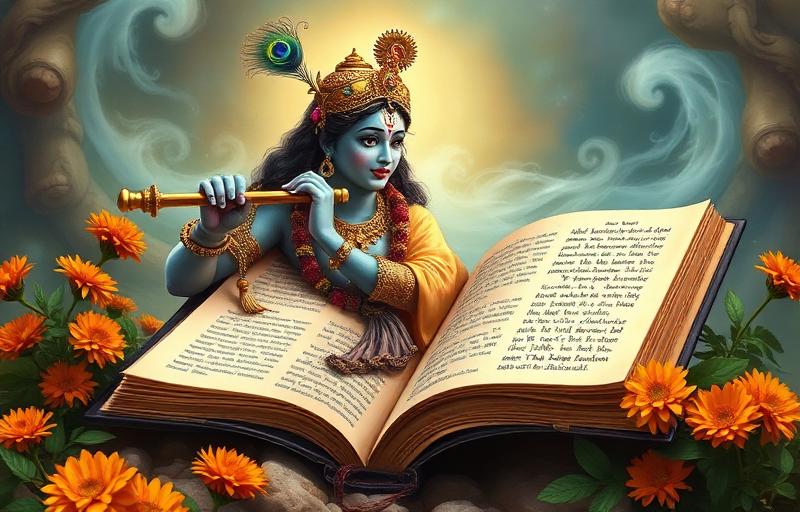
- Thiruppavai, 30 verses
- Nachiyar Thirumozhi, 143 verses in fourteen decads
The garland story. The one everybody knows.
- Her father made garlands daily for Vatapatrasayi, the deity of Srivilliputhur
- Kodhai, growing up, would take the finished garland, put it on herself, look at her reflection in a well, and then return it to the basket
- She wanted to see whether she looked suitable for him
- One day Periyalvar caught her at it
- He was appalled. A garland already worn is ritually unfit
- He made a fresh one and offered that
- That night the Lord appeared and asked why the usual garland had not come, the one that carried her scent
What that story does. It is the tradition's clearest statement that bhava, the interior state, overrides vidhi, the procedural rule.
By the rule, the garland was defiled. By what actually mattered, it was the only one worth having.
That is a considerable thing for an orthodox tradition to place at the centre of its most beloved biography, and it did.
Her refusal. As she grew, Periyalvar began to think of a marriage.
She refused to marry a human being. She would marry the Lord, or nobody.
The tradition takes this literally. It is not presented as a metaphor for renunciation. She names the deity she wants, argues about it, is specific, and does not move.
The ending. She was taken in procession to Srirangam.
- The Lord at Srirangam is said to have instructed Periyalvar in a dream to bring her
- She was brought, in bridal dress
- She entered the sanctum
- And she merged with Ranganatha and was not seen again
Her age. The tradition places her at around fifteen or sixteen.
A teenage girl in a small town in the far south, raised by a single father who grew flowers, wrote a hundred and seventy three verses and then, in the tradition's account, walked into a temple and did not come out.
And her thirty verses are recited every winter by more people than almost any other Tamil text.
The Thiruppavai
What it is: thirty verses, one for each day of the month of Margazhi.
The setting. Andal writes as a gopi in Ayarpadi, the cowherd settlement, undertaking a vow with her companions to obtain Krishna.
The vrat. The pavai nonbu is the frame.
It is an old Tamil observance in which unmarried girls take a vow in the cold month, bathe before dawn, avoid certain foods, and worship, in order to obtain a good husband and rain for the land.
Andal takes that existing observance and makes its object Krishna.
The structure of the thirty:
- Verses 1 to 5: the announcement of the vow, its rules, and the reason for it
- Verses 6 to 15: waking the companions, one by one, ten girls called out of their houses in the dark
- Verses 16 to 20: waking the gatekeeper, then Nandagopa, then Yashoda, then Balarama, then Krishna himself, and then Nappinnai
- Verses 21 to 29: the praise, the request, and the statement of what they actually want
- Verse 30: the phala shruti, naming herself and stating the fruit of reciting it
The waking verses are the heart of it. Ten verses in which a group of girls stand outside a friend's house in the dark and cold, calling her to come out.
They tease her. They point out that everybody else is up. They mention the birds are already calling. They say the temple conches have sounded. They accuse her of sleeping like the seven sleepers. She answers back from inside.
Why that is remarkable poetry. Because it is entirely concrete.
There is no theology in those ten verses. There is a cold morning, a village street, girls' voices, somebody who will not get up, and the sounds of a place waking.
And the whole devotional weight of the poem is carried by that: the vow is undertaken together, and the first work of the practice is getting your friends out of bed.
What they ask for. This is the famous part.
In verse 28 and elsewhere, Andal states plainly that they have no qualification: they are ignorant cowherd girls, they know nothing, they have done nothing, and they are coming anyway.
And what they ask for is not liberation. It is the parai, the drum, ostensibly the instrument needed for the vow, and the tradition reads it as kainkarya, the right to serve.
In verse 29 she makes it explicit: we did not come for the drum. We came because we are yours, and for seven times seven births our connection is to you, and what we ask is that you remove every other desire from us.
Verse 30, the closing, names her: Kodhai of Puduvai, daughter of Vishnuchittan, and says that those who recite these thirty verses will obtain the Lord's grace.
The Nappinnai figure. Worth noting because she is unfamiliar to north Indian readers.
In the Tamil tradition, Nappinnai is Krishna's beloved, the daughter of Kumbhan, whom he won by subduing seven bulls. She occupies the position that Radha holds in the northern traditions.
Andal wakes Nappinnai and asks her to intercede, which fits the Sri Vaishnava purushakara doctrine described in the Alvar entries: the approach is through her.
Margazhi
The month. Margazhi is the Tamil month running roughly from mid December to mid January, corresponding to Margashirsha and Pausha in the north Indian reckoning depending on the calendar.
Why it matters:
- It is the coldest month in the Tamil country and the mornings are dark
- The Gita has Krishna say that among months he is Margashirsha
- It is considered the brahma muhurta of the year, the auspicious pre dawn of the annual cycle
- Ordinary auspicious functions such as weddings are traditionally avoided in it, and it is given over to devotion instead
- Dhanurmasam, the month when the sun is in Dhanus, corresponds to it
What households do:
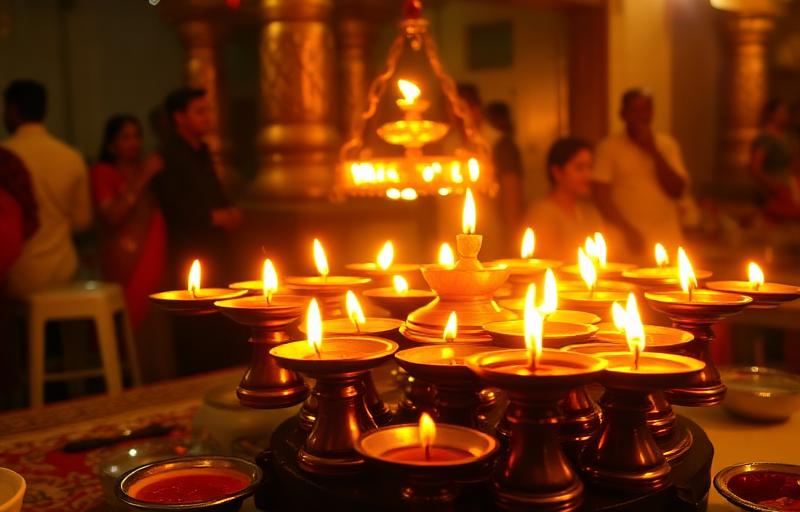
- Rise before dawn, in the brahma muhurta
- Bathe
- Draw the kolam at the doorway, larger and more elaborate than usual
- Place the pumpkin flower or the cow dung ball with a flower on the kolam, which is the traditional Margazhi form
- Recite one verse of the Thiruppavai each day, in order, one for each of the thirty days
- Many also recite the Thiruvempavai of Manikkavachakar, which is the Shaiva counterpart
- Visit the temple
In temples:
- Special early morning puja
- The Thiruppavai recited daily in Vishnu temples
- The Thiruvempavai in Shiva temples
- Adhyayana Utsavam at the major Divya Desams, the twenty one day recitation of the whole Prabandham
- Vaikunta Ekadashi falls in Margazhi
- At Srivilliputhur and Srirangam particularly, the Andal observances
The Margazhi music season. In Chennai, the month has become the largest concentration of Indian classical performance anywhere.
Hundreds of concerts, across dozens of sabhas, of Carnatic music and Bharatanatyam, much of it devotional repertoire. Many events are free or inexpensive, and the season runs from mid December into January.
Bhogi, at the end of the month, closes it, and Thai Pongal begins the next.
Why the pre dawn rising. Worth being practical about.
The brahma muhurta is roughly the hour and a half before sunrise. The tradition holds it is the best time for practice, and the reasons given are ordinary and sound: it is quiet, the mind is not yet occupied with the day, and nothing else is competing.
How to actually do it, if you want to try Margazhi:
- Go to bed earlier. That is the whole trick and there is no other
- Do not try to add an hour to the front of the day while keeping the same bedtime, which produces a month of exhaustion and a poor opinion of the practice
- Start with one verse, read, not chanted, if that is where you are
- The observance is thirty days. If you miss some, continue, and do not restart
A necessary caution. Pre dawn rising, cold bathing and fasting are all traditional here, and none of them suit everybody.
If you have a heart condition, blood pressure issues, are pregnant, elderly, diabetic, or have any condition affected by cold or by disrupted sleep, adapt: warm water, later hour, no fasting.
The tradition permits substitution universally and there is no version of Margazhi observance that requires you to damage your health. Andal's own verses are about the vow being taken together and joyfully, not about endurance.
The Nachiyar Thirumozhi
The second work is less recited and considerably more difficult, and it should be described honestly.
What it is: 143 verses in fourteen decads.
What it is about: desire, stated without mitigation.
The decads include:
- A vow to Kamadeva, the god of desire, asking him to bring her Krishna, in which she describes the observances she will perform
- Sending a cuckoo as a messenger
- A dream of her wedding to him, described step by step through the full marriage ritual
- Speaking to his conch, asking it what his mouth tastes like
- Reproaching the clouds for reminding her of his colour
- Asking her companions to take her to Brindavan
- Threatening to tear up her own body
The wedding dream decad, Varanam Ayiram, is the best known.
She dreams the entire marriage: a thousand elephants at the head of the procession, the streets decorated, the entry, the seating, the ritual, her hand being taken, the circling of the fire, the stepping on the stone, the throwing of the puffed rice.
It is sung at Tamil weddings. Very widely, and by people who do not necessarily know it is a teenage girl's dream of marrying a temple deity.
The conch verses. In one decad she addresses Panchajanya, Krishna's conch, and asks it directly what his mouth tastes like, since the conch is on his lips and she is not.
That is an unusually direct piece of writing and the tradition has always known it.
How the tradition handles the intensity. It does not soften it.
The commentaries treat the erotic register as theologically necessary rather than as an embarrassment to be explained away.
The argument is that the intensity of the soul's want for God is not adequately expressed by any milder vocabulary, and that the tradition uses the strongest available human analogy because the weaker ones misrepresent it.
On reading it. Some points worth making for a modern reader.
- This is a young woman writing about wanting somebody, in the vocabulary available to her tradition
- The tradition preserved it, made it scripture, and wrote commentaries on it, rather than editing it
- It is recited less than the Thiruppavai partly because of its difficulty and partly because of its intensity, and that is a fact about practice, not a judgment on the text
- Varanam Ayiram is the exception and is extremely widely sung
Andal as a woman's voice in the canon. This deserves stating plainly.
The Nalayira Divya Prabandham contains four thousand verses by twelve poets, of whom one is a woman.
Several of the male Alvars, including Nammalvar, write extensively in a woman's voice. But Andal is a woman writing in her own.
And what she writes about is her own want, her own refusal to accept the marriage arranged for her, and her own terms.
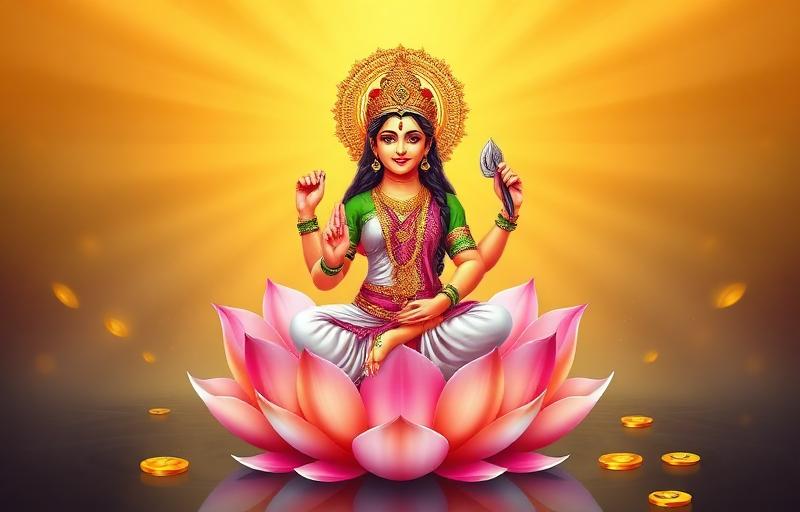
Her position in worship. She is not only a poet in the tradition. She is a goddess.
- She is worshipped as Andal or Nachiyar with her own shrine in Sri Vaishnava temples
- Her image is taken in procession
- Her Adi Pooram festival is major
- She is identified with Bhudevi, the earth goddess, one of Vishnu's consorts
- Godastuti, by Vedanta Desika, is a Sanskrit hymn in her praise
So the girl found under the tulsi plant became a deity in the tradition she wrote for, and has temples.
What Andal Refused
It is worth setting out plainly what the Andal story contains, because it is more radical than its familiarity suggests.
A girl refused an arranged marriage.
In a society in which the marriage of a daughter was arranged by her father and was not a matter of her choice, she declined, gave a reason, held to it, and was not overruled.
The tradition does not present this as disobedience. It presents her father as coming around, and the deity as confirming her.
She specified what she wanted.
She did not simply refuse. She named who she would accept, described the marriage she wanted in detail across an entire decad, and pursued it.
She was not corrected.
There is no point in the tradition at which somebody explains to Andal that she has misunderstood, that her desire is inappropriate, or that she should moderate her language.
The commentaries take her seriously as a theologian.
How to hold this now. Some care is needed.
What the story is not:
- It is not an argument that girls should reject marriage, or that they should accept it
- It is not a general licence to disregard families, nor an endorsement of arranging a young person's life without consent
- The tradition's own reading is about the soul and God, and about the sufficiency of wanting
What can reasonably be taken from it:
- That the tradition contains, at its centre, a young woman who said no to what was arranged for her and was vindicated
- That her want was treated as evidence rather than as a problem to be managed
- That a fifteen year old girl's writing became scripture, and men who were great scholars wrote commentaries on it
- That the household register, a garland, a well, a reflection, was enough material for all of it
On child marriage, since her age comes up. It should be said directly.
The tradition places Andal at around fifteen or sixteen and her story ends with her not marrying a human being at all.
Child marriage is illegal in India under the Prohibition of Child Marriage Act, with the minimum age of eighteen for women and twenty one for men, and it is harmful. No reading of a saint's biography changes that, and the tradition's own account here is of a girl refusing the marriage arranged for her rather than accepting one.
On the intensity of her verses and young people. Also worth saying.
The Nachiyar Thirumozhi is a young person's writing about wanting somebody, and the tradition placed it in its canon rather than suppressing it.
That is worth remembering when adults in a family respond to a young person's feelings with shame. The tradition's response to a teenage girl's declared longing was to write commentaries on it for a thousand years.
And the theological point she is making, which is the one the tradition cares about:
She has no qualification, states it repeatedly, and comes anyway. She is an ignorant cowherd girl who knows nothing and has done nothing.
And she gets what she asked for.
That is the entire Sri Vaishnava argument, delivered in thirty verses by somebody who was not a scholar, and it is why she is at the centre of the tradition rather than at its edge.
Observing the Thiruppavai
The simplest version, which is what most households actually do:
- During Margazhi, one verse a day, in order, thirty verses over thirty days
- Read or recited in the morning
- A lamp
- A kolam at the door if that is your custom
- That is the whole observance and it is enough
The fuller version:
- Rise in the brahma muhurta
- Bathe
- The kolam, with the pumpkin flower or the traditional Margazhi form
- The verse, with its meaning
- Temple visit
- Simple food, and many observe restrictions during the month
Resources:
- Text with Tamil, transliteration and translation is widely available online and in print
- Recitation recordings for each verse, including many for learning
- The Ariyakudi rendering and other Carnatic versions of the Thiruppavai are standard listening in the season
- M. S. Subbulakshmi's recordings are what most Indian households have heard, whether they know it or not
On learning it. Thirty verses in thirty days is achievable and is how it is designed.
One verse per day, learned in the morning and carried through the day, is the traditional method and it works. By the end of the month you have the whole thing.
The Shaiva counterpart. Worth knowing.
Thiruvempavai, by Manikkavachakar, is twenty verses in the same pavai nonbu frame, addressed to Shiva, and it is recited in Shiva temples through Margazhi exactly as the Thiruppavai is in Vishnu temples.
Many households recite both. In Thailand, the Thiruvempavai is recited at the Triyampavai Trippavai royal ceremony, which is a genuinely surprising piece of transmission.
Places
Srivilliputhur:
- Her town, in Virudhunagar district, around 75 kilometres from Madurai
- The Vatapatrasayi temple with the Andal shrine
- The Nandavanam where she was found
- The gopuram on the Tamil Nadu state emblem
- Adi Pooram, July or August, her birth star festival, which is the principal one
- Margazhi, for the daily Thiruppavai
Srirangam:
- Where she is held to have merged with Ranganatha
- Her shrine is there
- The Adhyayana Utsavam and Vaikunta Ekadashi
Andal shrines exist in most Sri Vaishnava temples, and in the Andal temples of the Tamil diaspora worldwide.
A practice for the rest of the year:
- The Thiruppavai is not restricted to Margazhi and can be recited any time
- Verse 29 and verse 30 alone are frequently recited
- Varanam Ayiram, the wedding dream decad, is sung at weddings
- A tulsi plant, in her memory and her father's
A closing thought. Thirty verses that begin by getting the neighbours out of bed.
Not with theology, not with a vision, not with a doctrine. With girls standing in a cold street before dawn calling to a friend who will not wake up, pointing out that the birds are already awake and the conches have gone and everybody is waiting.
And what they finally ask for, in verse 29, is that every other desire be taken away from them.
A girl found under a tulsi plant wrote that, and every December it is said out loud in the dark, before it gets light, in a very large number of houses.
What People Ask Most
Who was Andal?+
The ninth of the twelve Alvars and the only woman among them. She was found as an infant by Periyalvar under a tulsi plant in his flower garden at Srivilliputhur and named Kodhai. She composed the thirty verse Thiruppavai and the 143 verse Nachiyar Thirumozhi, refused to marry any human being, and by tradition merged with Ranganatha at Srirangam at around fifteen or sixteen.
What is the Thiruppavai?+
Thirty verses, one for each day of Margazhi, in which Andal writes as a cowherd girl undertaking the pavai nonbu vow with her companions to obtain Krishna. Verses one to five announce the vow, six to fifteen wake the companions one by one, sixteen to twenty wake the household and Krishna, and twenty one to twenty nine make the request, which turns out to be the right to serve rather than liberation. Verse thirty names her and states the fruit.
What is the garland story?+
Her father Periyalvar made garlands daily for the deity at Srivilliputhur. Kodhai would take the finished garland, wear it herself, look at her reflection in a well, and then return it to the basket. When her father caught her he was appalled, since a worn garland is ritually unfit, and offered a fresh one instead. That night the Lord appeared and asked why the usual garland had not come, the one that carried her scent. It is the tradition's clearest statement that the interior state overrides the procedural rule.
How is Margazhi observed?+
Households rise before dawn in the brahma muhurta, bathe, draw an elaborate kolam at the doorway with the traditional pumpkin flower, recite one verse of the Thiruppavai each day in order, and visit the temple. Shiva temples recite Manikkavachakar's Thiruvempavai instead. Ordinary auspicious functions like weddings are traditionally avoided in the month, Vaikunta Ekadashi falls in it, and Chennai's Margazhi music season runs through it.
What is the Nachiyar Thirumozhi?+
Andal's second work, 143 verses in fourteen decads, about desire stated without mitigation. It includes a vow to Kamadeva, a cuckoo sent as messenger, an address to Krishna's conch asking what his mouth tastes like, and Varanam Ayiram, the dream of her wedding described step by step, which is widely sung at Tamil weddings. The commentaries treat its intensity as theologically necessary rather than as something to explain away.
Can I recite the Thiruppavai if I do not know Tamil?+
Yes. Text with transliteration and translation is widely available in print and online, and recitation recordings exist for every verse, including many made for learning. The traditional method is one verse a day for the thirty days of Margazhi, learned in the morning and carried through the day, which gets you the whole work by the end of the month. Read the meaning alongside, and listen to the recitation, since the sound carries a great deal.
About the author
Anjali Mehta · Editor, M.A. Religious Studies
Anjali is the managing editor for Vandnaa and oversees the festival and vrat coverage. She holds an M.A. in Religious Studies and reviews every published article for accuracy, accessibility, and tradition-fidelity.
Meet the Vandnaa editorial team →