The Dust of the Feet of the Servants
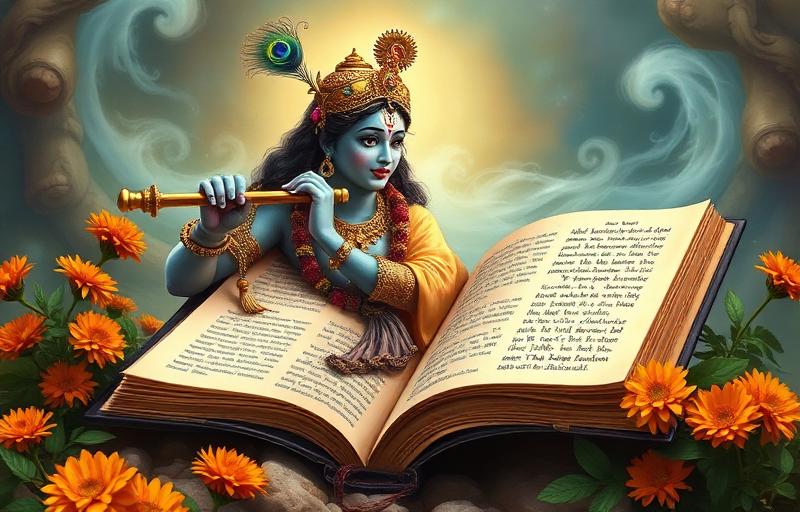
Thondaradippodi Alvar is the tenth of the twelve Alvars, and his name is a statement of position.
The name:
- Thondar means the servants, the devotees
- Adi means feet
- Podi means dust
- So Thondaradippodi: the dust of the feet of the servants of the Lord
Not the servant. Not at the feet. The dust at the feet of the servants.
That is as far down the scale as it is possible to place oneself, and he chose it as his name.
Who he was:
- Born Vipranarayana at Thirumandangudi, near Kumbakonam in Thanjavur district
- A brahmana
- He came to Srirangam and took up the service of the Nandavanam, the flower garden
- He grew tulsi and flowers for Ranganatha and made the garlands, as Periyalvar had done at Srivilliputhur
- He did this for a long time and lived austerely
What he wrote. Two works, both short and both central:
- Thirumalai, 45 verses
- Thiruppalliyezhuchi, 10 verses
Thiruppalliyezhuchi is the suprabhatam of the Tamil tradition: the waking of the Lord at dawn. It is recited every morning at Srirangam and at Sri Vaishnava temples to open the day, and it is one of the very few works recited daily in full.
Thirumalai is the more substantial and is among the most loved works in the Prabandham. There is a saying in the tradition that a person who has not learned the Thirumalai is not fully a Sri Vaishnava.
And then the other part of his life.
What Happened to Him
The tradition records this in full and does not soften it, which is the reason he matters.
The story:
- A courtesan named Devadevi came to Srirangam with her sister
- She saw Vipranarayana in his garden, absorbed in his work, taking no notice of anybody
- Her sister told her that this man could not be moved
- Devadevi took it as a challenge and said she would have him
- She came to the garden in plain clothes, presented herself as a servant, and asked to be allowed to help
- He allowed it
- She worked in the garden for months without asking anything
- And then, one day, in the rain, she stood outside and he brought her in
What followed:
- He abandoned the garden
- He abandoned the service at the temple
- He went to live with her
- He spent everything he had, and then everything he could get
- When there was nothing left, she put him out
Where that left him. Destitute, having lost his service, his standing, his discipline and his means, and having done it to himself.
What the Lord did. This is the part the tradition tells with pleasure.
- Ranganatha himself took the form of a servant
- He took a golden vessel from the temple treasury
- He carried it to Devadevi's house and said it was sent by Vipranarayana
- She took it
- The theft was discovered, the vessel traced to her, and she and Vipranarayana were arrested and brought before the king
- Then the Lord spoke, from the sanctum, and told the king what he had done and why
- Vipranarayana was released, restored, and understood what had been done for him
Why the Lord did it. Two readings, and the tradition holds both.
One: to get him back. Nothing else would have worked. He had to be brought to the absolute bottom and then shown that he had been carried there deliberately.
Two: to demonstrate the principle, which the tradition states plainly, that the Lord will commit a theft and stand accused before a king rather than lose a devotee.
And then he wrote.
The Thirumalai is what came out of this, and its posture makes sense only against the biography.
The Thirumalai
What it is: forty five verses addressed to Ranganatha at Srirangam.
Its reputation. It is among the most beloved works in the Prabandham, and the saying that a person who has not learned the Thirumalai is not a full Sri Vaishnava is genuinely current.
Why. Because it is the tradition's clearest statement of what to do when you have nothing to offer.
The famous opening moves:
Verse 1 asks what use the study of many texts is, and answers that the name is enough.
And then, through the work, he sets out:
- That he has done nothing that would qualify him
- That his conduct has been bad, and he specifies
- That the Lord's name is what saves, and that it saves regardless
- That the temple at Srirangam is where this is available
- That the devotees are what he wants to be near
- That the alternative, being without this, is unbearable
The self accusation. This is what distinguishes the work.
He does not write from a position of attainment. He writes as somebody who has been publicly disgraced and knows it, and the verses name his failings without arranging them into a lesson.
Several verses are among the most quoted in the tradition precisely because of this: he says, in effect, that he is unfit, has always been unfit, and has come anyway because there is nowhere else.
The verse about the name. One of the most quoted passages says that even those who have committed every wrong, if they take the name, are received, and that this is what the scriptures actually teach.
Why that is theologically load bearing. Because it establishes that the mechanism is not merit.
The whole Sri Vaishnava structure described in the Nammalvar entry, that surrender is the means and that nothing you do earns it, is stated here in the voice of somebody for whom it had to be true or there was no hope.
A note on how to read the self accusation. Carefully, because this kind of writing can be misused.
What it is: a specific man's account of a specific fall, written afterward, in a tradition that permitted him to say it and kept the record.
What it is not:
- A model of religious self hatred to be imitated
- A suggestion that you should catalogue your failings in order to be devotional
- An argument that people who have done wrong should be publicly shamed
The tradition's actual response to Thondaradippodi's fall was to restore him, keep his verses, and place them at the centre of the canon.
That is the model: not the shaming, the restoration.
The Thiruppalliyezhuchi. The other work, ten verses.
It is the waking of the Lord at dawn, and it is recited every morning at Srirangam and across Sri Vaishnava temples as the first thing of the day.
Its imagery is of the night ending: the stars going, the birds beginning, the elephants at the gate, the devotees gathered outside, and the request that he rise.
The contrast between the two works is the man's whole biography.
In one, he is a wreck asking to be taken in. In the other, he is the person who opens the temple in the morning and calls the Lord to wake up.
And both are in the canon, by the same author, recited daily.
On Falling and Coming Back

This saint is in the canon for a specific reason and it is worth using him for it.
The situation he addresses. Somebody who had a practice, lost it, did things they are ashamed of, and does not know whether they are permitted back.
That is an extremely common situation and most religious writing handles it badly.
What the tradition does with him:
- It keeps the full story, including the parts that are humiliating
- It does not require him to have been secretly virtuous throughout
- It has the Lord go and get him rather than waiting for him to return
- It restores him to his service
- It makes his verses scripture and recites them daily
The practical points, stated plainly.
One. There is no disqualifying event.
The tradition's position, stated in the Thirumalai itself, is that no conduct puts a person outside the reach of the name. That is not a loophole; it is the doctrine.
Two. Return is not conditional on explanation.
He was not required to account for himself, do penance for a set period, or convince anybody. He was picked up.
Three. The shame is not the practice.
His verses name his failings, but the work is not an exercise in self punishment. It moves quickly from what he did to what the Lord is, and stays there.
A practice that consists mostly of feeling bad about yourself is not what this saint models, and it is not what the tradition recommends.
Four. Somebody else may have to come and get you.
In the story, he did not walk back. He could not. Somebody came.
The practical version of this is ordinary and human: people who have fallen a long way frequently cannot return under their own effort, and the community's job is to go and fetch them rather than to wait with folded arms for a suitably contrite arrival.
On addiction, debt and the specific kind of fall in the story. Since the biography involves compulsive spending, loss of livelihood and destitution, it is worth being direct.
If that is your situation now:
- Debt is a practical problem with practical solutions, and shame keeps people from seeking them. Speak to somebody
- Compulsive behaviour, whether around substances, gambling or anything else, is a health matter and is treatable, and willpower alone is generally not the answer
- India has helplines. Tele MANAS is 14416, free, in many languages, and covers mental health broadly
- Telling a family member is usually the hardest and most useful step
What the tradition is not saying: it is not saying that a divine intervention will resolve a financial or medical problem. Ranganatha's theft in the story is a theological point about the Lord's attitude to devotees, not a plan for your creditors.
What it is saying, and this is worth carrying: that the tradition's own canon contains a man who lost everything through his own conduct, and it did not put him outside.
It put his verses at the front of the morning.
Srirangam and the Morning
Since his life is entirely at Srirangam, and since his ten verses open the day there, the place and its routine deserve a section.
Srirangam:
- On an island between the Kaveri and the Kollidam, near Tiruchirappalli, Tamil Nadu
- The first and foremost of the 108 Divya Desams
- The largest functioning temple complex in the world by area, around 156 acres
- Seven concentric enclosures, twenty one gopurams
- The Rajagopuram, around 72 metres, among the tallest in Asia
- The deity is Ranganatha, reclining on Adishesha
- A town lives inside the outer enclosures
The daily routine, which is what Thiruppalliyezhuchi belongs to:
- The temple is opened before dawn
- Viswaroopa darshan, the first darshan of the day
- Thiruppalliyezhuchi is recited, the waking
- The Thomala service, garlands
- Successive services through the day, each with its offerings
- The night service and the closing, when the Lord is put to rest
The waking and sleeping of a deity. Since it is a practice that puzzles people, here is what it means.
Sri Vaishnavism holds that the temple image is the Lord in his archa form, present and accepting the limits of that form. Having accepted them, he is treated as a person: woken, bathed, dressed, fed, garlanded, fanned, entertained, put to sleep.
That is not a game. It is the logic of the archa doctrine carried to its conclusion: if he is really there, then he is really there, and hospitality is what you owe a guest.
The Thiruppalliyezhuchi, ten verses recited in the dark to a reclining figure, is the morning half of that.
The Nandavanam. His own service.
The flower gardens attached to major temples are still maintained. Srirangam's gardens supply the garlands, and the service of growing and stringing continues to be performed.
If you visit and want to understand Thondaradippodi Alvar's life, ask about the Nandavanam rather than only seeing the sanctum.
Visiting:
- Tiruchirappalli airport and railway station, around 10 kilometres
- Open from very early; Viswaroopa darshan is before dawn and is worth the effort
- The complex is large. Allow half a day at minimum
- Modest dress, footwear off; there are entry restrictions to the inner enclosures at some temples in the region
- October to March for weather
When to go:
- Adhyayana Utsavam in Margazhi, twenty one days of the whole Prabandham
- Vaikunta Ekadashi, when the Paramapada Vasal is opened, which is extremely crowded
- Chithirai Brahmotsavam
- Panguni Uthiram, the Serthi festival
On crowds at Vaikunta Ekadashi: arrive early, follow the queue system, keep children close, identify exits, and leave if density rises beyond the point where you can move at your own pace.
Nearby:
- Thiruvanaikaval, the Jambukeswarar temple, one of the Pancha Bhoota Sthalams, representing water, very close
- Tiruchirappalli Rock Fort and the Uchi Pillayar temple
- Thanjavur, 60 kilometres
- Kumbakonam, and Thirumandangudi, Thondaradippodi Alvar's own birthplace, in that district
Thirumandangudi is a small village near Kumbakonam with a temple to him, and it is visited by those following the Alvar circuit.
Learning the Thirumalai
Why start here. Of all the Prabandham works, this is the one the tradition most insists a devotee should know, and it is only forty five verses.
How it is learned traditionally:
- Verse by verse, with meaning, usually from a teacher
- Recited in full at Srirangam and in Sri Vaishnava households
- Available with Tamil, transliteration, translation and commentary in print and online
- Recitation recordings are easy to find
Where to begin:
- The first verse, on the sufficiency of the name against all the learning in the world
- The verses about his own condition, which are the ones people come back to
- The verses naming Srirangam
Thiruppalliyezhuchi, the other work, is ten verses and is the shorter entry point.
It is recited every morning at Srirangam. If you want to begin the day the way that temple does, it is available and it is short.
A morning practice from this saint:
- Wake, and before anything else, say the name
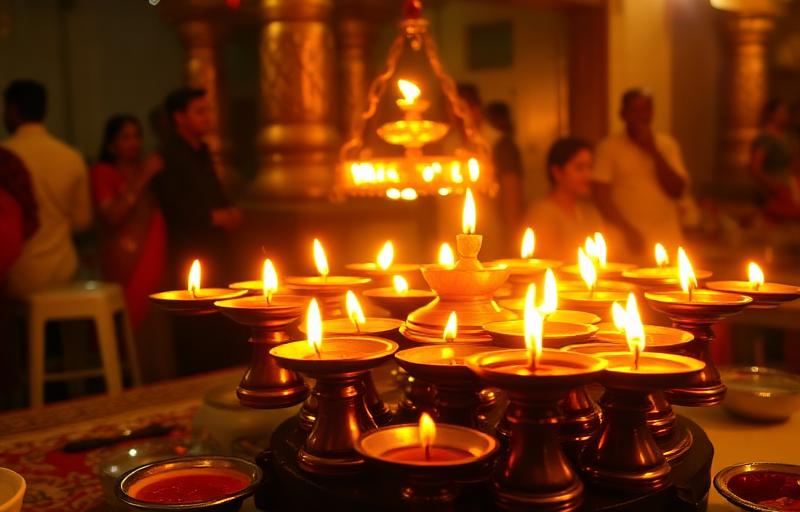
- Light a lamp
- Recite Thiruppalliyezhuchi, or one verse of it, or simply say the name for a few minutes
- If you keep tulsi, water it, which is his own service
On the Nandavanam mode. His life before the fall was the same as Periyalvar's: growing flowers and making garlands.
If you want the practice rather than only the reading:
- Grow something for the deity, even one plant on a windowsill
- Make your own garland occasionally rather than buying one
- Do the same thing daily, regardless of mood, because the garland is needed daily
And the thing he is actually for. Use him when you need him.
Most people, at some point, have a period where the practice stops, where they behave in ways they would not defend, and where returning feels impossible because of what would have to be admitted.
The tradition put a man in exactly that position at the front of its morning liturgy.
It did not require him to explain. It did not put him on probation. It sent somebody to get him, restored him to the garden, and then had him write the verses that wake the Lord at dawn.
A closing thought. He called himself the dust at the feet of the servants.
Not from false modesty. He had been publicly disgraced and knew exactly what he was worth by any ordinary reckoning.
And from that position he wrote forty five verses which the tradition decided every Sri Vaishnava should learn, and ten more which are the first thing said out loud, in the dark, at the largest temple in the world, every single morning.
Reader Questions Answered
Who was Thondaradippodi Alvar?+
The tenth of the twelve Alvars, born Vipranarayana at Thirumandangudi near Kumbakonam. He came to Srirangam and took up the service of the Nandavanam, the flower garden, growing tulsi and flowers for Ranganatha and making the garlands. His name means the dust of the feet of the servants of the Lord. He wrote the forty five verse Thirumalai and the ten verse Thiruppalliyezhuchi.
What happened between him and Devadevi?+
A courtesan named Devadevi took it as a challenge that he could not be moved, came to his garden disguised as a servant, worked there for months asking nothing, and eventually he took her in. He abandoned the garden and the temple service, spent everything he had, and when there was nothing left she put him out. Ranganatha then took the form of a servant, carried a golden vessel from the temple treasury to her house saying it was sent by him, and when the theft was traced and both were arrested, spoke from the sanctum and had him released.
What is the Thirumalai?+
Forty five verses addressed to Ranganatha at Srirangam, among the most beloved works in the Prabandham. There is a saying in the tradition that a person who has not learned the Thirumalai is not fully a Sri Vaishnava. Its opening asks what use the study of many texts is and answers that the name is enough, and through the work he states that he has done nothing to qualify, that his conduct has been bad, and that he has come anyway because there is nowhere else.
What is Thiruppalliyezhuchi?+
Ten verses waking the Lord at dawn, the suprabhatam of the Tamil tradition, recited every morning at Srirangam and across Sri Vaishnava temples as the first thing of the day. Its imagery is of the night ending: the stars going, the birds beginning, the elephants at the gate, the devotees gathered outside, and the request that he rise. It is one of very few works recited daily in full.
What does his story say about coming back after a fall?+
That there is no disqualifying event, that return is not conditional on explanation, that the shame is not itself the practice, and that somebody may have to come and get you because a person who has fallen a long way frequently cannot return under their own effort. The tradition kept the full and humiliating story, had the Lord go and fetch him rather than waiting, restored him to his service, and made his verses scripture recited daily.
Why is the deity woken and put to sleep?+
Because Sri Vaishnavism holds that the temple image is the Lord in his archa form, actually present and accepting the limits of that form. Having accepted them, he is treated as a person: woken, bathed, dressed, fed, garlanded, fanned and put to rest. It is the logic of the archa doctrine carried to its conclusion, that if he is really there then hospitality is what you owe a guest, and the Thiruppalliyezhuchi is the morning half of it.
About the author
Anjali Mehta · Editor, M.A. Religious Studies
Anjali is the managing editor for Vandnaa and oversees the festival and vrat coverage. She holds an M.A. in Religious Studies and reviews every published article for accuracy, accessibility, and tradition-fidelity.
Meet the Vandnaa editorial team →