What Is Varuthini Ekadashi?
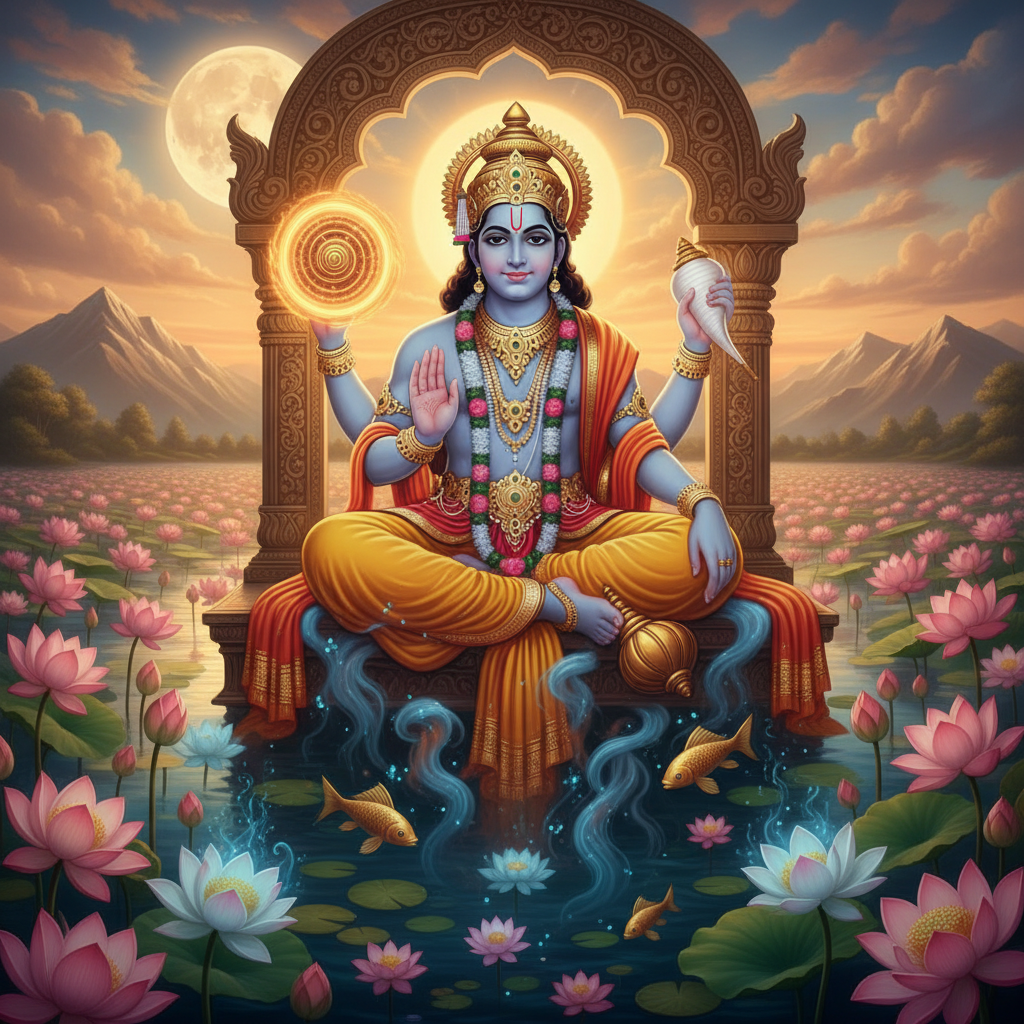
Varuthini Ekadashi is observed on the Krishna Paksha Ekadashi of the Vaishakh month. The Sanskrit word varuthini means "armoured" or "protected" - one sheltered behind a shield. This is the Ekadashi devotees keep when they seek Bhagwan Vishnu's protection: from misfortune, from accidents, from the fear that follows hard times, and from their own past karmas. The Bhavishyottara Purana records Lord Krishna describing its glory to King Yudhishthira, comparing its merit to years of austerity and to the gift of gold given in charity at sacred places. Falling in the warm, sacred month of Vaishakh - itself dear to Vishnu - the vrat carries a tender message: the devotee who places himself in the Lord's hands wears an armour no calamity can pierce, even when the body suffers, as the katha of King Mandhata shows.
Varuthini Ekadashi 2027 Date and Tithi
Varuthini Ekadashi falls on Vaishakh Krishna Ekadashi, which in 2027 comes around April-May. The precise fasting day depends on which tithi prevails at sunrise in your city, and the next morning's parana window depends on the Dwadashi timings - both vary by location and year, which is why we do not print fixed times here. 1. Check the exact Ekadashi date for your city on the Vandnaa Panchang. 2. Note the tithi start and end, and the parana muhurat on Dwadashi morning. 3. If your panchang lists separate Smarta and Vaishnava dates, householders usually observe the first; Vaishnava sampradaya followers observe the second. 4. Vaishakh days are hot in most of India - if you plan a nirjala fast, confirm timings in advance so the fast does not stretch longer than intended, and keep drinking water through Dashami so the body enters the vrat rested and hydrated.
Significance - The Armour of Devotion
Why call a fast "armoured"? The tradition answers through the katha: King Mandhata could not prevent the bear's attack, but the Lord's protection reached him in his helplessness. Varuthini Ekadashi does not promise that hardship will never come; it promises that the devotee will not face it alone. The Puranas list generous fruits - merit equal to ten thousand years of tapasya, the washing away of sins, a good destination after death, and happiness in this life. The vrat is considered especially consoling for those recovering from accidents, illness or loss, and for families praying for the safety of a loved one. On this day, charity is emphasised almost as much as fasting: the scriptures praise anna-dana (gift of food) and kanya-dana support above other gifts, teaching that the protected devotee becomes, in turn, a protector of others. Many devotees keep this vrat in the name of a parent, a child or a loved one far from home, offering the day's merit for that person's safety.
Varuthini Ekadashi Vrat Katha - King Mandhata and the Bear
On the banks of the Narmada ruled King Mandhata, a generous and dharmic king who spent his later years in tapasya. One day, as he sat absorbed in meditation in the forest, a wild bear crept up and seized his foot in its jaws. Honouring his vow of ahimsa and absorbed in the Lord, the king neither struck the beast nor broke his meditation; the bear dragged him deep into the forest. In agony, Mandhata inwardly cried out to Bhagwan Vishnu. The Lord appeared in His Varaha (boar) form, slew the bear with His Sudarshana Chakra, and saved His devotee - but the king's foot was already lost. Seeing Mandhata's grief, Vishnu said: "Do not sorrow. This befell you through a karma of a past life. Go to Mathura and observe Varuthini Ekadashi, worshipping My Varaha form; the vrat will restore you." The king obeyed, kept the fast with full faith, and regained a whole and strong body. Devotees recite this katha to remember that the Lord's grace can mend what karma has broken.
Varuthini Ekadashi Puja Vidhi - Step by Step
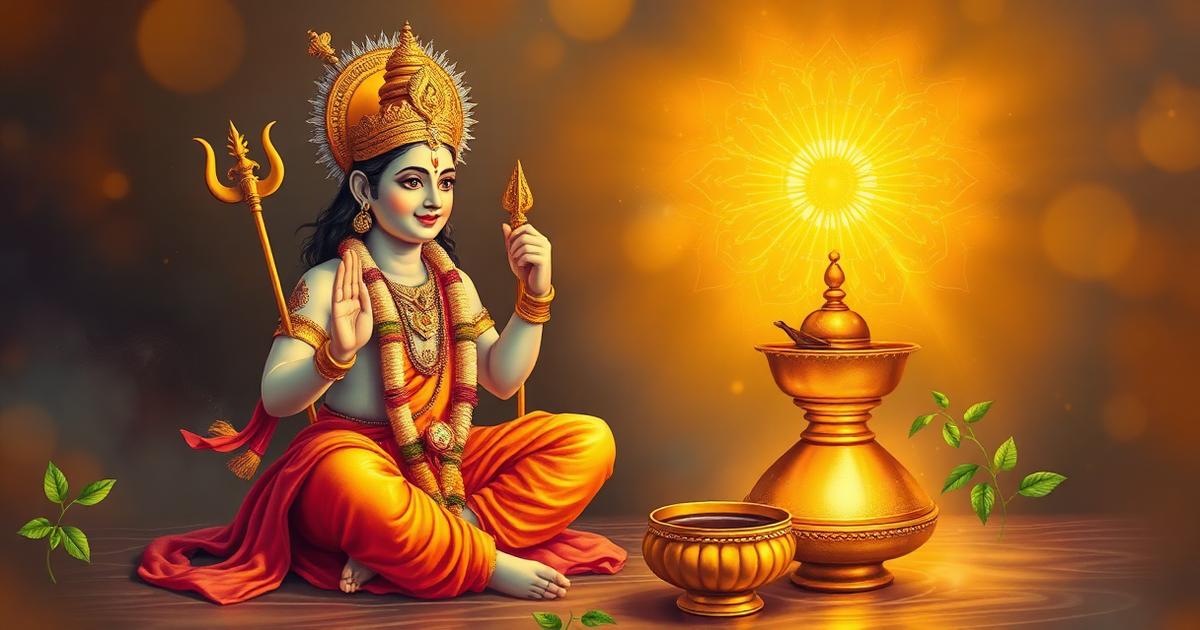
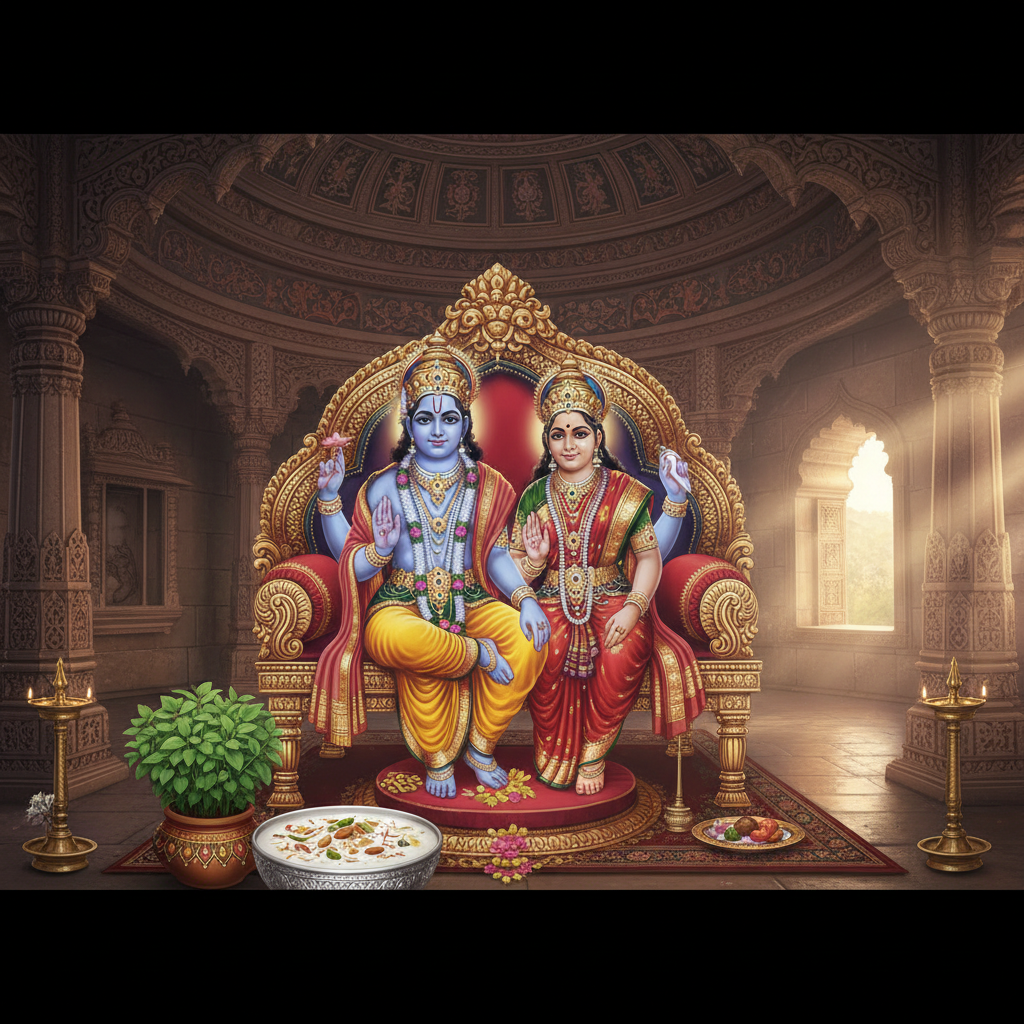
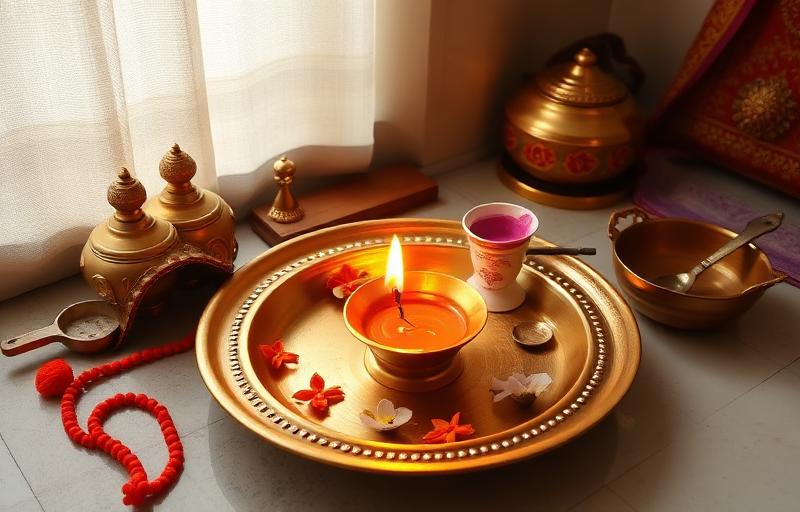
On this Ekadashi, many devotees specifically worship Vishnu's Varaha avatar, following the katha. 1. Eat one sattvik meal before sunset on Dashami; traditionally, even that meal avoids masoor dal, chana and honey. 2. On Ekadashi morning, bathe early and take sankalp for the vrat, praying for the protection of your family. 3. Set the altar with a murti or picture of Bhagwan Vishnu (or Varaha form if available); offer panchamrit, chandan, tulsi, seasonal flowers and fruit. 4. Light dhoop and deepak, then read or listen to the Varuthini vrat katha of King Mandhata. 5. Spend the day in japa and Vishnu-smaran; traditional niyam for this vrat also discourage sleeping by day, gossip and anger. 6. Do sandhya aarti and, if possible, a soft jagran with bhajans. 7. On Dwadashi, give anna-dana to the needy, then complete parana within the muhurat shown on the Vandnaa Panchang.
Mantras for Varuthini Ekadashi
Mantras of refuge and protection suit this day best. 1. ॐ नमो भगवते वासुदेवाय - Om Namo Bhagavate Vasudevaya - "I bow to Bhagwan Vasudeva." The principal Ekadashi japa; 108 repetitions on a tulsi mala. 2. ॐ नमो नारायणाय - Om Namo Narayanaya - "I bow to Narayana, the refuge of all beings." Keep it running silently through the day's work. 3. ॐ श्री वराहाय नमः - Om Shri Varahaya Namah - "Salutations to Shri Varaha," the form that rescued both the Earth and King Mandhata; especially fitting on Varuthini Ekadashi. Devotees who can, also recite the Vishnu Sahasranama or the Narayana Kavacham, the protective hymn from the Bhagavata Purana, whose very theme is the armour of the Lord's names - a perfect companion to the "armoured" Ekadashi. Chant slowly enough that the meaning stays with you; a protected mind is the first protection the vrat gives.
Parana Rules and Benefits of Varuthini Ekadashi

Parana is done on Dwadashi morning after sunrise, before the Dwadashi tithi ends and never during Hari Vasara. Look up your city's window on the Vandnaa Panchang, and in the Vaishakh heat keep water and fruit ready so the fast closes gently. Feeding the hungry before your own parana meal completes the vrat's spirit of protection extended outward. The traditional fruits of Varuthini Ekadashi: 1. Protection of self and family - the armour of Vishnu's remembrance around daily life. 2. Healing and restoration after suffering, as King Mandhata's body was made whole. 3. Merit the Puranas compare to long tapasya and gold given at sacred tirthas. 4. Freedom from the fear of past karma - the quiet confidence that grace is stronger than history. 5. The joy of charity, since this Ekadashi specially praises anna-dana.
What People Ask Most
When is Varuthini Ekadashi in 2027?+
Varuthini Ekadashi falls on Vaishakh Krishna Ekadashi, around April-May 2027. The exact fasting date and the Dwadashi parana muhurat depend on tithi timings in your city, so confirm both on the Vandnaa Panchang before observing the vrat.
What does the name Varuthini mean?+
Varuthini comes from the Sanskrit varutha, meaning armour or shield. It is the Ekadashi of divine protection - devotees keep it praying for Bhagwan Vishnu's shelter over themselves and their families, as He sheltered King Mandhata in the katha.
What is the katha of Varuthini Ekadashi?+
King Mandhata, meditating by the Narmada, was seized by a bear that dragged him away. He called on Vishnu, who appeared as Varaha and slew the bear, but the king's foot was lost. The Lord directed him to observe Varuthini Ekadashi, and the vrat restored his body whole.
Why is Vishnu's Varaha form worshipped on Varuthini Ekadashi?+
In the vrat katha it is the Varaha form that rescues King Mandhata from the bear, and the Lord Himself instructs the king to worship Varaha while observing this Ekadashi. Hence many devotees keep a Varaha image or chant Om Shri Varahaya Namah on this day.
Are there special food rules for Varuthini Ekadashi?+
Beyond the usual Ekadashi rules (no grains, rice, lentils, onion, garlic), tradition adds extra niyam for this vrat: the Dashami meal avoids masoor dal, chana and honey, and on Ekadashi devotees avoid eating in another's home and eating more than once at parana.
What charity is recommended on Varuthini Ekadashi?+
Anna-dana, the gift of food, is praised above other gifts on this Ekadashi, along with supporting a daughter's marriage. Feeding the hungry on Dwadashi before your own parana meal is considered the most fitting way to complete this vrat of protection.
About the author
Pandit Mahesh Trivedi · Festival Traditions & Panchang
Pandit Mahesh leads the festival-date and Panchang content on Vandnaa. He cross-references multiple regional panchangs (Drik, Vaishnava, Bengali, Marathi) for every festival date published on the site.
Meet the Vandnaa editorial team →