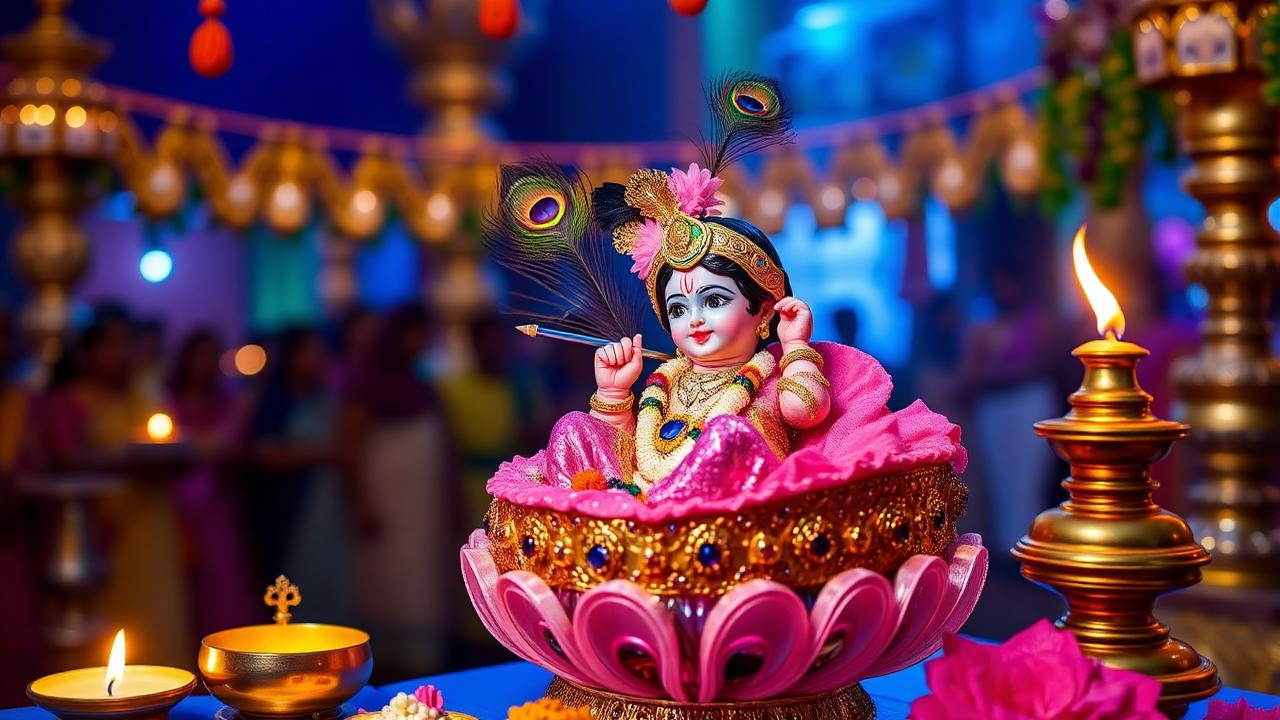
What Is Vikram Samvat?
Vikram Samvat is the most widely used traditional Hindu calendar in North India, Gujarat and Nepal. It runs approximately 57 years ahead of the Common Era: when the English calendar reads 2026, the Vikram Samvat year is 2082-2083 (the Hindu year changes in March-April, not on 1 January, so the two overlap). Every panchang you see in a temple, every wedding card that prints a tithi, every festival date your grandmother remembers is rooted in this calendar. Vikram Samvat is a lunisolar calendar: its months follow the phases of the Moon, while periodic corrections keep it aligned with the solar year and the seasons. For a devotee, knowing how it works is practical literacy - it explains why Diwali moves around October-November, why Ekadashi falls twice a month, and how to plan vrats with confidence using a tool like the Vandnaa Panchang.
The King Vikramaditya Origin
Tradition traces the calendar to the legendary King Vikramaditya of Ujjain. The story tells that around 57 BCE he won a great victory over the Shaka invaders, and to mark the liberation he began a new era - the Vikram Samvat - in his name. Ujjain, his capital, was already one of ancient India's great centres of astronomy and timekeeping; the city sits near the line Indian astronomers used as their prime meridian, and the Mahakaleshwar Jyotirlinga there is associated with Shiva as Mahakala, the Lord of Time itself. Whether one reads the king as precise history or as cherished tradition, the calendar named for him has continuously ordered Hindu religious life for over two thousand years. It remains the official calendar of Nepal and the living calendar of countless North Indian and Gujarati households, which still note a child's birth, a wedding and every festival by its samvat year and tithi.
How the Lunisolar System Works
A purely lunar year of 12 moon-cycles lasts about 354 days - roughly 11 days shorter than the solar year of about 365 days that drives the seasons. If nothing corrected this gap, festivals would drift backwards through the seasons, and a harvest festival would eventually fall in summer. The Hindu calendar solves this elegantly. Months follow the Moon: each month runs one full cycle from new moon to new moon (the amanta system used in the south and west) or full moon to full moon (the purnimanta system common in the north). Then, roughly once every 32-33 months, an extra month called Adhik Maas (or Purushottam Maas) is inserted to absorb the accumulated difference. This keeps every festival anchored to its season: Holi always announces spring, Diwali always arrives after the harvest. The result is a calendar that honours both the Moon that shapes tithis and vrats, and the Sun that shapes the seasons.
The 12 Months - Chaitra to Phalguna
The Vikram Samvat year unfolds through twelve months, each named after the nakshatra near which the full moon of that month rises: 1. Chaitra (March-April) - the new year month; Chaitra Navratri and Ram Navami. 2. Vaishakha (April-May) - Akshaya Tritiya, Buddha Purnima. 3. Jyeshtha (May-June) - Ganga Dussehra, Nirjala Ekadashi. 4. Ashadha (June-July) - Jagannath Rath Yatra, Devshayani Ekadashi, Guru Purnima. 5. Shravana (July-August) - the month of Shiva; Sawan somvar vrats, Raksha Bandhan. 6. Bhadrapada (August-September) - Janmashtami, Ganesh Chaturthi. 7. Ashwin (September-October) - Shardiya Navratri, Dussehra, Sharad Purnima. 8. Kartik (October-November) - Diwali, Govardhan Puja, Dev Uthani Ekadashi. 9. Margashirsha (November-December) - praised by Krishna in the Gita. 10. Pausha (December-January) - quiet devotion, Makar Sankranti at its edge. 11. Magha (January-February) - Magh snan, Vasant Panchami. 12. Phalguna (February-March) - Mahashivratri and Holi close the year.
Why the New Year Falls on Chaitra Shukla Pratipada
The Vikram Samvat new year begins on Chaitra Shukla Pratipada - the first tithi of the bright fortnight of Chaitra, falling in March-April. Tradition holds that on this very day Brahma began the creation of the universe, which is why it is celebrated as a day of pure beginnings: as Gudi Padwa in Maharashtra, Ugadi in Andhra Pradesh, Telangana and Karnataka, and Navreh in Kashmir. It also opens Chaitra Navratri, nine nights of Devi worship that culminate in Ram Navami. Nature itself agrees with the timing - spring is in full bloom, the harvest of rabi crops nears, and the world feels newly made. One regional variation is worth knowing: in Gujarat, the new samvat year traditionally begins on Kartik Shukla Pratipada, the day after Diwali, which is why Gujarati families perform Chopda Pujan of new account books at Diwali and greet each other with Nutan Varshabhinandan the next morning.
Vikram Samvat vs Shaka Samvat
India's tradition holds two great eras, and devotees often see both printed on panchangs. Vikram Samvat begins in 57 BCE and is about 57 years ahead of the CE year. Shaka Samvat begins in 78 CE and is about 78 years behind the CE year - so in 2026 CE, the Vikram year is 2082-2083 while the Shaka year is 1947-1948. The Shaka era, associated by tradition with the Shaka rulers and later refined by astronomers like Varahamihira, became the basis of classical Indian astronomy texts. In 1957 the Government of India adopted a reformed Shaka calendar as the official Indian national calendar, which is why All India Radio and government gazettes announce Shaka dates. In daily religious life, however, Vikram Samvat dominates the north and west, while southern traditions follow their own solar and lunisolar reckonings. Both eras count the same tithis and festivals; only the year-number differs.
Why Festival Dates Shift on the Gregorian Calendar
Every year, families ask the same question: 'When is Diwali this time?' The answer shifts because festivals are fixed to tithis of the Hindu lunar calendar, not to Gregorian dates. Diwali is always Kartik Amavasya; Janmashtami is always Bhadrapada Krishna Ashtami; Ram Navami is always Chaitra Shukla Navami. Since the lunar year is about 11 days shorter than the solar year, each festival arrives roughly 11 days earlier on the English calendar than the previous year - until an Adhik Maas pushes it back about 19 days, keeping it within its season. So Diwali wanders between mid-October and mid-November but never leaves autumn. For a devotee, the practical takeaway is simple: never assume last year's date. Check the current year's panchang - the Vandnaa Panchang lists every major festival, Ekadashi and sankranti for your location - and plan your vrat, fast-breaking parana and family gatherings from there.
What People Ask Most
What year is Vikram Samvat in 2026?+
In 2026 CE, the Vikram Samvat year is 2082 until Chaitra Shukla Pratipada (March 2026), after which Vikram Samvat 2083 begins. The Hindu year changes in March-April, not on 1 January, which is why a single English year overlaps two samvat years.
Why is Vikram Samvat 57 years ahead of the English calendar?+
Tradition holds that King Vikramaditya of Ujjain started the era in 57 BCE to commemorate his victory over the Shaka invaders. Counting from that starting point, the samvat year number is always about 57 ahead of the Common Era year.
What are the 12 months of the Hindu calendar in order?+
Chaitra, Vaishakha, Jyeshtha, Ashadha, Shravana, Bhadrapada, Ashwin, Kartik, Margashirsha, Pausha, Magha and Phalguna. Chaitra (March-April) opens the year and Phalguna (February-March) closes it with Mahashivratri and Holi.
What is the difference between Vikram Samvat and Shaka Samvat?+
Vikram Samvat starts in 57 BCE and runs about 57 years ahead of CE; Shaka Samvat starts in 78 CE and runs about 78 years behind CE. Both follow the same tithis and festivals - only the year count differs. A reformed Shaka calendar is India's official national calendar, while Vikram Samvat dominates religious life in North and West India.
Why does the Gujarati new year fall after Diwali?+
Gujarat follows the Kartik-adi tradition, in which the samvat year begins on Kartik Shukla Pratipada, the day after Diwali, rather than in Chaitra. This is why Gujarati families perform Chopda Pujan of new account books on Diwali and celebrate Bestu Varas (new year) the next morning.
Why do Hindu festival dates change every year?+
Festivals are fixed to lunar tithis, and the lunar year is about 11 days shorter than the solar year. So each festival arrives roughly 11 days earlier each English year, until an Adhik Maas resets the drift. The tithi never changes - only its Gregorian date does. Check the current panchang each year rather than relying on last year's date.
About the author
Anjali Mehta · Editor, M.A. Religious Studies
Anjali is the managing editor for Vandnaa and oversees the festival and vrat coverage. She holds an M.A. in Religious Studies and reviews every published article for accuracy, accessibility, and tradition-fidelity.
Meet the Vandnaa editorial team →