What Is Vishu?
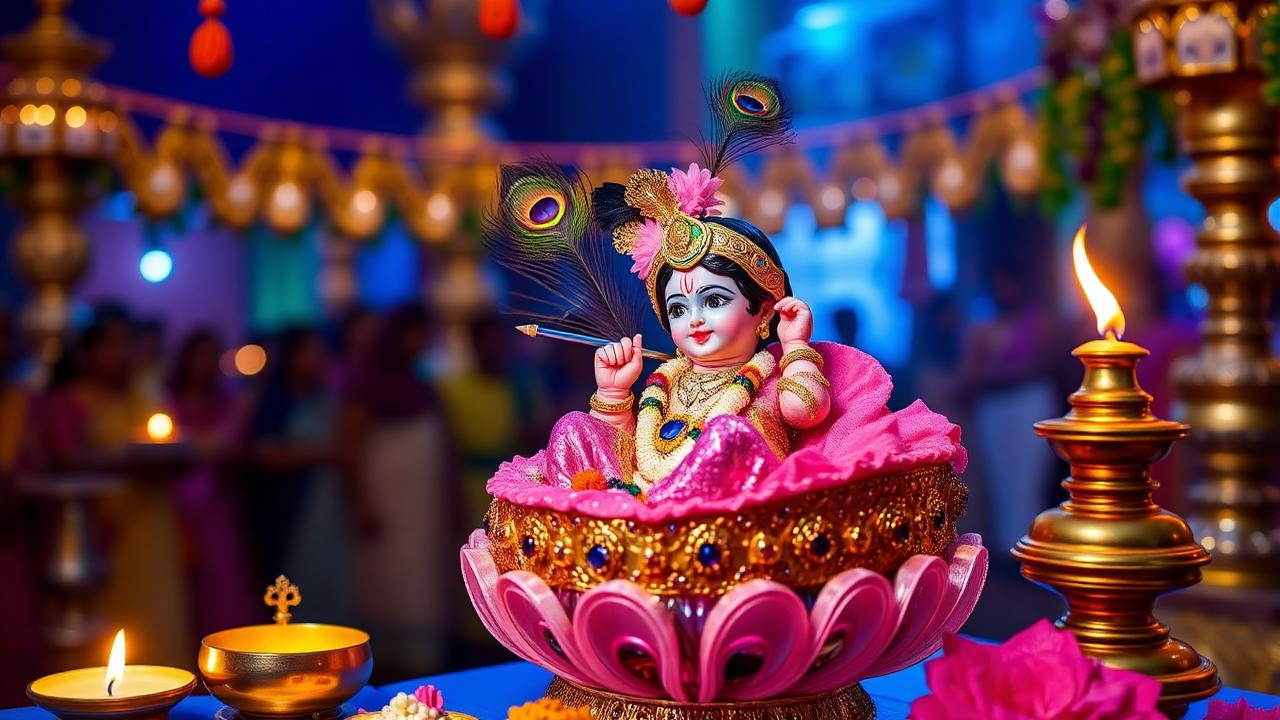
Vishu is Kerala's traditional new year, celebrated on Mesha Sankranti - the day the Sun enters Mesha (Aries) according to the sidereal solar calendar, falling around mid-April every year, with Vishu 2027 arriving in that same period. Confirm the exact day on the Vandnaa Panchang. The word Vishu derives from the Sanskrit Vishuvam, meaning equal - a memory of the time when the festival aligned with the equinox, when day and night stand in balance. For Malayalis, Vishu marks the agricultural new year, the start of a fresh cycle of sowing and hope. But above all, it is a festival of Krishna bhakti: the entire day is designed so that the very first thing your eyes fall upon in the new year is the face of Lord Krishna, surrounded by golden abundance. How you begin, Kerala believes, shapes how the whole year unfolds.
Vishu 2027 - Timing and the Sankranti Connection
Unlike the lunar festivals of Chaitra, Vishu follows the solar calendar: it falls on the first day of the Malayalam month of Medam, when the Sun makes its sankramana (transit) into Mesha. This is the same Mesha Sankranti observed across India under different names, arriving around April 14-15 - though the precise day and the auspicious kani viewing time should be confirmed on the Vandnaa Panchang for 2027. The most important timing of Vishu is the Brahma Muhurta of Vishu morning, roughly between 4 and 6 am, when the Vishukkani is viewed. The kani is arranged the previous night, usually by the mother or eldest woman of the house, in the puja room before the lamp. Temples across Kerala, led by Guruvayur and Sabarimala, open their kani darshan in these same sacred pre-dawn hours, with queues forming from midnight.
The Vishukkani - The Complete List of Items
Kani means 'that which is seen first', and the Vishukkani is a carefully composed scene of auspiciousness. The traditional items are: 1. A murti or picture of Lord Krishna (often as Balagopala or Guruvayurappan) 2. The uruli - a wide bell-metal vessel that holds the arrangement 3. Konna flowers (Cassia fistula, the golden shower) - Kerala's golden Vishu flower 4. Raw rice and paddy - food security for the year 5. Golden cucumber (kani vellari), coconut, jackfruit, mango and banana - the season's harvest 6. Gold ornaments and coins or currency - wealth and Lakshmi's grace 7. A kasavu mundu (cream and gold cloth) draped in folds 8. A val-kannadi - the traditional handheld mirror 9. The nilavilakku - the lit bell-metal lamp 10. A holy text such as the Bhagavad Gita or a grantha Betel leaves, areca nut, halved coconuts with oil lamps, and kumkum-chandanam complete the kani.
How to Arrange and View the Vishukkani
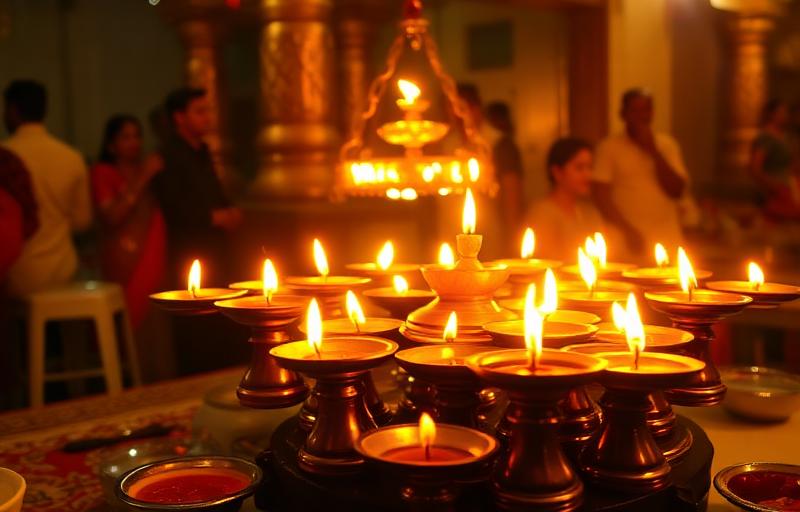
Arrange the kani on Vishu eve, after sunset, in the puja room facing east where possible. Place Krishna at the centre and highest point, the uruli before him filled with rice, then layer the vegetables, fruits, gold, cloth and mirror around it, scattering konna flowers generously over everything - their gold is said to be Krishna's own colour. Light the nilavilakku just before viewing time. On Vishu morning, the eldest member rises in Brahma Muhurta, views the kani first, then leads each family member - eyes closed - from their beds to the puja room, opening their eyes only before the kani. The mirror in the arrangement holds the loveliest meaning: as you gaze at Krishna and the golden abundance, you also see your own face among them - a gentle teaching that you too belong to this auspiciousness, that the divine prosperity you seek already contains you. The kani is later shown to the cattle and even the trees of the house.
Vishukkaineetam and the Vishu Sadya
After the kani darshan comes Vishukkaineetam, Kerala's tender tradition of blessing through giving. Elders place coins or notes into the palms of children and younger family members - and in many homes, into the hands of household helpers and neighbours too - as the year's first act of generosity. The teaching is simple and profound: begin the year by giving, not acquiring, and prosperity will flow through open hands. Children eagerly await their kaineetam, often saving the coins as Krishna's blessing. Firecrackers (Vishu padakkam) greet the dawn in many homes. Later comes the Vishu sadya, the festive feast on banana leaf, featuring seasonal specialities: Vishu kanji (rice gruel), thoran, mampazha pulissery (ripe mango curry), Vishu katta (rice and coconut-milk pudding) and payasam. The sadya balances all six tastes - sweet, sour, salty, bitter, pungent, astringent - a reminder that the new year, like the leaf before you, will hold every flavour of life.
Krishna Devotion at Guruvayur on Vishu
No place expresses the Krishna-heart of Vishu like the Guruvayur Sri Krishna Temple, the Bhuloka Vaikuntha (Vaikuntha on earth) of Kerala. On Vishu, lakhs of devotees queue from the previous night for the Vishukkani darshan of Guruvayurappan, when the Lord himself becomes the kani - adorned in gold, framed by konna flowers, mountains of fruits, grain and gleaming lamps. Devotees believe that beginning the year with the face of Guruvayurappan secures his grace over all twelve months that follow. The temple's kani items are later distributed, and the day continues with special poojas and the chanting of Narayaneeyam, the beloved hymn composed by Melpathur Narayana Bhattathiri at this very shrine. Families who cannot reach Guruvayur keep a picture of Guruvayurappan in their home kani, joining the temple in spirit. Sabarimala, too, holds a famed Vishukkani for Lord Ayyappa, and across Kerala every temple glows before dawn.
Regional Parallels - One Sun, Many New Years
Vishu belongs to a beautiful family of solar new-year festivals celebrated across India in mid-April, all tied to the same Mesha Sankranti: 1. Puthandu (Tamil Nadu): the Tamil new year, where families view an auspicious tray of fruits, gold and mirror much like the kani, and share the sweet-sour-bitter mango pachadi 2. Bohag Bihu (Assam): the joyous Rongali Bihu of feasting, bihu dance and honouring cattle, opening the Assamese year 3. Pohela Boishakh (Bengal): the Bengali new year of new account books (haal khata), sweets and Esho he Boishakh songs Punjab's Baisakhi and Odisha's Pana Sankranti join the same chorus. The lesson is moving: one Sun crosses one point in the sky, and a dozen cultures greet it in their own tongue, with their own sweets and songs - many rivers, one ocean of gratitude. Vishu is Kerala's golden verse in that shared hymn.
Frequently Asked Questions
When is Vishu 2027?+
Vishu falls on Mesha Sankranti, the day the Sun enters Mesha, marking the first day of the Malayalam month of Medam. It arrives around mid-April each year, and Vishu 2027 falls in the same period. Confirm the exact date and the auspicious kani viewing time on the Vandnaa Panchang.
What items are needed for the Vishukkani?+
The essential items are a Krishna murti or picture, an uruli with raw rice, konna (golden shower) flowers, golden cucumber, coconut, jackfruit, mango and banana, gold ornaments, coins or currency, a kasavu mundu cloth, a val-kannadi mirror, a lit nilavilakku lamp and a holy text like the Bhagavad Gita, completed with betel leaves and areca nut.
Why is there a mirror in the Vishukkani?+
The val-kannadi mirror carries the kani's most beautiful teaching: as you view Krishna surrounded by golden abundance, you also see your own face within the arrangement. It gently reminds you that you belong to this auspiciousness - the divine prosperity you pray for already includes you, and the new year's blessings begin within.
What is Vishukkaineetam?+
Vishukkaineetam is the Vishu tradition in which elders place coins or money into the palms of children, younger family members, and often household helpers and neighbours, as the year's first act of giving. It teaches that the year should begin with generosity, not acquisition, so that prosperity keeps flowing through open hands.
What is special about Vishu at Guruvayur Temple?+
At Guruvayur, Lord Guruvayurappan himself becomes the Vishukkani - adorned in gold amid konna flowers, fruits, grain and lamps. Lakhs of devotees queue from the previous night for this pre-dawn darshan, believing that beginning the year with the Lord's face secures his grace for all twelve months. The day continues with special poojas and Narayaneeyam chanting.
How is Vishu related to Puthandu, Bohag Bihu and Pohela Boishakh?+
All four are solar new-year festivals tied to Mesha Sankranti in mid-April. Puthandu is the Tamil new year with its own auspicious first-sight tray, Bohag Bihu opens the Assamese year with feasting and bihu dance, and Pohela Boishakh begins the Bengali year with new account books and sweets. Vishu is Kerala's expression of the same shared solar moment.
About the author
Pandit Mahesh Trivedi · Festival Traditions & Panchang
Pandit Mahesh leads the festival-date and Panchang content on Vandnaa. He cross-references multiple regional panchangs (Drik, Vaishnava, Bengali, Marathi) for every festival date published on the site.
Meet the Vandnaa editorial team →