What Is Vivah Sanskar
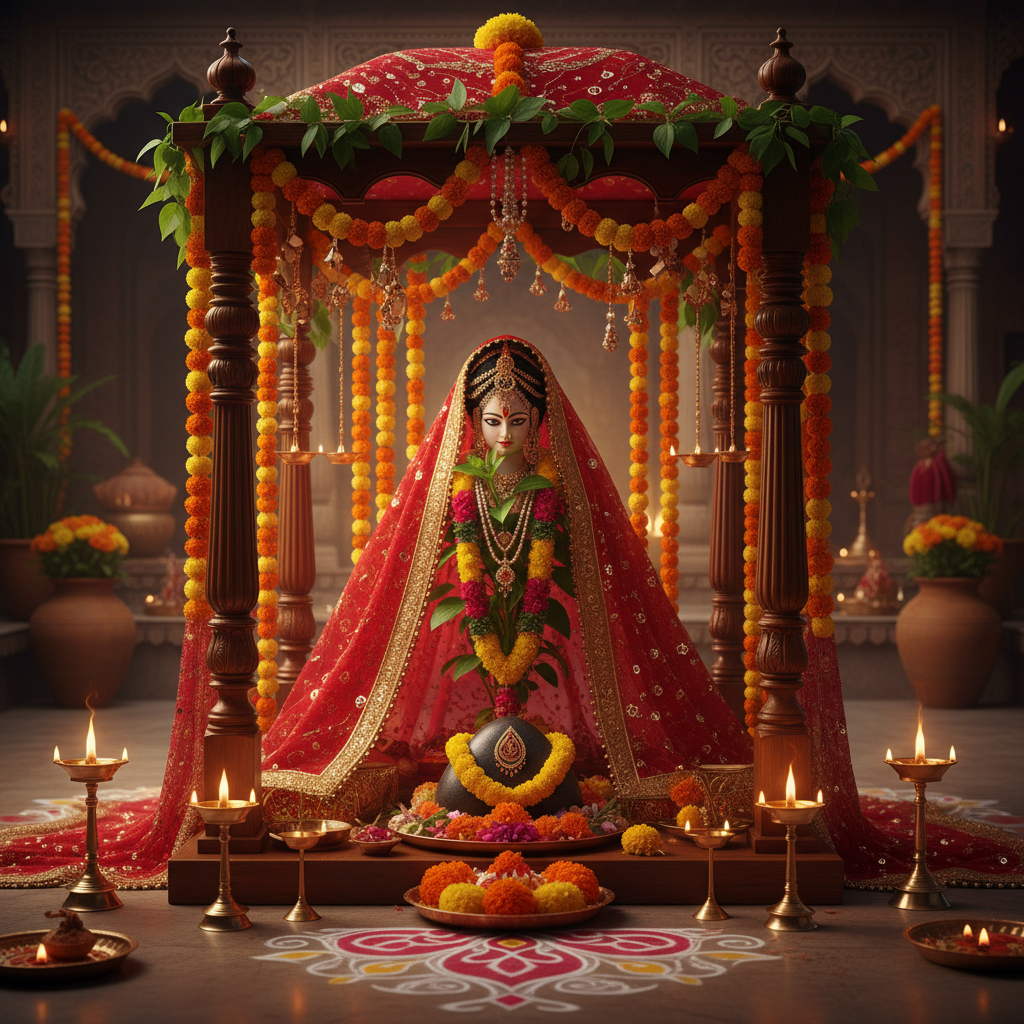
Vivah, the thirteenth of the sixteen samskaras, is the sacred rite of marriage that unites two individuals not merely as partners in worldly life but as companions bound to walk the path of dharma together. Unlike a purely social contract, Hindu tradition regards vivah as a sacred bond witnessed by Agni, the sacred fire, and sealed with vows exchanged before family, priest and the divine.
The ceremony draws on rituals refined over centuries, each step carrying its own meaning, from the arrival of the groom to the final blessing of elders. Though customs vary widely by region, community and language, the devotional heart of vivah, that two souls are joining in a sacred, lifelong commitment, remains the same across India.
Origin in Vedic Tradition
References to marriage rites appear across the Vedas and Grihya Sutras, which describe the union of Surya's daughter as an early model for vivah, and lay out the sequence of vows and offerings that later became the template for Hindu weddings. The Rigveda's wedding hymns, still recited in some form today, ask for a long, harmonious life together, mutual respect and children who honour dharma.
Over centuries, regional cultures added their own beautiful customs, songs, colours and foods, layered onto this common Vedic core, so that a wedding in Kerala and a wedding in Punjab, though visibly different, still carry the same devotional structure of vows before the sacred fire.
Key Rituals and Their Meaning
Every major Hindu wedding ritual carries symbolic weight:
- Kanyadaan - the giving away of the daughter by her parents, regarded as one of the most sacred gifts a family can offer
- Panigrahan - the groom holding the bride's hand, accepting her as his partner in dharma
- Saptapadi - the seven steps taken together around the sacred fire, each step a vow, for nourishment, strength, prosperity, happiness, progeny, health and lifelong friendship
- Mangalsutra and Sindoor - symbols placed on the bride marking her married status, worn as a daily reminder of the sacred bond
- Agni Sakshi - the fire itself stands as witness to every vow exchanged
Of all these, Saptapadi is often considered the moment the marriage is truly sealed, since tradition holds that a couple is bound as husband and wife only after completing the seven steps together.
Significance for Devotees
As per tradition, vivah is not viewed as the end of individual life but the beginning of a shared spiritual journey, the grihastha ashrama, or householder stage, considered essential to a balanced life alongside study, retreat and renunciation. Devotees believe that a marriage grounded in mutual respect and shared devotion becomes a support system for both partners' spiritual growth, not merely a domestic arrangement.
Many couples continue to worship together after marriage, visiting temples, observing fasts like Karva Chauth or Teej, and performing pujas as a pair, treating their bond itself as a form of shared devotion to the divine.
A Devotional Takeaway
Vivah reminds devotees that love, when placed within a devotional frame, becomes a shared spiritual path rather than just a personal choice. The vow chanted during Saptapadi, Sakha Saptapadi Bhava (may we become friends through these seven steps), captures the heart of Hindu marriage: partnership built on companionship as much as commitment.
This sanskar, like all others, is ultimately an act of faith and love, not a transaction, a family's way of blessing two lives as they begin their shared journey through dharma together.
Frequently Asked Questions
What is the significance of Saptapadi in a Hindu wedding?+
Saptapadi, the seven steps taken together around the sacred fire, is traditionally regarded as the moment a couple is truly bound as husband and wife, each step representing a vow for a shared life.
Why is Agni considered a witness in Hindu marriage?+
Agni, the sacred fire, is regarded in tradition as a pure and eternal witness before whom the couple exchanges vows, symbolising that the marriage is sanctified by the divine.
What does Kanyadaan symbolize?+
Kanyadaan symbolizes parents entrusting their daughter's wellbeing to her new life partner, considered one of the most sacred and selfless gifts a family can offer.
About the author
Anjali Mehta · Editor, M.A. Religious Studies
Anjali is the managing editor for Vandnaa and oversees the festival and vrat coverage. She holds an M.A. in Religious Studies and reviews every published article for accuracy, accessibility, and tradition-fidelity.
Meet the Vandnaa editorial team →