What Ekadashi Is on the Hindu Calendar
Ekadashi refers to the eleventh tithi, or lunar day, counted from each new moon and each full moon. Since a lunar month has two fortnights, or pakshas, a shukla paksha (waxing) and a krishna paksha (waning), there are two Ekadashis every lunar month, adding up to roughly 24 in a typical year. In years with an adhik maas, an extra intercalary month added to keep the lunar and solar calendars aligned, there can be as many as 26.
Each Ekadashi in the Hindu year has its own name and its own associated story, often tied to a specific month or season. Nirjala Ekadashi, observed without even water, falls in the month of Jyeshtha and is considered the most rigorous of all. Devshayani Ekadashi marks the beginning of Chaturmas, when Vishnu is traditionally believed to go into cosmic sleep, while Dev Uthani Ekadashi, months later, marks his waking. Each of these carries distinct customs, but the underlying practice, abstaining from certain foods and observing the day with devotion, remains consistent across all of them.
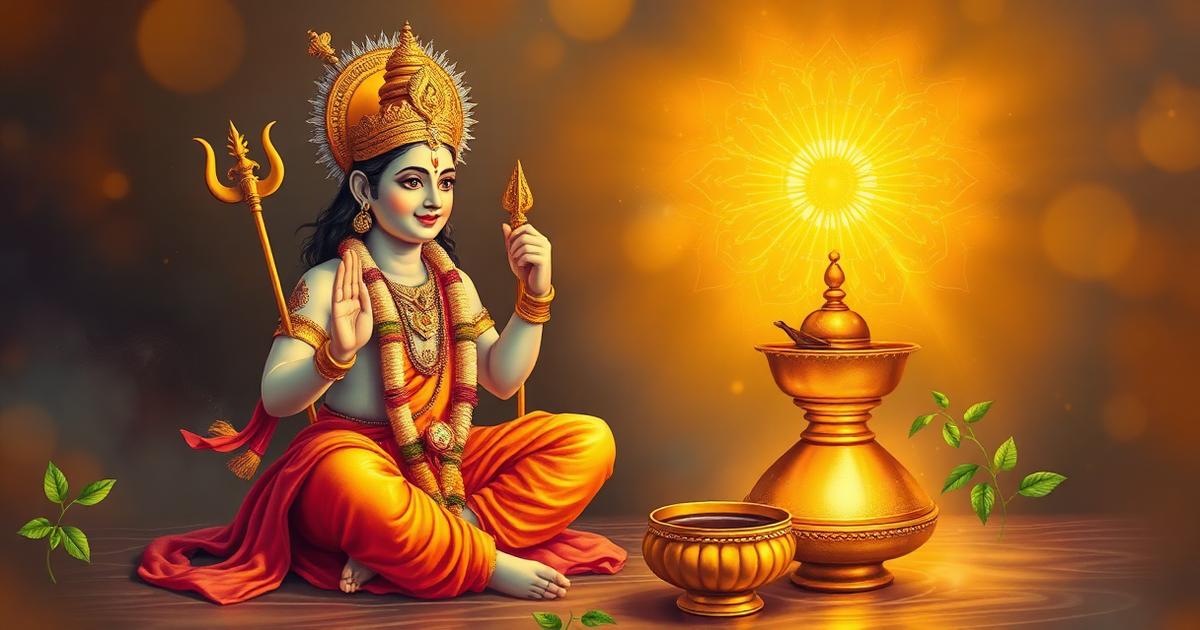
What unites every Ekadashi, regardless of season or specific legend, is its dedication to Lord Vishnu. Devotees observe the day with prayer, reading or listening to the relevant katha, and a fast whose strictness varies by individual capacity, health and family tradition, ranging from a complete nirjala fast to simply avoiding rice and grains for the day.
Because Ekadashi is a tithi rather than a fixed weekday, its Gregorian date shifts each month along with the rest of the lunar calendar, which is why devotees typically check a panchang or a trusted app rather than memorizing a repeating date. Temples dedicated to Vishnu, including major pilgrimage sites, often see a noticeable rise in footfall on Ekadashi days, particularly Nirjala Ekadashi and Dev Uthani Ekadashi, when the day's significance is considered especially heightened.
The Story Behind the Vrat
According to the Padma Purana and Brahmavaivarta Purana, Ekadashi's origin is tied to a demon named Mura, who had grown powerful enough to trouble even the devas. When Vishnu battled Mura and grew fatigued, he retreated into a cave to rest. A radiant, powerful feminine force emerged from Vishnu's own being while he slept, and it was this force, personified as the goddess Ekadashi, who confronted and destroyed Mura while Vishnu rested.
Pleased and grateful, Vishnu offered Ekadashi Devi a boon. She asked to be remembered and honored on the earth, in a form that would allow ordinary devotees to draw close to Vishnu through her. Vishnu granted that any devotee who observed a sincere fast on the tithi bearing her name would be freed from accumulated sin and draw closer to moksha, liberation from the cycle of rebirth.
This legend is why Ekadashi fasting is fundamentally an act of bhakti, devotional surrender to Vishnu, rather than a purely disciplinary exercise. Devotees observing the vrat typically spend part of the day in prayer, reading the specific katha associated with that month's Ekadashi, and consciously avoiding not just certain foods but also anger, gossip and other behaviors considered inconsistent with a day meant for spiritual focus. The fast is only one visible part of a broader intention to dedicate the day to Vishnu.
Different Puranas and regional oral traditions add their own variations to this core story, and some Vaishnav lineages emphasize different episodes for different Ekadashis across the year, each carrying its own moral lesson alongside the shared devotional purpose. What remains constant across these retellings is the basic structure: a devotee's restraint on this day is understood as a direct offering to Vishnu, not a private wellness routine borrowed later for a spiritual label.
The Traditional Reasoning: The Moon's Pull on Mind and Body
Beyond the Puranic legend, Hindu tradition offers a second, complementary line of reasoning for why the eleventh tithi specifically was chosen for fasting. Ekadashi falls roughly midway between the new moon and full moon in each fortnight, close to the period when the moon's gravitational influence is building toward its peak. Traditional thought, echoed in Ayurveda, holds that the moon affects fluids broadly, not just ocean tides, including the fluid balance within the human body and the state of the mind.
This is the same underlying logic traditionally offered for why amavasya (new moon) and purnima (full moon) are treated as spiritually significant days across Hindu practice, often associated with heightened emotional sensitivity or restlessness. Ekadashi, arriving a few days before each of these lunar extremes, is traditionally viewed as an ideal moment to prepare the body and mind through lightness and restraint, rather than waiting until the more intense lunar day itself.
It is worth being clear about what kind of claim this is. The idea that the moon measurably affects the human body in this specific way is a traditional and Ayurvedic belief, not one confirmed by rigorous modern clinical research, and readers should hold it as such, an old and internally consistent framework of understanding rather than an established scientific fact. What tradition intuited, though, was a pattern worth taking seriously on its own terms: a regularly repeating day set aside for lightness, roughly twice a month, tied to a natural, observable cycle everyone could track without a clock or calendar.
What Modern Research Says About Periodic Fasting
Separate from tradition, a genuine and active area of modern research looks at periodic and intermittent fasting, and some of its findings line up interestingly with what Ekadashi has practiced for centuries. Giving the digestive system a scheduled break, roughly twice a month in Ekadashi's case, is a pattern that modern nutrition science recognizes as plausible for supporting digestive rest and metabolic regulation, without needing to overstate the claim into something it isn't.
Research into autophagy, the cellular process by which the body clears out and recycles damaged components, gained significant scientific attention after the 2016 Nobel Prize in Physiology or Medicine was awarded for work explaining its mechanisms. Fasting periods are one of the triggers studied in connection with autophagy, alongside other factors like exercise and sleep, and periodic fasting more broadly has been studied for potential effects on insulin sensitivity and inflammation markers in various populations.
It is important to be precise here rather than overclaiming. These are active, evolving areas of research, not settled medical consensus, and grain-avoidance style fasting as commonly practiced on Ekadashi is different from the specific fasting protocols used in most published studies. Ekadashi fasting was never designed as a clinical intervention, and it should not be treated as a substitute for medical advice, particularly for people managing diabetes, pregnancy, or other conditions where fasting needs individualized guidance from a doctor.
What is fair to say is this: a tradition built centuries ago around devotion and lunar observance happened to also encode a rhythm, periodic digestive rest, that contemporary nutrition research finds independently worth studying. That overlap is worth noting honestly, without either dismissing the science or overselling the ritual as medicine.
How the Fast Is Actually Observed
Ekadashi fasting is not a single uniform practice, and understanding its range matters for anyone curious about how it actually works day to day. Broadly, three levels of observance are common:
- Nirjala - the strictest form, avoiding even water, traditionally most associated with Nirjala Ekadashi in the month of Jyeshtha, and popularly linked to Bhima from the Mahabharata, who is said to have observed only this one Ekadashi each year due to his difficulty fasting otherwise
- Phalahari - a fruit-based fast, permitting fruits, milk, nuts and specific flours like kuttu (buckwheat) or singhara (water chestnut), while avoiding rice, wheat, lentils and regular grains
- Grain avoidance only - the most accessible version, simply avoiding rice, wheat and grains for the day while eating otherwise normally, common among people balancing the observance with work or health needs
Foods commonly eaten during a phalahari-style Ekadashi include sabudana khichdi, kuttu ka atta preparations, fruits, yogurt and specific nuts, all chosen because they fall outside the category of grains the fast is meant to avoid.
The fast is formally closed the next day, Dwadashi, during a specific window known as Parana, generally to be completed after sunrise and before a particular cutoff time determined by the tithi's timing that year. Breaking the fast too early, before Dwadashi begins, or too late, after the Parana window closes, is traditionally considered to diminish the merit of the observance, which is why devoted households often check a panchang or trusted local source for the correct Parana timing each month rather than guessing.
Where the Two Explanations Meet
It would be a mistake to treat the devotional and the practical explanations for Ekadashi as competing with each other. Tradition never framed the fast primarily as a health intervention, its stated purpose has always been devotion to Vishnu and the resulting spiritual merit, and that purpose stands on its own regardless of anything modern research eventually finds. At the same time, it is genuinely interesting, not contradictory, that a practice built entirely around lunar timing and bhakti happens to also give the body a periodic reset that contemporary science finds worth studying independently.
This is common across many long-standing Hindu practices: a ritual observed for spiritual reasons frequently carries embedded practical wisdom, refined by generations of lived experience even without formal clinical trials to back it at the time. Ekadashi's twice-monthly rhythm gave households a built-in, socially reinforced structure for dietary discipline long before the language of "intermittent fasting" existed, and it did so wrapped in story, devotion and community observance rather than as an isolated dietary rule, which likely helped it stick for centuries in a way an isolated health tip rarely does.
For a devotee today, this means the two explanations do not need to be reconciled or chosen between. Someone can observe Ekadashi purely out of faith in Vishnu, purely because it happens to suit their body well, or, as is true for most practicing Hindus, for both reasons woven together without needing to separate them.
✨ Vandnaa's daily panchang view shows you every upcoming Ekadashi so you never have to guess the date or the Parana timing.
Frequently Asked Questions
Do all Hindus fast strictly (nirjala) on every Ekadashi?+
No, strictness varies widely by individual, health and family tradition. Many devotees follow a phalahari (fruit-based) fast or simply avoid grains, reserving a full nirjala fast for specific Ekadashis like the one in Jyeshtha month.
Why is rice specifically avoided on Ekadashi?+
Tradition holds that grains, especially rice, are considered heavier and are linked in Puranic legend to sage Medhatithi, whose meditation was disturbed by Mura's demon form said to reside within grains on this day. Devotees avoid grains out of respect for this belief.
What happens if someone misses an Ekadashi fast?+
There is no punitive consequence in tradition. Devotees who miss a fast due to health, travel or circumstance are simply encouraged to observe the next one with sincerity, since the intent behind the vrat matters more than a perfect unbroken record.
Is Ekadashi fasting safe for everyone, including diabetics or pregnant women?+
Not automatically. People managing diabetes, pregnancy or other health conditions should consult a doctor before fasting, and many such individuals adapt the observance, following a lighter version rather than a strict fast, which is widely accepted in practice.
How many Ekadashis are there in a year?+
There are typically 24 Ekadashis in a standard lunar year, two in each of the twelve months. In years with an adhik maas (leap month), this can rise to 26.
When exactly should the Ekadashi fast be broken?+
The fast is broken the next day, Dwadashi, during the Parana window, generally after sunrise and within a specific time limit determined by that month's tithi timing. Checking a panchang for the exact window is recommended rather than estimating.
About the author
Pandit Mahesh Trivedi · Festival Traditions & Panchang
Pandit Mahesh leads the festival-date and Panchang content on Vandnaa. He cross-references multiple regional panchangs (Drik, Vaishnava, Bengali, Marathi) for every festival date published on the site.
Meet the Vandnaa editorial team →Explore on Vandnaa
Related Articles

Dincharya: Structuring a Hindu Daily Spiritual Routine From Sunrise to Sleep
7 min read

Gayatri Mantra Meaning, Benefits & How to Chant (गायत्री मंत्र)
12 min read
Lunar vs Solar: How the Hindu Calendar Actually Works
7 min read
Why Hindu Festival Dates Change Every Year: The Lunar Calendar Explained
7 min read