Lakshmi and the Lotus
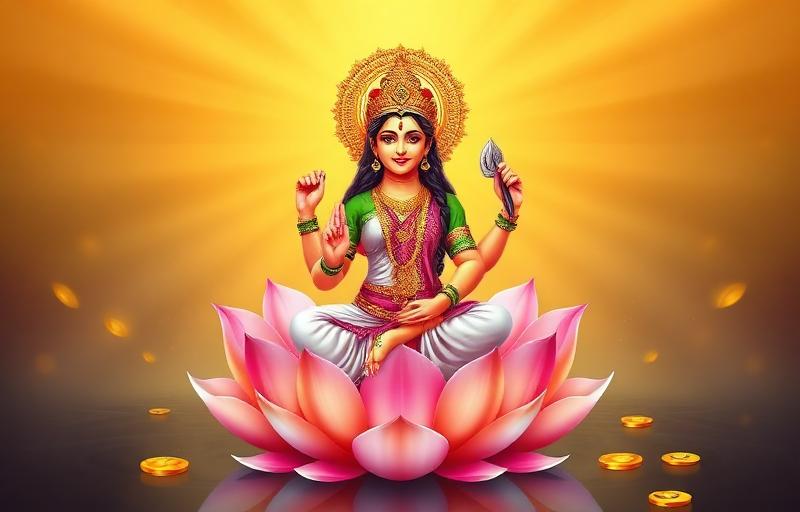
In almost every depiction, Goddess Lakshmi - the goddess of wealth, fortune and beauty - is seated upon a fully bloomed lotus (kamal). She holds lotuses in two of her hands, and lotuses often surround her in the water below. She is even called Padma and Kamala, both names meaning 'the lotus one'.
The lotus is not mere decoration. It is the single most important symbol attached to Lakshmi, and through it the tradition teaches what true prosperity really is - and how it should be held.
Purity Rising from the Mud
The lotus grows in muddy, murky water, yet its flower rises above the surface untouched and spotless. Mud and water cannot cling to its petals. This is the lotus's first great teaching: beauty and purity can rise out of the most ordinary, even unclean, surroundings.
Lakshmi seated on this flower shows that true wealth and grace are not stained by the world they appear in. Just as the lotus blooms clean above the mud, prosperity guided by dharma stays pure even amid the messiness of worldly life. The goddess reminds us that we too can live in the world's mud and still keep our heart unstained.
The Lotus and Detachment
Water rolls off a lotus leaf without wetting it. From this comes a famous ideal in Hindu scripture, including the Bhagavad Gita, of living like the lotus leaf - in the water but untouched by it. This is the spirit of anasakti, detachment.
Lakshmi on the lotus teaches that wealth should be held, not clung to. We may live amid abundance, use it, and serve with it, yet not let it wet and weigh down the soul. The moment we grasp wealth with greed, it stains us; held with the lotus's detachment, it stays pure and even becomes a means of service. This is why Lakshmi is said to leave those who hoard with arrogance and stay where wealth is shared with humility.
The Lotus and True Prosperity
The lotus carries still more meaning that completes the picture of Lakshmi:
- Unfolding and growth: A lotus opens petal by petal toward the sun. It symbolises the gradual blossoming of prosperity, beauty and the soul's potential.
- Spiritual abundance: Lakshmi is not only material wealth (dhana) but also the inner riches - devotion, virtue, peace and grace. The lotus reminds us that true Lakshmi includes both.
- Auspiciousness and fertility: The full-blooming lotus stands for life, fortune and the fullness of creation, which is why it surrounds the giver of all good fortune.
So when we see Lakshmi on the lotus, the image is a quiet instruction: seek prosperity, but keep it pure, hold it with detachment, share it with grace, and let it blossom into something higher than mere riches.
What People Ask Most
Why is Goddess Lakshmi always shown on a lotus?+
The lotus symbolises purity rising spotless from muddy water, detachment, and the blossoming of prosperity. Lakshmi on the lotus teaches that true wealth stays pure and is held with detachment, not greed. She is even called Padma and Kamala, meaning 'the lotus one'.
What does the lotus rising from mud teach us?+
It teaches that beauty and purity can rise out of the most ordinary or even unclean surroundings. Just as the lotus blooms clean above the mud, a heart guided by dharma can stay pure even amid the messiness of worldly life.
How does the lotus relate to detachment?+
Water rolls off a lotus leaf without wetting it, symbolising living in the world but untouched by it. Lakshmi on the lotus teaches that wealth should be held with detachment - used and shared, but never clung to with greed.
Why is Lakshmi called Padma or Kamala?+
Both Padma and Kamala are Sanskrit names for the lotus. Because the lotus is Lakshmi's central symbol - her seat, what she holds, and what surrounds her - she is lovingly called 'the lotus one' through these names.
About the author
Anjali Mehta · Editor, M.A. Religious Studies
Anjali is the managing editor for Vandnaa and oversees the festival and vrat coverage. She holds an M.A. in Religious Studies and reviews every published article for accuracy, accessibility, and tradition-fidelity.
Meet the Vandnaa editorial team →