The Sound and Symbol Every Prayer Begins With
Long before a mantra is spoken, a wedding starts, or a school day in many Indian homes begins, one sound is uttered first: Om. Written as ॐ, it is both a sound and a symbol, seen painted on walls, worn as a pendant, printed on invitation cards, and carved above temple doorways.
For most Hindus, Om is not just a word to pronounce but the first sound of any sacred beginning. Yoga classes across the world now open and close with it, but within Hindu tradition, Om has held this position for thousands of years, considered the most fundamental sound in creation.
What the Scriptures Say About Om
The Mandukya Upanishad, one of the shortest yet most discussed Upanishads, is devoted almost entirely to explaining Om. It describes Om as encompassing all of time, the past, present and future, and everything that exists beyond time as well. The Upanishads describe Om as pranava, the primal sound understood as the root from which all other sound and speech is said to arise.
In the Bhagavad Gita too, Krishna tells Arjuna that among words, he is Om itself, pointing to how central this single syllable is considered within Hindu thought. This is why nearly every mantra, whether to Ganesha, Shiva, Devi or Vishnu, traditionally opens with Om before the deity's name is invoked.
What the Three Curves and the Dot Represent
The written symbol of Om is generally understood to have three curved parts, a crescent, and a dot. Tradition reads the three curves as representing the states of waking, dreaming and deep sleep, the three everyday conditions of human consciousness. The dot, or bindu, is said to represent a fourth state beyond these three, a state of pure awareness often called turiya.
The crescent beneath the dot is traditionally understood to represent maya, the veil of illusion that must be crossed to reach that highest state. Some traditions also connect the three sounds within Om itself, A-U-M, to Brahma, Vishnu and Shiva, tying creation, preservation and dissolution into a single syllable.
How Om Is Chanted and Used Today

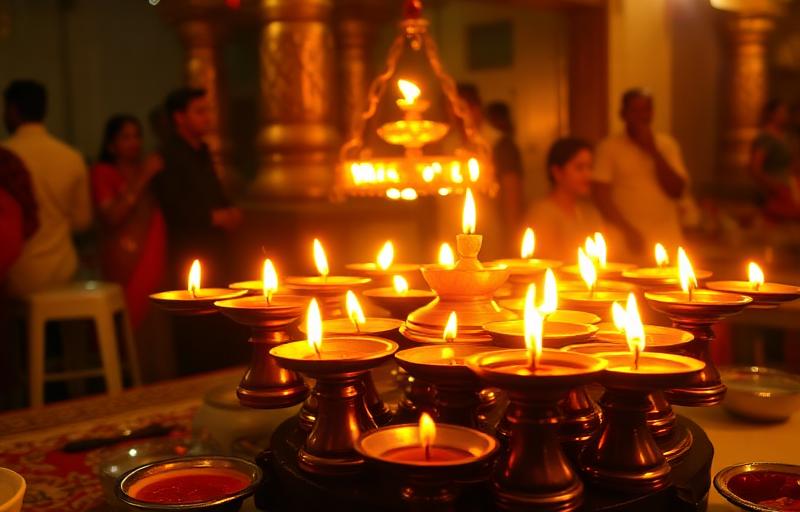
Om remains the opening sound of most Hindu prayers, aartis and mantras recited at home and in temples. It is chanted at the start of yoga and meditation sessions, inscribed on wedding cards and account books, and worn as jewellery by many who find comfort in keeping it close.
- Chanted as Om alone, slowly and with a long resonant hum, often as a practice in itself
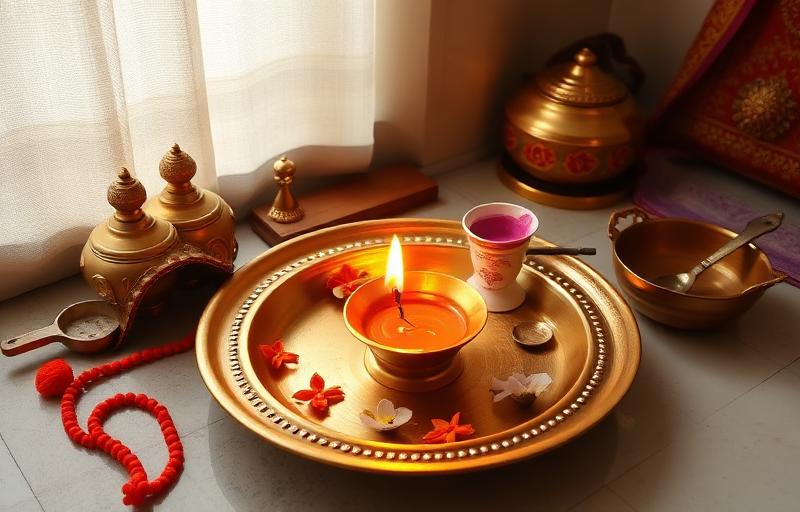
- Placed above the main door or in the puja room of many Hindu homes
- Used at the start of the Gayatri Mantra and countless other stotras
- Taught to children early, often as their first introduction to prayer
One Syllable, an Entire Tradition
Om asks nothing elaborate of a devotee, no ritual object, no fixed hour, only a breath and a sound. Perhaps that is why it has travelled so easily from ancient hermitages into modern homes, yoga studios and daily prayer alike. To chant it is to begin, in the simplest way possible, an act of faith and love, not a transaction.
Frequently Asked Questions
What does the word Om actually mean?+
Om does not translate into a single word. It is understood as the primal sound of creation itself, representing the totality of existence, consciousness and time in one syllable.
Why do most mantras begin with Om?+
Since Om is regarded as the root sound from which all other sound arises, chanting it first is traditionally believed to align the mind and voice before invoking a deity's name.
Can anyone chant Om, regardless of background?+
Yes. Om is chanted widely, including by those simply seeking calm and focus. Within Hindu practice, it is treated as a universal sound open to sincere devotees.
About the author
Acharya Vinaya Kapoor · M.A. Sanskrit, Mantra & Stotra Studies
Acharya Vinaya holds an M.A. in Sanskrit from Banaras Hindu University and writes the mantra and stotra commentary on Vandnaa. Her focus is on accurate pronunciation, traditional context, and helping modern readers connect with classical texts.
Meet the Vandnaa editorial team →