A Thread Worn as a Lifelong Vow
The janeu, also called the yagnopaveet, is a thin thread made of several twisted cotton strands, worn diagonally across the torso, over the left shoulder and under the right arm. It is traditionally given during the Upanayana, the sacred thread ceremony, a samskara historically marking a young person's entry into a phase of formal learning under a guru.
Once received, the thread is meant to be worn continuously, changed periodically rather than removed casually, and treated with the same reverence given to other sacred objects in the home.
The Traditional Meaning Behind the Three Strands
The Upanayana ceremony traditionally marked readiness for disciplined study, truthful conduct and ritual responsibility, and the thread became the outward, wearable sign of that commitment. It is said to be made of three strands twisted together, and tradition offers more than one explanation for what they represent, commonly linked to three debts, rin, owed to the divine, to the sages and teachers, and to one's ancestors.
Other explanations describe the three strands as standing for discipline of body, speech and mind together. Whichever explanation a family follows, the thread's purpose remains the same, a constant, physical reminder of vows that are otherwise easy to forget in daily life.
What Wearing the Thread Symbolizes
Beyond its origin, the janeu carries meaning that touches everyday conduct.
- It is a constant, physical reminder to live with discipline, honesty and self-restraint
- It marks a formal transition into responsibility, historically tied to learning and later extended to broader ritual life
- It connects the wearer to a lineage of teaching and tradition passed down through the guru-shishya relationship
- Its diagonal position across the body means it is never out of sight for long, a quiet, ever-present nudge toward one's vows
How the Tradition Continues Today
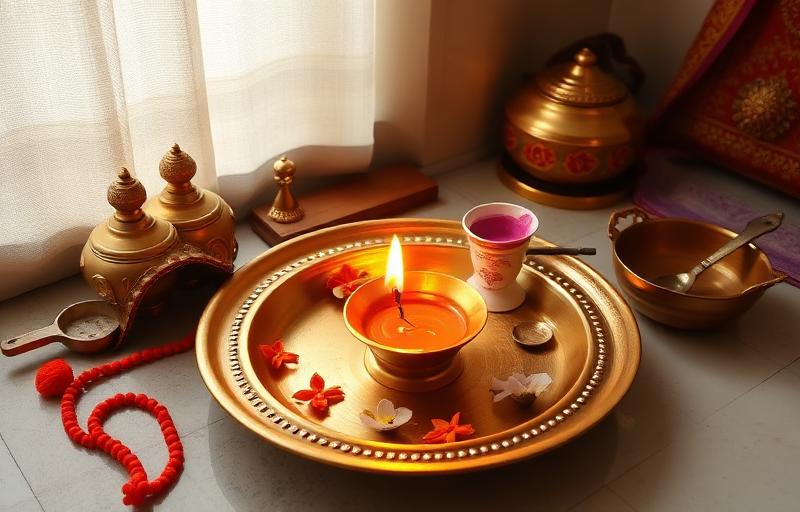
The Upanayana ceremony continues to be performed in many communities, especially among Brahmin families, though practices and timing vary by region and tradition. Priests conducting rituals almost always wear the janeu, and many devotees choose to wear it throughout life, while others wear it primarily during ceremonies, pujas or visits to the temple.
The thread is not meant to be worn indefinitely without renewal, it is traditionally changed on specific occasions, and old threads are disposed of respectfully rather than discarded like ordinary waste, often immersed in water or placed at the base of a sacred tree.
A Thread, Not Jewelry
The janeu is deliberately simple, a plain thread rather than anything ornamental, because its value was never meant to lie in appearance. Worn quietly across the body, it carries centuries of intention, a vow renewed, remembered and lived daily rather than displayed.
Quick Answers
What is the Upanayana ceremony?+
Upanayana is the traditional sacred thread ceremony, a samskara that historically marked a young person's entry into a phase of formal learning and the wearing of the janeu.
What do the three strands of the janeu represent?+
Tradition offers a few explanations, most commonly the three debts owed to the divine, to sages and teachers, and to one's ancestors, while some describe them as representing discipline of body, speech and mind.
How often is the janeu changed?+
It is traditionally renewed on specific occasions such as Shravani Purnima, and also replaced if it breaks or becomes soiled, with the old thread disposed of respectfully rather than discarded casually.
About the author
Anjali Mehta · Editor, M.A. Religious Studies
Anjali is the managing editor for Vandnaa and oversees the festival and vrat coverage. She holds an M.A. in Religious Studies and reviews every published article for accuracy, accessibility, and tradition-fidelity.
Meet the Vandnaa editorial team →