
Covering the Head - An Instinct of Reverence
Watch any Indian household at aarti time and you will see it happen without a word: the mother draws her pallu over her head, the daughter adjusts her dupatta, and in many families the men place a topi, angavastram, or simple handkerchief on their heads before folding their hands. No one instructs anyone; the gesture is inherited like a mother tongue. Across much of North and West India, covering the head during puja, aarti, havan, katha, and temple visits is simply how the body says what the heart feels - that one is standing before something greater than oneself. This post explores the layers behind the custom: humility and surrender, traditional beliefs about spiritual energy, the culture of respect, parallels in other communities, and the practical etiquette of when it is essential and when it is a matter of choice.
Humility and Surrender Before the Divine
The deepest reason is bhava - the inner attitude. In Indian culture, an uncovered, proudly held head signals self-assurance; a covered, slightly bowed head signals vinamrata (humility) and sharanagati (surrender). Before the deity, the devotee deliberately sets aside status, ego, and adornment. Covering the head is a wordless declaration: "Here, I am not an officer, an elder, or an achiever; I am simply a child at your feet." The same logic appears when we touch the feet of elders with a bowed head. Scriptural tradition treats the head as the seat of ahankara (the sense of "I"), so veiling it before God is a symbolic veiling of the ego itself. Elders also taught that one should not appear before the deity exactly as one appears in the marketplace - the small act of covering marks the shift from worldly mode to worship mode.
The Crown of the Head in Traditional Belief
Yogic and tantric tradition regards the crown of the head as the seat of the sahasrara, the thousand-petalled lotus through which, it is said, spiritual energy enters and departs. Within this traditional framework, elders explained that during puja, japa, and aarti the atmosphere becomes charged with mantra and devotion, and covering the crown helps the worshipper contain and absorb that subtle energy rather than let it scatter. The shikha (tuft) kept by priests and the practice of covering the head during sandhya are described in the same spirit. This is devotional and yogic wisdom handed down through generations - a way of taking the worship moment seriously - and is best honoured as such rather than measured as science. What is certain is its effect on the mind: the moment the cloth touches the head, attention gathers inward, the way closing a door quietens a room.
Pallu, Dupatta, Topi - A Culture of Respect
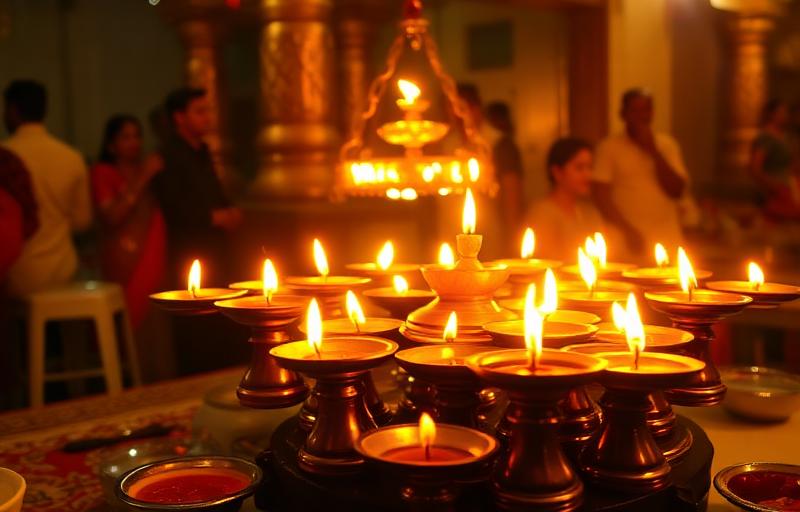
Covering the head in India has never been limited to worship; it is part of a broader grammar of respect. Traditionally, women drew the pallu or dupatta over the head before elders, in-laws, and guests as a gesture of grace, and men wore the pagdi (turban) or topi on every dignified occasion - weddings, panchayats, festivals, and funerals alike. A bare head in a solemn setting was once considered incomplete dress. Worship absorbed this same vocabulary: if we cover the head before respected elders, how much more before the Lord of all? This is why grandmothers gently remind younger women to take the pallu during katha, and why men of many communities will not perform a havan or pind-daan bareheaded. The custom varies in strictness by region and family, but its language is universal across India: a covered head says, "I honour where I stand."
Regional Traditions and the Gurudwara Parallel
The custom wears many regional faces. In Rajasthan, Haryana, and much of Uttar Pradesh, head covering during puja is near-universal for women and common for men. In Maharashtra, men traditionally wear a topi for pooja and festivals; in South India, many temples instead emphasise bare-chested simplicity for men, showing that humility can take different outward forms. The most striking parallel is the gurudwara, where covering the head is mandatory for everyone, men and women alike, before entering the presence of Guru Granth Sahib - which is why baskets of scarves wait at every entrance. Mosques and many churches of the East share versions of the same practice. Seen together, these traditions reveal a shared Indic and human intuition: the head, our highest and proudest part, is lowered and covered where the sacred is enthroned.
When Is It Essential and When Is It Optional?
There is no single pan-Hindu rule, so let family and local tradition guide you. Covering is generally treated as essential during havan and yajna, shraddha and pind-daan rites, katha and satsang in traditional settings, weddings and sanskars, and at shrines that explicitly ask for it - and it is mandatory in every gurudwara. It is customary but flexible during daily home puja and aarti, where many devotees, especially women in North Indian households, cover by habit and bhava. It is largely optional in most large temples of South India and in modern urban settings, where darshan bareheaded is common and not considered disrespectful. A good rule: observe what devout locals and elders do, and when in doubt, cover - the gesture costs nothing and can never offend. What matters most is that the act is done with awareness, not as an empty formality.
Practical Etiquette - Doing It Gracefully
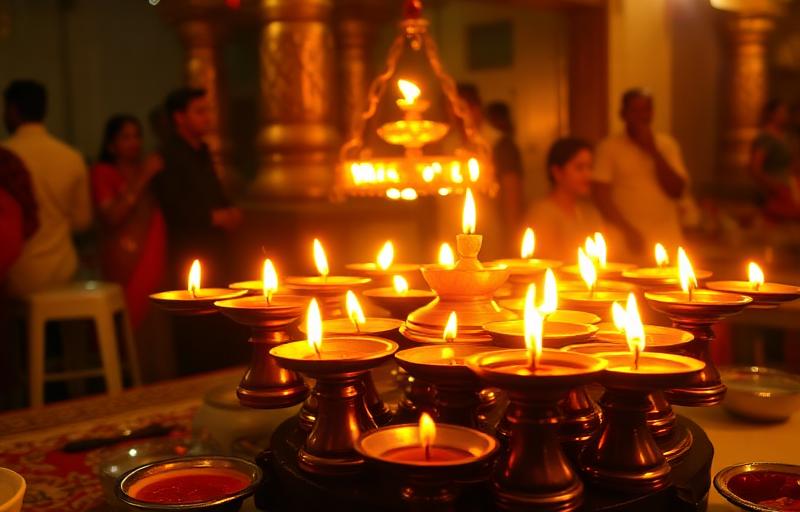
A few simple habits keep the custom graceful: 1. Keep a clean dupatta, gamchha, or handkerchief in your puja space or car so you are never caught unprepared at a havan or gurudwara. 2. Cover before you enter the sacred space or begin the puja, not midway - the gesture marks the threshold. 3. The cloth need not hide the face; resting lightly over the crown is enough in most Hindu traditions. 4. Men may use a topi, angavastram, or folded handkerchief; tying a large knotted kerchief is the gurudwara norm. 5. Guide children gently by example rather than scolding, so the habit forms with love. 6. If a head covering is genuinely impractical for you, bow the head a little deeper - tradition always accepts bhava as the highest covering.
Frequently Asked Questions
Why do Hindus cover the head during puja and aarti?+
Primarily as an expression of humility and surrender before the divine - the covered, bowed head symbolically sets aside the ego. Tradition adds that covering the crown helps contain the subtle spiritual energy of the worship moment, and culturally it extends India's wider etiquette of covering the head before anyone worthy of deep respect.
Do men also need to cover the head during puja?+
In many traditions, yes - men cover with a topi, angavastram, or handkerchief during havan, shraddha, katha, and sanskars, and a head covering is mandatory for all in gurudwaras. In daily home puja and most South Indian temples it is optional for men. Follow your family and local custom.
What is the connection between the head covering and the sahasrara?+
Yogic tradition regards the crown as the seat of the sahasrara, the thousand-petalled lotus through which spiritual energy is said to flow. Elders taught that covering the crown during worship helps the devotee absorb rather than scatter that subtle energy. This is traditional yogic wisdom, honoured as heritage rather than measured as science.
Is it disrespectful to do darshan without covering the head?+
Not in most Hindu temples, where bareheaded darshan is common, especially in South India and urban settings. It becomes important where local custom or the shrine explicitly asks for it, during havan and shraddha rites, and it is compulsory in every gurudwara. When unsure, simply cover - the gesture can never offend.
Why is covering the head mandatory in a gurudwara?+
In Sikh tradition, Guru Granth Sahib is revered as the living Guru, so everyone entering the presence covers the head as an act of respect and humility, just as one would before a sovereign. The practice applies equally to men and women, which is why scarves are provided at every gurudwara entrance.
What can I use to cover the head if I do not have a dupatta?+
Any clean cloth serves the purpose: a handkerchief, gamchha, scarf, shawl, towel, or topi. The material does not matter; cleanliness and intention do. Keeping a small clean cloth in your puja space, bag, or car ensures you are always prepared for a havan, katha, or gurudwara visit.
About the author
Pandit Mahesh Trivedi · Festival Traditions & Panchang
Pandit Mahesh leads the festival-date and Panchang content on Vandnaa. He cross-references multiple regional panchangs (Drik, Vaishnava, Bengali, Marathi) for every festival date published on the site.
Meet the Vandnaa editorial team →