What Is Panch Aarti
Panch aarti is the offering of light using a special lamp called a panch-mukhi diya or pancharti, which holds five wicks burning together. It is performed at the close of puja, when the lamp is waved clockwise before the deity while the aarti song is sung. The word aarti comes from aaraatrika, the act of removing darkness, and panch means five.
The Spiritual Meaning of Five Flames
The five flames represent the panch tatva (five elements) - earth (prithvi), water (jal), fire (agni), air (vayu) and ether (akash) - from which all creation, including our own body, is made. By waving all five before the deity, we offer the entire universe and our own being back to the divine. The single act of light symbolises dissolving the ego into the lamp of pure consciousness.
Scriptural and Cultural Reason
The agamas and puja traditions prescribe aarti as the final upachara (service) offered to a deity, completing the worship with light after water, flowers and incense. The number five recurs through Hindu thought - the five elements, the five pranas, the panchopachara puja - so the panch aarti gathers these fivefold powers into a single offering of flame. Singing the aarti together also binds the family and community in shared devotion.
The Science and Practical Angle
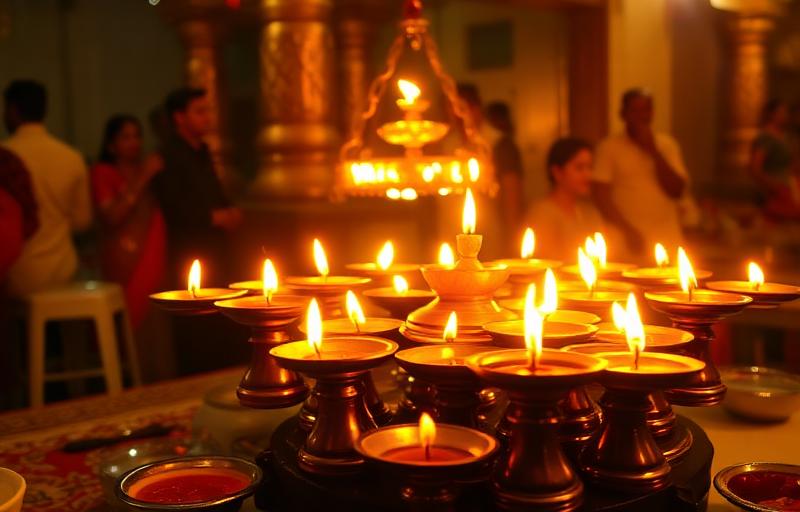
Lamps were traditionally lit with ghee or camphor, whose burning purifies the air and was believed to reduce germs in the enclosed mandir space. The warm, flickering light of five flames helps the eyes and mind focus and settle at the end of worship. Waving the lamp also distributes its warmth and fragrance evenly, and the rising sound of the bell and aarti creates calming vibrations that ease stress.
How to Perform Panch Aarti Correctly
1. Fill the five-wick lamp with ghee and place fresh cotton wicks; light all five flames. 2. Hold the lamp in the right hand and ring a bell with the left. 3. Wave the lamp clockwise before the deity - traditionally first at the feet (four circles), then the navel (two), then the face and whole form. 4. Sing the aarti with devotion while circling. 5. After the aarti, pass your palms over the flame and touch them to your eyes and head to receive the blessing. Keep the lamp steady and never blow out the flame; let it settle naturally or use the wick.
Benefits of Panch Aarti
Performing panch aarti is believed to complete the puja, remove negativity and fill the home with auspicious, purified energy. The warm light and rhythmic singing calm the mind and lift the mood, ending worship on a note of joy and gratitude. Done daily, it brings a sense of order and devotion to the household and gently draws the whole family together at the mandir.
Common Questions From Devotees
What do the five flames of panch aarti represent?+
The five flames represent the panch tatva (five elements) - earth, water, fire, air and ether - from which all creation and our own body are made. Waving them offers the whole universe back to the divine.
Why is aarti waved clockwise?+
Waving the lamp clockwise follows the auspicious pradakshina direction, keeping the deity to the right. It is the traditional way to circle light around the divine form with respect.
What fuel should be used in the panch aarti lamp?+
Ghee is the preferred fuel, as its burning is considered pure and purifying for the air. Camphor is also used. Cotton wicks should be fresh and clean for each aarti.
Why do we pass hands over the aarti flame?+
Passing the palms over the flame and touching the eyes and head is a way of receiving the deity's light and blessing. It symbolises taking the warmth and grace of the divine into oneself.
Should the aarti flame be blown out?+
No. The flame should never be blown out with the mouth, as breath is considered impure for this. Let it settle naturally or extinguish it gently with a wick or hand fan.
When in the puja is panch aarti performed?+
Panch aarti is the final step of puja, performed after offering water, flowers, incense and bhog. It completes the worship with light and is followed by receiving blessings and prasad.
About the author
Acharya Vinaya Kapoor · M.A. Sanskrit, Mantra & Stotra Studies
Acharya Vinaya holds an M.A. in Sanskrit from Banaras Hindu University and writes the mantra and stotra commentary on Vandnaa. Her focus is on accurate pronunciation, traditional context, and helping modern readers connect with classical texts.
Meet the Vandnaa editorial team →Explore on Vandnaa
Related Articles
Ganesh Aarti Lyrics – Jai Ganesh Deva (गणेश आरती)
8 min read
Lakshmi Aarti Lyrics – Om Jai Lakshmi Mata (लक्ष्मी आरती)
8 min read
Durga Aarti Lyrics – Ambe Tu Hai Jagdambe Kali (दुर्गा आरती)
8 min read
Why We Offer Akshat (Unbroken Rice) in Puja - Meaning & Vidhi
8 min read
Why We Use Silver & Copper Vessels in Puja - Meaning & Vidhi
9 min read
Home Mandir Setup - Direction, Vastu Rules, Dos and Don'ts
9 min read