The Temple in the Rock
Yaganti, or Yaganti Uma Maheswara temple, is in Nandyal district, Andhra Pradesh, set against a hillside in the Erramala range.
What is there:
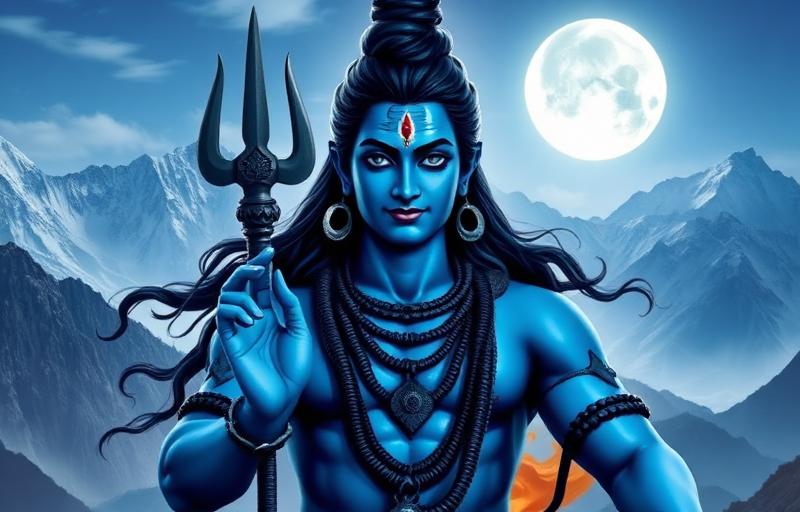
- The Uma Maheswara shrine, with Shiva and Parvati in a single image, which is itself unusual
- A large Nandi facing the sanctum, which is the temple's most discussed feature
- A Pushkarini, a tank fed by water that comes out of the hillside through the mouth of a Nandi figure
- Caves in the hill behind, including the Agastya cave, the Venkateswara cave and the Veerabrahmam cave
- Vijayanagara period building, attributed to Harihara Bukka Raya
The setting. The temple is built against the rock, and the hill is part of the structure rather than a backdrop.
The Nallamala and Erramala country here is dry, rocky, hot and thinly populated, and the temple's water is what makes the place possible.
The single image. Shiva and Parvati in one image, as Uma Maheswara, is worth pausing on.
- Most Shiva temples have a linga in the sanctum
- A few have Shiva in anthropomorphic form
- Fewer have Shiva and Parvati together as the principal image
- Yaganti does, and the deity is addressed as a pair
Why Yaganti is known. Two claims, both of which get repeated constantly and neither of which is usually explained properly.
- The Nandi is growing
- There are no crows at Yaganti
Both deserve a careful answer, and both are given one below.
The Growing Nandi
The claim. The Nandi at Yaganti is said to be increasing in size, and the assertion is made specifically, not vaguely.
- Devotees and temple authorities state that the image has grown measurably over the years
- It is commonly reported that the Archaeological Survey of India examined it and confirmed growth, with a figure often quoted of about an inch every twenty years
- A pillar that once stood beside the Nandi is said to have had to be removed, or is said to be now touched by the expanding stone
What geology says. This is the part that is usually left out, and it is more interesting than the claim.
- The Nandi is carved from stone of the local formation, and the region's rock includes types that can expand
- Some rocks contain minerals that take up water and swell, and certain shales, and rocks containing clay minerals or particular sulphates, expand measurably over time
- Weathering and hydration can cause volumetric increase in a stone body
- A large carved block in a humid setting near a perennial water source is in exactly the conditions where this would occur
So the growth, if it is occurring, is a real physical process with a known mechanism, not a suspension of physics.
How to hold the two accounts. This is worth doing carefully, because it is a good test case.
- The devotee says: the bull is growing, and at the end of the age it will come alive and bellow
- The geologist says: the stone contains minerals that expand with hydration, and the dimensional change is consistent with that
- Both statements can be true, and neither refutes the other
The geological account explains the mechanism. It does not address the question of meaning, which is the question the temple is answering.
The prophecy. The growth claim is attached to a prediction associated with Pothuluri Veera Brahmendra Swamy, a sixteenth or seventeenth century Telugu seer whose Kalagnanam is a body of prophetic verses widely known in Andhra and Telangana.
The prediction is that the Nandi at Yaganti will come alive and bellow at the end of Kali Yuga.
Veera Brahmendra Swamy. He is a significant figure in Telugu religious history and is worth knowing about.
- A Vishwakarma by community, a craftsman caste, which is unusual for a figure of his standing
- He taught across caste lines and had disciples from communities of every rank, including his best known disciple Siddhaiah, from a Muslim family in some accounts and from a low caste in others
- His Kalagnanam verses are recited and interpreted continuously, and passages are applied to current events in the way prophetic literature always is
- He is said to have entered jiva samadhi at Banaganapalle, and his cave at Yaganti is shown
On prophecy generally. The Kalagnanam is read the way such texts are read everywhere, with verses matched to events after the fact. That is not a reason to dismiss the tradition, which carries real moral teaching alongside the predictions, but it is worth knowing what kind of text it is.
The Crows
The claim. There are no crows at Yaganti. Visitors report not seeing any, and the absence is treated as a standing feature of the place.
The katha:
- The sage Agastya was performing penance at Yaganti
- Crows disturbed him, as crows do
- In the standard telling, he cursed them so that they would never come to that place
- Crows are the vahana of Shani, Saturn, so the curse is sometimes extended to say that Shani himself does not enter Yaganti
- That second reading is the one devotees find significant, since it means the place is free of Shani's affliction
What is actually the case. The honest position has several parts.
- The absence is reported consistently by visitors and locals over a long period, which is not nothing
- There is no published ornithological survey establishing it rigorously
- Crow distribution is affected by real ecological factors, including food availability, competition from other corvids and raptors, habitat type and disturbance
- A rocky hillside site away from a large human settlement, with a temple that manages its waste, is a plausible place for crows to be scarce, since crows follow human refuse
What can be said. Something is probably true about crow scarcity at Yaganti. Whether it is absolute, and whether it is unusual for a site of that kind in that landscape, has not been established by anyone who measured it.
The Shani connection, and why it matters to devotees. This is the part that explains why anyone cares.
- Shani, Saturn, is the graha most associated with hardship, delay, obstruction and difficult periods
- Sade Sati, the seven and a half year transit of Shani over the natal moon and the signs beside it, is the most widely feared period in popular practice
- Enormous effort goes into propitiating Shani, at Shani Shingnapur, at Tirunallar, on Saturdays, with oil, black cloth and sesame
- A place where Shani is said not to enter is therefore offering something quite specific, which is relief
A word on this. Vandnaa's position is that devotion is about relationship with the deity, and that fear based practice around planetary affliction has taken up far more space in popular religion than it deserves.
If you go to Yaganti, go because there is a temple in the rock, a spring, caves and a Nandi worth seeing. If the crow story is a comfort, take the comfort. Do not build a life around avoiding a planet.
The Agastya connection more broadly. Agastya is one of the most widely distributed figures in the Indian tradition.
- A Rigvedic sage
- The one who is said to have crossed the Vindhyas and brought Vedic tradition south, which is why he appears at so many southern sites
- Credited with the earliest Tamil grammar in tradition
- The teacher of the Aditya Hridayam to Rama
- Associated with Siddha medicine in the Tamil tradition
- A star, Canopus, is named for him
A cave at Yaganti bearing his name places the site in that very large network, and this pattern, a local site connected to Agastya, repeats across the whole of south India.
The Spring and the Caves
The two things at Yaganti that nobody argues about are the water and the caves, and they are the reason the site was chosen.
The Pushkarini:
- Water emerges from the hillside and is channelled into the temple tank
- It arrives through the mouth of a carved Nandi figure, which is where the flow becomes visible
- The supply is perennial, running through the year in a landscape that is otherwise very dry
- Devotees bathe in the tank before darshan
- The source is not obvious from the surface, which is part of the site's character
As at Mahanandi, the geology of this region, with its limestone and karst drainage, produces water that emerges at the base of hills without any visible catchment above.
Why the water explains the temple. In this landscape, a permanent water source is the whole reason for a settlement.
The temple is on the water, the caves are beside it, and the sequence is almost certainly that people used the water and the shelter first and the temple grew afterwards.
The caves:
- The Agastya cave, associated with the sage's penance, reached by steps
- The Venkateswara cave, holding a Venkateswara image, connected to the origin story below
- The Veerabrahmam cave, associated with Pothuluri Veera Brahmendra Swamy, where he is said to have written part of the Kalagnanam
- Steps and passages, some of them narrow and low
The origin story:
- Agastya wished to install an image of Venkateswara at this place
- The image was made, but a toenail of the image was found to be broken, or was damaged in the making
- A damaged image cannot be installed under Agamic rules, which is a real and strict requirement
- Agastya performed penance, and Shiva appeared
- On Shiva's instruction, an Uma Maheswara image was installed instead
- The Venkateswara image remains in the cave, worshipped but not as the principal deity
Why the broken toenail matters. This detail is not incidental and it reflects genuine Agamic practice.
- An image intended for installation must be without defect
- Cracks, chips and breaks disqualify it
- The rule is strictly applied, and damaged images in temples are removed from worship and disposed of by prescribed rites, usually immersion
- The same principle applies to a damaged linga and to images damaged after installation
So the story is describing a real problem that a real temple builder would have faced, and describing a real solution, which is to install something else and keep the flawed image separately.
That is one of the marks of a story with actual practice behind it, as against one invented to explain a name.
How to Think About Temple Marvels
Yaganti is a good place to work out a general approach, because it has two claims of different kinds and both are made loudly.
A method:
First, establish what is actually claimed. Vague claims cannot be assessed. The Yaganti Nandi claim is specific, an inch every twenty years, which is assessable. The crow claim is also specific, no crows, which is assessable in principle.
Second, ask whether anyone has measured it. For the Nandi, some measurement is claimed but the record is not easy to verify. For the crows, nobody has published a survey.
Third, ask whether there is a known mechanism. For the Nandi there is, and it is ordinary geology. For the crows there are ordinary ecological explanations that would produce the same result.
Fourth, and most importantly, ask what the claim is for. This is where most discussion goes wrong in both directions.
- The devotee who insists the growth is inexplicable is claiming more than the tradition needs. The tradition's point is that the deity is present and the age is turning, not that geology is suspended
- The sceptic who explains the mineralogy and concludes there is nothing here has answered a question nobody asked. Explaining the mechanism does not touch the meaning
What the tradition is actually saying at Yaganti:
- That this place is alive, in the sense that something in it is still changing
- That the world has an ending, and there will be a sign
- That a stone bull, which is the most inert thing imaginable, is not as inert as it looks
Those are theological statements. They are not measurements and they were never offered as measurements.
A test to apply. When a temple claim is made to you, ask whether the claim would still matter if the mechanism were explained.
- If yes, it is a religious claim and it is doing religious work
- If no, if the whole point was that science cannot explain it, then the claim was resting on ignorance and it will not survive
The strongest religious claims are the ones that do not depend on anything being unexplained. The Yaganti Nandi is stronger, not weaker, if the stone genuinely does take up water and swell, because then the sign is written into the material itself.
What this means for a visitor. Go, look at the Nandi, look for crows, drink the water, climb to the caves, and hold the temple's account and the geologist's account at the same time without needing to choose.
Most of Indian religion is more comfortable with that than the arguments about it suggest.
Visiting Yaganti
Getting there
- Yaganti, Nandyal district, Andhra Pradesh
- About 15 km from Banaganapalle, which is known for its mangoes and for the diamond mines nearby
- Roughly 80 km from Kurnool and about 60 km from Nandyal
- Nandyal and Kurnool are the nearest railheads
- Kurnool and Hyderabad for airports
- A vehicle is the practical way to get there
Timings
- The temple opens early and runs through the day with a midday break. Check locally
When to go
- October to February. This region is genuinely very hot from March to June and the rock radiates heat
- Maha Shivaratri, the principal festival, with an all night observance
- Karthika Masam, November or December
- Early morning, for the light on the rock and for the climb before the heat
The caves
- The Agastya cave involves a climb of steps
- The Venkateswara and Veerabrahmam caves are also reached by steps and passages
- Some sections are narrow, low and dark. A torch is useful
- Not suitable for anyone with mobility difficulty or claustrophobia
- Watch your footing. The rock is worn smooth in places
Practicalities
- Carry water, and more than you think. This is dry, hot country
- Facilities are limited. Banaganapalle and Nandyal are the nearest towns of any size
- Traditional dress is appropriate
- Bathing in the Pushkarini is common. Bring a change of clothes if you intend to
Combining the visit
- Belum caves, about 30 km, among the longest cave systems in India
- Mahanandi and the Nava Nandis, about 60 km
- Ahobilam, with the nine Narasimha shrines
- Banaganapalle, for the Veera Brahmendra Swamy samadhi
- Gandikota, about 80 km, the Pennar gorge and fort, which is one of the best landscapes in Andhra
- Srisailam, further into the Nallamala
- Kurnool and Nandyal as bases
A suggested circuit. Kurnool or Nandyal as a base, then Yaganti, Belum, Banaganapalle, Mahanandi and the Nava Nandis, Ahobilam and Gandikota, over three or four days.
This is one of the least travelled and most rewarding stretches in south India, with caves, gorges, forest, spring temples, shrine circuits and a Jyotirlinga, and almost nobody on the roads.
A closing thought. Yaganti is best approached as three separate things that happen to share a site: a piece of geology doing what geology does, a set of caves that people have been using for a very long time, and a temple in which a claim about the end of the world is made quietly and without much fuss.
You do not have to accept the third to be moved by the fact that somebody carved a bull, put it in front of a god, and left instructions about what it would do at the end of time.
Common Questions From Devotees
Where is Yaganti?+
In Nandyal district, Andhra Pradesh, against a hillside in the Erramala range, about 15 km from Banaganapalle, roughly 80 km from Kurnool and about 60 km from Nandyal. Nandyal and Kurnool are the nearest railheads and a vehicle is the practical way to get there.
Is the Yaganti Nandi really growing?+
Devotees and temple authorities say it has grown measurably, with a figure of about an inch every twenty years commonly quoted. Geology offers a mechanism: the local rock includes types containing minerals that take up water and swell, and a large carved block near a perennial water source is in exactly the conditions for that. The mechanism does not settle what the growth means.
Why are there no crows at Yaganti?+
The katha says the sage Agastya was disturbed by crows while performing penance and cursed them never to come there, and since crows are Shani's vahana, the curse is extended to say Shani does not enter Yaganti. No ornithological survey has established the absence rigorously, and crow scarcity at a rocky site away from human refuse has ordinary ecological explanations.
Why is the deity Uma Maheswara and not Venkateswara?+
Agastya wished to install a Venkateswara image here, but a toenail of the image was found broken. Agamic rules require an image intended for installation to be without defect, and this is strictly applied. He performed penance, Shiva appeared, and on his instruction an Uma Maheswara image was installed instead. The Venkateswara image remains in a cave, worshipped but not as the principal deity.
Who was Pothuluri Veera Brahmendra Swamy?+
A sixteenth or seventeenth century Telugu seer, a Vishwakarma by community, who taught across caste lines and whose Kalagnanam is a widely known body of prophetic verses in Andhra and Telangana. He is said to have entered jiva samadhi at Banaganapalle, and a cave at Yaganti is associated with him. The prediction that the Nandi will come alive and bellow at the end of Kali Yuga is attributed to him.
What are the caves at Yaganti?+
Three principal caves in the hill behind the temple: the Agastya cave associated with the sage's penance, the Venkateswara cave holding the image that could not be installed, and the Veerabrahmam cave associated with Pothuluri Veera Brahmendra Swamy. All are reached by steps and passages, some narrow, low and dark, so carry a torch and skip them if mobility or closed spaces are a problem.
About the author
Pandit Ravindra Sharma · Vedic Rituals & Bhakti, 22+ years
Pandit Ravindra is the Vandnaa editorial team's resident specialist on aarti, chalisa, and daily devotion. He has performed home and temple pujas across Varanasi and Delhi for over two decades and contributes the bhakti-focused articles on this site.
Meet the Vandnaa editorial team →